Bánh Cuốn Tây Hồ 127

Michelin Bib Gourmand
Our verdict
A once-humble hawker stand now operating as a two-storey shop in Tan Dinh Ward, Bánh Cuốn Tây Hồ 127 specialises in delicate steamed rice rolls made to order beside an open kitchen. Traditional fillings—pork and jicama, mushroom, vegetarian—are paired with balanced dipping broths, and the shop also serves golden bean cake, a local breakfast staple.

Pearl is the En Primeur Club membership app — saves, bookings, and concierge access live there. Same editors, same standards.
- Address
- 127 Dinh Tien Hoang Street, Tan Dinh Ward, Ho Chi Minh City, Hồ Chí Minh, 710000, VNM
- Phone
- +84 28 3820 0584
- Hours
- Daily 5:30 AM–9:30 PM
- Website
- guide.michelin.com
- Directions
- Get directions
The menu
What to order
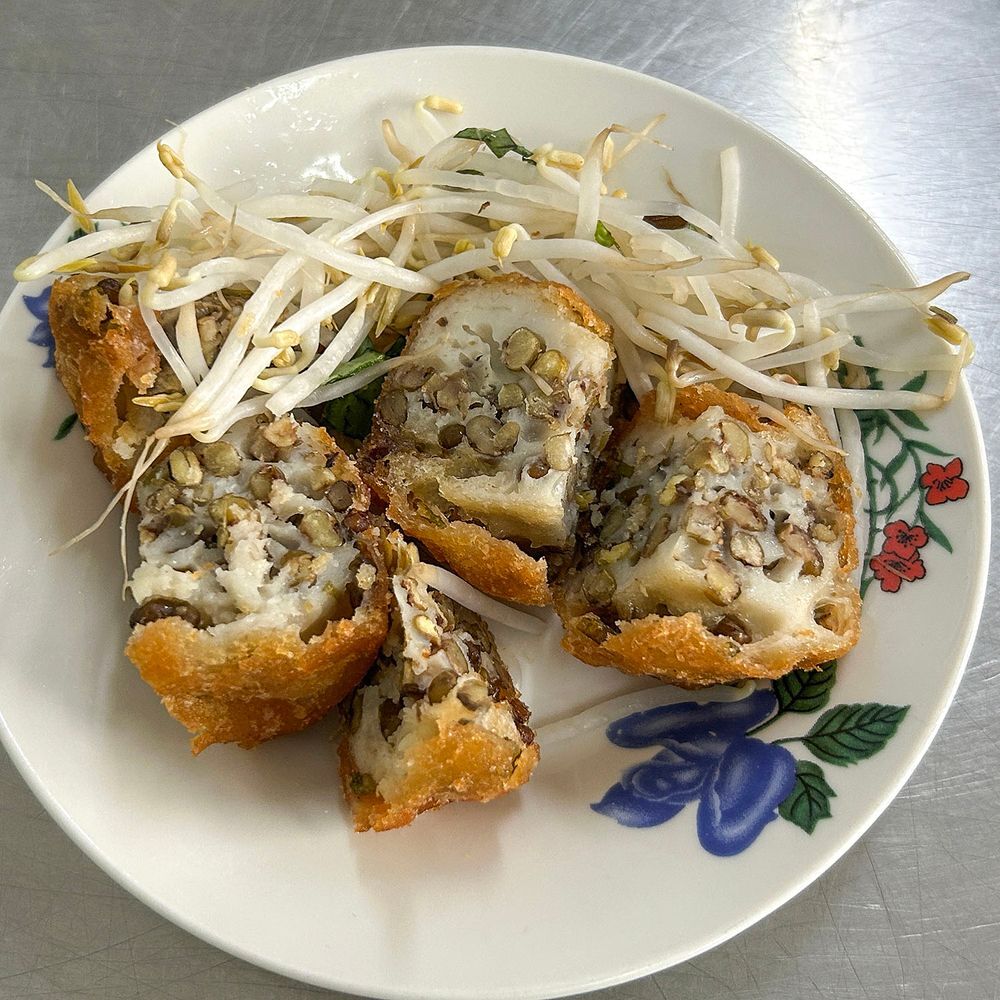
- Bánh cuốn nhân thịt (pork and jicama rice rolls)
- Bánh cuốn chay (vegetarian rice rolls)
- Nem chua
- Bánh tôm
Dinh Tien Hoang Street in Tan Dinh Ward runs through one of Ho Chi Minh City's densest breakfast corridors, where rice-roll shops and bún specialists open before dawn and serve until mid-afternoon. Bánh Cuốn Tây Hồ 127 occupies a two-storey shophouse on this strip, its ground-floor kitchen visible from the street through open doors. Steam rises from wide bamboo trays as a cook spreads wet rice batter across stretched cotton cloth, then scrapes the thin, translucent sheet onto a wooden board. The assembly line is continuous: rolls filled, folded, plated, and handed to tables within two minutes of order.
The shop's name references Tây Hồ, a district in Hanoi known for its concentration of bánh cuốn vendors. Ho Chi Minh City's steamed-rice-roll scene is less regionally homogenous than the capital's, and shops here often draw on northern technique while adjusting filling ratios and broth seasoning for southern preference. Bánh Cuốn Tây Hồ 127 follows that pattern: the rolls themselves are thin and silky, closer to Hanoi's benchmark texture than the thicker, chewier versions found at some Saigon vendors, while the dipping broth skews slightly sweeter and the fried shallots more abundant.
What Arrives at the Table
Pork-and-jicama remains the canonical filling. Minced pork shoulder is cooked with finely shredded jicama, wood-ear mushroom, and shallot, then spooned onto each steamed sheet before it is rolled and cut into short cylinders. The jicama adds crunch and a faint sweetness that balances the pork's savouriness; the wood-ear contributes texture rather than flavour. Vegetarian rolls swap the pork for additional mushroom and tofu, though the jicama base remains. Each plate arrives topped with fried shallots, fresh herbs, mint, coriander, Thai basil, and a small bowl of nước chấm, the fish-sauce-based dipping liquid central to most Vietnamese rice dishes.
Golden bean cake, bánh đậu xanh, sits alongside the rolls as a secondary speciality. The cakes are pressed from mung-bean paste, shallow-fried until the exterior crisps, then dusted with sesame seeds. They are served warm, with a denser, slightly crumbly texture that contrasts with the rolls' softness. The dish is common in northern Vietnam but less frequently offered in Ho Chi Minh City's commercial breakfast trade, and its presence here signals the shop's continued connection to Hanoi's street-food vocabulary.
Sourcing and Technique in the Open Kitchen
Rice batter for bánh cuốn is typically milled from short-grain jasmine or a similar medium-starch variety, soaked overnight, then ground into a slurry with water. The ratio of water to rice flour determines the roll's final thickness and elasticity. At Bánh Cuốn Tây Hồ 127, the batter is prepared each morning and kept in large steel bowls beside the steaming station. The cook ladles a thin layer onto a stretched cloth set over a pot of boiling water, covers it with a domed lid for fifteen to twenty seconds, then lifts the cloth and scrapes the cooked sheet onto a plate in one fluid motion. Speed matters: if the sheet sits too long on the cloth, it tears; if it cooks too briefly, it remains sticky and difficult to fold.
Pork and jicama are sourced from Ben Thanh Market and prepped in the shop's upstairs kitchen. Jicama is peeled, julienned, and blanched to remove excess moisture before mixing with the pork. Wood-ear mushrooms are rehydrated, rinsed, and chopped. The filling is seasoned with fish sauce, black pepper, and a small amount of sugar, then cooked in a wok until the pork is fully browned and the jicama softens but retains some bite. The filling ratio is calibrated to ensure the roll holds its shape without tearing under the weight of the ingredients.
Nước chấm is mixed fresh throughout service: fish sauce, lime juice, sugar, water, garlic, and chilli. The shop's version leans sweeter than the Hanoi standard, a concession to southern palates that prefer more pronounced sweetness in dipping broths. Fried shallots are prepared in small batches and stored in sealed jars to retain crispness.
Ho Chi Minh City's steamed-rice-roll landscape splits between standalone specialists like Bánh Cuốn Tây Hồ 127 and broader breakfast vendors that offer rolls alongside phở, bún, and congee. The former tend to focus on batter consistency and filling balance, while the latter prioritise speed and variety. Bánh Cuốn Tây Hồ 127 sits firmly in the specialist tier, where technique and ingredient preparation are visible and central to the shop's identity. Its recognition in the Michelin Guide's street-food category aligns it with a small cohort of hawker-origin vendors, Anan Saigon, Ăn Thôi in Da Nang, that have formalised operations without abandoning street-food pricing or format.
The two-storey layout accommodates approximately thirty seats, split between ground-floor tables near the kitchen and a quieter upstairs dining area. Service is fast-paced; orders are taken verbally, and plates arrive within five minutes. Turnover is high during morning service, when the shop fills with neighbourhood regulars, office workers, and a small but steady flow of visitors seeking Michelin-recognised street food. The shop does not accept reservations, and peak hours, between seven and nine in the morning, can require a short wait for seating.
Bánh Cuốn Tây Hồ 127 operates as a single-category specialist in a city where most breakfast vendors diversify menus to capture broader traffic. That focus allows it to refine one preparation rather than manage multiple, and the visible kitchen reinforces the shop's commitment to technique over convenience. For those mapping Ho Chi Minh City's street-food tier, it offers a clear example of how northern technique and southern preference intersect in the capital's evolving breakfast trade. Those exploring the city's broader dining landscape should also consider our full Ho Chi Minh City restaurants guide, which includes both street-food specialists and fine-dining rooms such as 3G Trois Gourmands, Akuna, and An's Saigon.
Frequently asked questions
Is Bánh Cuốn Tây Hồ 127 child-friendly?
The two-storey shop on Dinh Tien Hoang Street accommodates families with its casual seating and straightforward menu. Rice rolls are mild and simple, and vegetarian options are available. The open kitchen offers a low-key production spectacle that holds children's attention.
How would you describe the vibe at Bánh Cuốn Tây Hồ 127?
Functional hawker efficiency defines the space. Orders are taken quickly, rice paper is stretched over steam kettles beside your table, and rolls arrive within minutes. The two-storey layout has expanded capacity without altering the no-frills, eat-and-move rhythm that local regulars expect.
What kind of recognition has Bánh Cuốn Tây Hồ 127 received?
Bánh Cuốn Tây Hồ 127 has received recognition including: This once-humble hawker is now an iconic two-storey shop known for its delicate rice paper rolls. Made to order beside the open kitchen, they boast balanced, traditional flavours, such as pork and jicama, and vegetarian options. Be sure to ….
What's Bánh Cuốn Tây Hồ 127's location?
Bánh Cuốn Tây Hồ 127 is located at 127 Dinh Tien Hoang Street, Tan Dinh Ward, Ho Chi Minh City, Hồ Chí Minh, 710000, VNM, Ho Chi Minh City.
Comparable venues by cuisine and price in the same metro.
| Venue | Cuisine | Price | Awards |
|---|---|---|---|
| Bánh Cuốn Tây Hồ 127This venue — the venue you are viewing | Traditional Vietnamese Bánh Cuốn Specialist | $1–10 | Michelin Bib Gourmand |
| Thúy 94 Cũ | Vietnamese Crab Seafood | $10–20 | Michelin Plate |
| Tales by Chapter | Zero‑waste plant-based fine dining | $50–100 | Michelin Plate · Conde Nast Hot List Restaurants |
| Hoi An Sense | Central Vietnamese Fine Dining | $30–50 | Michelin Plate |
| Noir. Dining in the Dark | Sensory Dining in the Dark (International Fusion) | $30–50 | Not listed |
| Fashionista Café | French-Vietnamese Fusion | $10–20 | Michelin Plate |
Recognition history
Dated appearances from independent guides and award organizations, with the underlying list record or original source where available.
Michelin Bib Gourmand
Michelin
Continue exploring
More in Ho Chi Minh City
Restaurants in Ho Chi Minh City
Browse all →
Bars in Ho Chi Minh City
Browse all →

Details
- Lively
- Classic
- Solo
- Casual Hangout
- Family
- Late Night
- Standalone
- Open Kitchen
- Street Scene
- A La Carte
- Counter Dining
- Soft Drinks
- Tea
- Vegetarian Friendly
Current opening hours
- Monday
- 5:30 AM–9:30 PM
- Tuesday
- 5:30 AM–9:30 PM
- Wednesday
- 5:30 AM–9:30 PM
- Thursday
- 5:30 AM–9:30 PM
- Friday
- 5:30 AM–9:30 PM
- Saturday
- 5:30 AM–9:30 PM
- Sunday
- 5:30 AM–9:30 PM
Hours can change for holidays and private events. Last verified .
A no-frills, cafeteria-style local eatery with bright lighting, simple metal tables and stools, an open cooking station at the front, and a bustling, informal street-food atmosphere.