Baluchi
Baluchi at 181 Tooley Street brings northern Indian cooking to London's Southwark, a neighbourhood better known for European fine dining than the subcontinent's regional traditions. The kitchen draws on the culinary belt stretching from the Punjab through the North West Frontier, where slow-cooked meats and tandoor work define the meal's architecture. For London's Indian restaurant tier, that regional specificity places it in a more focused peer set than the broader 'Modern Indian' category currently commands.
 Discover on Pearl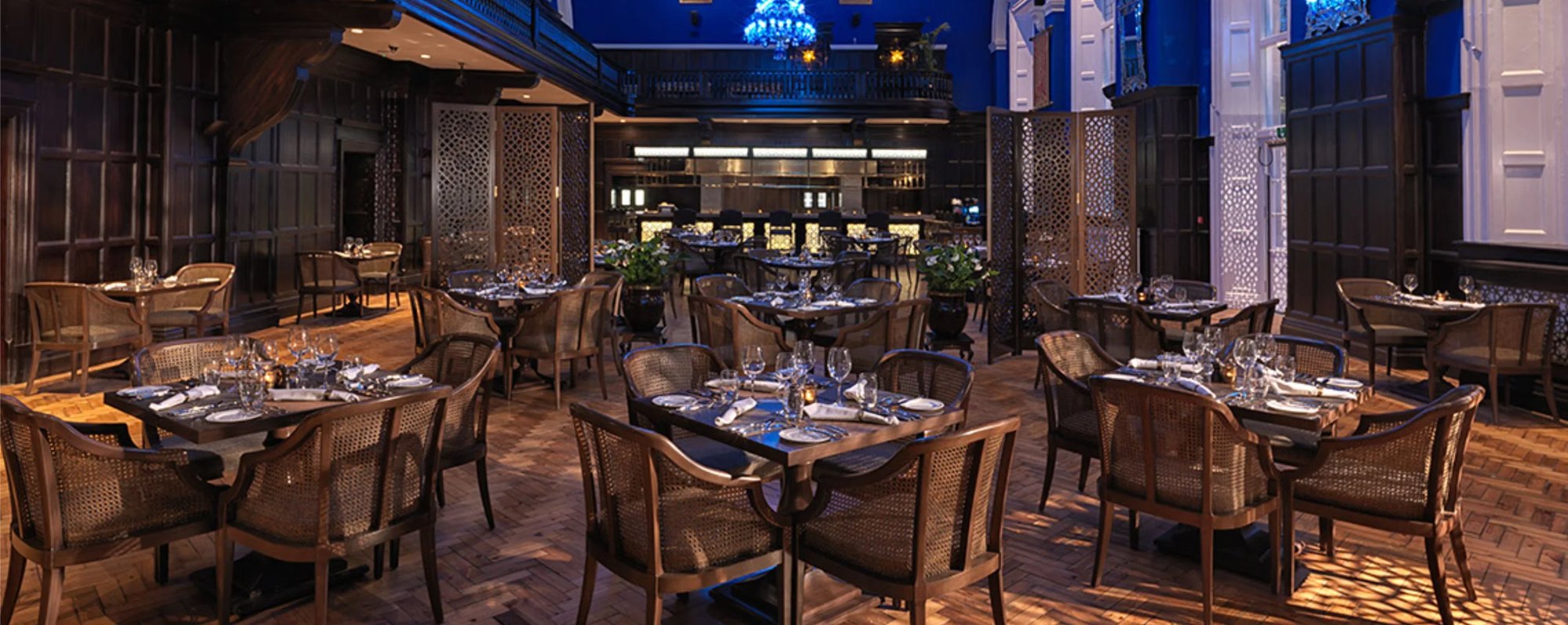
South Bank, Southwark, and the Geography of Indian Fine Dining in London
London's premium Indian restaurant scene has long been anchored in Mayfair and Knightsbridge, where venues like Benares and Gymkhana built the template for white-tablecloth subcontinental cooking that the city now takes for granted. The Southwark stretch of the South Bank, running east from London Bridge toward Bermondsey, has developed differently: its restaurant density reflects the neighbourhood's conversion from industrial wharves into a mixed cultural and hospitality district over the past two decades. Baluchi, at 181 Tooley Street, occupies that zone, placing northern Indian cooking in a postcode more commonly associated with European formats. That geographic displacement is itself an editorial signal about which dining audience the kitchen is oriented toward, specifically hotel and destination diners rather than the walk-in neighbourhood crowd that sustains the Southall or Drummond Street corridors.
The address sits within the La Suite West and Hilton cluster of the area, and the surrounding blocks include the Design Museum's former home and the glass-fronted developments that have reshaped this bank of the Thames since the early 2000s. For context on what the wider London dining map offers across price tiers and cuisines, our full London restaurants guide covers the city's range from neighbourhood staples to the three-Michelin-star bracket occupied by CORE by Clare Smyth, Restaurant Gordon Ramsay, Sketch, The Lecture Room and Library, and The Ledbury.
The shortlist, unlocked.
Hard-to-book tables, cellar releases, and concierge-planned trips.
Get Exclusive Access →The Architecture of a Northern Indian Meal
Northern Indian cooking, particularly the tradition associated with the Punjab and the North West Frontier provinces, is built around a progression that differs structurally from the South Indian or Bengali traditions more common in London's casual tier. The meal tends to open with breads and small preparations designed to establish heat tolerance and appetite, moves through tandoor-cooked proteins as its central register, and closes with dairy-based or syrup-heavy sweets that function as a deliberate counterweight to the spice accumulation of earlier courses. This sequencing logic, when applied in a formal dining context, creates a natural multi-course arc without requiring the kitchen to impose European tasting-menu conventions onto Indian ingredients.
The tandoor oven is the structural centre of that cuisine, not a peripheral technique. Meats marinated in yogurt and spice compounds, then cooked at temperatures that European ovens rarely sustain, produce a particular char-to-tenderness ratio that defines the middle section of any serious northern Indian meal. Breads, particularly naan variants cooked directly on the tandoor wall, carry that char character into the carbohydrate course. Understanding this sequencing helps a diner at any northern Indian restaurant plan their meal rather than treating it as an undifferentiated set of dishes to be ordered simultaneously.
Where Baluchi Sits in London's Indian Restaurant Tier
London's Indian restaurant market has stratified considerably since the mid-2000s, when the first wave of premium subcontinental venues began separating from the high-street curry-house format. The current upper tier includes Michelin-recognised addresses alongside a second cohort of well-capitalised hotel restaurants that operate at comparable price points without formal award recognition. Baluchi falls into that second cohort, a hotel-adjacent Indian restaurant with the fit-out and service expectations of the premium tier but without the independent critical apparatus that defines a venue like Gymkhana or Trishna.
That positioning has implications for the dining experience. Hotel-attached Indian restaurants in London tend to prioritise accessibility over regional specificity, offering a range broad enough to satisfy guests unfamiliar with subcontinental cuisine alongside dishes targeted at more experienced diners. This is a different editorial proposition from the tightly focused regional menus emerging at smaller independents, and neither is inherently inferior: the question is whether the kitchen has the depth to execute both registers without the menu becoming a series of compromises.
For comparison across different categories of London's premium dining tier, Dinner by Heston Blumenthal demonstrates how a hotel restaurant (in that case within the Mandarin Oriental) can sustain serious critical standing at the two-Michelin-star level. The challenge for any hotel-attached Indian restaurant in London is demonstrating equivalent seriousness of intent.
Reading the Menu as a Sequence, Not a Selection
The most useful approach to a northern Indian meal in a formal setting is to think in courses rather than in dishes. A well-constructed northern Indian progression might read: chaat or papdi preparations to open; a tandoor section anchored by seekh kebab or sikandari raan; a main-course phase built around slow-cooked dals and a protein curry, bread alongside rather than before; and a dessert of kulfi or halwa to close. Ordering dishes at random and sharing without that structural awareness tends to collapse the spice progression and flatten the meal's pacing.
This applies as much to wine and drink pairing as to the food sequence itself. The northern Indian meal's accumulating heat profile benefits from lower-alcohol, higher-acid whites or from beer in the tandoor phase, then moves naturally toward richer reds or fortified wines if the main-course curries lean toward slow-braised meats. London's Indian restaurant tier has become considerably more sophisticated about this pairing conversation in the past decade, and a venue at Baluchi's address-level positioning should be equipped to guide it.
Beyond the Restaurant: The Wider South Bank Context
Diners staying in or around the Tooley Street area have access to a dense hospitality corridor. Our full London hotels guide, bars guide, and experiences guide cover the South Bank and broader city in detail. For those building a wider trip around serious eating, the UK's destination restaurant circuit extends well beyond London: The Fat Duck in Bray, L'Enclume in Cartmel, Moor Hall in Aughton, Gidleigh Park in Chagford, Hand and Flowers in Marlow, and hide and fox in Saltwood each represent a distinct regional tradition at the serious end of British cooking. Internationally, the progressive Korean tasting-menu format at Atomix in New York City offers an interesting point of comparison for how Asian fine dining codifies sequence and progression in a Western context, as does the seafood-focused precision of Le Bernardin in New York City for thinking about how a single-tradition kitchen sustains critical recognition over decades. Our London wineries guide is also worth consulting if you are building a drinks itinerary around the visit.
Know Before You Go
Address: 181 Tooley Street, London SE1 2JR
Nearest Transport: London Bridge station (Jubilee and Northern lines, National Rail) is the closest underground and rail hub; the walk to Tooley Street is short and direct.
Reservations: Contact the venue directly or check current booking availability via the hotel; weekend and Friday evening services at hotel-attached Indian restaurants in this price tier typically require advance booking.
Leading Time to Visit: Weekday lunches at hotel-adjacent restaurants in the Southwark corridor tend to be less pressured than weekend dinner services, and the kitchen's full range is usually available across both sessions.
What to Bring: No dress code is confirmed in our data; the neighbourhood's smart-casual register applies across most Tooley Street dining.
The shortlist, unlocked.
Hard-to-book tables, cellar releases, and concierge-planned trips.
Get Exclusive Access →Frequently Asked Questions
Side-by-Side Snapshot
A quick peer list to put this venue’s basics in context.
| Venue | Cuisine | Price | Awards | Notes |
|---|---|---|---|---|
| Baluchi | This venue | |||
| The Ledbury | Modern European, Modern Cuisine | ££££ | Michelin 3 Star | Modern European, Modern Cuisine, ££££ |
| Sketch, The Lecture Room and Library | Modern French | ££££ | Michelin 3 Star | Modern French, ££££ |
| CORE by Clare Smyth | Modern British | ££££ | Michelin 3 Star | Modern British, ££££ |
| Restaurant Gordon Ramsay | Contemporary European, French | ££££ | Michelin 3 Star | Contemporary European, French, ££££ |
| Dinner by Heston Blumenthal | Modern British, Traditional British | ££££ | Michelin 2 Star | Modern British, Traditional British, ££££ |
Need a table?
Our members enjoy priority alerts and concierge-led booking support for the world's most difficult tables.
Get Exclusive AccessThe shortlist, unlocked.
Hard-to-book tables, cellar releases, and concierge-planned trips.
Get Exclusive Access →