Babiččina zahrada
.png)
Babiččina zahrada, meaning 'grandma's garden', sits in the quiet Prague suburb of Průhonice and delivers seasonal Czech cooking in a country-house dining room that opens onto a terrace garden. Signature preparations include beef broth with liver dumplings served from a pot and steak tartare finished tableside. The attached hotel adds overnight options, with electric vehicle charging on site.
 Discover on Pearl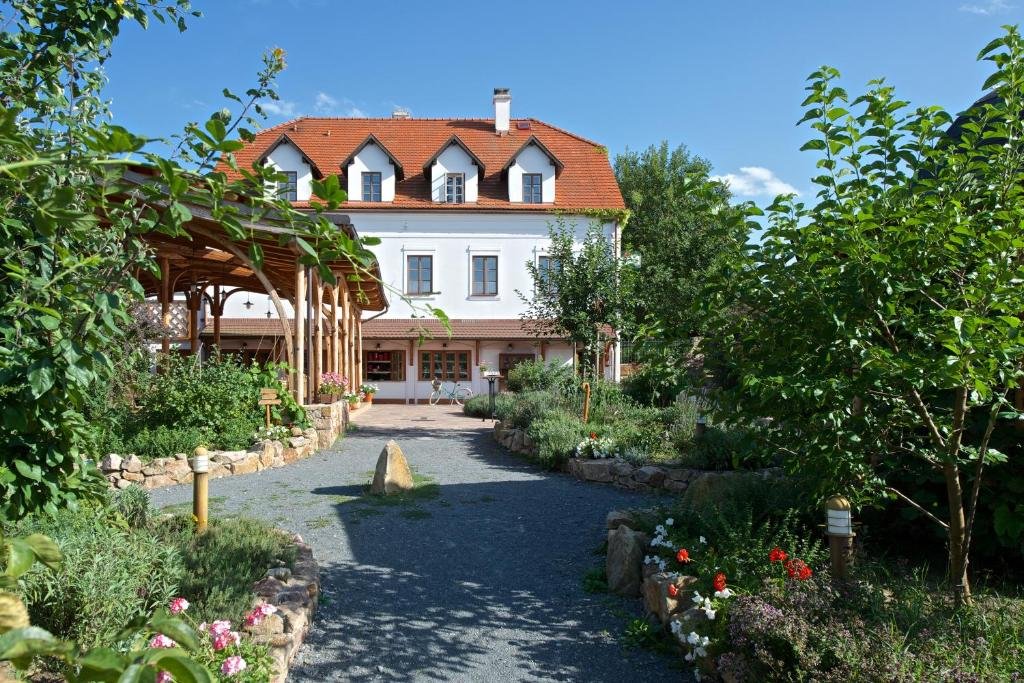
Where Prague's Edge Meets the Czech Kitchen Garden
Průhonice sits just beyond the Prague city boundary, close enough to draw a lunch crowd from the capital yet far enough to operate at a different register entirely. The restaurant culture here follows that geography: quieter, more rooted in Czech regional cooking, and less preoccupied with the kind of international positioning that defines the city's upper tier. Places like La Degustation Bohême Bourgeoise in Prague carry a Michelin star and position themselves against European fine-dining norms. Babiččina zahrada operates on a different axis entirely, one organised around domesticity and seasonal Czech ingredients rather than competition with any formal tasting-menu tradition.
Approaching the property, the country-house exterior prepares you for what follows inside. The decoration is deliberate and particular rather than generic rustic: lovingly chosen details that suggest accumulated taste rather than a theme applied wholesale. It reads less like a restaurant that decided to look homely and more like a house that became a restaurant while keeping its personality intact.
The shortlist, unlocked.
Hard-to-book tables, cellar releases, and concierge-planned trips.
Get Exclusive Access →The Terrace and the Garden That Give the Place Its Name
The name translates directly as 'grandma's garden', and the outdoor terrace delivers on that reference. The garden setting invites extended meals when the weather holds, which in the Průhonice microclimate around the famous dendrological park tends to mean a longer usable season than central Prague's more exposed streets. The terrace is not a minor afterthought; it is a genuine reason to plan the visit around the right conditions and, in warmer months, a reason to arrive without rushing.
Czech restaurant gardens have a specific cultural weight. They connect to a domestic tradition in which the garden produces what the kitchen needs, and the kitchen serves what the season allows. At Babiččina zahrada, that connection informs the menu positioning rather than serving as mere decoration. The name is an editorial statement about sourcing philosophy as much as it is a visual identity.
Seasonal and Regional Sourcing in Czech Cooking
Across the Czech Republic, a growing number of kitchens have moved away from the standardised menu formats inherited from the communist-era hotel restaurant model toward something more responsive to what regional producers and seasonal cycles actually provide. You can see this in places as different as Entrée in Olomouc and Bohém in Litomyšl, where the commitment to regional ingredients shapes not just sourcing but the format and rhythm of the menu itself. At Babiččina zahrada, the kitchen operates within this broader movement, centring seasonal and traditional Czech dishes on a menu that changes with what is available rather than holding a fixed repertoire year-round.
Czech regional cooking at this level draws on a larder that is specific and well-developed: game from Bohemian forests, root vegetables and brassicas through the colder months, freshwater fish from Bohemian ponds, and the dairy and grain traditions that underpin classic preparations. The sourcing decisions are not incidental; they define the flavour register and the structural logic of the dishes on the plate. A kitchen that sources seasonally in this tradition is making a statement about what Czech cooking can be when it is not filtered through international fine-dining convention.
The beef broth with liver dumplings, vegetables and noodles arrives served in a pot so you portion it yourself — a format that signals something about the kitchen's orientation. This is not a plated composition designed for visual appraisal; it is a dish calibrated for comfort and for the actual pleasure of the eating. The broth format connects directly to a Czech domestic tradition in which soup is a serious course rather than an amuse, and the liver dumplings anchor it to a specific regional technique. The steak tartare, prepared at the table, belongs to a different register: a dish common across Central European restaurants that here retains its performative element, connecting to a tableside tradition that has largely been retired elsewhere in favour of kitchen plating.
The Dining Room and the Open Kitchen
The interior country-house style carries through from the decoration to the spatial logic of the room. The kitchen is visible from the front section of the dining area, which serves a practical and editorial function simultaneously. The transparency about preparation — watching what happens in the kitchen rather than receiving dishes through a closed door , aligns with the broader honesty of the menu's positioning. There is nothing here to conceal. The service is described as friendly, which in the context of Czech restaurant culture is worth stating plainly: the country tends toward formality in higher-end contexts, and informality at this level reflects a deliberate choice about the relationship the dining room wants with its guests.
Průhonice as a Destination and How It Compares
Village is known internationally for its UNESCO-listed park, which draws visitors who might otherwise spend an entire Prague trip without crossing the city boundary. That proximity creates a natural visitor pattern: the park in the afternoon, a longer meal in the evening. Babiččina zahrada fits into that itinerary more naturally than any city restaurant could, its garden terrace extending the outdoor experience rather than replacing it with an interior shift.
For those planning around the restaurant, the attached hotel provides the option of staying in Průhonice rather than returning to Prague, which changes the pace of the whole visit. The charging station for electric vehicles is a practical addition that reflects the property's awareness of how its guests are arriving , a detail specific enough to matter if you are driving from Prague or from further in the region. For broader context on staying in the area, see our full Průhonice hotels guide.
The comparison points for Babiččina zahrada are not the formal tasting menus of central Prague or the international ambitions visible at places like Cattaleya in Čeladná. The peer set here includes Czech regional restaurants that prioritise seasonal sourcing and traditional preparations over international positioning , a category that includes, in different registers, Chapelle in Písek and Goldie in Tábor. Within that set, the garden, the country-house atmosphere, and the tableside preparations give Babiččina zahrada a specific identity rather than a generic one.
For visitors considering the broader dining and drinking context in the area, see our full Průhonice restaurants guide, our full Průhonice bars guide, our full Průhonice wineries guide, and our full Průhonice experiences guide. For reference points across the Czech Republic's wider restaurant scene, ARRIGŌ in Děčín, ATELIER bar & bistro in Brno, Dvůr Perlová voda in Budyně nad Ohří, ESSENS in Hlohovec, and Grandrestaurant Pupp in Karlovy Vary each represent distinct points on the Czech regional restaurant spectrum.
Planning Your Visit
Babiččina zahrada is located at Tovární 536, 252 43 Průhonice, a short drive from central Prague and accessible by car or by combining metro and local bus. The property includes a hotel, making it viable as an overnight stop rather than a day trip. The EV charging station is on site. Booking details are not publicly listed in available sources, so contacting the property directly or checking local booking aggregators before arriving is advisable, particularly for terrace seating during summer or for larger groups. The restaurant address places it well within reach of the Průhonice Park, which is the primary draw for most first-time visitors to the village.
Frequently Asked Questions
- Is Babiččina zahrada okay with children?
- The country-house atmosphere and informal garden setting make it a comfortable choice for families with children, particularly given the accessible price positioning relative to central Prague restaurants.
- How would you describe the vibe at Babiččina zahrada?
- The atmosphere sits in a specific Czech tradition of the country inn: warm rather than formal, with genuine decorative character rather than generic rural styling. For a city like Prague, which has developed a sophisticated upper tier of international-facing restaurants, Babiččina zahrada occupies a deliberate counterpoint, foregrounding domestic comfort and regional cooking over technical ambition or awards positioning.
- What should I order at Babiččina zahrada?
- Order the beef broth with liver dumplings , it arrives in a pot and you serve yourself, which is the point , and the steak tartare prepared at the table. Both dishes represent the kitchen's two strongest suits: traditional Czech broth cookery and the Central European tableside preparation tradition.
- Is Babiččina zahrada reservation-only?
- Booking ahead is advisable, particularly for the garden terrace in warmer months, when demand from both the local Průhonice area and visitors combining the restaurant with a trip to the nearby park increases considerably. Contact the property directly to confirm availability and reservation requirements.
Comparable Spots, Quickly
These are the closest comparables we have in our database for quick context.
| Venue | Cuisine | Price | Awards | Notes |
|---|---|---|---|---|
| Babiččina zahrada | This restaurant in a quiet suburb of Prague has bags of charm. The interior is d… | This venue | ||
| La Degustation Bohême Bourgeoise | French-Czech | €€€€ | Michelin 1 Star | French-Czech, €€€€ |
| Alcron | Modern European | Modern European | ||
| Benjamin | Modern Cuisine | €€€ | Modern Cuisine, €€€ | |
| Café Imperial | Traditional Cuisine | €€ | Traditional Cuisine, €€ | |
| Dejvická 34 by Tomáš Černý | Italian | €€ | Italian, €€ |
Need a table?
Our members enjoy priority alerts and concierge-led booking support for the world's most difficult tables.
Get Exclusive AccessThe shortlist, unlocked.
Hard-to-book tables, cellar releases, and concierge-planned trips.
Get Exclusive Access →