
At the foot of Trégastel's parish church, Auberge de la Vieille Église pairs centuries-old stonework and exposed beams with contemporary Breton cooking from chef Brieg Le Cam, formerly of Les Hauts de Loire. The kitchen draws directly from the surrounding terroir, producing precise, instinct-led plates that range from coco de Paimpol bean amuse-bouches to gurnard with carrots and buckwheat rice pudding.
Pearl is the En Primeur Club membership app — saves, bookings, and concierge access live there. Same editors, same standards.
- Address
- 9 place de l'Église
- Phone
- +33 2 96 23 88 31
- Website
- ave-restaurant.bzh
- Directions
- Get directions
 Saves & bookings on Pearl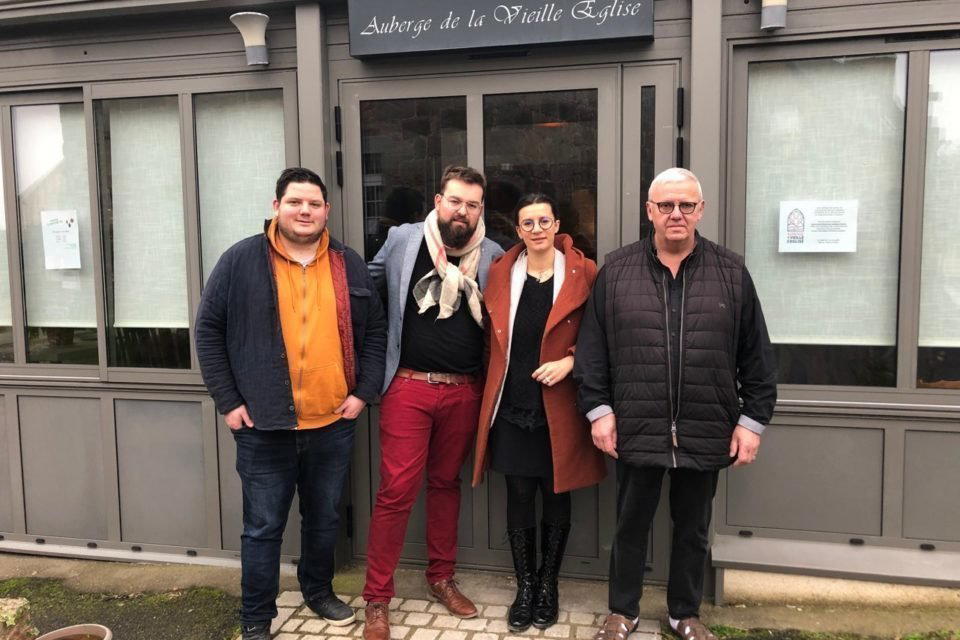
Stone Walls, Living Larder: Dining at the Foot of the Church in Trégastel
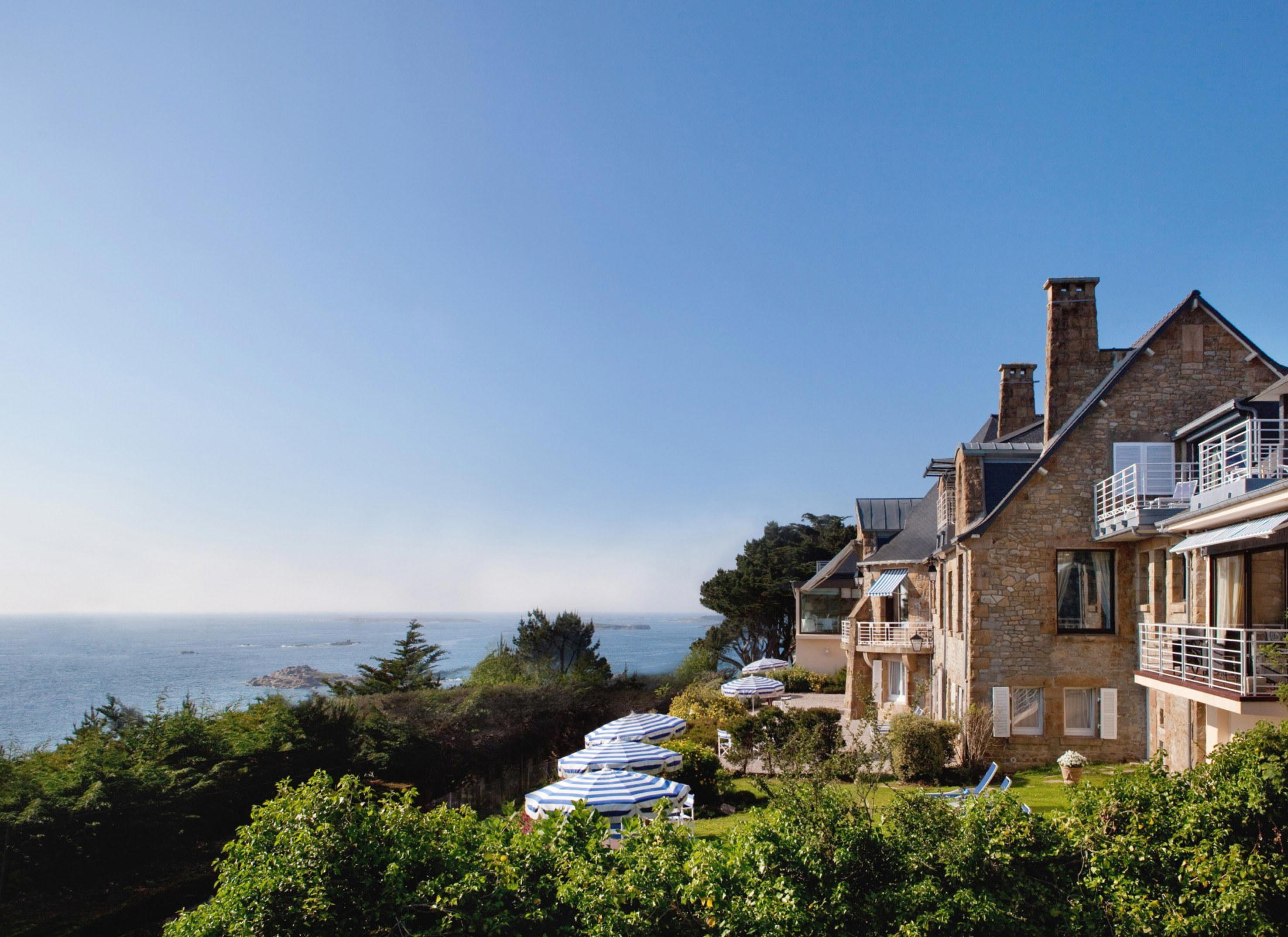
Brittany's Côte de Granit Rose has never lacked for dramatic scenery, but its restaurant scene has historically punched below its weight relative to the quality of ingredients the region produces. That gap has been narrowing. In Trégastel, the Auberge de la Vieille Église sits at 9 place de l'Église, directly beneath the parish church, and the building announces its age before you've looked at a menu: exposed ceiling beams, rough stonework walls, and the particular kind of stillness that old ecclesiastical adjacency tends to impose on a room. The physical setting, in other words, is doing real editorial work before the kitchen gets involved.
Across French regional dining, the auberge format occupies a specific position: rooted in place, with an expectation of local sourcing and a format that prioritises substance over spectacle. The leading examples, from Auberge de l'Ill in Illhaeusern to Auberge du Vieux Puits in Fontjoncouse, have always used the format's inherent groundedness as a strength rather than a limitation. Trégastel's entry into that tradition takes a contemporary approach to what Breton terroir actually means at the table.
What the Terroir Tastes Like Here
Brittany is one of France's most ingredient-rich regions, and the northern coast in particular delivers a concentrated argument for that claim. The offshore waters supply shellfish and flat fish of consistent quality; the interior produces buckwheat, white beans from Paimpol, and root vegetables shaped by Atlantic weather and granite-heavy soil. The kitchen at the Auberge de la Vieille Église reads those ingredients as a brief rather than a constraint.
Chef Brieg Le Cam, who trained at Les Hauts de Loire in Onzain before taking the helm here, works in a mode that is at once technically precise and compositionally instinctive. That combination tends to produce cooking that feels grounded rather than academic. The amuse-bouches that open proceedings illustrate the point: a crispy cone filled with coco de Paimpol beans alongside sausage and a potato purée aerated through a whipping siphon. The coco de Paimpol bean carries a protected designation of origin (IGP) status, harvested on the northern Breton coast each summer, and its appearance in the first bite of the meal is a signal about kitchen priorities rather than a coincidence of season.
Among the more substantive courses, a medley of gurnard and carrots places a fish that many kitchens overlook at the centre of the plate. Gurnard is a species with firm, lean flesh that takes heat well but is unforgiving of imprecision; its appearance here, alongside a root vegetable that rewards slow preparation, suggests a kitchen comfortable working against the grain of fashionable ingredient choices. Buckwheat rice pudding, appearing as a dessert course, closes a loop that began with the amuse-bouche: buckwheat (blé noir) is as Breton as any ingredient in the region's pantry, and its reappearance in a sweet register is a structural decision about coherence, not a novelty flourish.
For readers interested in how France's broader fine dining conversation intersects with this regional mode, the contrast is informative. Operations like Alléno Paris au Pavillon Ledoyen in Paris or Mirazur in Menton operate in a register of international ambition, where terroir is one variable among many. Here, it is the organising principle. Closer in sensibility, perhaps, to Bras in Laguiole, which has spent decades making the argument that deeply regional cooking and serious culinary ambition are not in tension.
The Room and What It Asks of You
The atmosphere in a room built against a church wall and dressed with original stonework is not neutral. It encourages a slower pace, an attention to what is in the glass and on the plate, and a willingness to sit with the meal rather than move through it. That framing suits the kitchen's approach. This is not a dining room designed for a ninety-minute turnover; the format, from the animated amuse-bouches through to the closing dessert, is structured as a progression. The Michelin assessment notes that diners will want to return again and again, which is a phrase the guide applies selectively and which here functions as a proxy for a specific quality: that the cooking repays attention rather than demanding it.
For a broader look at where this fits within the local dining scene, [our full Trégastel restaurants guide]() maps the options across price points and formats. Trégastel's offer in hotels and bars is equally worth surveying before committing to a visit: [our full Trégastel hotels guide](), [bars guide](), [wineries guide](), and experiences guide cover the surrounding infrastructure.
Planning a Visit
The auberge is at 9 place de l'Église in Trégastel, a small commune on the Côte de Granit Rose in the Côtes-d'Armor department. The nearest town of any scale is Lannion, roughly fifteen kilometres west, which is accessible by train from Rennes and Brest. Trégastel itself is a seasonal destination with higher visitor density in summer months, when the surrounding beaches draw traffic and table availability at well-regarded restaurants tightens accordingly. Visiting outside the July-August peak means a quieter room and, typically, better access to bookings. Given the Michelin recognition and the limited scale implied by the auberge format, reserving in advance is advisable at any time of year, particularly on weekends.
France's broader fine dining circuit, from Flocons de Sel in Megève and Troisgros in Ouches to AM par Alexandre Mazzia in Marseille and Assiette Champenoise in Reims, operates in well-documented destinations. Trégastel is not that kind of destination, which is precisely the point. The Auberge de la Vieille Église offers Michelin-noted cooking in a setting where the surrounding coast, the building's own history, and the kitchen's sourcing logic all point in the same direction.
How Auberge de la Vieille Église Trégastel compares with similar nearby venues.
| Venue | Cuisine | Price |
|---|---|---|
| La Table de mon Père - Castel Beau Site | Modern Cuisine | €€€ |
Recognition history
Dated appearances from independent guides and award organizations, with the underlying list record or original source where available.
Michelin Plate
Michelin
Continue exploring
More in Trégastel
Restaurants in Trégastel
Browse all →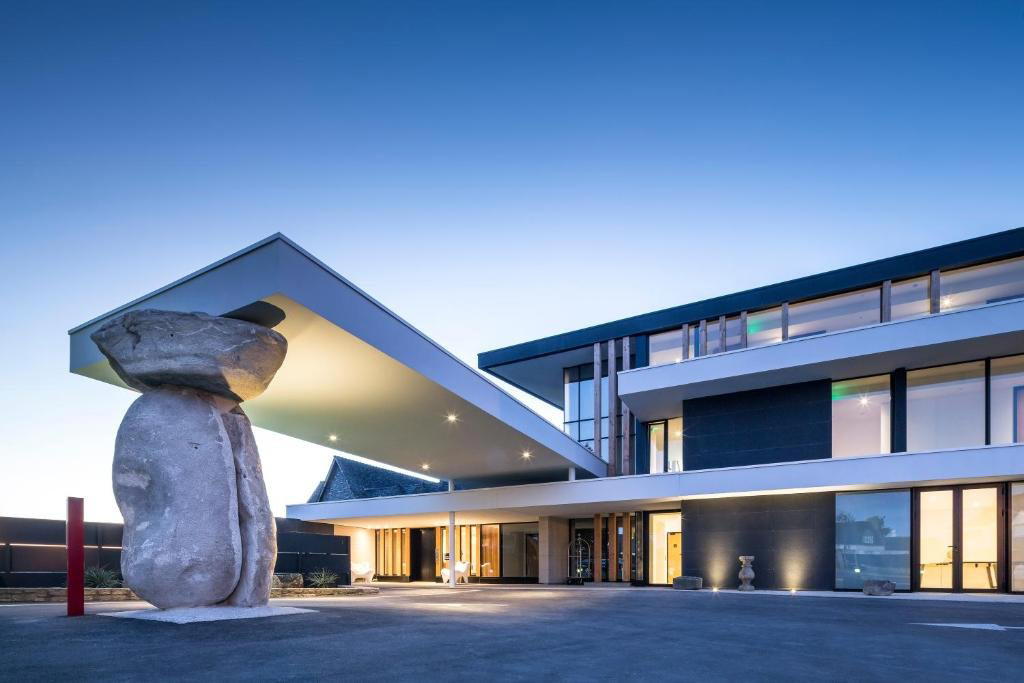
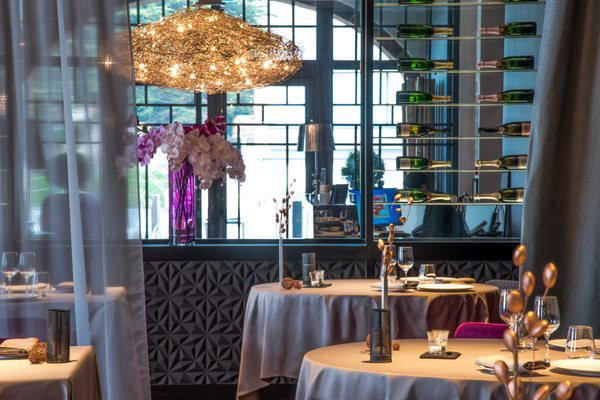
Bars in Trégastel
Browse all →
At a Glance
- Rustic
- Elegant
- Cozy
- Intimate
- Date Night
- Special Occasion
- Family
- Historic Building
- Sommelier Led
- Local Sourcing
Current opening hours
- Monday
- Closed
- Tuesday
- Closed
- Wednesday
- 12:15–1:15 PM, 7–8 PM
- Thursday
- 12:15–1:15 PM, 7–8 PM
- Friday
- 12:15–1:15 PM, 7–8 PM
- Saturday
- 12:15–1:15 PM, 7–8 PM
- Sunday
- 12:15–1:15 PM, 7–8 PM
Hours can change for holidays and private events. Last verified .
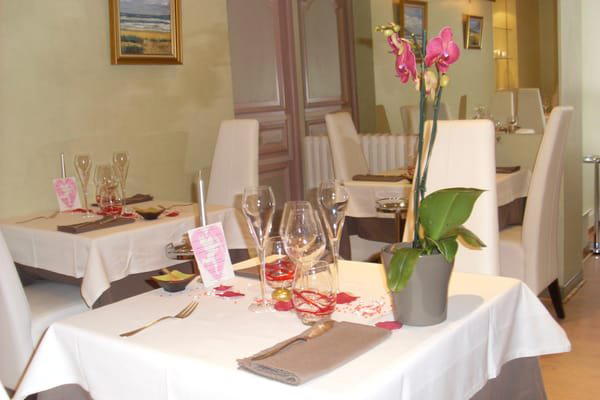
Charming dining room with exposed stonework, beams, fireplace, light floors, and pleasant veranda; warm, contemporary decor praised for its tasteful and welcoming atmosphere.
Know Before You Go
- Getting there
- 9 place de l'Église