.png)
On a cobbled lane opposite the medieval Église St Maclou in Rouen's old quarter, Au Flaméron operates at the precise intersection of Norman tradition and Japanese technique. Chef Takahiro Oikawa's seasonal French menu introduces yuzu to pâté en croûte, miso to aubergine, and karaage discipline to veal sweetbreads — a kitchen that earns its place in Rouen's most interesting dining tier.
 Discover on Pearl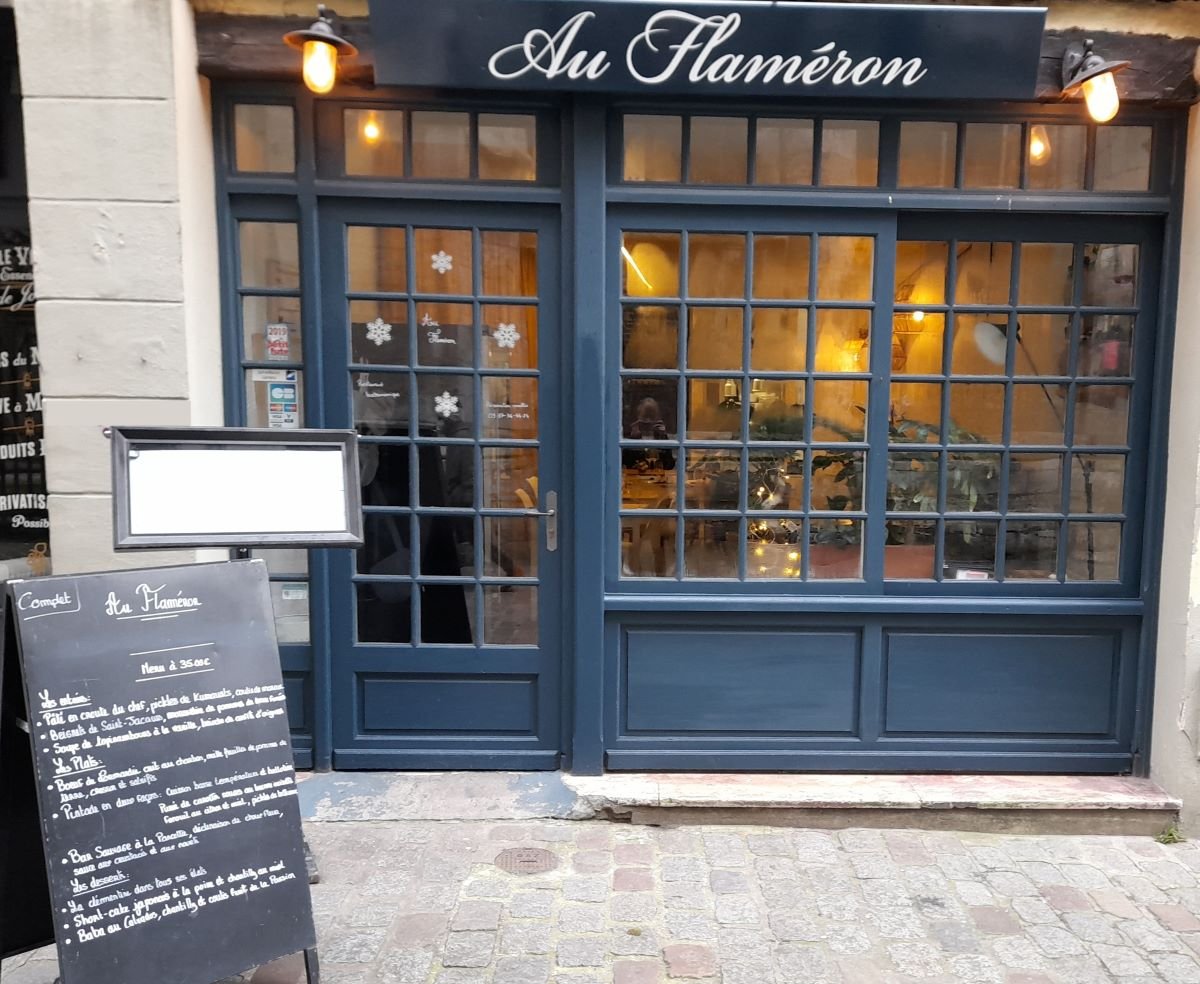
Where Cobblestones Meet Koji: Rouen's Franco-Japanese Counter
The rue Martainville strip in Rouen's medieval quarter is one of those streets that does most of the work before you've even sat down. Half-timbered façades, a near-intact Gothic church across the lane, and a neighbourhood that predates the French Revolution by several centuries — the environmental context at Au Flaméron is as loaded as any in Normandy. What happens inside, however, isn't a period piece. It's a dialogue between two culinary traditions separated by nine thousand kilometres but surprisingly compatible in their shared reverence for seasonal produce, precise technique, and the kind of restraint that makes a single ingredient the point of a dish.
Rouen's restaurant scene has developed along a clear tier structure over the past decade. At the leading sits Gill, the city's long-standing formal French anchor. Below that, a set of mid-range creative tables — L'Odas, L'epicurius, OKTO, and Paul-Arthur , operates with modern cuisine pricing and contemporary format. Au Flaméron sits within that second tier but with a distinct identity: it is the room where the chef's Japanese formation is not a garnish on a French menu, but the organising logic behind how ingredients are sourced, treated, and combined.
The shortlist, unlocked.
Hard-to-book tables, cellar releases, and concierge-planned trips.
Get Exclusive Access →The Ingredient Logic Behind the Cooking
In French gastronomy, the relationship between chef and ingredient has always been philosophical , the Bras tradition of gargouillou in Laguiole (Bras), the terroir obsession at Flocons de Sel in Megève, the Atlantic-sourcing discipline at Le Bernardin in New York City , all represent a lineage that treats the market as primary and technique as secondary. Japanese cooking culture operates from a structurally similar premise, though the language differs: in Japan, the concept of shun (the peak seasonal moment of an ingredient) governs menu decisions the way the market calendar governs a Norman kitchen.
What chef Takahiro Oikawa appears to have done at Au Flaméron is apply both frameworks simultaneously. The result shows in dishes like pâté en croûte with confit octopus and yuzu: a preparation that is unmistakably French in its architecture but draws on Japanese ingredient logic at two points , the octopus treatment and the use of yuzu as an acidic finish rather than cream or mustard. Yuzu's citric profile is sharper and more aromatic than lemon, less fruity than orange, and it cuts through the fat of pastry and forcemeat in a way that no European citrus replicates precisely.
The aubergine-miso preparation follows the same pattern. Normandy's vegetable cookery has historically leaned on butter and cream as enriching agents. Miso brings fermented depth without dairy weight , it is a different register of umami, one that sits closer to the ingredient rather than coating it. For kitchens thinking seriously about sourcing and seasonality, the choice of miso as an enricher rather than butter isn't a stylistic flourish; it reflects a different philosophy about what the vegetable should taste like at the end of cooking.
The karaage-style veal sweetbreads demonstrate where the cross-tradition approach becomes most technically demanding. Sweetbreads are one of the more challenging offal preparations in classical French cuisine, requiring careful blanching, pressing, and finishing. Applying karaage technique , a Japanese frying method that produces a lighter, crispier crust than standard breadcrumbing through the use of potato starch and multiple frying stages , to this ingredient demands that both traditions are understood at a level of depth, not merely borrowed from. Across France's contemporary dining tier, Japanese technique has sometimes been applied decoratively; at Au Flaméron, it appears to be structural.
Norman Context, Japanese Formation
Broader movement of Japanese chefs into French kitchens has a history stretching back to the 1970s, when the nouvelle cuisine revolution opened French restaurants to international culinary formation. Kitchens affiliated with chefs like those behind Troisgros in Ouches, Auberge de l'Ill in Illhaeusern, and later Alléno Paris au Pavillon Ledoyen and Mirazur in Menton trained a significant number of Japanese cooks whose subsequent work , whether in Tokyo or in France itself , became a recognisable category within contemporary French gastronomy. In Japan, this cross-training produced the kaiseki-meets-French hybrid sometimes called wa-fu frenchi. In France, it has produced something adjacent but distinct: restaurants where Japanese chefs bring technique and ingredient philosophy to deeply French culinary formats.
Rouen, as a city, hasn't historically been associated with this movement , it sits outside the Paris-Lyon-Côte d'Azur corridor where most of this cross-pollination has concentrated. That makes Au Flaméron an interesting anomaly within a Norman city better known for duck, cream, Calvados, and Camembert than for yuzu or koji fermentation. The seasonal French menu positions it as a French restaurant first, which is the correct framing: the Japanese accents operate as method and ingredient choice, not as the cuisine's identity. See also our full Rouen restaurants guide for the wider picture of where the city's dining sits.
Visiting Au Flaméron
Au Flaméron sits at 236 rue Martainville, directly opposite the Église St Maclou , one of the finest examples of Flamboyant Gothic architecture in Normandy, which gives the address a navigational ease that most restaurant directions can't claim. The location in Rouen's Vieux-Marché quarter puts it within walking distance of the city's main cathedral and the medieval street grid that makes the old centre navigable on foot. For those arriving by rail, Rouen-Rive-Droite station is approximately two kilometres from the venue, manageable on foot or a short taxi ride. The restaurant operates as a gourmet destination within a neighbourhood that also draws significant tourist foot traffic, so advance booking is advisable, particularly for dinner service on weekends. Phone and website details are not publicly listed in our current records, so reservation outreach may require visiting in person or checking for updated contact information through local listings before travel.
For those planning a wider stay in the city, the Rouen hotels guide, bars guide, wineries guide, and experiences guide map the city's hospitality offer across categories. Also worth noting: an evening that starts opposite St Maclou and works its way toward the Vieux-Marché square covers the densest concentration of Rouen's medieval fabric in roughly a fifteen-minute walk.
Frequently Asked Questions
- What do people recommend at Au Flaméron?
- The dishes that have drawn the most attention are the pâté en croûte with confit octopus and yuzu, and the karaage-style veal sweetbreads , both of which demonstrate chef Takahiro Oikawa's ability to apply Japanese technique to French formats at a structural level rather than superficially. The silky custard tart has been cited as a dessert that holds up to the savoury courses in technical finish. These dishes reflect a kitchen where the ingredient sourcing , seasonal French produce filtered through Japanese ingredient logic , produces results that aren't replicable from either tradition alone.
- What's the vibe at Au Flaméron?
- The setting is the medieval quarter of Rouen, opposite a Gothic church, on a cobbled lane , which sets an atmospheric tone before you arrive. Inside, the register is gourmet rather than formal, with food that rewards attention without requiring ceremony. If you're familiar with Rouen's dining tier, this sits alongside the creative mid-range tables in ambition and price orientation, closer to L'Odas or OKTO in format than to the more established formality of Gill.
- Would Au Flaméron be comfortable with kids?
- The menu at Au Flaméron is built around seasonal French cooking with Japanese technique , dishes like miso-enriched aubergine and karaage sweetbreads that reflect a kitchen with a specific culinary point of view. In a city like Rouen, which has a wide range of more casual dining options in the same neighbourhood, Au Flaméron is most naturally suited to adults eating with focus and appetite for what the kitchen is doing. It isn't formatted as a family restaurant, though nothing in the available information explicitly excludes younger diners. Parents with children who eat adventurously across flavour profiles would find more to work with here than those needing a simplified menu.
A Quick Peer Check
These are the closest comparables we have in our database for quick context.
| Venue | Cuisine | Price | Awards | Notes |
|---|---|---|---|---|
| Au Flaméron | In a cobbled lane opposite the church, Église St Maclou, a new gourmet haven awa… | This venue | ||
| L'Odas | Creative | €€€ | Michelin 1 Star | Creative, €€€ |
| Paul-Arthur | Modern Cuisine | €€ | Modern Cuisine, €€ | |
| Gill | French | French | ||
| L'epicurius | Modern Cuisine | €€ | Modern Cuisine, €€ | |
| OKTO | Modern Cuisine | €€ | Modern Cuisine, €€ |
Need a table?
Our members enjoy priority alerts and concierge-led booking support for the world's most difficult tables.
Get Exclusive AccessThe shortlist, unlocked.
Hard-to-book tables, cellar releases, and concierge-planned trips.
Get Exclusive Access →