Google: 4.9 · 179 reviews
.png)
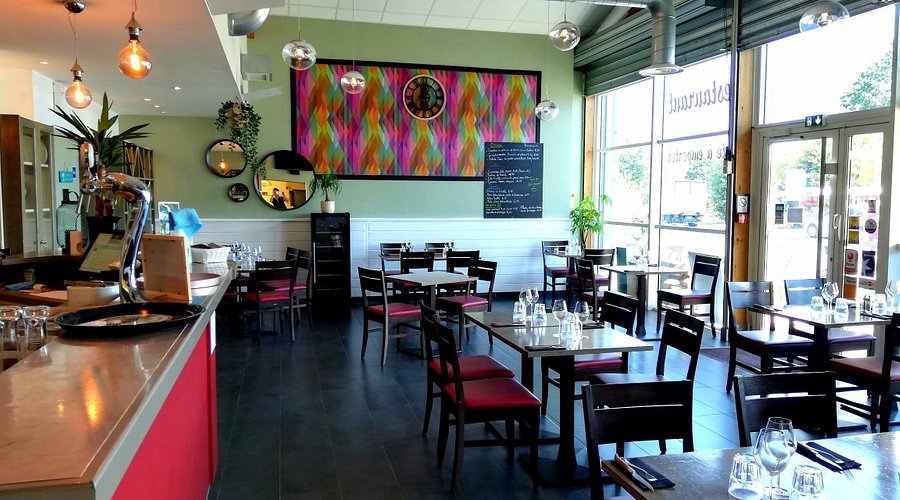
Arlequin holds a 2025 Michelin Plate at 170-A Rue St Germain O in Rimouski, placing it among the small number of Québec restaurants outside the major urban centres to attract that level of recognition. The modern cuisine format positions it alongside a quiet but growing regional dining movement on the lower St. Lawrence shore. A Google rating of 4.9 across 171 reviews signals consistent execution rather than occasional brilliance.
 Discover on Pearl
Pearl is the En Primeur Club membership app — saves, bookings, and concierge access live there. Same editors, same standards.
Where the St. Lawrence Shapes What Ends Up on the Plate
Rimouski sits on the south shore of the St. Lawrence estuary, roughly 300 kilometres east of Québec City, at a point where the river has already widened into something closer to sea. The cold, deep water and the surrounding Bas-Saint-Laurent agricultural belt produce ingredients with a distinct character: bivalves and cold-water fish from estuarial waters, root vegetables from short-season farms, foraged material from boreal edge land. Restaurants that anchor their menus in this geography have a sourcing story that requires no embellishment. Arlequin, at 170-A Rue St Germain O, operates inside that tradition — and the 2025 Michelin Plate it received suggests the guide's inspectors found the kitchen's execution worthy of formal recognition.
The Michelin Plate designation, introduced as a category distinct from starred recognition, signals a kitchen producing food of consistent quality without the full apparatus of a star. For a restaurant in a city of Rimouski's scale, the designation carries real weight: Michelin's Quebec coverage is selective, and the lower St. Lawrence corridor is not a region the guide visits casually. Arlequin's inclusion puts it in a peer conversation with a small number of regionally rooted modern kitchens across Canada, including Tanière³ in Québec City, which has pushed Québec terroir cooking to its most technically demanding expression, and properties like Eigensinn Farm in Singhampton and The Pine in Creemore, where sourcing geography defines the entire creative premise.
The Sourcing Logic Behind Modern Cuisine in Bas-Saint-Laurent
Modern cuisine, as a category, can mean almost anything. In dense urban markets — at Alo in Toronto, at Jérôme Ferrer's Europea in Montreal, or at precision-driven rooms like Frantzén in Stockholm , the term implies classical technique applied to premium global ingredients, sometimes with a local accent added as flourish. In a place like Rimouski, geography imposes a different logic. The supply chain for imported luxury product is longer and less reliable than in a metropolitan centre. What is reliably excellent is what is close: the estuary's cold-water shellfish, the farms of the Bas-Saint-Laurent plateau, the forests at the region's margins.
Kitchens that work seriously with this material find that the sourcing decision shapes the menu before technique enters the conversation. A Michelin-plate kitchen in this context is not simply demonstrating classical skill; it is demonstrating that regional ingredients, handled with rigour and precision, can hold their own against any more glamorously located competition. That is a harder argument to make than it sounds. Most of Canada's recognised modern kitchens are in Vancouver, Toronto, or Montreal. AnnaLena in Vancouver and Restaurant Pearl Morissette in Lincoln both draw on defined regional terroir, but both operate in wine-producing regions with established gastro-tourism infrastructure. Rimouski does not have that scaffold. Arlequin's recognition is partly a recognition of what the Bas-Saint-Laurent produces, and that context matters for anyone travelling here specifically to eat.
Arlequin in Rimouski's Dining Tier
The $$$ price positioning places Arlequin above the city's accessible everyday dining but below the full tasting-menu investment. Within Rimouski's defined restaurant landscape, this creates a clear tier structure. Les Affamés and Losange both operate at $$, offering modern and regional approaches at lower price points. Narval, priced at $$$$ with a Michelin Star, occupies the upper tier. Arlequin sits between these two positions , more committed and more formally recognised than the casual end of the market, but accessible to a wider audience than the starred experience at Narval.
This mid-to-upper positioning in a small regional city creates a specific kind of diner: locals marking a significant occasion, visitors who have come to the region with food as a primary motivation, and the occasional business traveller who wants something better than the city's default options. A Google rating of 4.9 across 171 reviews is statistically unusual: at that review volume, a 4.9 almost always reflects sustained consistency rather than a lucky run of positive months. The kitchen is clearly hitting a reliable standard across a range of diners and expectations.
The Rim of the Estuary as a Dining Destination
Rimouski does not market itself as a food destination in the way that Charlevoix or the Cantons-de-l'Est do. There is no established gastro-tourism trail, no cluster of high-profile restaurants that feeds each other's reputations. What exists instead is a small group of kitchens that have independently developed serious programs grounded in the region's actual output. The concentration of Michelin recognition in a city this size , a Plate at Arlequin, a Star at Narval , suggests that what is happening here is not accidental. The estuary produces genuinely interesting ingredients, and at least two kitchens are now translating that into cooking that registers at a national reference level.
For the travelling diner, this creates a specific kind of visit logic. Rimouski is not a city where you make one reservation and consider the food question solved. The spread between Arlequin's $$$ modern format and Narval's $$$$ creative tasting menu, with Les Affamés and Losange filling the more accessible register, means a two-night stay can cover meaningfully different expressions of the same regional ingredients at different price points and with different levels of formality. That is the structure of a city whose dining scene is more developed than its profile suggests. For broader trip planning, our full Rimouski restaurants guide covers the complete picture, alongside our Rimouski hotels guide, bars guide, wineries guide, and experiences guide.
Internationally, the model of a small-city kitchen earning formal recognition through disciplined regional sourcing has clear parallels. ÄNKÔR in Canmore operates on a similar premise in Alberta, and at the high-production end, FZN by Björn Frantzén in Dubai demonstrates how Nordic sourcing rigour translates into an entirely different geographical context. The principle connecting these rooms , that the quality of what you source determines the ceiling of what you can cook , is the same logic that drives Arlequin's Michelin Plate on the lower St. Lawrence shore.
Planning a Visit
Arlequin is located at 170-A Rue St Germain O, Rimouski, QC G5L 4B7. The $$$ price range positions a full dinner comfortably below the starred tier while remaining above everyday pricing. Given the 4.9 rating across 171 reviews and the Michelin Plate recognition in 2025, booking in advance is the practical approach, particularly on weekends or during summer months when the region draws more visitors. Current hours and reservation availability are leading confirmed directly with the restaurant, as booking policy and seasonal scheduling details are not available here.
Quick Comparison
A fast peer set for context, pulled from similar venues in our database.
| Venue | Cuisine | Price | Awards | Notes |
|---|---|---|---|---|
| Arlequin | Modern Cuisine | $$$ | Michelin Plate (2025) | This venue |
| Narval | Creative | $$$$ | Michelin 1 Star | Creative, $$$$ |
| Les Affamés | Modern Cuisine | $$ | Modern Cuisine, $$ | |
| Losange | Regional Cuisine | $$ | Regional Cuisine, $$ |
Continue exploring
More in Rimouski
At a Glance
- Intimate
- Modern
- Minimalist
- Date Night
- Special Occasion
- Open Kitchen
- Chefs Counter
- Byob
- Local Sourcing
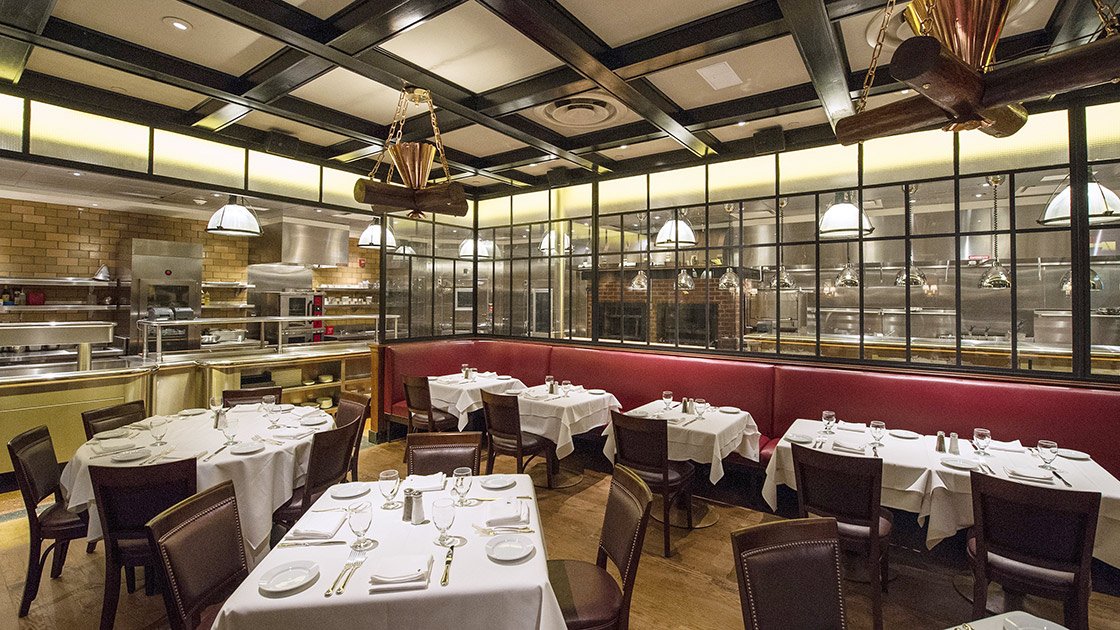
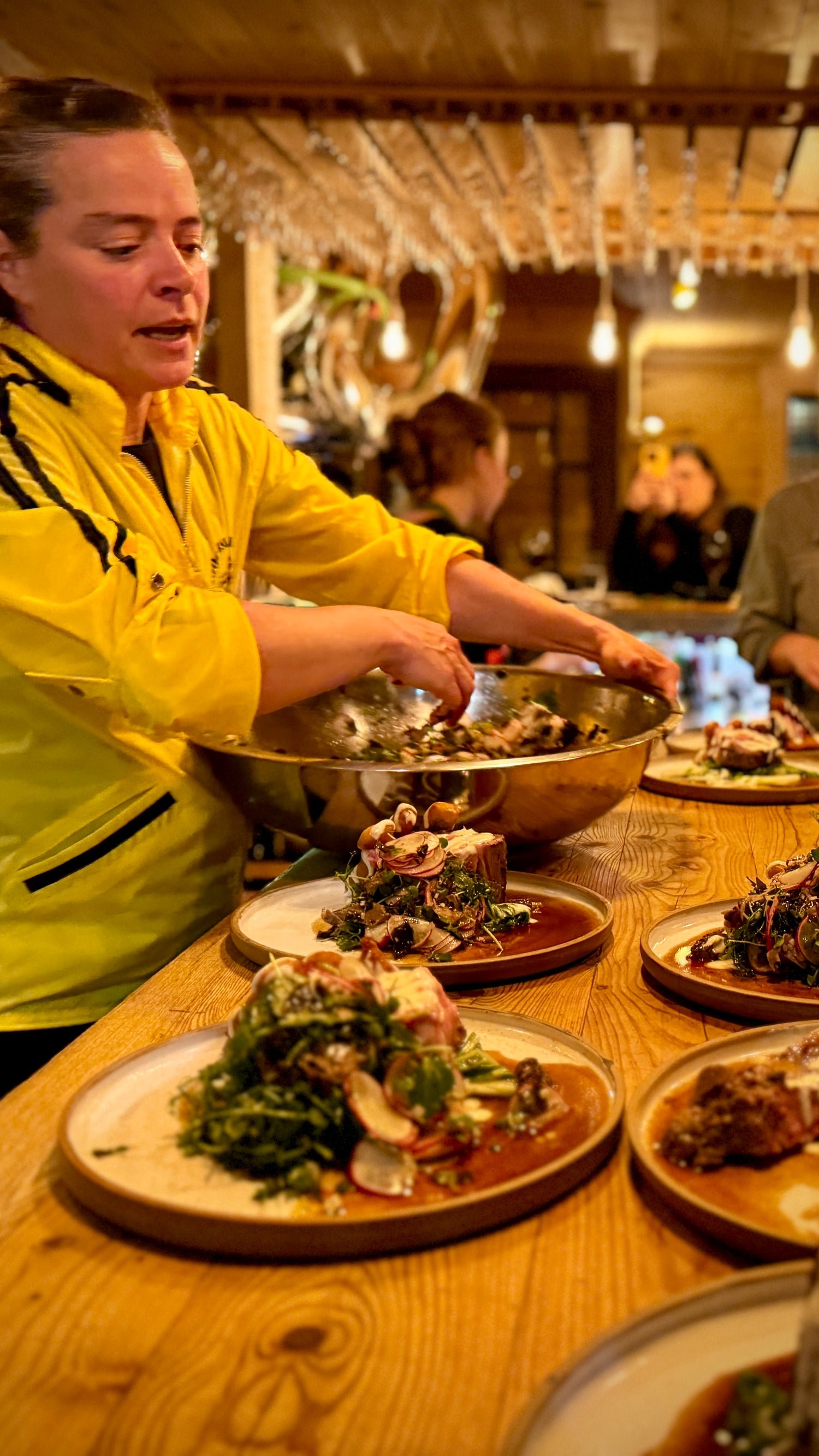
Small intimate interior with open kitchen, minimalist design, and warm welcoming atmosphere.