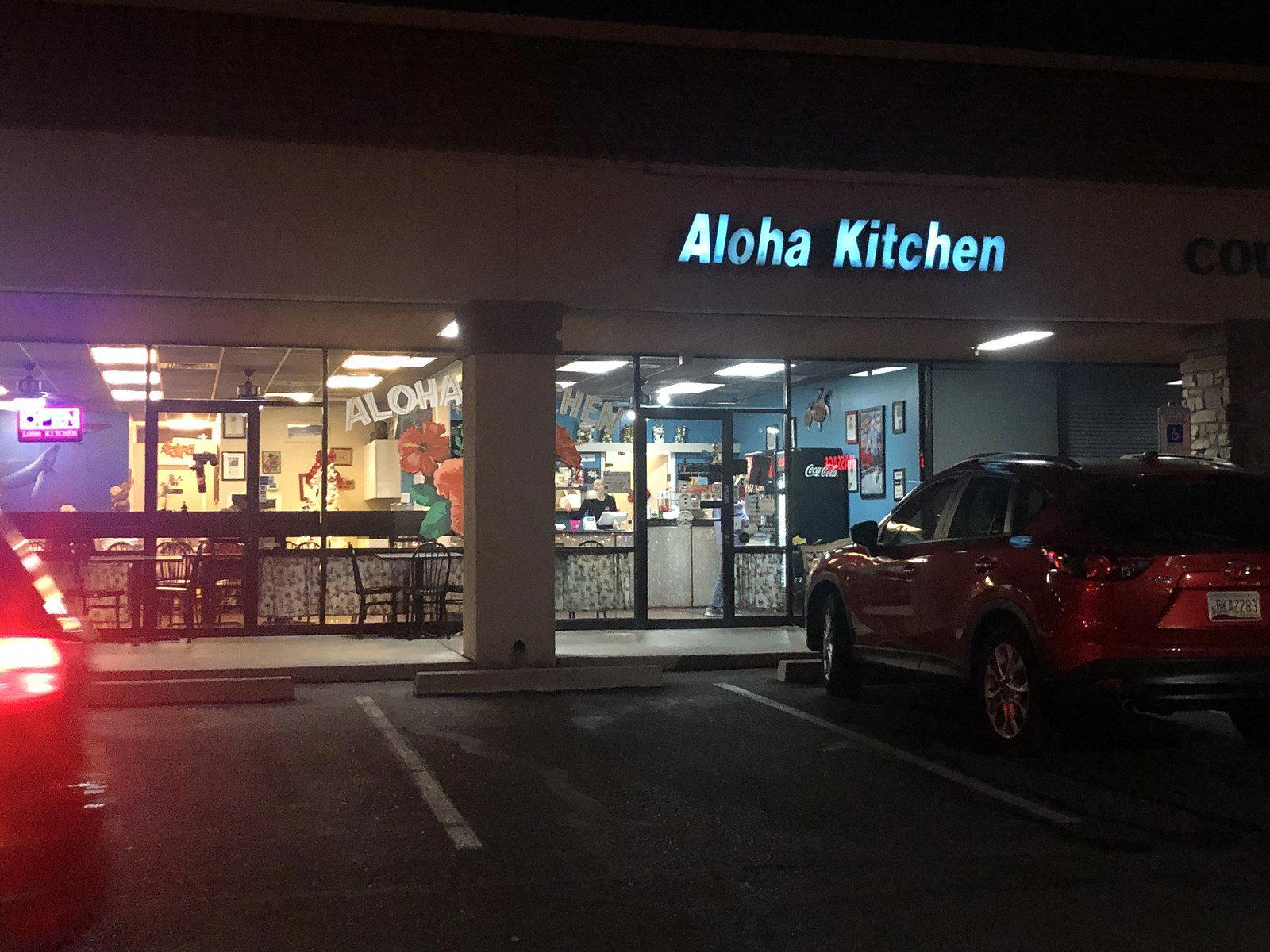
Aloha Kitchen

Diners, Drive-Ins and Dives Featured Restaurant
Our verdict
Aloha Kitchen on South Alma School Road brings Hawaiian plate lunch tradition to Mesa's suburban dining corridor, placing it in a category that remains genuinely underrepresented across the Phoenix metro. The format — built around ingredient-forward comfort food rooted in the Pacific Islands — speaks to a regional dining scene that rewards exploration beyond the Southwest's dominant cuisine types. For Mesa diners curious about the style, it merits a visit.

Pearl is the En Primeur Club membership app — saves, bookings, and concierge access live there. Same editors, same standards.
- Address
- 2950 S Alma School Rd UNIT 12, Mesa, AZ 85210
- Phone
- (480) 897-2451
- Hours
- Mon ClosedTue–Sat 11 AM–8 PMSun 11 AM–5 PM
- Website
- alohakitchen.com
- Directions
- Get directions
The menu
What to order
- Chicken katsu
- Pork buns
- Fried saimin
- Spam katsu musubi
Where Hawaiian Plate Lunch Lands in the Phoenix Metro
Mesa's dining corridor along South Alma School Road runs through a stretch of strip-mall addresses that, taken at face value, offer little to distinguish themselves. But this format — the accessible, ingredient-anchored American suburban restaurant — has long been the delivery mechanism for some of the country's most genuine regional cooking. Hawaiian plate lunch fits exactly this profile. Built around rice, macaroni salad, and a protein anchored in the culinary traditions of the Pacific Islands, it is a cuisine that travels poorly to fine-dining formats. Its integrity lives in informality. Aloha Kitchen, at 2950 S Alma School Rd, sits within that tradition rather than apart from it.
Across the broader Phoenix metro, Hawaiian food occupies a smaller share of the restaurant count than its cultural footprint in Arizona might suggest. The state has a meaningful Pacific Islander community, and the demand for authentic plate lunch, built around proteins like kalua pork, teriyaki chicken, and loco moco, outpaces the supply of kitchens doing it with any seriousness. Mesa, in particular, skews heavily toward Southwestern and Mexican cooking, which means a Hawaiian kitchen represents a different kind of choice for a local diner. For context on the range of what Mesa's dining scene covers, see our full Mesa restaurants guide.
The Sourcing Logic Behind Plate Lunch
Hawaiian plate lunch has always been a cuisine of synthesis. Its origins lie in the plantation-era workforce of 19th-century Hawaii, where Japanese, Filipino, Korean, Chinese, and Portuguese laborers brought their own culinary traditions and adapted them to shared ingredients and shared circumstances. The result was a food culture built on practical sourcing: proteins that preserved or cooked efficiently, starches that provided caloric density, and condiments that carried flavor without requiring elaborate technique. That history is still legible in the format today.
The ingredient question matters more here than it does in, say, a steakhouse or a pizza kitchen, because Hawaiian plate lunch derives its character from protein preparation rather than from premium raw ingredients. Kalua pork, the benchmark dish in this category, is traditionally slow-cooked in an underground imu oven, a process that renders the fat slowly and produces a pulled texture with a mild smoke note. Mainland interpretations typically approximate this with oven slow-cooking or pressure methods. The gap between an imu-cooked result and a credible mainland approximation is narrower than purists sometimes admit, but the sourcing and preparation of the pork itself, cut, fat content, seasoning depth, determines whether the dish reads as genuine or generic.
Similarly, the macaroni salad that anchors every Hawaiian plate is frequently underestimated as a component. In Hawaiian tradition, it is not a side dish in the continental American sense. It functions as a texture and temperature counterpoint to the hot protein, and its dressing, typically mayonnaise-heavy, with a slightly sweet finish, is calibrated to that role. A kitchen that treats it as an afterthought signals a broader inattention to the format's internal logic.
Where Aloha Kitchen Sits in Mesa's Dining Scene
Mesa's restaurant scene is anchored by its Southwestern heritage. Blue Adobe Grille and Los Dos Molinos represent the kind of regionally rooted cooking that the city does with real depth. Espiritu Mesa covers similar ground with its own register. Seafood-forward formats like By the Bucket - East Mesa and broader American formats like Bobby fill out the mid-market. What's absent from that list, conspicuously, is any Pacific Island representation. Aloha Kitchen occupies that gap.
The strip-mall unit format is not incidental. Hawaiian plate lunch kitchens across the country almost uniformly operate from low-overhead, high-throughput spaces. The economics of plate lunch, generous portions at accessible prices, require it. This places Aloha Kitchen in a different competitive tier than the sit-down dining options nearby, and that distinction shapes the visit. You are not arriving for a structured dining experience in the way you might at a full-service restaurant. You are arriving for a specific food proposition, delivered efficiently.
That proposition, when executed with ingredient attention, is one of the more satisfying formats in American regional cooking. The combination of slow-cooked protein, white rice, and macaroni salad reads as simple only until you encounter a version where the pork has been properly rendered, the rice is freshly cooked rather than held, and the macaroni salad has been dressed at the right ratio. At that point, the format justifies itself without any additional context.
Planning Your Visit
Aloha Kitchen is located at 2950 S Alma School Rd, Unit 12, in Mesa's southern commercial corridor, accessible by car from the broader Phoenix metro without significant difficulty. The strip-mall location means parking is immediate and the format is walk-in oriented rather than reservation-dependent. For a kitchen operating in the plate lunch format, peak lunch hours typically represent the leading moment to visit: proteins are freshest off the cook cycle and the kitchen is running at full capacity. Visits outside peak hours risk held product, which affects the format more than it would a table-service kitchen.
For readers calibrating this visit against Mesa's broader dining range, the context is useful: Aloha Kitchen sits in a different register than the city's full-service restaurant options, and functions leading as a lunch destination rather than a dinner occasion. That positioning is a feature of the format, not a limitation.
The Wider Context: Hawaiian Food Beyond the Islands
The ingredient-sourcing challenge that Hawaiian kitchens face on the mainland is a version of the same challenge that any cuisine encounters when its supply chain is severed from its origin. The most demanding American restaurants address this head-on: Single Thread Farm in Healdsburg builds its sourcing structure around its own farm; Blue Hill at Stone Barns in Tarrytown has made the farm-to-table relationship the entire editorial premise of the restaurant. At that level, ingredient provenance is the main subject. At the plate lunch level, the question is more practical: is the pork the right cut, is it cooked long enough, and is the kitchen treating the format with the seriousness it deserves?
The broader American restaurant scene has, over the past decade, shown a growing willingness to take seriously the cuisines that arrived via immigration and community rather than via fine-dining channels. Atomix in New York City represents what Korean fine dining looks like when that investment is made at the highest level. Providence in Los Angeles does the same for Pacific seafood traditions. The plate lunch format sits at the opposite end of that formality spectrum, but the underlying argument is the same: food rooted in specific communities and specific geographies deserves more attention than it typically receives from the mainstream dining press. In Mesa, where the Pacific Island community remains underrepresented on restaurant menus, Aloha Kitchen addresses that directly.
Frequently asked questions
How do I find Aloha Kitchen?
Aloha Kitchen is located at 2950 S Alma School Rd UNIT 12, Mesa, AZ 85210, Mesa.
Is Aloha Kitchen one of the few Hawaiian restaurants in the Mesa and Phoenix metro area?
Hawaiian plate lunch is a sparse category across the Phoenix metro, where the dining scene skews heavily toward Southwestern, Mexican, and New American formats. Aloha Kitchen's presence in Mesa at 2950 S Alma School Rd positions it as one of a small number of venues serving this specific cuisine in the region. That scarcity is context, not a ranking — but it does explain why the Mesa location draws from well beyond its immediate strip-mall corridor.
What should I order at Aloha Kitchen?
Aloha Kitchen specializes in Hawaiian plate lunch, a format built around a protein, two scoops of rice, and macaroni salad — the combination that defined plantation-era Hawaiian working meals. The plate lunch format itself is the ordering framework: choose a protein and the sides arrive as a set.
Do I need a reservation for Aloha Kitchen?
Hawaiian plate lunch operations in the mainland United States typically run as counter-service or fast-casual formats, which generally do not require advance reservations. No reservation policy is confirmed for Aloha Kitchen's Mesa location. Visiting during off-peak hours is a reasonable precaution given the format's popularity in markets with limited Hawaiian dining options.
Fast Comparison
Comparable venues nearby, for context on price, style, and recognition.
| Venue | Cuisine | Price | Awards | Notes |
|---|---|---|---|---|
| Aloha KitchenThis venue — the venue you are viewing | Authentic Hawaiian | $10–20 | Diners, Drive-Ins and Dives Featured Restaurant | Not listed |
| Bobby | Craft BBQ and Steaks | $30–50 | Not listed | . Concurrent |
| Pizzicata - Mesa | Authentic Italian - Roman Pinsa & Neapolitan Pizza | $30–50 | Not listed | Painted Mountain Golf Resort area |
| Espiritu Mesa | Modern Mexican Seafood | Not listed | James Beard Award Semi Finalist | downtown |
| Blue Adobe Grille | New Mexican | $20–30 | Not listed | Downtown Mesa |
| The VIG Dana Park | Contemporary American Gastropub | $20–30 | Not listed | Dana Park |
Recognition history
Dated appearances from independent guides and award organizations, with the underlying list record or original source where available.
Diners, Drive-Ins and Dives Featured Restaurant
Diners, Drive-Ins and Dives · 2026 Diners, Drive-Ins and Dives Featured Restaurants
Details
- Cozy
- Casual
- Casual Hangout
- Family
- Standalone
- A La Carte
- Vegetarian Friendly
Current opening hours
- Monday
- Closed
- Tuesday
- 11 AM–8 PM
- Wednesday
- 11 AM–8 PM
- Thursday
- 11 AM–8 PM
- Friday
- 11 AM–8 PM
- Saturday
- 11 AM–8 PM
- Sunday
- 11 AM–5 PM
Hours can change for holidays and private events. Last verified .
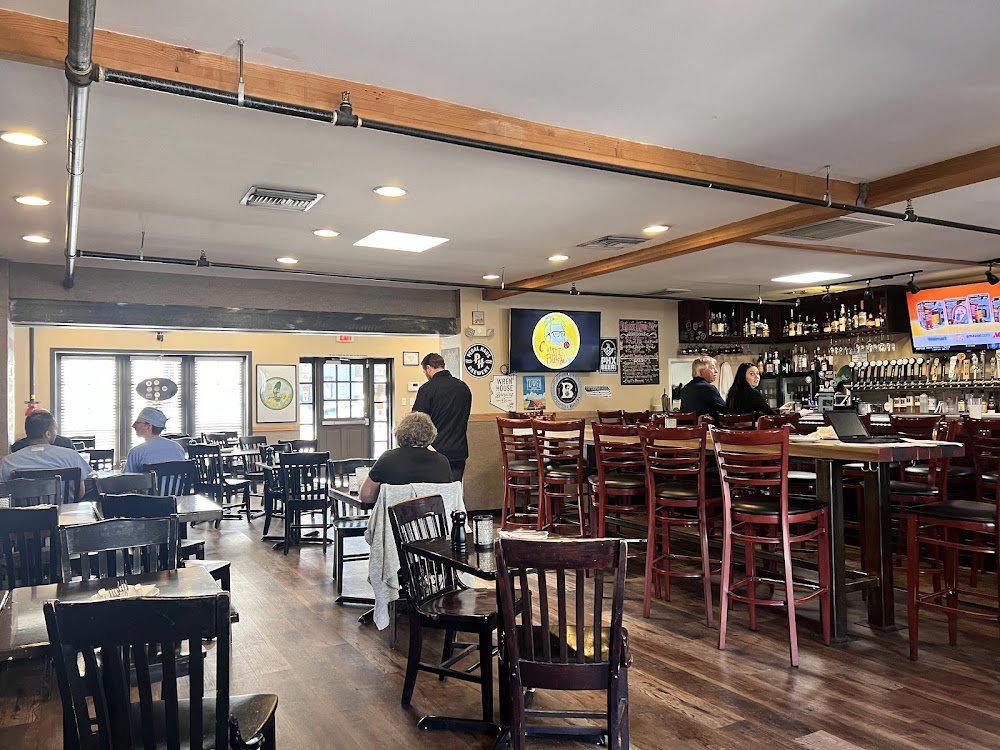
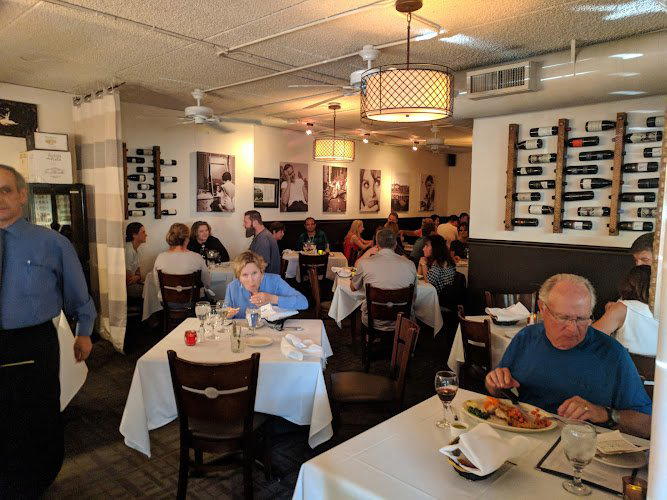
Casual diner atmosphere in a small shopping center with a welcoming island vibe.