1947 London
Positioned on Rathbone Street in Fitzrovia, 1947 London sits within a neighbourhood that has become one of central London's more considered dining corridors, offering proximity to the West End without its worst excesses. The address places it alongside independent operators rather than the chain-heavy grid further south, a distinction that shapes both the clientele and the pacing of a meal here.
 Discover on Pearl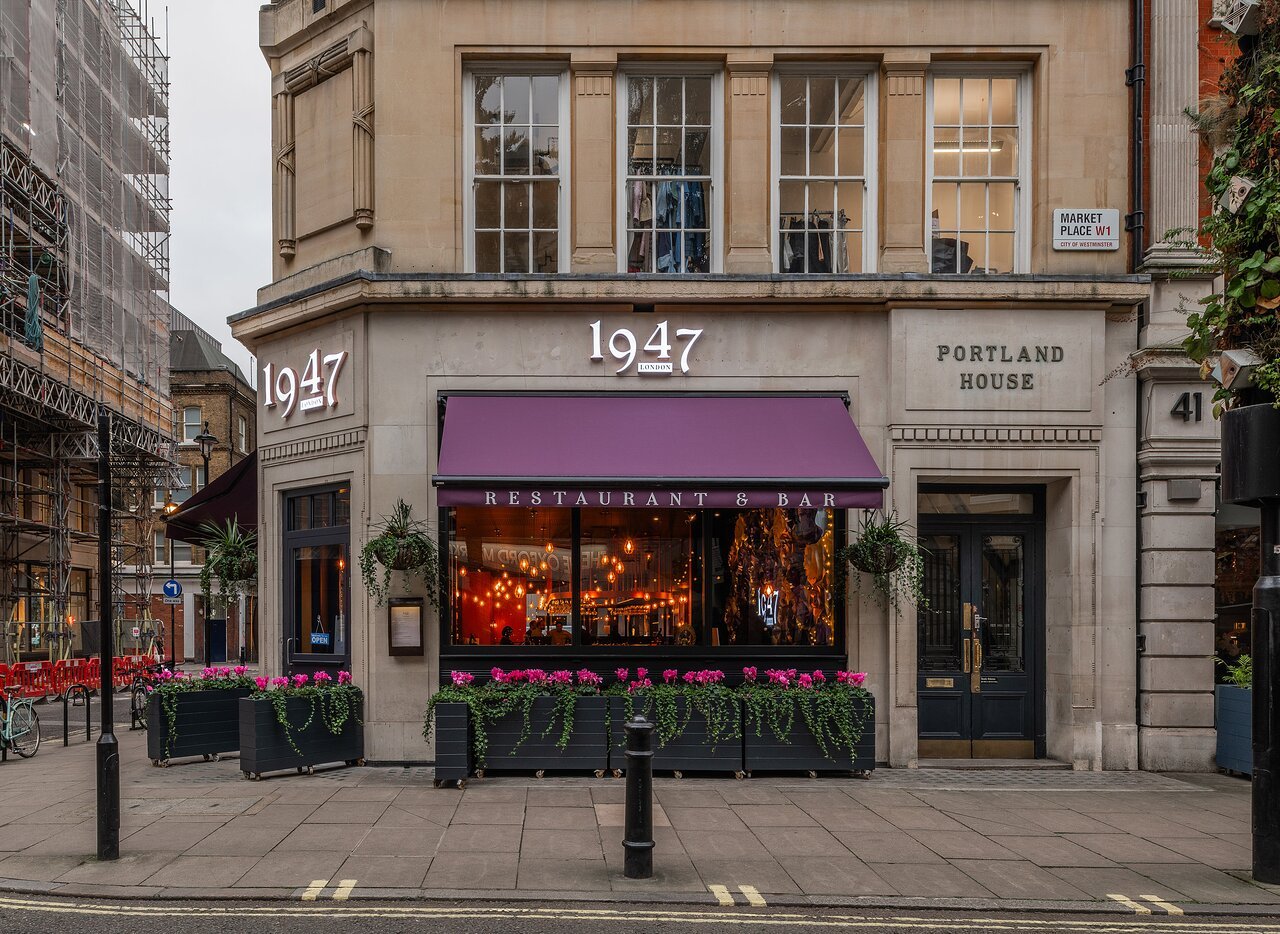
Fitzrovia's Dining Position and What Rathbone Street Represents
Fitzrovia occupies a particular place in London's restaurant geography. Bounded by Oxford Street to the south, Tottenham Court Road to the east, and the Charlotte Street cluster to the west, it has accumulated a density of independent operators that resists the tourist-circuit logic of Covent Garden or the expense-account formality of Mayfair. Rathbone Street, where 1947 London holds its address at number 33, sits inside that independent corridor: close enough to the West End to draw a broad urban clientele, far enough from it that the room tends to fill with people who made a deliberate choice rather than a convenient one.
That geography matters more than it might seem. In a city where a restaurant's postcode communicates a great deal about its pricing tier, its ambitions, and the kind of evening it expects you to have, a Fitzrovia address signals something specific. It is not the white-tablecloth formality of Mayfair's three-Michelin-star tier, where venues like Restaurant Gordon Ramsay and Sketch, The Lecture Room and Library set the register. Nor is it the neighbourhood-restaurant informality of further-flung postcodes. Fitzrovia sits in between, and that in-between position has historically suited operators who want serious food without the ceremonial weight that the top-tier London dining rooms carry.
The shortlist, unlocked.
Hard-to-book tables, cellar releases, and concierge-planned trips.
Get Exclusive Access →The Address in Context: What W1T Communicates
The W1T postcode places 1947 London within walking distance of several reference points that shape how visitors experience the area. The British Museum is a short walk east; the BT Tower marks the northern edge of the neighbourhood. On the street level, Rathbone Street itself is a relatively quiet cut-through compared to the Charlotte Street strip, which carries more foot traffic and more restaurant competition. That quieter positioning tends to filter the walk-in crowd and skew the room toward reservation-holders, a pattern common to slightly off-the-main-drag addresses across London.
For comparison, the Fitzrovia and Marylebone arc that runs from here toward The Ledbury's Notting Hill setting or the Knightsbridge address of Dinner by Heston Blumenthal illustrates how London's premium dining is distributed across multiple micro-neighbourhoods rather than concentrated in a single district. Each zone carries its own demographic weight, its own price-tier expectations, and its own relationship to tourism versus local repeat custom. Fitzrovia's position in that map has historically favoured operators with a regular local clientele supplemented by destination visitors who know exactly where they are going.
A Name That Anchors to Place and Period
The name 1947 London grounds the venue explicitly in both city and era. 1947 is a year of particular resonance in British food history: post-war rationing remained in force, the country was remaking its identity, and the foundations of what would eventually become a distinct modern British culinary tradition were, if not yet visible, at least being laid. Whether the name carries that weight as a deliberate reference or operates as a more atmospheric anchor is a question the venue's own communications would need to answer. What the name does, functionally, is distinguish the address from the generically named operators that populate mid-market London dining, and signals that some thought has gone into the framing of what the place represents.
London's premium dining tier has seen considerable movement in recent years. The emergence of CORE by Clare Smyth as a three-Michelin-star address, the sustained recognition of The Ledbury after its post-pandemic reopening, and the ongoing critical attention directed at the full spread of the city's serious kitchens have created a competitive environment in which a Fitzrovia address carries both opportunity and pressure. Opportunity, because the neighbourhood's dining stock remains thinner than Mayfair or the City. Pressure, because London's informed dining audience compares across the full city map, not just the immediate surroundings.
Fitzrovia Against the Wider British Dining Picture
Understanding what 1947 London represents also means placing it within the wider British restaurant context. Outside London, the country's most formally recognised kitchens tend to cluster in rural or semi-rural settings: The Fat Duck in Bray, L'Enclume in Cartmel, Moor Hall in Aughton, Gidleigh Park in Chagford. Those venues benefit from destination-visit economics and the ability to source locally in ways that urban addresses cannot replicate. London's contribution to the national picture is different: density, diversity, and a clientele that absorbs ambitious cooking into the rhythm of working-week and weekend dining rather than treating it as an annual event.
Within London itself, venues like Hand and Flowers in Marlow and hide and fox in Saltwood operate in the London-adjacent orbit, drawing capital residents willing to make a short journey for a specific kitchen. 1947 London, by contrast, is fully inside the city grid, which means it competes directly for the same evenings and the same budgets as the full spread of London's serious operators. Internationally, London's dining scene is increasingly measured against New York's comparable tier, where addresses like Le Bernardin and Atomix define what sustained critical recognition looks like at the city-level. That comparison sets a high bar for any London address that wants to be taken seriously beyond its immediate neighbourhood.
Planning a Visit to Rathbone Street
Rathbone Street is served by several Underground stations within easy walking distance. Goodge Street on the Northern line is the most direct approach; Tottenham Court Road, now served by the Elizabeth line in addition to the Central and Northern lines, offers easy connections from both Heathrow and the eastern parts of the city. The area is compact enough that walking from Oxford Circus or Warren Street is practical for most visitors. For those approaching from further afield, consulting our full London hotels guide, our full London bars guide, or our full London experiences guide will help structure the broader visit. A full overview of the capital's serious kitchens is available through our full London restaurants guide and our full London wineries guide for those interested in the wine dimension of the city's hospitality offer.
Frequently Asked Questions
- What's the must-try dish at 1947 London?
- The venue's cuisine type and specific menu details are not publicly documented in the sources available to us. Given its Fitzrovia location and the tier of cooking that address tends to attract, the sensible approach is to check the venue's current menu directly before visiting, as seasonal changes are standard practice across London's serious kitchens. For verified dish-level detail, the venue's own communications are the reliable source.
- Can I walk in to 1947 London?
- Walk-in availability at a W1T address in central London depends heavily on the day of the week and the hour. London's more considered dining operators in this part of the city tend to fill their reservation books several days to several weeks ahead, particularly Thursday through Saturday evenings. Making a reservation before arriving is the approach that gives you the most control over timing and seating. London's broader restaurant scene, including venues at every price tier, is mapped in our full London restaurants guide.
- What makes 1947 London worth seeking out?
- The Fitzrovia address places 1947 London in one of central London's more independently minded dining corridors, away from the tourist-heavy grids that shape the experience at comparably positioned venues elsewhere in zone one. The name itself signals an intent to connect to a specific cultural moment in British food history, which distinguishes it from the generically branded operators that make up the bulk of the neighbourhood's mid-market offer. For the full context of what London's serious kitchens look like across cuisine type and price tier, the comparison set includes venues such as CORE by Clare Smyth and The Ledbury.
- Can 1947 London handle vegetarian requests?
- Specific dietary accommodation policies are not documented in the publicly available information for this address. If vegetarian or other dietary requirements are a factor in your planning, contacting the venue directly before booking is the standard practice across London's dining tier. London's broader hospitality offer, including bars and experiences that complement a restaurant visit, is covered in our full London bars guide and our full London experiences guide.
- Is 1947 London suitable for a business dinner?
- Fitzrovia has a long-standing relationship with the creative and media industries clustered around the surrounding streets, and restaurants in the W1T postcode frequently host professional dinners as a result. The area's quieter register compared to the City or Canary Wharf makes it a practical choice for conversations that require some acoustic space. Whether 1947 London specifically accommodates private dining or larger group bookings is leading confirmed directly with the venue, as those formats vary considerably across central London operators.
A Tight Comparison
Comparable venues for orientation, based on our database fields.
| Venue | Notes | Price |
|---|---|---|
| 1947 London | This venue | |
| The Ledbury | Modern European, Modern Cuisine, ££££ | ££££ |
| Sketch, The Lecture Room and Library | Modern French, ££££ | ££££ |
| CORE by Clare Smyth | Modern British, ££££ | ££££ |
| Restaurant Gordon Ramsay | Contemporary European, French, ££££ | ££££ |
| Dinner by Heston Blumenthal | Modern British, Traditional British, ££££ | ££££ |
Need a table?
Our members enjoy priority alerts and concierge-led booking support for the world's most difficult tables.
Get Exclusive AccessThe shortlist, unlocked.
Hard-to-book tables, cellar releases, and concierge-planned trips.
Get Exclusive Access →