


Michelin Selected · Mr & Mrs Smith Seal of Approval · Design Hotels Member
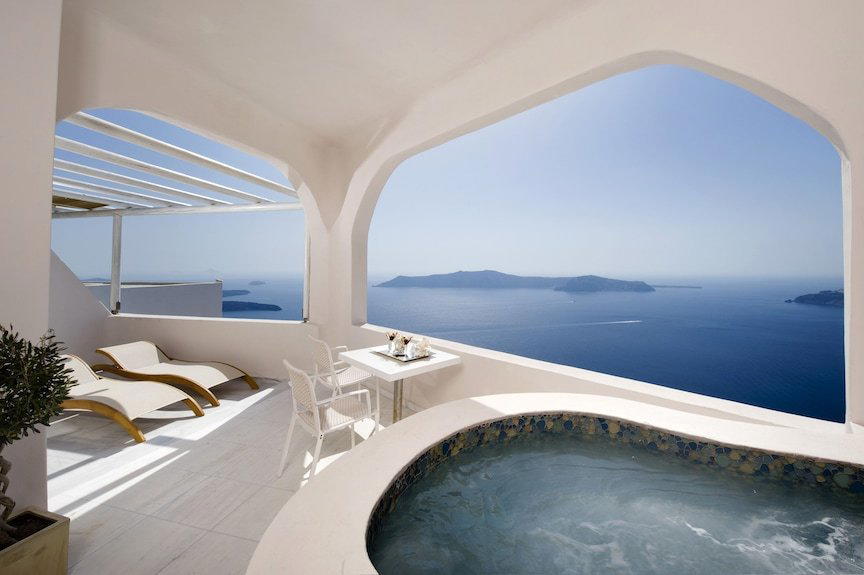
Carved into the caldera cliff face at Imerovigli, Vora is one of Santorini's most dramatically positioned properties, offering a form of seclusion that the island's busier villages rarely allow. The setting places it in a small tier of cliff-edge retreats where privacy and verticality define the experience as much as any amenity. Reserve well in advance, particularly for summer stays.

Pearl is the En Primeur Club membership app, where members save venues, book tables and use the concierge.
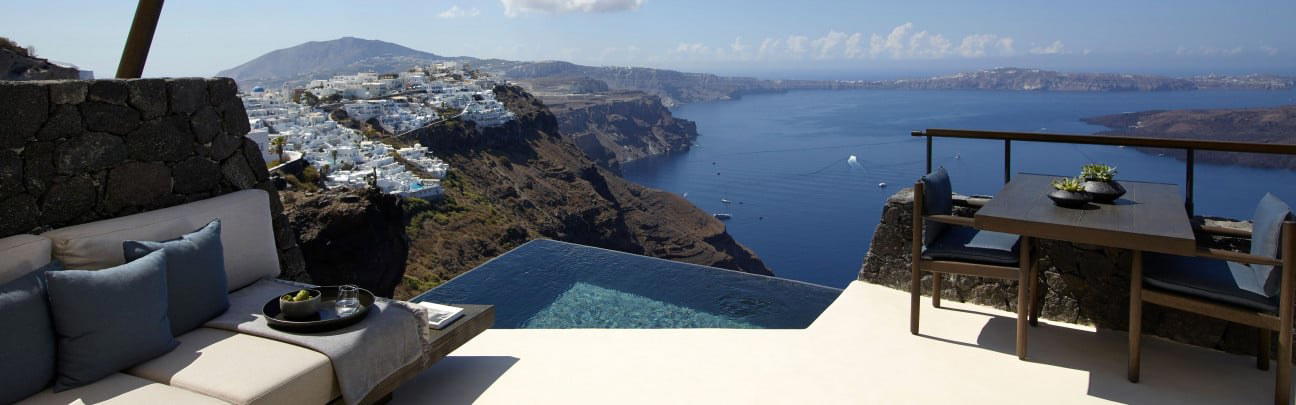
Where the Caldera Begins
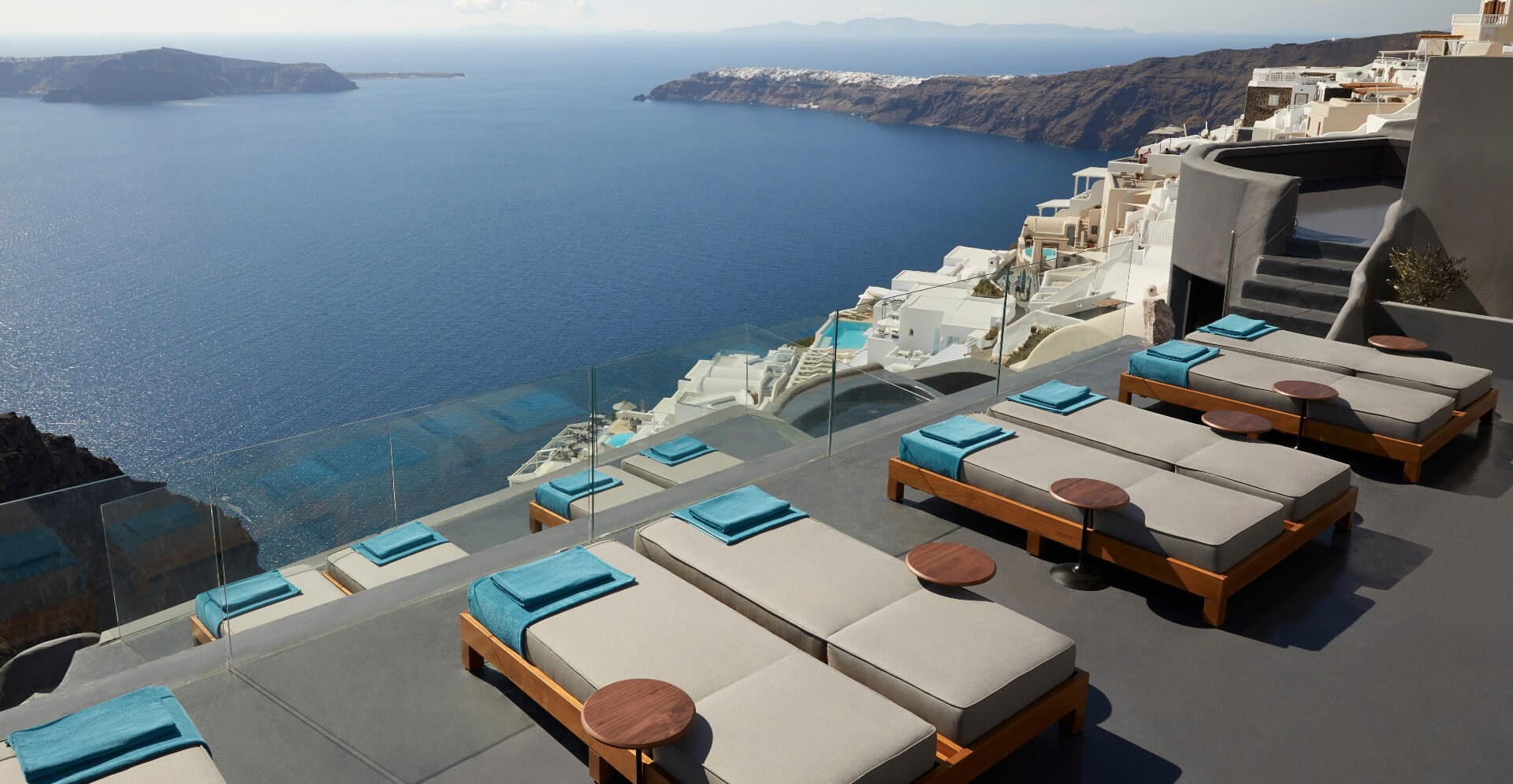
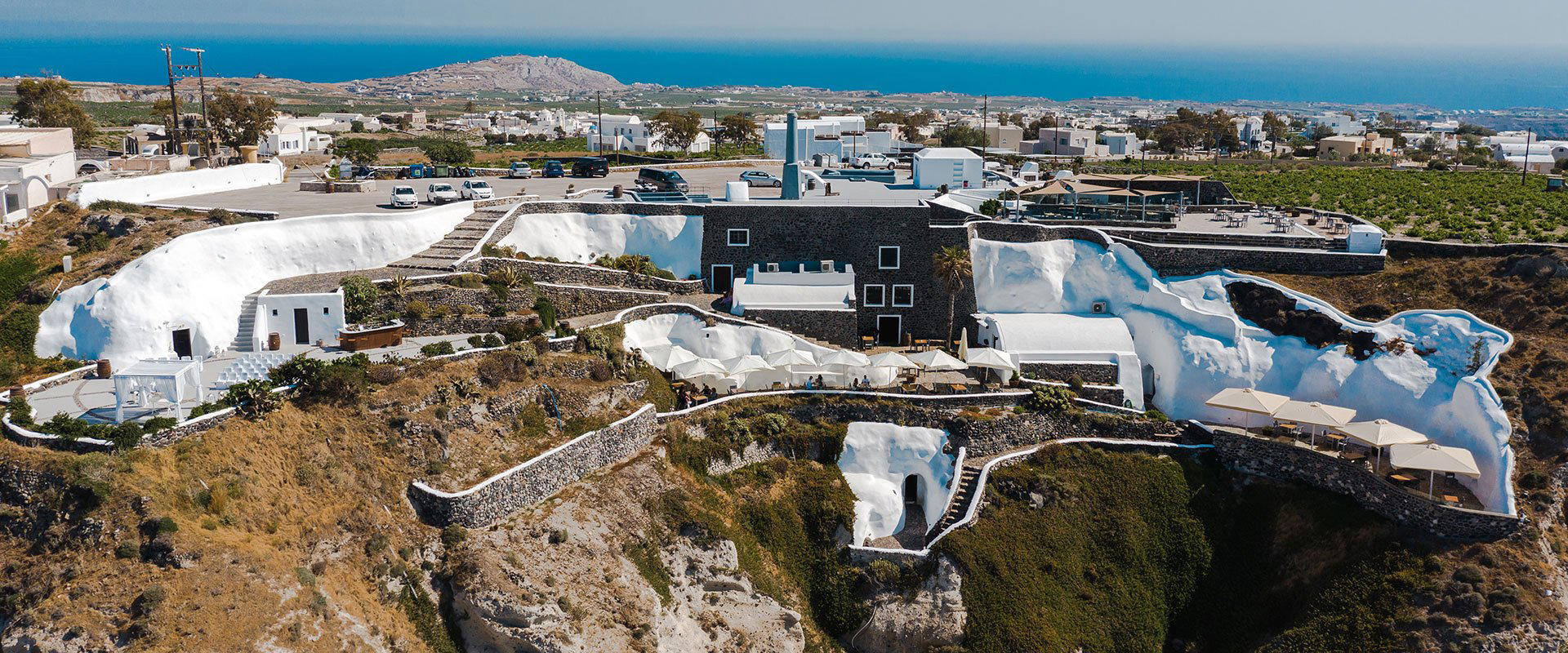
Imerovigli sits at the highest point of Santorini's caldera rim, above the crowds of Fira and removed from the sunset-watching queues that clog Oia's narrow lanes each evening. This positioning matters: properties here trade in a particular kind of altitude-driven stillness, where the only interruption to the Aegean view is the shadow of a passing ferry some three hundred metres below. Vora occupies this ridge, carved directly into the volcanic cliff face in a manner that places the caldera not as backdrop but as immediate foreground. The architecture here is less design statement than geological fact, you do not look at the view from Vora; you are suspended inside it.
Cliff-integrated properties represent a distinct tier within Santorini's accommodation scene. They share a structural challenge that limits scale: excavation into pumice and volcanic tuff constrains room counts and complicates construction in ways that a terrace-and-pool layout on flat ground does not. The result is that properties like Vora occupy a niche defined by limited capacity, relative privacy, and an intimacy of scale that larger caldera-facing hotels cannot replicate regardless of their room rates.
The Approach and First Impression
Arriving at Imerovigli requires either a descent from the main road or a walk along the caldera path from Fira, a route that takes roughly twenty minutes on foot and functions as an unintentional decompression from the island's more commercial zones. The Skaros Rock outcrop, the remnant of a Venetian-era fortress that once commanded the caldera approach, rises from the water just off the Imerovigli headland, and it frames the initial sighting of properties along this stretch in a way that no architecture department could engineer. Context arrives before you do.
For travellers coming from further afield, Santorini's airport connects to Athens with frequent short-haul services, and the island's port at Athinios serves regular ferries from Piraeus and neighbouring Cycladic islands. From either arrival point, Imerovigli sits toward the northern arc of the caldera road, accessible by taxi or the island's public bus system, though the caldera path walk is worth factoring into the itinerary at least once. Properties in this village tend to attract guests who have already done Santorini once and are returning with a clearer sense of where they actually want to be.
A Progression Through the Day
The framework for understanding a stay at Vora is less a list of facilities than a sequence of light. Santorini's caldera orientation means that west-facing positions receive the full arc of the afternoon sun and the famous early-evening colour shift that draws the island's peak-season visitors. Imerovigli's elevation amplifies this, placing guests above the haze that sometimes settles over the lower caldera rim by late afternoon. The progression runs from a morning where the crater's still surface reflects a pale blue sky, through a midday where the stone heats and the Aegean takes on a deeper register, to the hour before sunset when the light turns horizontal and the white walls of caldera-edge properties glow against the darkening water below.
That arc matters for how a stay is structured. Greek island hospitality at this level is rarely programme-heavy; there are no organised excursions to join, no scheduled activities competing for attention. What properties like Vora offer is a framework for doing very little, very deliberately. The sequence of a day here is one of its own, coffee on a terrace with the caldera at arm's length, a midday interval of heat and stillness, the gathering of guests toward the western edge as the light shifts, and an evening where the sky does most of the work without any assistance from the itinerary.
For reference across the island's cliff-edge tier, Andronis Arcadia and Canaves Ena both operate along the caldera rim with architectural approaches that prioritise the view-from-room experience over shared social spaces. Canaves Oia Suites and Canaves Epitome occupy Oia's more populated stretch with a higher-volume footprint. Imerovigli properties tend to sit between those poles: less isolated than a private villa arrangement, less trafficked than Oia's premium hotel corridor.
Santorini's Wider Premium Tier
Positioning Vora accurately requires understanding what Santorini's luxury accommodation market actually looks like in 2024. The island has two distinct premium registers. The first is the design-led, brand-affiliated property with international recognition, a spa programme, and multiple food and beverage outlets. The second is the smaller-footprint, caldera-integrated retreat where intimacy and position do the work that amenity counts do elsewhere. Vora belongs to the second category, which means its competitive set is narrower but its strengths are harder to engineer at scale.
Properties in this second tier attract a different booking pattern: fewer impulse bookings, a higher proportion of returning guests, and a tendency toward longer stays than the average Santorini visit. Guests willing to look beyond the island will find comparable cliff-position logic at Amoudi Villas in Oia or, on a completely different scale, at Amanzoe in Porto Heli on the Peloponnese. Those seeking the full international luxury footprint might consider Four Seasons Astir Palace Hotel Athens as a pre- or post-island stay in Athens.
Within Santorini, guests who want a smaller-scale alternative to the cliff-edge format might look at Aeifos Boutique Hotel, Athina Luxury Suites, or Cocoon Suites, each of which operates at a different price point and with a different balance between social infrastructure and seclusion. Aressana Spa Hotel and Suites and Pegasus Suites in Fira represent the more centrally located Fira option for guests who want caldera access without Imerovigli's quiet.
Planning Considerations
Santorini's peak season runs from late May through early September, and the caldera-rim properties book earliest of all, their limited capacity means that summer dates at any well-regarded Imerovigli address require advance planning of at least three to four months, often more for the July and August window. The shoulder periods of April through May and September through October offer a different version of the island: fewer arrivals at the airport, shorter queues at Oia's viewpoints, and a cooler evening temperature that makes the caldera walk from Fira genuinely comfortable rather than a test of endurance.
Guests exploring the broader Greek island network might also consider Eréma in Milos or Gundari in Petousis as part of a multi-island itinerary, both of which sit in the smaller-footprint, design-conscious tier that Vora occupies on Santorini. For Crete as part of the same trip, Le Méridien Sissi Crete and Milatos Marriott Resort Crete offer contrasting formats at opposite ends of the service-infrastructure spectrum.
Cost Snapshot
A compact comparison to help you place this venue among nearby peers.
| Venue | Price | Awards |
|---|---|---|
| VoraThis venue (the venue you are viewing) | Not listed | Michelin Selected · Mr & Mrs Smith Seal of Approval |
| Andronis Arcadia | Not listed | 1 Michelin Key · La Liste Top Hotels |
| Canaves Ena | Not listed | Michelin Selected · La Liste Top Hotels |
| Katikies Santorini | Not listed | 1 Michelin Key · La Liste Top Hotels |
| Santorini Secret Suites & Spa | Not listed | Michelin Selected · Forbes 4-Star |
| Aeifos Boutique Hotel Santorini | $300–500 | World Luxury Hotel Awards WLHA Country Winner |
Recognition history
Dated appearances from independent guides and award organizations, with the underlying list record or original source where available.
Michelin Selected
Michelin
Design Hotels Member
Design Hotels
Mr & Mrs Smith Seal of Approval
Mr & Mrs Smith
Continue exploring
More in Santorini
Hotels in Santorini
All hotels in Santorini →
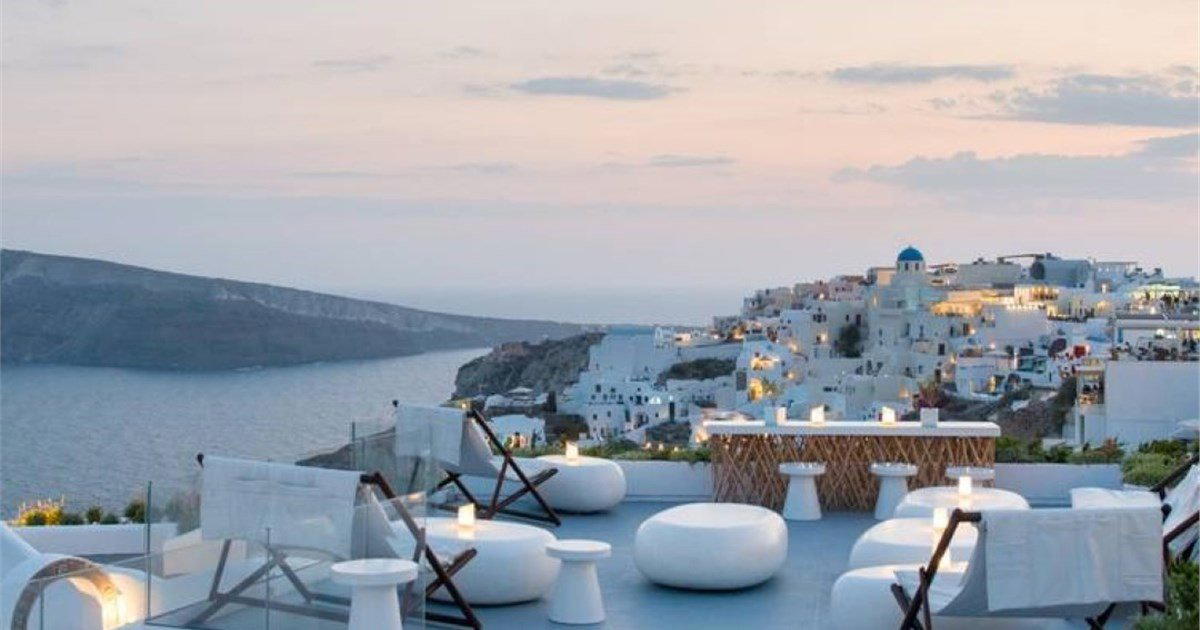
Restaurants in Santorini
All restaurants in Santorini →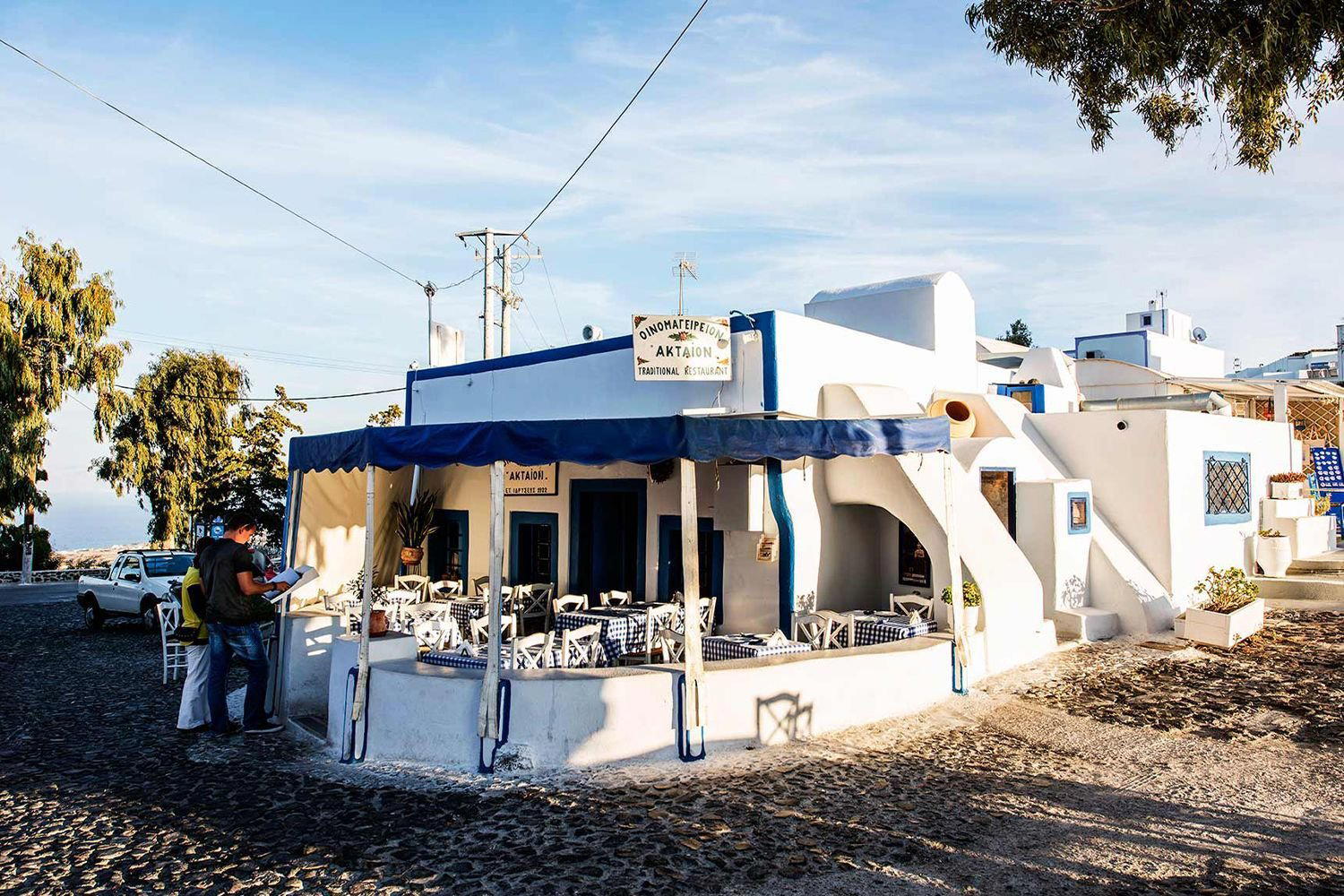
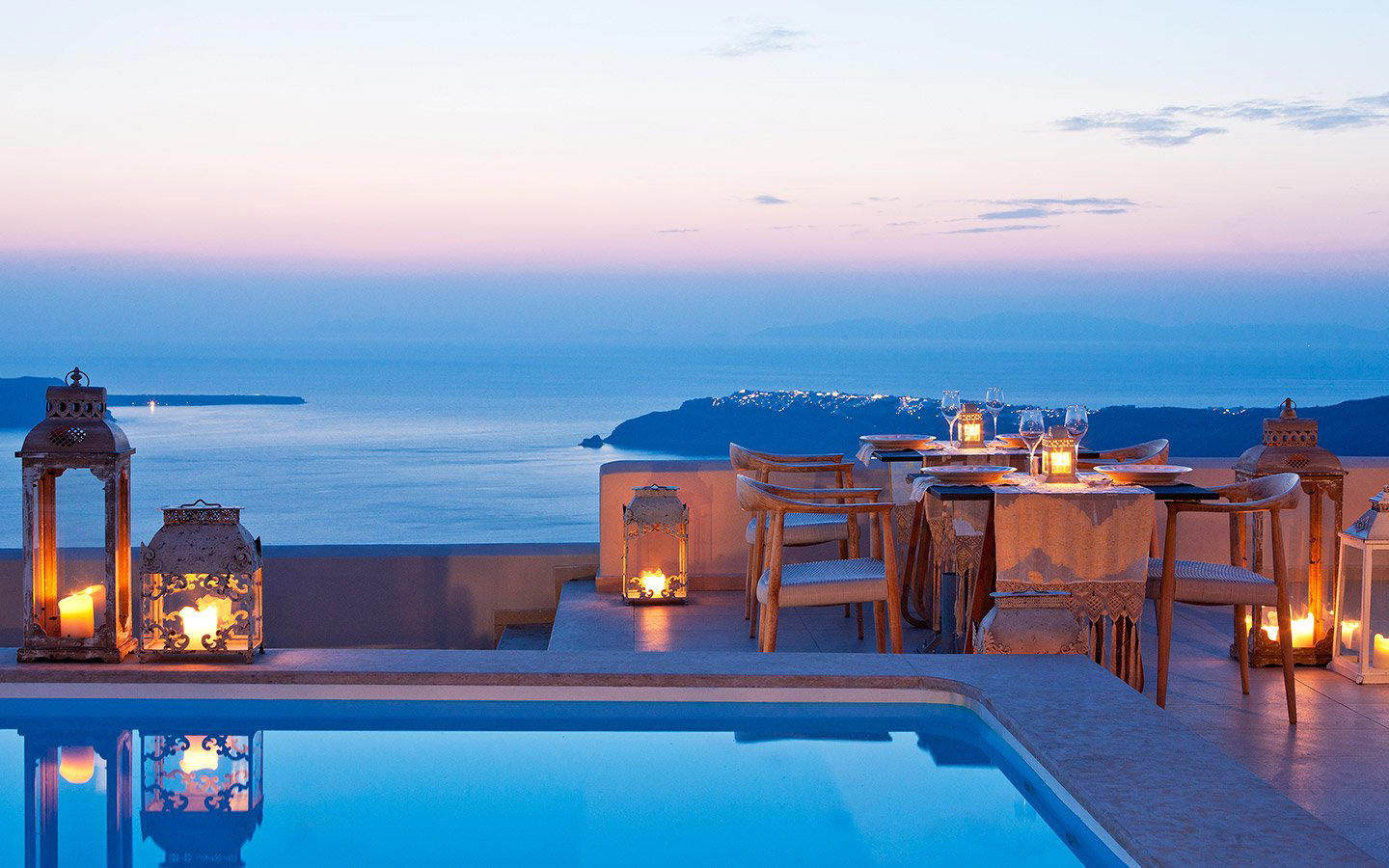
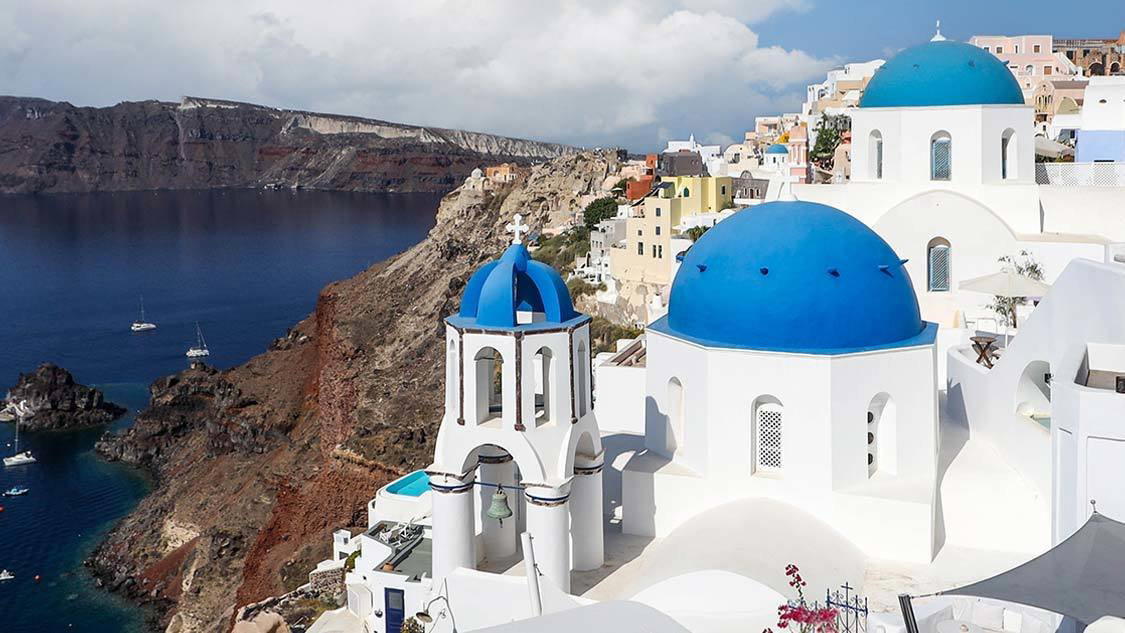
Details
- Romantic
- Quiet
- Elegant
- Minimalist
- Intimate
- Sophisticated
- Honeymoon
- Romantic Getaway
- Anniversary
- Infinity Pool
- Private Villa
- Panoramic View
- Terrace
- Wi Fi
- Pool
- Spa
- Room Service
- Concierge
- Breakfast Included
- Waterfront
- Step Free Entrance
Minimalistic Cycladic design with custom furniture, soothing beiges and grays, soundproofed spaces, and dramatic contrasts of light and dark volcanic rock creating a relaxing, luxurious atmosphere.