
Michelin Selected
A Michelin Selected medieval tower and farmstead compound in the hills above Montone, Torre di Moravola sits within Umbria's quieter luxury register, the kind of property where stone-and-timber architecture does the heavy lifting and the Tiber Valley spreads out below. For travellers choosing between Perugia's historic urban hotels and the region's countryside retreats, it occupies a distinct position: genuinely remote, architecturally serious, and operating without the brand infrastructure of larger resort properties.

Pearl is the En Primeur Club membership app, where members save venues, book tables and use the concierge.
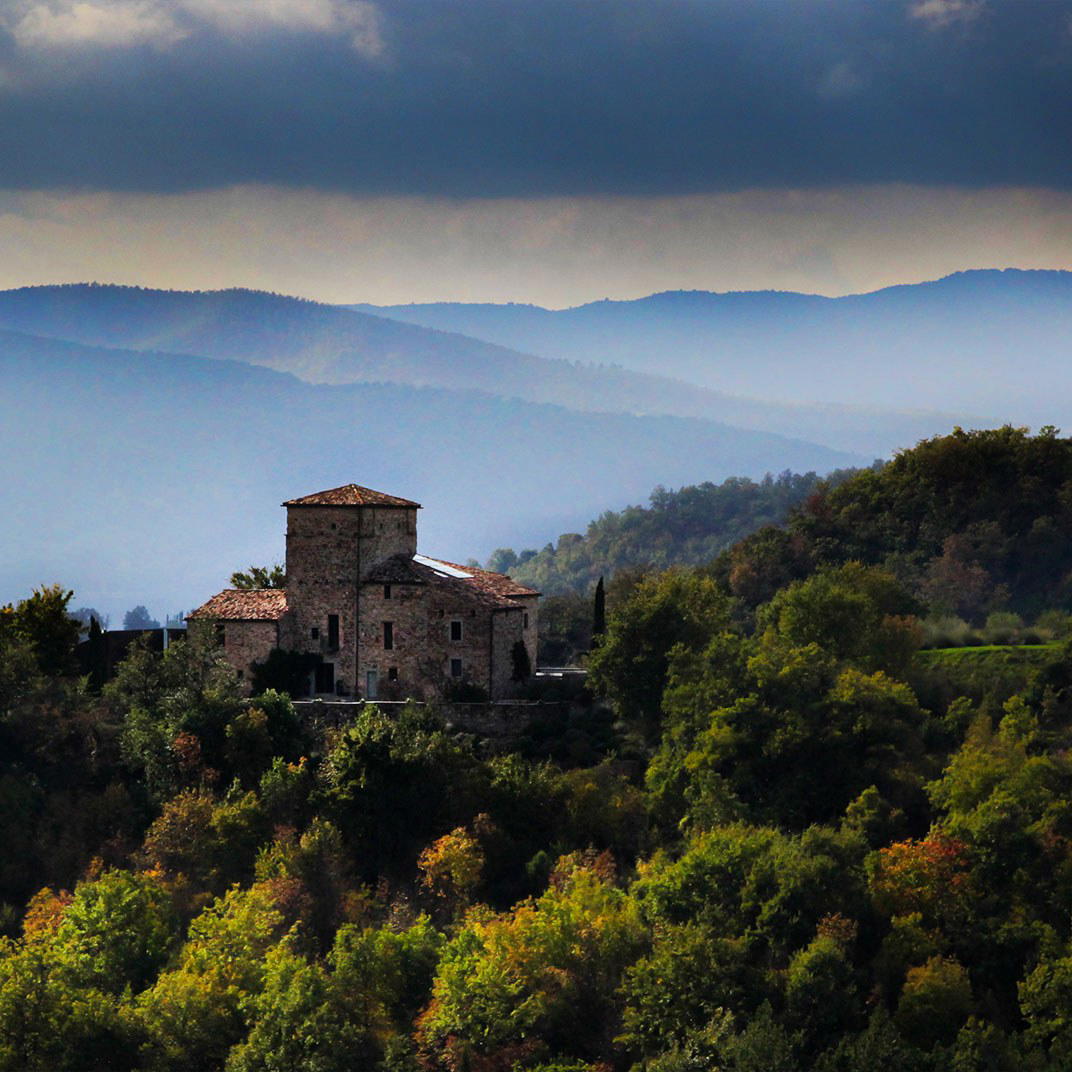
Stone, Altitude, and the Umbrian Countryside
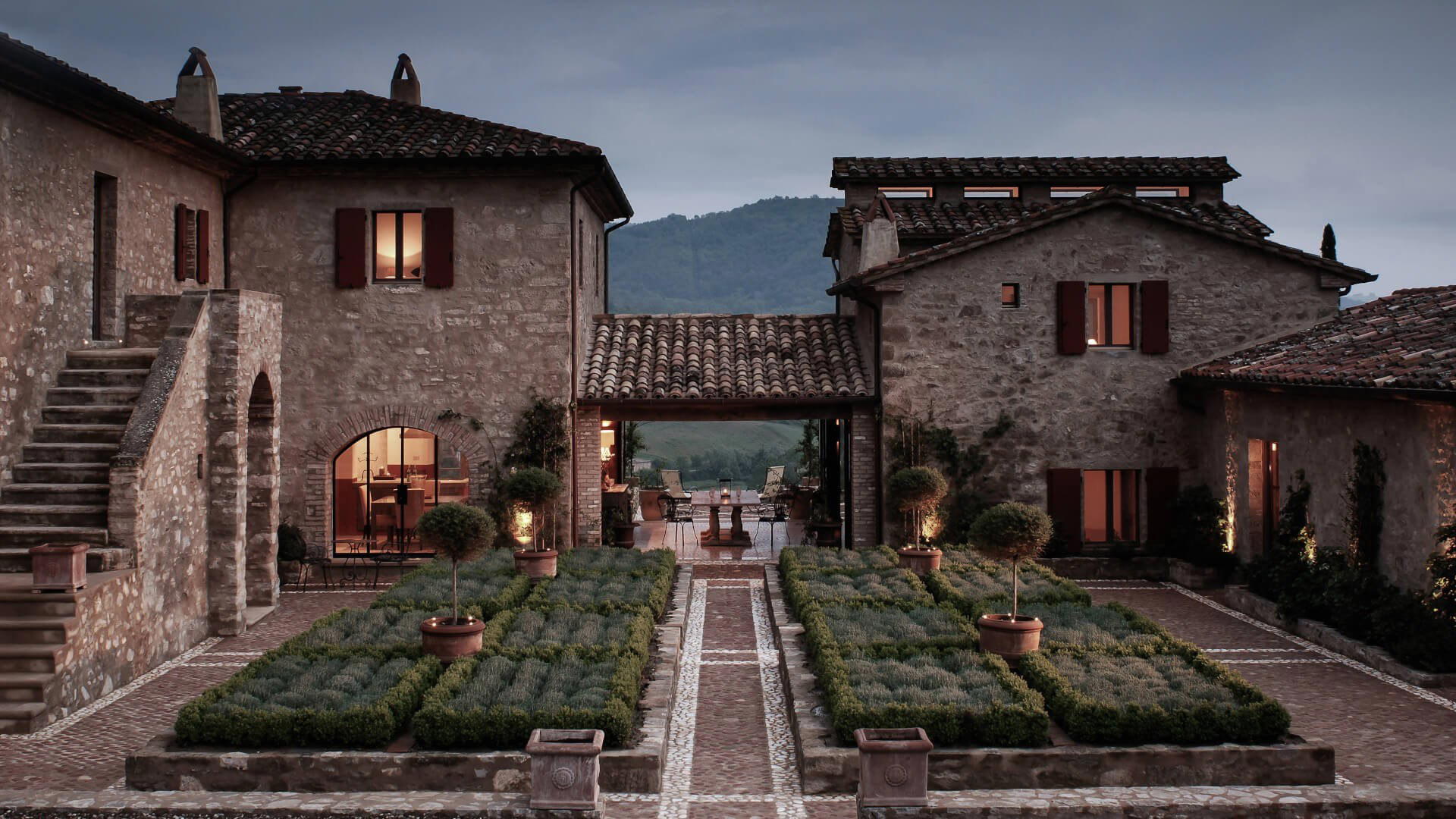
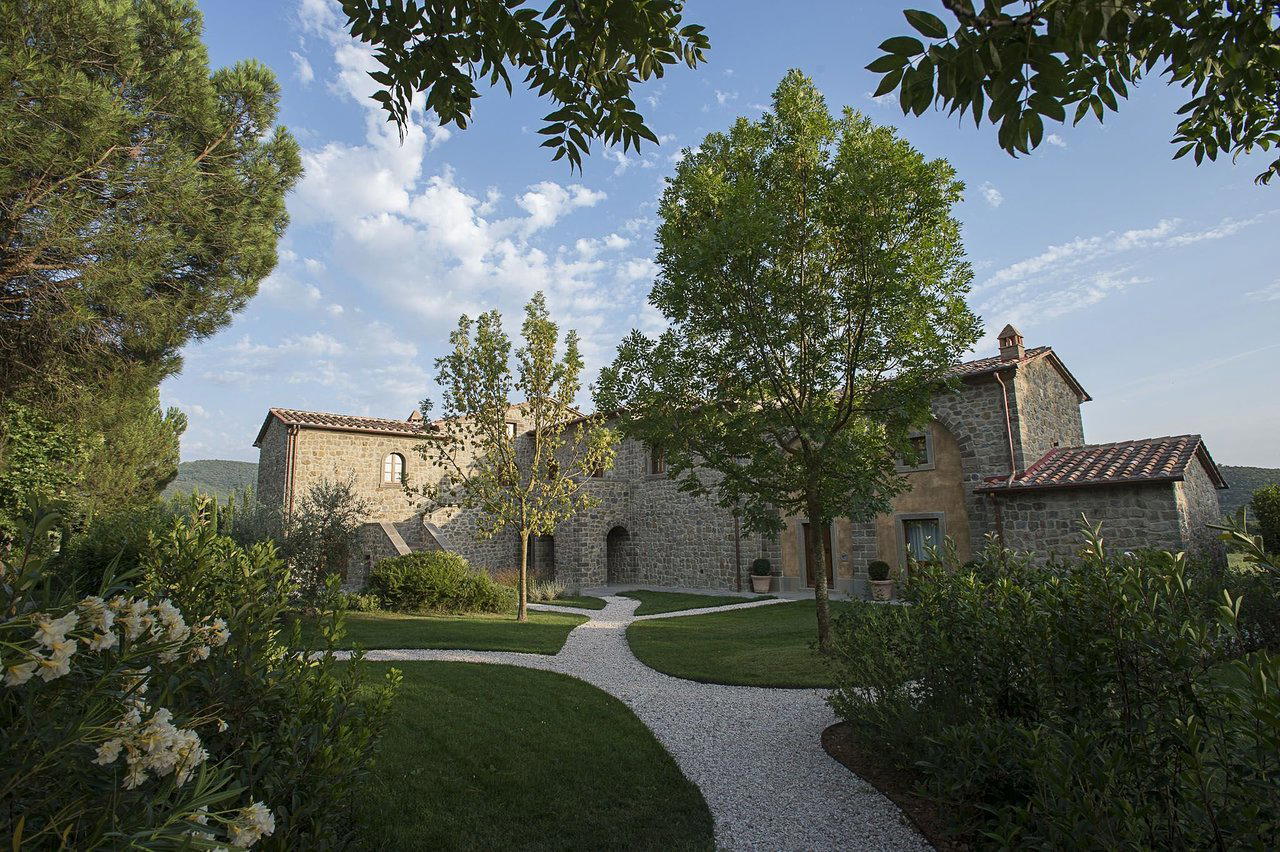
Approaching Torre di Moravola, the road narrows through oak forest before the medieval tower appears above the treeline at Località Moravola Alta, outside the walled hill town of Montone in the province of Perugia. This is not a converted farmhouse with a wellness annex added in the 2010s. The tower itself is the structural and visual anchor of the property, a centuries-old stone construction that gives the compound its vertical logic, rising from terraced grounds that look out over the Tiber Valley toward the ridgelines separating Umbria from Tuscany. The architecture communicates before anything else does: thick walls, small apertures, materials drawn from the hillside itself.
That physical context matters because it places Torre di Moravola inside a specific tradition of Umbrian rural hospitality that has little to do with resort-format luxury. This is the part of central Italy where the built environment is already the attraction, and where properties that understand this resist over-decorating. The Michelin Selected distinction for 2025 signals that the property meets a curatorial standard, though it does not operate in the same tier as the branded castle-hotel conversions that have proliferated across Tuscany and southern Umbria over the past two decades.
How It Sits in the Perugia Accommodation Picture
Perugia's accommodation offer splits in two directions that rarely overlap. The city itself holds historic-centre properties including Sina Brufani, which operates from a grand nineteenth-century palazzo above Piazza Italia, and Hotel Castello di Monterone, a medieval castle conversion at the city's southern edge. Outside the walls, the province holds a looser set of agriturismo properties, redesigned farmsteads, and resort compounds at varying price points. Torre di Moravola belongs to the countryside tier but occupies a more architecturally serious position within it than most agriturismo-format properties.
The comparison that matters most is with properties like Borgo dei Conti Resort and Tenuta di Murlo, which also operate in the Perugia province countryside register. What separates Torre di Moravola is the tower itself, a structural fact rather than a decorative one. Properties across Italy market their medieval heritage through stonework and exposed beams; fewer can point to a functioning medieval tower as the literal centre of the compound. That architectural specificity is what Michelin's selection is implicitly recognising.
For broader reference within the Italian luxury countryside category, the peer conversation extends to properties like Castello di Reschio in Lisciano Niccone, which sits just over the Umbrian border into the same rolling terrain, and Rosewood Castiglion Del Bosco in Montalcino, which operates at a higher price point and larger scale under a global brand. Torre di Moravola is neither of those things, smaller, without brand infrastructure, and more dependent on the architecture itself to carry the experience.
The Architecture as the Experience
Medieval tower conversions are genuinely difficult to execute as lodging. The structural constraints that give these buildings their character, load-bearing stone walls, vaulted ceilings, irregular floor plans, stairwells built for defence rather than comfort, resist the spatial logic that modern hospitality design relies on. Properties that succeed tend to work with those constraints rather than against them, accepting that rooms will be irregular, circulation will be narrow, and that the visual weight of the stone is both the draw and the limitation.
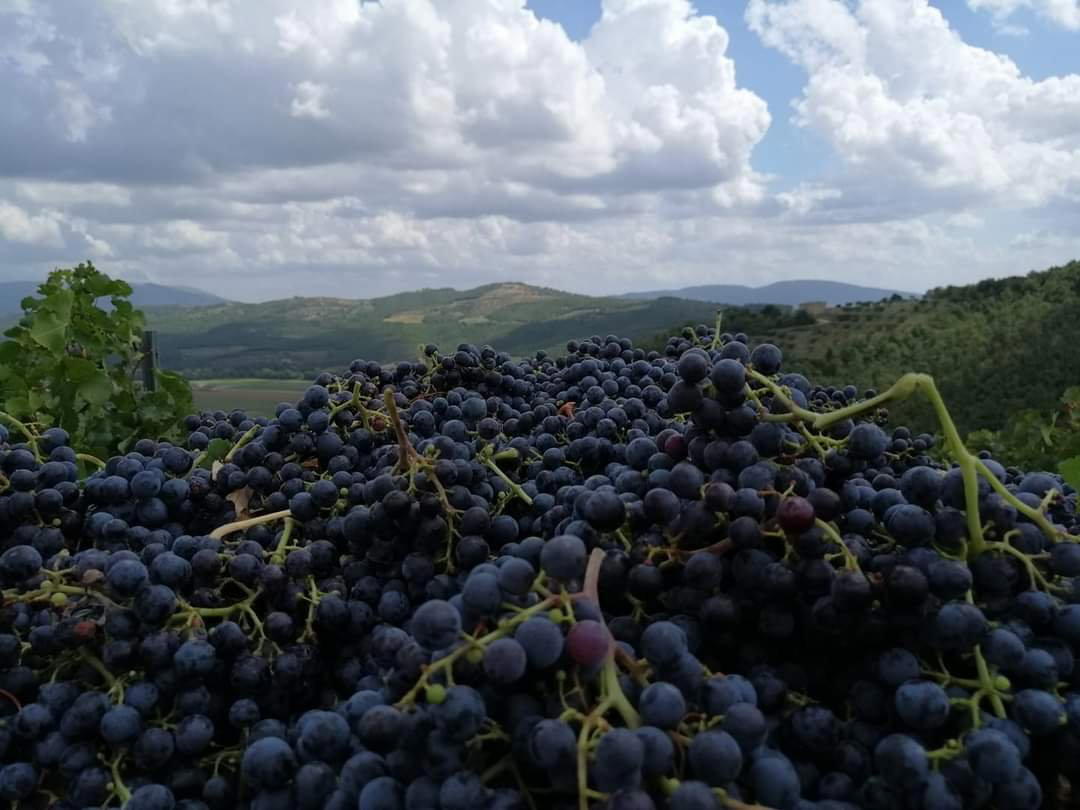
The Moravola Alta setting adds an environmental dimension that few Umbrian properties can match at this altitude. Hill towns throughout Umbria, Montone itself is among the smaller and less-trafficked of them, which keeps the immediate surroundings quiet in a way that Assisi or Spello cannot, sit within a range of olive groves, oak forest, and terraced agricultural land that changes character through the seasons. Spring brings the valley fog that burns off by mid-morning; autumn concentrates the colour across the hillsides in a way that has drawn painters to this part of central Italy for centuries. A property at this elevation, with this orientation toward the Tiber Valley, is making an implicit argument that the view is part of the architecture.
That argument connects Torre di Moravola to a tradition of Italian hospitality that predates the boutique hotel category entirely: the idea that the building and its setting are the offering, and that the role of the host is to not interrupt that relationship. Properties across the Italian countryside claim this ethos; few are working with material as architecturally compelling as a medieval tower on a Umbrian hillside.
Practical Considerations for Planning
Torre di Moravola is located at Località Moravola Alta, Vocabolo San Faustino, in the commune of Montone, approximately 40 kilometres north of Perugia. The nearest airport with regular international connections is Perugia Sant'Egidio, though most travellers arriving from northern Europe or North America route through Florence or Rome and drive into Umbria from there. The road to the property is the kind that rewards drivers who are comfortable with single-track hill roads, the approach is part of the arrival experience, not incidental to it.
Given the property's rural position and the absence of published booking details in the standard channels, direct contact through the property's own channels is the appropriate approach. The Michelin Selected status for 2025 places it within a curated tier that typically requires advance planning in the main Umbrian seasons: late spring (May and early June) and autumn (September through October) see the highest demand from travellers combining Umbrian hill towns with the Tiber Valley. Summer stays at altitude benefit from cooler temperatures than the valley floor, which is a practical argument for properties like this one during July and August.
For travellers building a longer Italian itinerary, Torre di Moravola fits logically within a routing that moves between Umbria and Tuscany: Castel Fragsburg in Merano operates a similar castle-elevation logic in the Alto Adige, and Il Pellicano in Porto Ercole anchors the Tyrrhenian coast at the other end of the Tuscan register. Within Umbria specifically, the property is leading understood alongside Corte della Maestà in Civita di Bagnoregio and the broader network of small-scale historic properties that the region has accumulated. Our full Perugia restaurants and hotels guide maps the wider options across both city and province.
For reference across the wider Italian luxury hotel spectrum, the conversation extends to Aman Venice, Four Seasons Hotel Firenze, Casa Maria Luigia in Modena, Borgo Santandrea on the Amalfi Coast, Portrait Milano, JK Place Capri, Il San Pietro di Positano, Borgo Egnazia, Il Sereno in Torno, Savoia Excelsior Palace Trieste, Passalacqua in Moltrasio, and Bulgari Hotel Roma, properties that collectively define what the Michelin hotel selection is measuring against internationally.
Side-by-Side Snapshot
Comparable venues nearby, for context on price, style, and recognition.
| Venue | Cuisine | Price | Awards | Notes |
|---|---|---|---|---|
| Torre di MoravolaThis venue (the venue you are viewing) | Medieval watchtower converted into contemporary luxury retreat | $300–500 | Michelin Selected | Not listed |
| Tenuta di Murlo | Historic country estate blending aristocratic heritage with refined modern comfort | Not listed | 1 Michelin Key | San Giovanni del Pantano |
| Hotel Castello di Monterone | Restored medieval castle blending historic authenticity with subtle modern comforts. | Not listed | 1 Michelin Key | Monterone |
| Sina Brufani | Historic luxury palace hotel opened in 1884 with classic elegance. | $100–200 | Virtuoso Luxury Hotel Partner | Piazza Italia |
| Borgo dei Conti Resort | Restored medieval castle and village estate | $200–300 | 1 Michelin Key · Relais Chateaux Award | Monte Petriolo |
| Poggio Piglia | Cultured contemporary Tuscan casale in bucolic countryside setting | $200–300 | Michelin Selected · Mr & Mrs Smith Seal of Approval | Macciano |
Recognition history
Dated appearances from independent guides and award organizations, with the underlying list record or original source where available.
Michelin Selected
Michelin
Continue exploring
More in Perugia
Hotels in Perugia
All hotels in Perugia →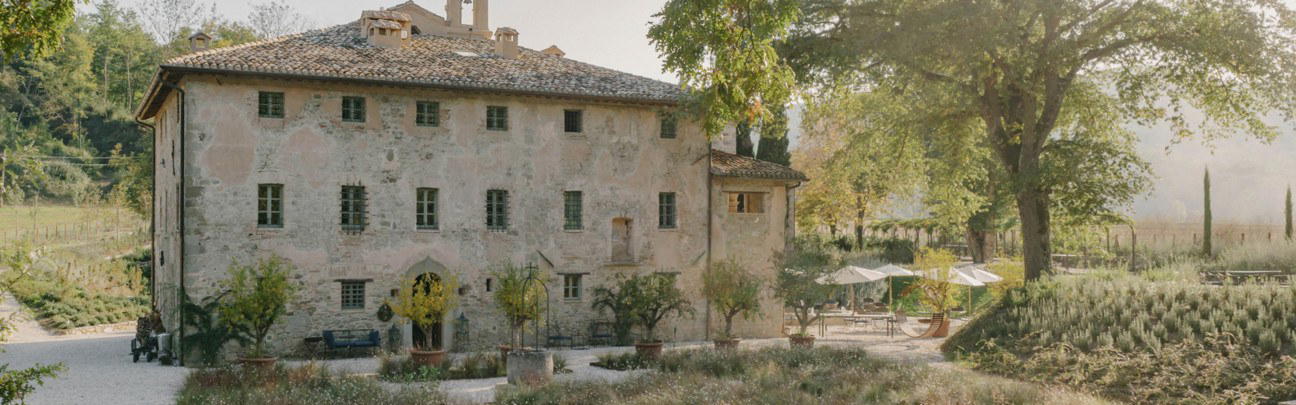
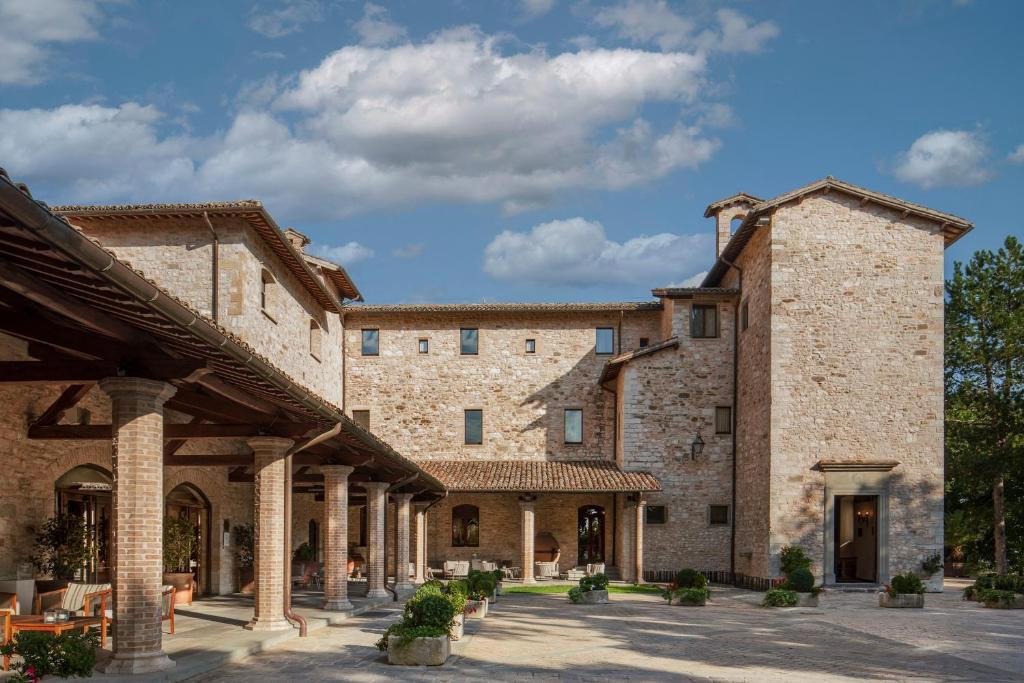
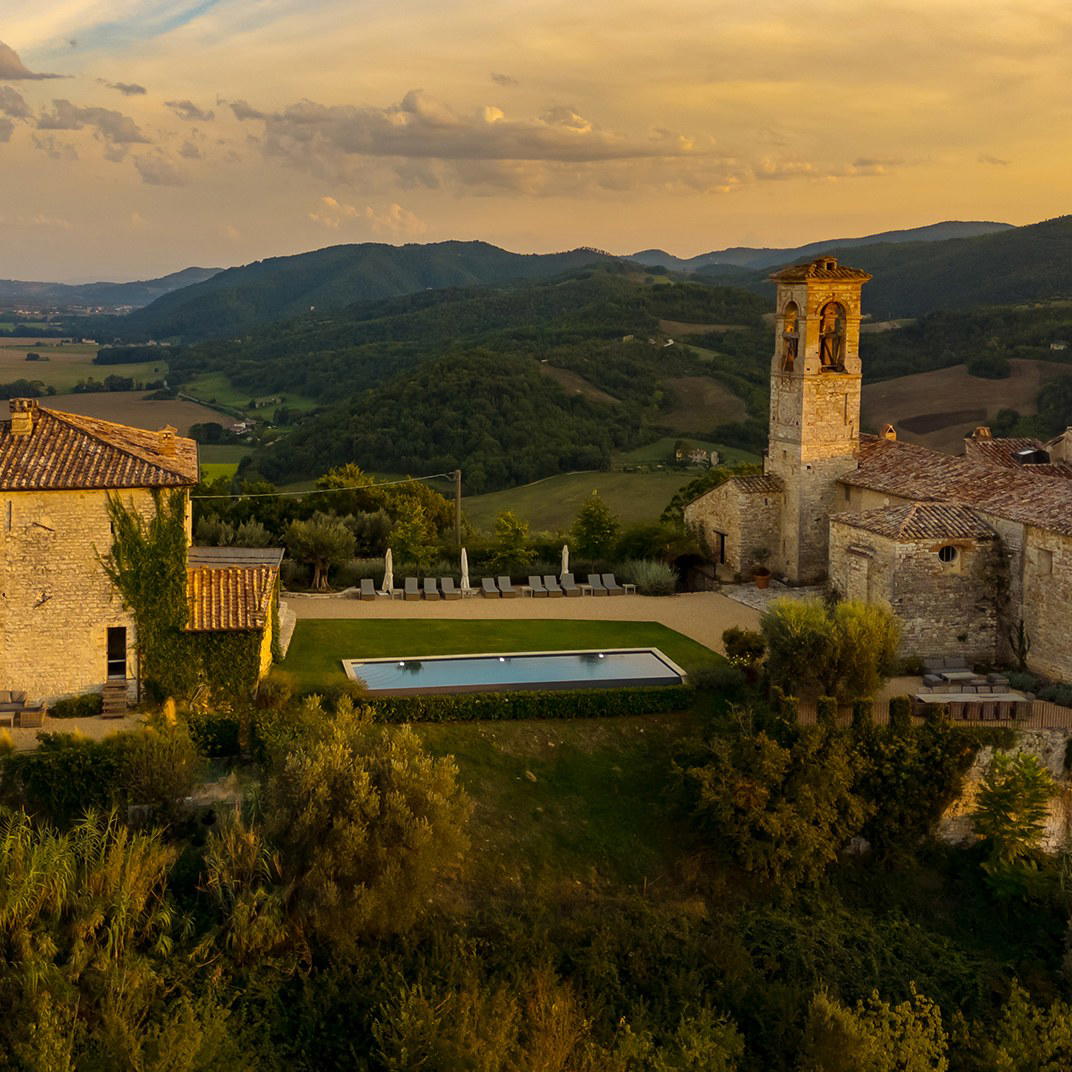
Bars in Perugia
Browse all →

Details
- Romantic
- Quiet
- Elegant
- Scenic
- Intimate
- Sophisticated
- Romantic Getaway
- Honeymoon
- Anniversary
- Weekend Escape
- Historic Building
- Panoramic View
- Infinity Pool
- Terrace
- Garden
- Wi Fi
- Outdoor Pool
- Spa
- Fitness Center
- Air Conditioning
- Restaurant
- Concierge
- Garden
- Pool
- Mountain
- Garden
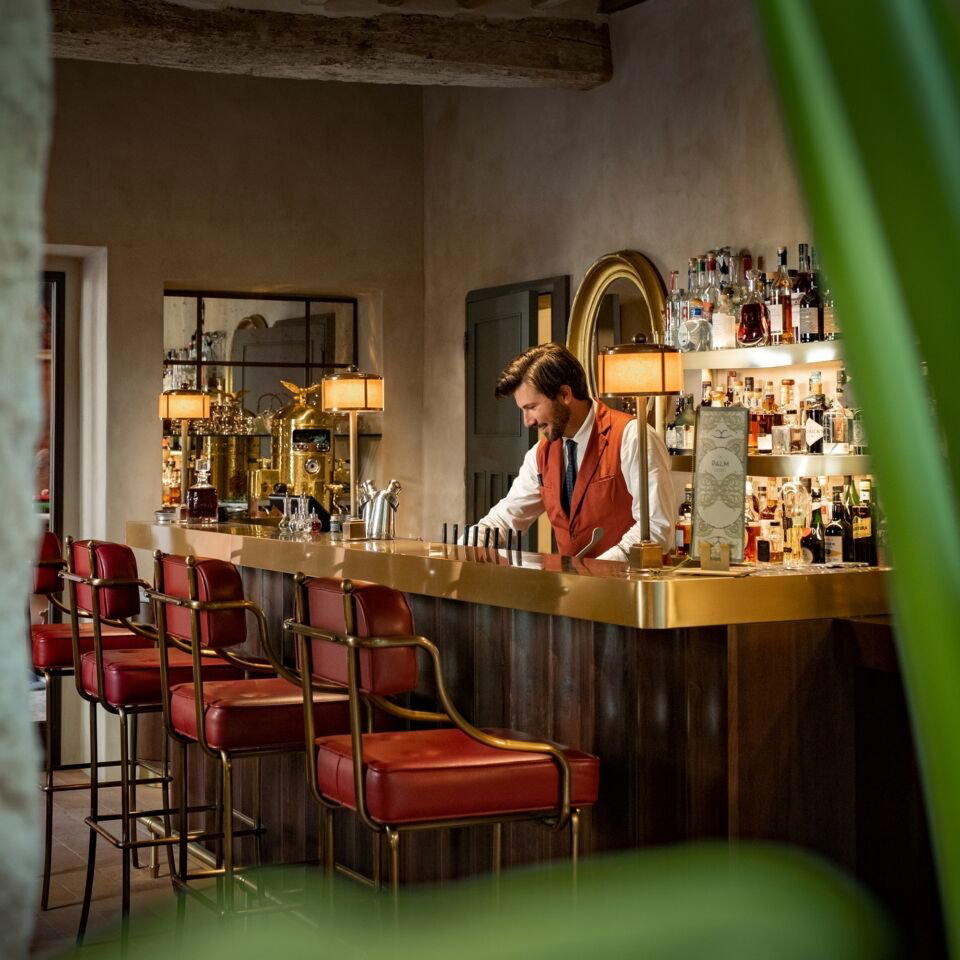
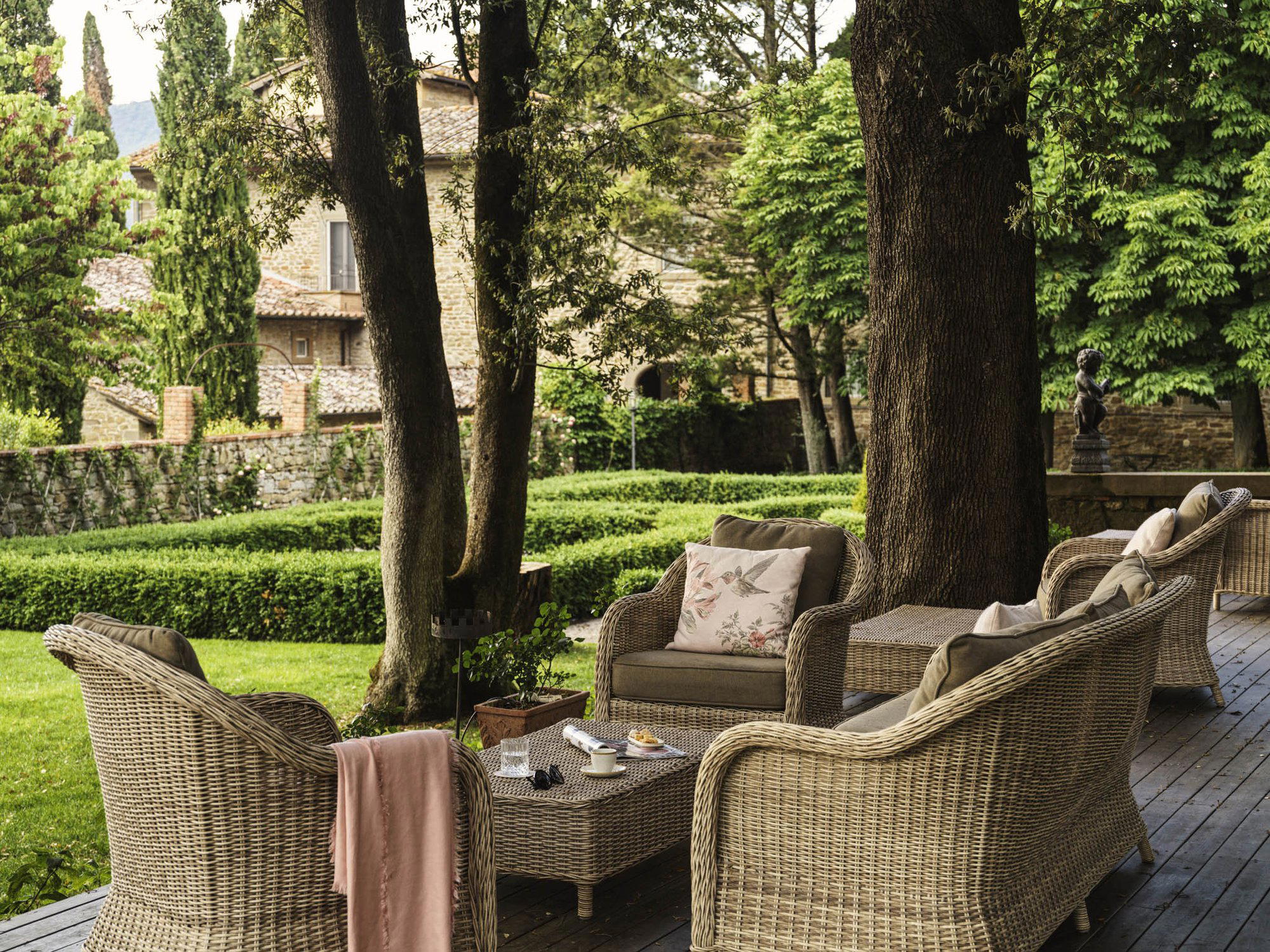
Monastic simplicity with sleek architectural details, concealed lighting, neutral furnishings, and a profound sense of peace in a remote, otherworldly setting.