Torel Terra Brava

A Michelin Selected property on Terceira Island, Torel Terra Brava occupies a historic address in Angra do Heroísmo, a UNESCO World Heritage city whose colonial-era architecture sets the scene for considered, small-scale hospitality. The property sits within the boutique tier of Portugal's design-conscious hotel segment, where local materials and architectural integrity matter more than room count.
Pearl is the En Primeur Club membership app — saves, bookings, and concierge access live there. Same editors, same standards.
- Address
- R. de Jesus 42, 9700-103 Angra do Heroísmo, Portugal
- Phone
- +351 295 249 730
- Website
- torelterrabrava.com
- Directions
- Get directions
 Saves & bookings on Pearl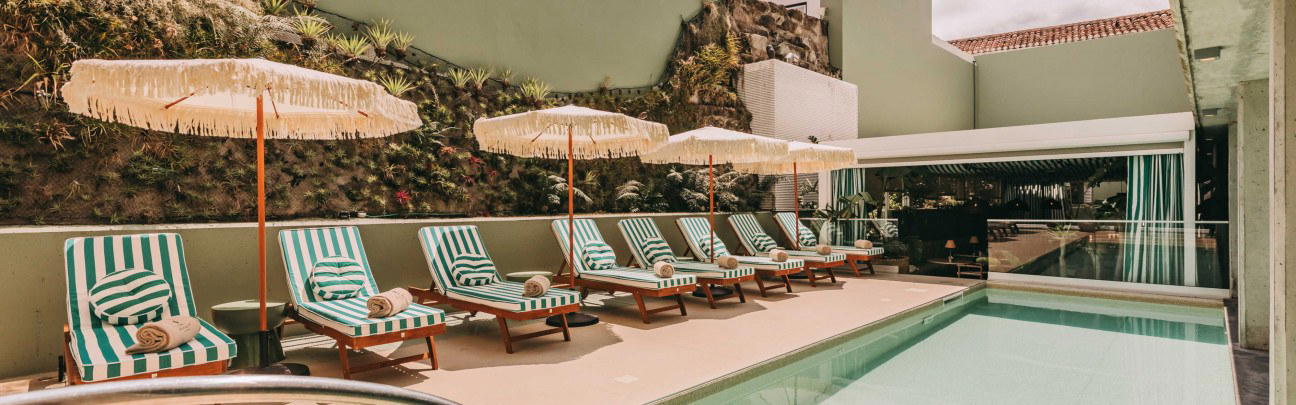
Stone, Silence, and the UNESCO City That Time Kept
Angra do Heroísmo is one of the few Atlantic island cities where the built fabric has remained largely intact since the 16th century. The colonial grid, the volcanic basalt cobblestones, the whitewashed facades trimmed in dark local stone, these are not restorations but survivals, and the city's UNESCO World Heritage status, granted in 1983, formalises what any arriving visitor already senses on foot: this place has coherence. Hotels that earn recognition here do so partly by not undermining that coherence, and Torel Terra Brava is a 4-star hotel on Rua de Jesus 42 in Angra do Heroísmo, Portugal, and it operates in precisely that vein.
Torel Terra Brava's Michelin Selected distinction for 2025 places it inside a small tier of Portuguese properties worth recommending on hospitality and design grounds, independent of any restaurant rating. Across Portugal, that cohort spans everything from Lisbon's art deco survivors to wine-country quintas in the Douro, but on Terceira Island specifically, the designation carries additional weight because the accommodation options at this quality level are narrow. For a property to earn Michelin attention in a city of roughly 35,000 people on an island accessible only by air or ferry tells you something about the calibre of the execution.
Architecture as the Dominant Argument
The physical language of Angra do Heroísmo provides a demanding context for any interior design project. The historic centre's buildings follow a typology shaped by centuries of Portuguese colonial building practice, modified by Atlantic pragmatism, deep walls that resist wind and damp, interior courtyards that capture light in a climate that can shift several times in a single afternoon, and an almost complete absence of the decorative excess that characterises mainland Baroque. Properties that work within that vocabulary tend to read as confident; those that overlay imported contemporary aesthetics on heritage shells tend to look awkward.
Torel Terra Brava's address on Rua de Jesus places it within the old city fabric, which means the building's relationship to the street, to neighbouring structures, and to the city's protected skyline is not incidental but defining. The design tradition the Torel group has pursued across its Portuguese portfolio has generally favoured the preservation and accentuation of original architectural elements, exposed stone, period joinery, spatial proportions that predate modern hotel-room standardisation, over wholesale reinvention. That approach is consistent with how particularly considered heritage conversions operate across Portugal, from the palace hotels of the Alentejo to the townhouse properties that have reshaped Porto's accommodation tier. Comparable work in the boutique segment is visible at Palacete Severo in Porto and MS Collection Aveiro - Palacete Valdemouro in Aveiro, both of which demonstrate how working with a historic shell rather than against it produces results that a new-build cannot replicate.
Across the Azorean archipelago, the design conversation among better hotels has shifted in recent years toward using the islands' own material culture more deliberately, Terceira's dark volcanic stone, the region's azulejo traditions, the particular greens of the Azorean landscape, rather than importing a mainland or international aesthetic. Octant Furnas in Furnas, on neighbouring São Miguel, represents one version of that commitment at a larger scale. Torel Terra Brava, operating within the constraints and opportunities of Angra's protected urban core, represents another.
Where It Sits in the Portuguese Boutique Tier
Portugal's premium hospitality segment has developed an unusually sophisticated small-property tradition over the past decade, driven partly by international demand for heritage-led travel and partly by the country's physical stock of convents, palaces, quintas, and townhouses available for sensitive conversion. The Michelin hotel guide's expanding Portuguese coverage has tracked that development, and its Selected tier now maps a broad spread from Lisbon neighbourhoods to rural northern Portugal to the islands. Within that spread, Hotel Casa Palmela in Setubal and Carmo's Boutique Hotel in Ponte de Lima occupy a comparable register to the hotel, smaller properties where the building's identity is the primary hospitality argument.
The contrast with resort-scale luxury is instructive. Properties like the Conrad Algarve in The Algarve or the Sheraton Cascais Resort in Cascais compete on facilities breadth, beach or golf proximity, and international brand assurance. The hotel competes on specificity: on the irreproducibility of a heritage building in a UNESCO city on an Atlantic island, and on the calibre of attention that a small property with a defined design identity can deliver. These are different propositions for different types of traveller, and the Michelin recognition signals that the hotel executes its particular proposition well.
On Terceira itself, the nearest design-led competition within the city comes from Boutique Hotel Teatro, another property working within Angra's historic fabric. The two properties give visitors a meaningful choice within a narrow comparable set rather than a single dominant option, which is, in general, a healthy sign for a destination's hospitality maturity.
The City as Context for a Stay
A property in Angra do Heroísmo is inseparable from the city itself, and the city rewards a certain kind of visitor. The Monte Brasil volcanic headland that frames the bay, the 16th-century São João Baptista fortress, the Jardim Duque da Terceira gardens, and the compact grid of the historic centre are all within walking distance of Rua de Jesus. The rhythms here are slow in the leading sense: the city does not perform for tourism. Dining on the island tilts toward Azorean cattle and dairy traditions, fresh Atlantic fish, and the cozido das Furnas geothermal stew that defines the archipelago's culinary identity.
The historic centre is a short transfer from the airport. Those combining Terceira with the broader archipelago commonly route through Ponta Delgada on São Miguel, where Aqua Pópulo - Eco Village offers an Azorean alternative at a different design register. For mainland Portugal extensions, the The Lince Braga in Braga and Ventozelo Hotel & Quinta in Ervedosa Do Douro represent two distinct approaches to heritage hospitality north of Lisbon worth considering as part of a longer Portuguese itinerary.
Planning a Stay
The hotel's address at Rua de Jesus 42 in Angra do Heroísmo places it within easy walking reach of the city's main historic sites and waterfront. The Azores' Atlantic climate means conditions vary considerably by season: summer months (June through September) bring stable weather and the highest visitor numbers, while spring and autumn offer quieter streets and lower rates with only moderate increase in rain risk. Winter on Terceira is mild by European standards but wetter. The property's Michelin recognition is current for 2025, which provides a reasonable benchmark for quality assurance ahead of a visit.
A Quick Peer Check
Comparable venues nearby, for context on price, style, and recognition.
| Venue | Cuisine | Price | Awards | Notes |
|---|---|---|---|---|
| Torel Terra BravaThis venue — the venue you are viewing | Boutique luxury in restored colonial architecture blending classic features with contemporary design. | $$$$ | 4-Star | Not listed |
| Boutique Hotel Teatro | Historic boutique in UNESCO center with sustainable elegant design | $$$ | 4-Star | Angra do Heroísmo |
| PortoBay Teatro | Theatrical-themed boutique hotel in historic center | $$$ | 4-Star | Baixa |
| You and the sea - Ericeira Hotel and Apartments | Urban chic beachfront aparthotel | $$$ | 4-Star | Praia do Sul |
| Pousada Palácio Estoi – Faro | Historic palace hotel blending 19th-century European grandeur with contemporary luxury, part of Small Luxury Hotels of the World collection. | $$$$ | 4-Star | Estoi |
| Almaria da Corte Apartments | Chiado | Historic aparthotel with modern apartments | $$$ | 4-Star | Chiado |
Recognition history
Dated appearances from independent guides and award organizations, with the underlying list record or original source where available.
Mr & Mrs Smith Smith Seal of Approval
Mr & Mrs Smith
Michelin Selected
Michelin
Continue exploring
More in Angra do Heroísmo
Hotels in Angra do Heroísmo
Browse all →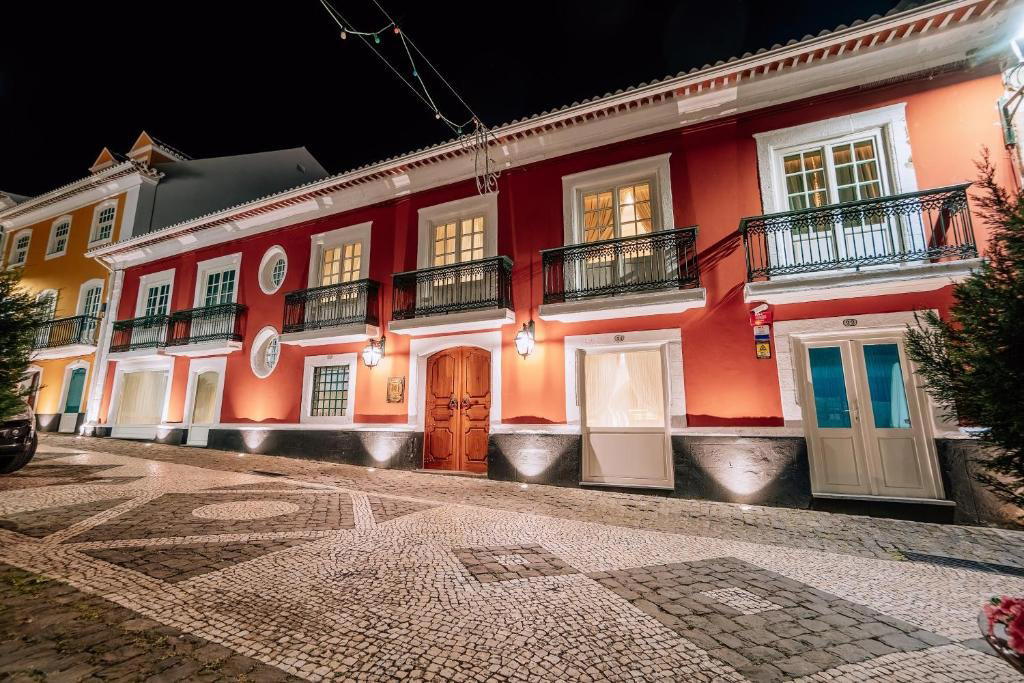
At a Glance
- Romantic
- Elegant
- Scenic
- Cozy
- Sophisticated
- Romantic Getaway
- Honeymoon
- Weekend Escape
- Terrace
- Historic Building
- Panoramic View
- Wi Fi
- Pool
- Spa
- Fitness Center
- Sauna
- Room Service
- Concierge
- Street Scene
- Wi Fi
- Pool
- Spa
- Fitness Center
- Sauna
- Room Service
- Concierge
Elegant and relaxing with natural materials, North African textile influences, and a sense of calm in a historic setting.