The Three Chimneys and The House Over-by
Set on the remote western shore of the Isle of Skye, The Three Chimneys combines a long-established destination restaurant with six accommodation suites in The House Over-by. The kitchen draws on the produce of Skye's coastline and crofting land, placing it among Scotland's most recognised rural dining addresses. Advance booking is advisable, particularly for dinner-and-stay packages.
Pearl is the En Primeur Club membership app — saves, bookings, and concierge access live there. Same editors, same standards.
- Address
- Colbost, Dunvegan, Isle of Skye IV55 8ZT, United Kingdom
- Phone
- +44 1470 511258
- Website
- threechimneys.co.uk
- Directions
- Get directions
 Saves & bookings on Pearl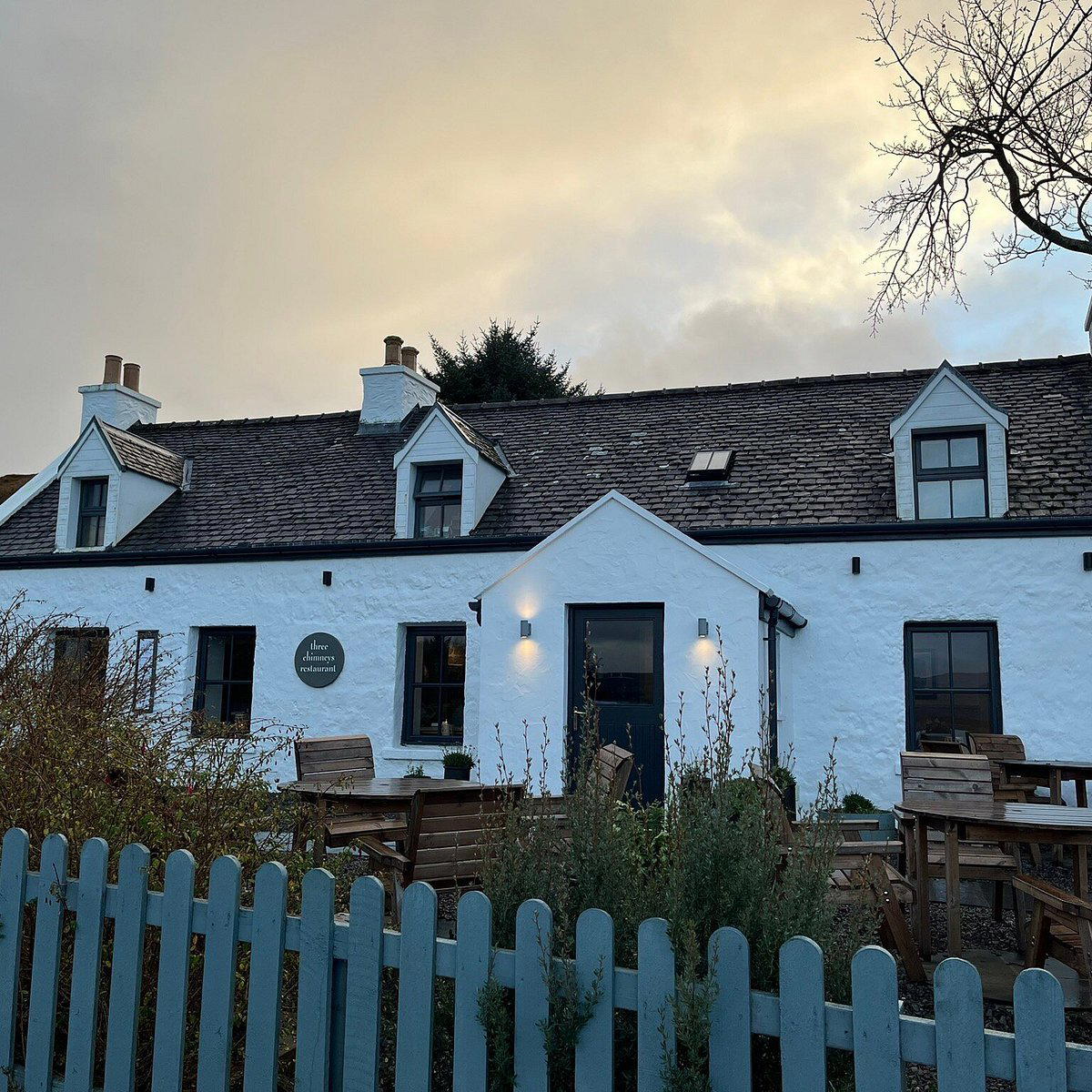
Where the Hebridean Coast Becomes the Menu
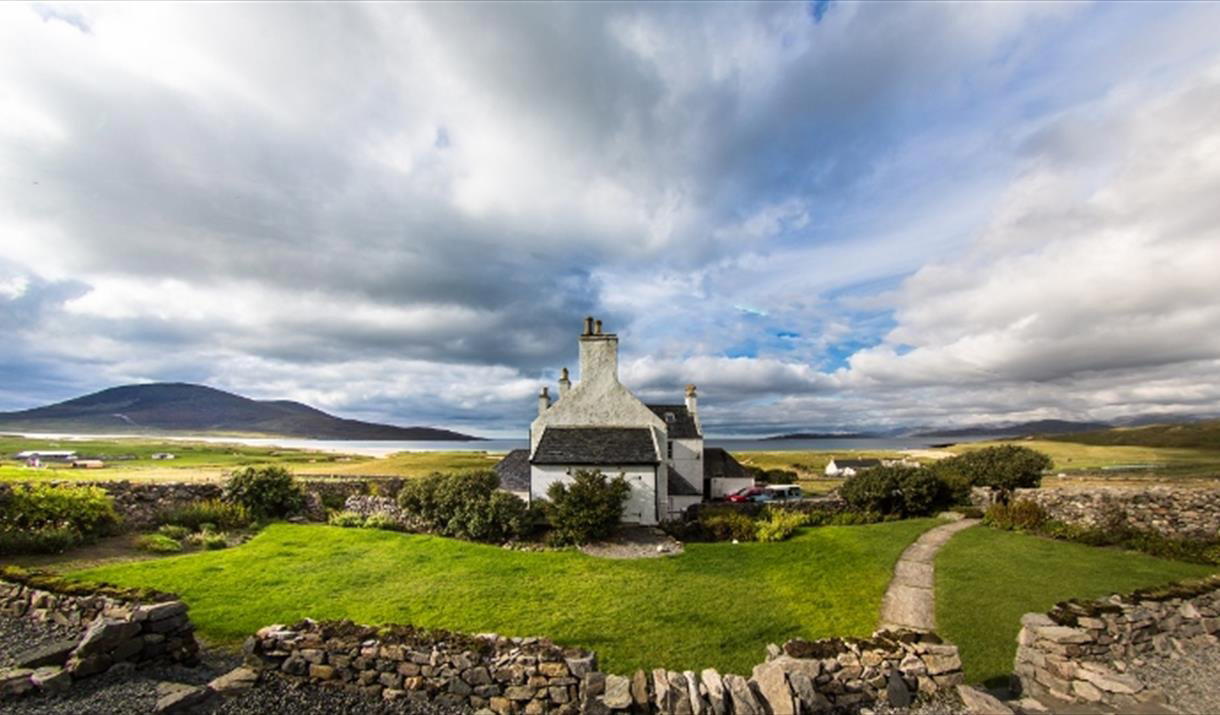
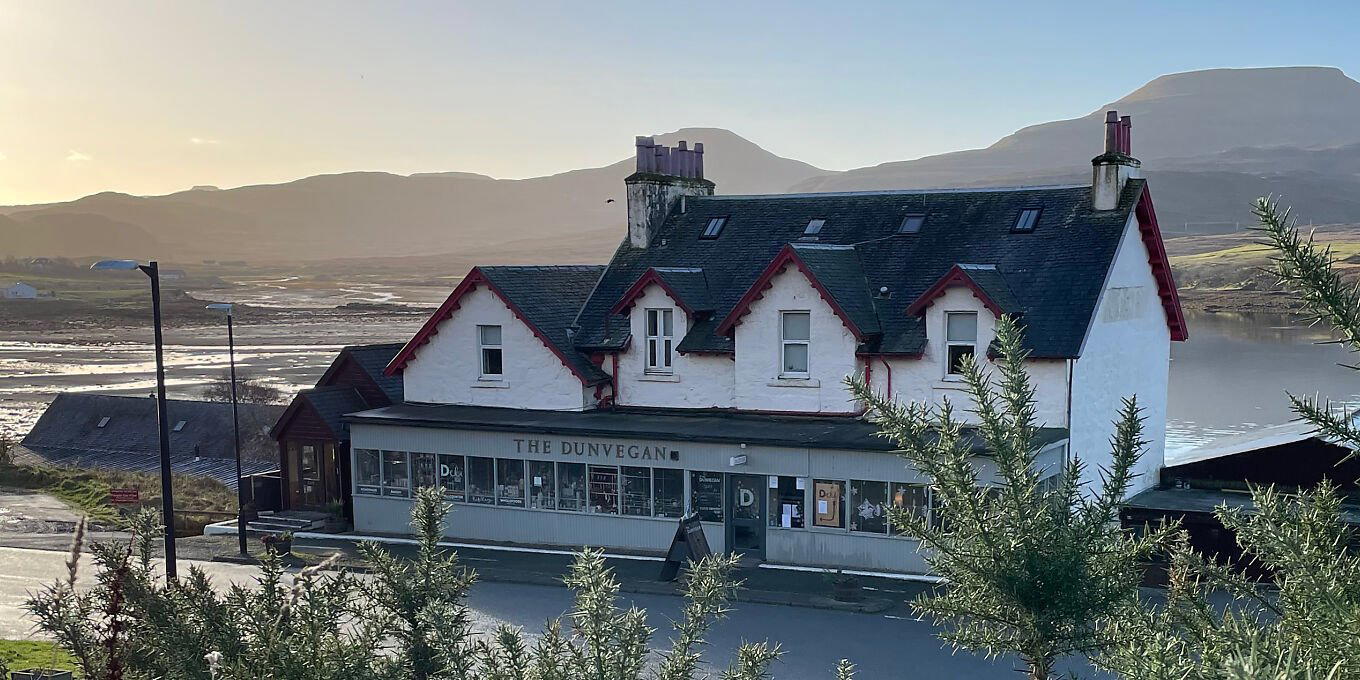
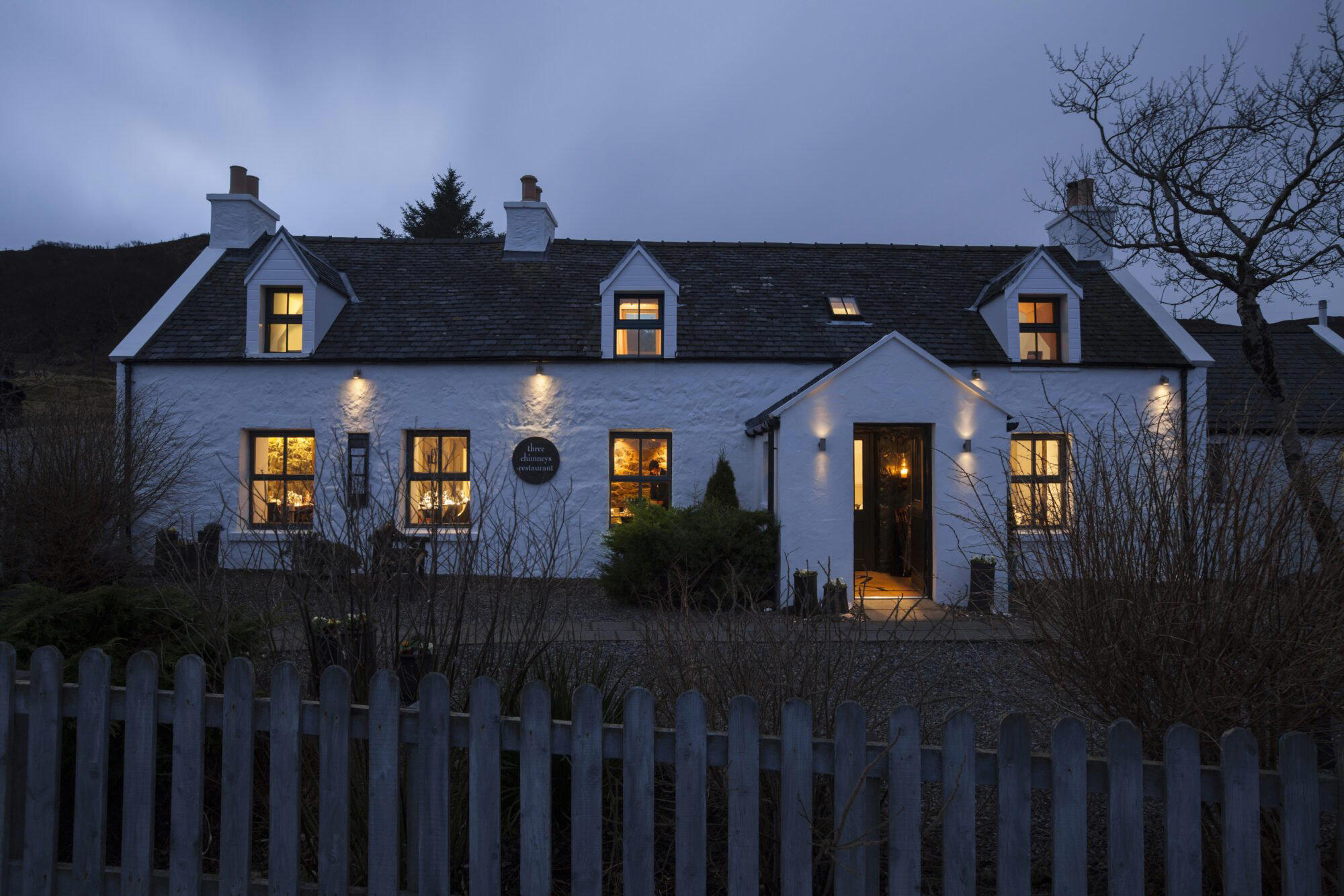
The drive to Colbost on Skye's Duirinish peninsula is itself an argument for the meal ahead. The single-track road follows Loch Dunvegan's western shore, passing through a range of basalt outcrops and sheep-cropped grass, until a low whitewashed crofthouse appears at the water's edge. This is the physical reality of destination dining in this part of the Isle of Skye: no town, no cluster of alternatives, just the building, the loch, and the hills of Waternish across the water. The House Over-by, the six-suite accommodation wing, sits adjacent, giving guests the option of staying rather than attempting a night drive back through the peninsula's narrow roads.
That geographic isolation is not incidental. It is the organizing principle behind how The Three Chimneys operates as a dining and hospitality address. The kitchen's relationship with Skye's producers, fishermen, and crofters is a direct product of being embedded in this community for decades rather than importing a metropolitan model onto a scenic backdrop. Few restaurants in rural Scotland carry that length of continuous operation alongside sustained recognition.
Scotland's Larder, Applied at Source
The broader argument for West Coast Scottish cooking rests on proximity to raw material rather than technique borrowed from elsewhere. Langoustines come from Skye's own waters, lamb from the island's crofts, and game and foraged ingredients from the surrounding moorland. In a country where provenance claims have become standard marketing language from Perth to Portree, the test is whether the kitchen's location actually closes the supply chain in ways that matter to flavour and seasonality. Here, the distance between catch and plate is measurable in miles rather than logistics chains.
This model, where the restaurant functions as both end-market and community anchor for local producers, has parallels across Scotland's rural hospitality sector. Properties like the Applecross Inn on the Bealach na Bà road and the Arisaig Hotel on the Road to the Isles operate on comparable principles of coastal sourcing and community embedding, though at a different price tier and dining register. The Shieldaig Lodge similarly anchors itself to the ecology of its loch-side setting. What distinguishes The Three Chimneys within this cohort is the consistency of its national profile over a longer period, which has allowed it to draw visitors specifically for the restaurant rather than treating dining as a secondary feature of a scenic stay.
Sustainability as Structural Practice, Not Positioning
The sustainability argument at remote Highland restaurants is structural before it is ethical. When your nearest urban food supplier is a ferry crossing and several hours of road away, local sourcing is partly logistics. But the implications for environmental practice run deeper than supply chain convenience. The Three Chimneys operates in an environment where waste disposal, energy supply, and water management all require deliberate systems rather than reliance on urban infrastructure. Restaurants in this position either build those systems carefully or accumulate costs and impacts that urban operators can externalise.
Scotland's broader food policy context reinforces this. Sustainable food systems have become a more formal part of Scottish public and commercial catering. Destination restaurants in rural Scotland that have maintained long-term producer relationships are better positioned within that framework than newer operations building sourcing models from scratch. The longevity of the Three Chimneys' community ties functions as a form of verified commitment that press releases about sustainability cannot replicate.
The accommodation side of this equation matters too. Six suites in The House Over-by is a deliberately constrained capacity, which limits the venue's environmental footprint while also ensuring that the ratio of cooking resource to seated guests remains high. Across the Highland accommodation sector, properties like the Coul House Hotel and Ceilidh Place Ullapool occupy a similar small-footprint, community-embedded position, though their dining ambitions differ. The The Granary Lodge is another Highland property where accommodation scale is calibrated to what the setting can absorb rather than what revenue maximisation might suggest.
The Case for Staying, Not Just Dining
The House Over-by suites were added to suit the restaurant's remote location. Driving from Portree or Broadford after dinner on Skye's roads is a significant undertaking, and the overnight option changes the nature of the visit from a logistical calculation to an immersive one. Guests who stay eat breakfast overlooking Loch Dunvegan the following morning, which reframes the entire experience from a single meal into a fuller engagement with the peninsula's particular light and quiet.
For comparison within Scotland's rural luxury tier, Gleneagles in Auchterarder represents the large-estate model where accommodation, sport, and dining are bundled at scale. The Three Chimneys operates at the opposite end of that spectrum: low capacity, high specificity, one dining room, one setting. Visitors choosing between those models are effectively choosing between breadth of amenity and depth of place. Within the UK's wider restaurant-with-rooms category, properties like Lime Wood in Lyndhurst or The Newt in Somerset offer a useful contrast: both embed their dining within a designed estate, where landscape is curated. Colbost is the uncurated version of that proposition.
Getting Here and Planning the Visit
Reaching The Three Chimneys requires either flying into Inverness and driving the A87 to Skye via the bridge at Kyle of Lochalsh, or taking the Caledonian MacBrayne ferry to Armadale from Mallaig on the mainland. From the Skye Bridge, allow roughly 50 to 60 minutes to reach Dunvegan and a further 15 minutes on the B884 to Colbost. There is no public transport to the restaurant. For those arriving on Skye by ferry from the Western Isles, Langass Lodge on North Uist (Langass Lodge in Na H Eileanan An Iar) offers an alternative overnight before crossing to Skye.
Advance booking is necessary, and the dinner-and-stay combination should be treated as a reservation unit rather than two separate decisions. The six House Over-by suites fill ahead of the restaurant seats for peak summer weeks from May through September, when evening light on the loch runs past ten o'clock. Spring and late autumn offer the same setting with less competition for tables and rooms, and the kitchen's sourcing in those seasons reflects what Skye's land and water actually produce in colder months rather than a menu adjusted to tourist expectations.
Those building a broader Highland itinerary around the visit might combine it with stays at the Glen Mhor Hotel and Apartments in Inverness as a gateway property, or plan onward travel to properties like Dun Aluinn in Aberfeldy for a Perthshire comparison.
Cost and Credentials
Comparable venues nearby, for context on price, style, and recognition.
| Venue | Price | Awards | Notes |
|---|---|---|---|
| The Three Chimneys and The House Over-byThis venue — the venue you are viewing | $$$$ | 5-Star | Not listed |
| Shieldaig Lodge | $$$$ | 4-Star | Gairloch, Victorian hunting lodge refurbished with period charm and modern comforts |
| Arisaig Hotel | $$ | 3-Star | Arisaig, Traditional Scottish coaching inn with modern comforts |
| Ceilidh Place Ullapool | $$ | 3-Star | Ullapool, Charming independent hotel combining accommodation, dining, and cultural experiences in historic cottages. |
| Coul House Hotel | $$$$ | 3-Star | Contin, Classic Scottish country estate with distinctive architecture and period features. |
| Glen Mhor Hotel & Apartments | $$ | 4-Star | Inverness city centre, Victorian heritage with modern sustainable upgrades |
Continue exploring
More in Highland
Hotels in Highland
Browse all →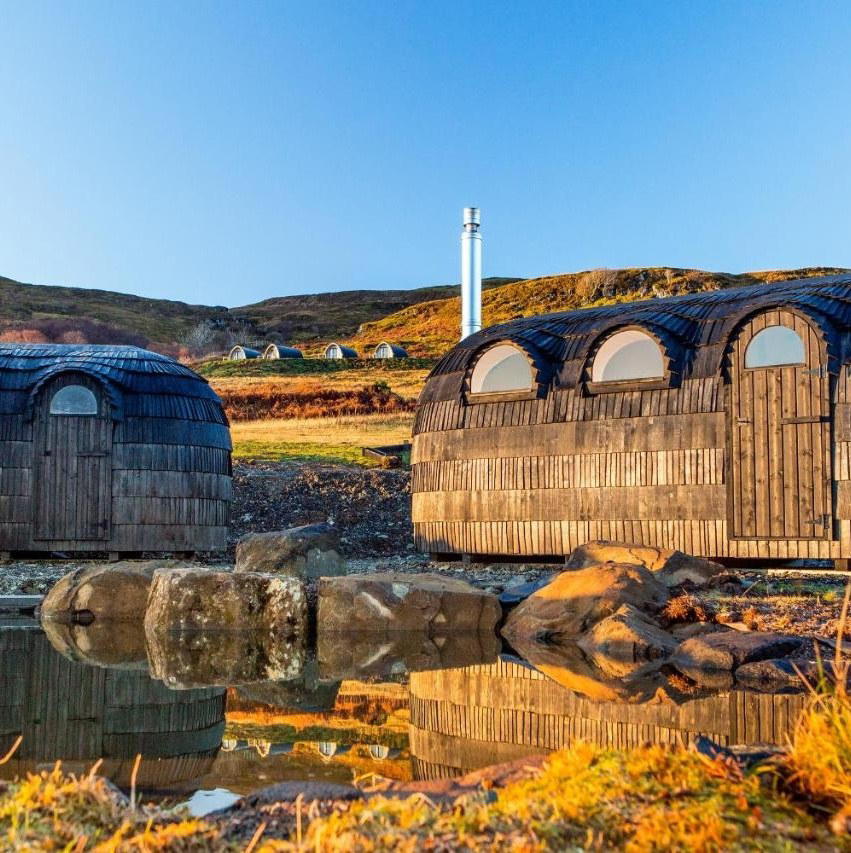
Bars in Highland
Browse all →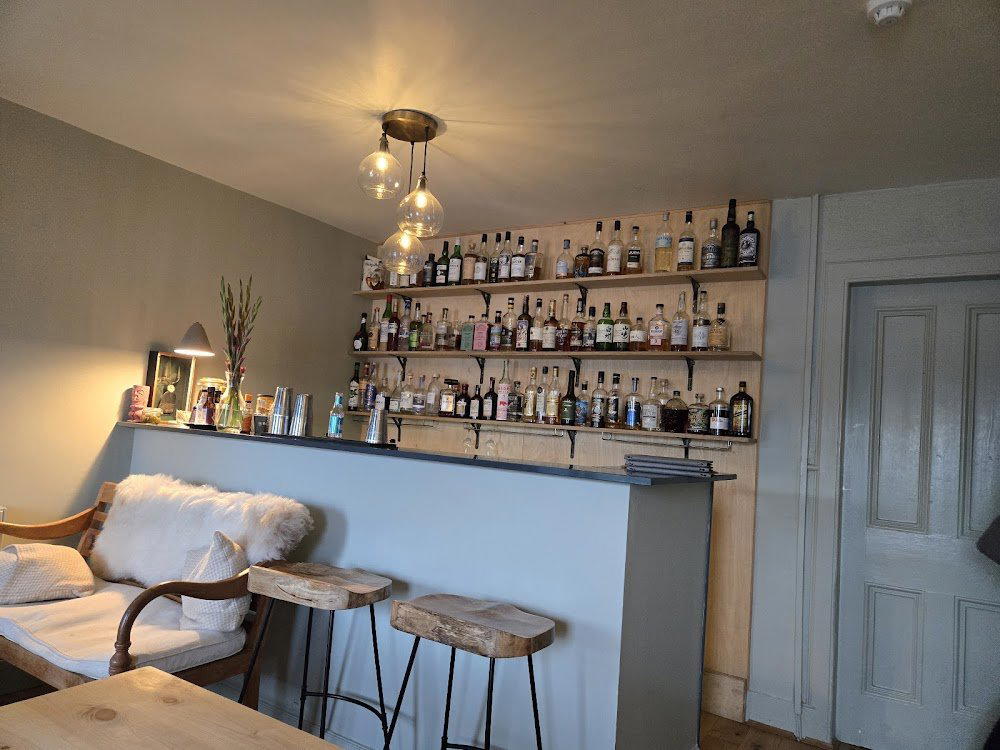
Restaurants in Highland
Browse all →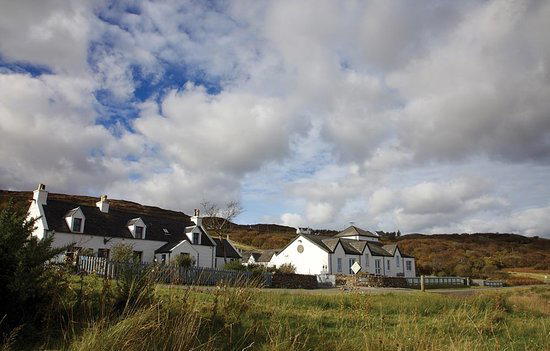
Wineries in Highland
Browse all →
At a Glance
- Romantic
- Scenic
- Cozy
- Elegant
- Intimate
- Sophisticated
- Romantic Getaway
- Anniversary
- Weekend Escape
- Waterfront
- Historic Building
- Panoramic View
- Room Service
- Concierge
- Waterfront
- Room Service
- Concierge
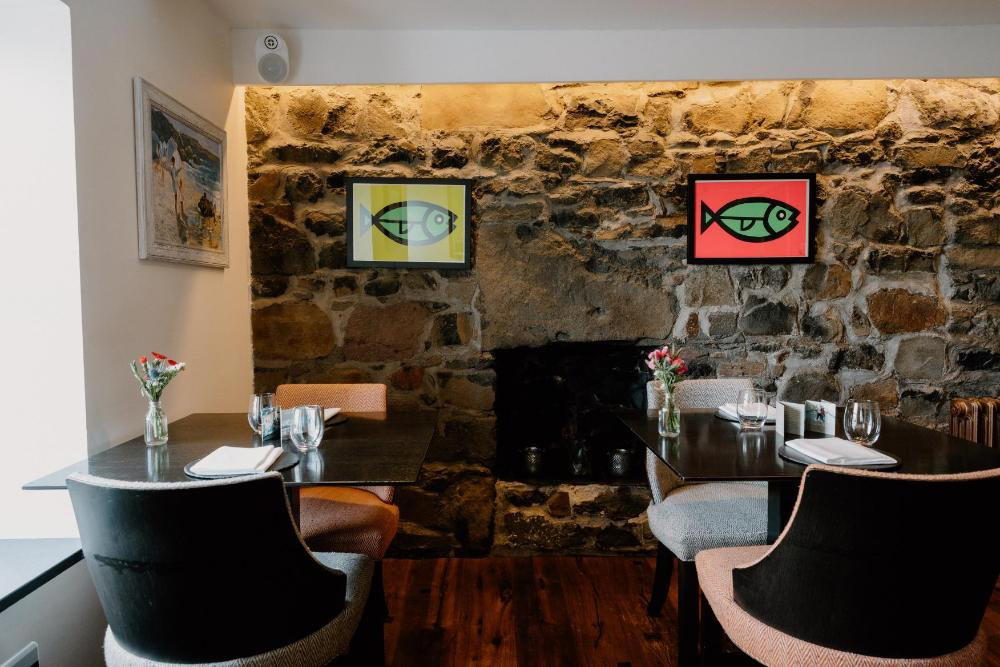
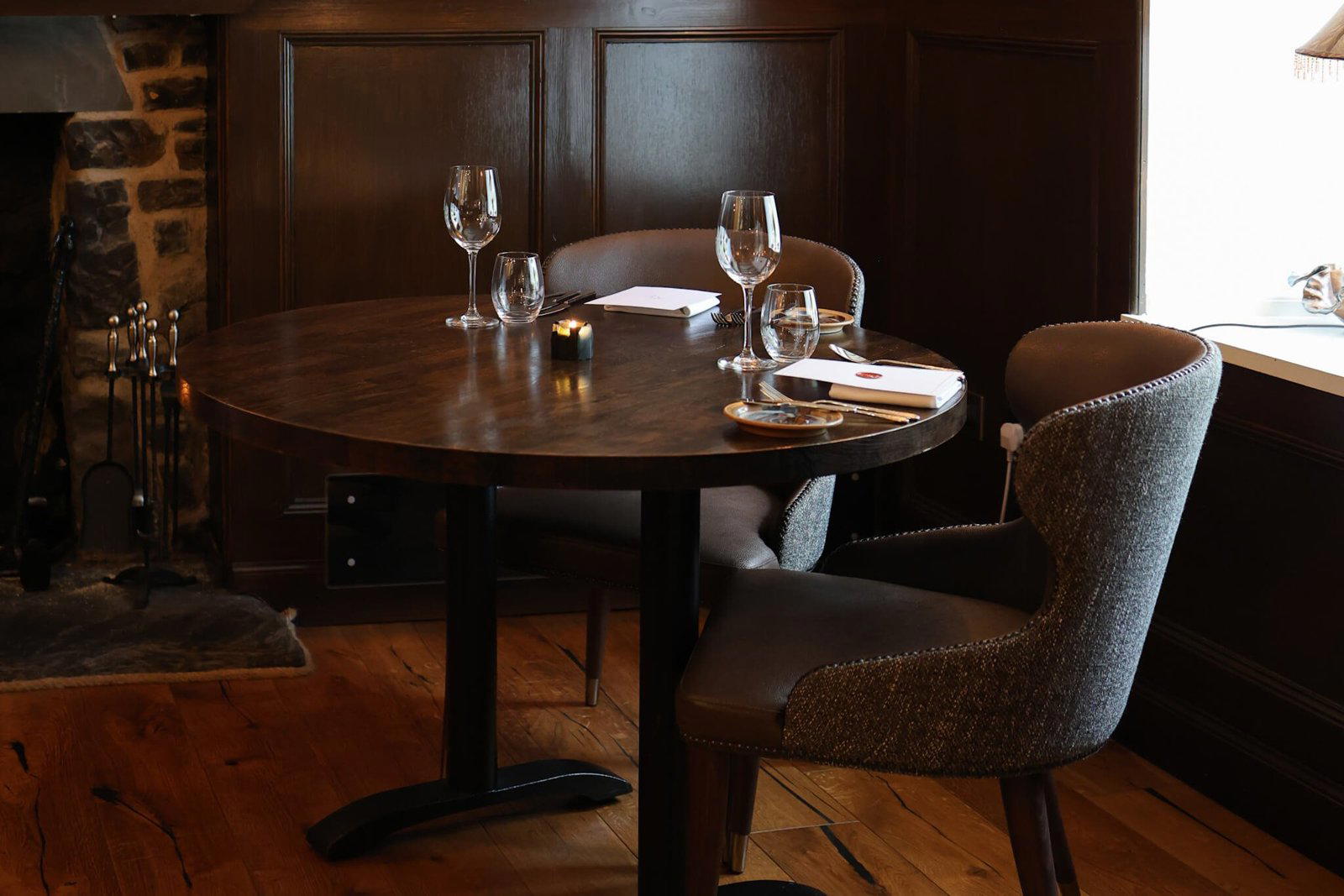
Cozy and intimate Scandi minimalist lounge with stripped-back design and peaceful rural atmosphere.