The St. Regis Kuwait


On Fahd Al Salem Street in central Kuwait City, The St. Regis Kuwait occupies a position that few Gulf properties can match: a 135-room urban address where Arab architectural references — mashrabiya-inspired screens, patterned marble floors, local artisan metalwork — sit alongside the brand's signature butler service and its long-running Bloody Mary bar program. Rates from $1,086 position it at the top of Kuwait City's luxury hotel tier.
 Discover on Pearl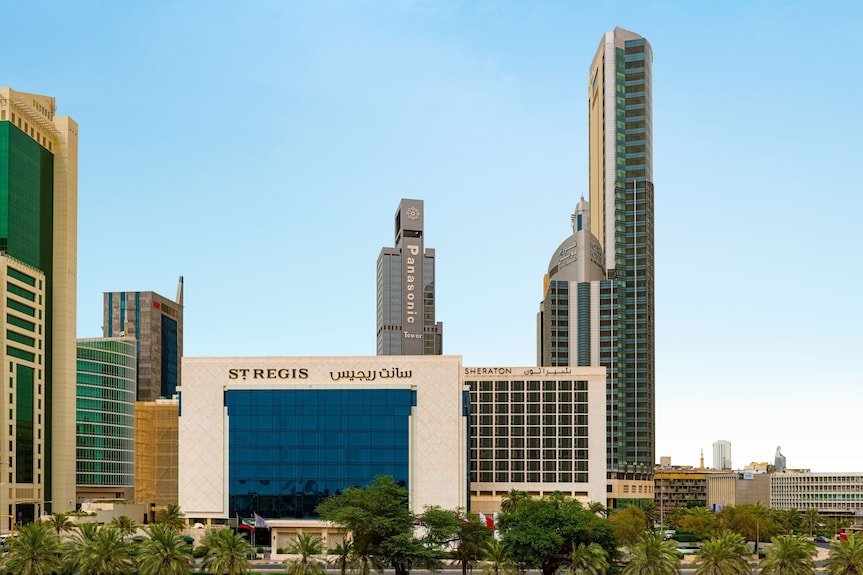
A Central Kuwait City Address at the Leading of the Market
Kuwait City's luxury hotel market has consolidated around a small number of international flagships occupying the city's most connected corridors. Fahd Al Salem Street, where The St. Regis Kuwait sits, is among the most commercially legible addresses in the capital: close to the financial district, within reach of the waterfront corniche, and on an artery that connects the older city fabric to newer development zones. For a property at this price tier, starting from $1,086 per night, location functions as part of the product — the ability to walk or make a short drive to Kuwait City's primary business, retail, and cultural nodes without the time cost of a suburban or beach-resort setting.
That positioning places The St. Regis Kuwait in a different competitive conversation from beach-oriented properties such as Jumeirah Messilah Beach, which trades central access for seafront space. The Four Seasons Hotel Kuwait at Burj Alshaya and the Waldorf Astoria Kuwait occupy the same urban premium tier, and together these three properties effectively define the ceiling of the Kuwait City hotel market. Within that peer group, address specifics, design approach, and food and beverage programming are the differentiating variables.
Arrival and Architecture: Where Brand Logic Meets Local Reference
The St. Regis formula, applied consistently across properties from Paris to Tokyo, involves transplanting a recognizable set of brand codes — butler service, the Bloody Mary bar ritual, a formal arrival sequence , into a local design context. In Kuwait City, that local context is handled with more specificity than the brand sometimes deploys. The porte-cochère on Fahd Al Salem Street sets the register immediately: gleaming marble floors and crystal chandeliers visible from the entrance signal a formal European-inflected luxury idiom, while the decorative screens and custom wood paneling throughout the common spaces draw directly from mashrabiya latticework, the traditional carved wooden screen form used across Arab architecture to control light and provide privacy.
Patterned marble floors in the common areas reference the cool geometry of mosque interiors, a design move that grounds the space in a regional visual language rather than generic international luxury. The 135 rooms and suites continue this logic at a smaller scale: leather and brass details produced by local artisans, color palettes in gold, ivory, and navy blue, floor-to-ceiling windows, and marble bathrooms with proportions that signal a certain idea of occasion. Suites oriented toward the bay or the aquamarine pool are the geometry-dependent choice for travelers who want the visual payoff to match the rate.
This approach to integration , using local craft and architectural reference as design grammar rather than surface decoration , is more common in smaller, independent properties. Properties like Castello di Reschio in Umbria or Casa Maria Luigia in Modena have built entire identities around the depth of local material engagement. The St. Regis Kuwait achieves a version of this within a branded framework and at urban scale, which is a harder editorial problem to solve.
Food, Drink, and the Brand's House Customs
The food and beverage program at The St. Regis Kuwait reflects both the international clientele the property is built to receive and a deliberate effort to keep the dining mix regionally grounded. The upscale Italian restaurant and the English tea lounge with chandelier lighting are calibrated for a global guest who expects familiar luxury reference points. The tea lounge in particular belongs to a long tradition at St. Regis properties , afternoon tea as a social ritual with enough formality to feel like an occasion rather than a break.
The St. Regis Bar follows the house custom that the brand has maintained across its global portfolio: twists on the Bloody Mary, a drink whose association with the brand dates to the original St. Regis in New York. This is one of the more coherent proprietary rituals in luxury hospitality, because it gives the bar a specific editorial identity rather than a generic premium cocktail list. The remaining dining outlets focus on regional cuisines, which provides contrast to the European anchors and makes the food and beverage floor feel less like a single-register program.
For context on how this compares to the brand's approach in other cities, the St. Regis formula at properties like flagship New York addresses or European luxury hotels consistently uses F&B; to reinforce place identity rather than provide escape from it. In Kuwait City, the split between the Italian restaurant, the English tea lounge, and the regional dining outlets reflects the actual composition of the city's luxury hospitality clientele: business travelers, regional visitors, and a local guest base with diverse reference points.
Travelers researching the wider Kuwait City food and beverage scene will find additional context in our full Kuwait City restaurants guide and our full Kuwait City bars guide.
Planning Your Stay
The St. Regis Kuwait operates 135 rooms and suites on Fahd Al Salem Street, with rates from $1,086 per night placing it at the leading of Kuwait City's urban luxury tier. The central address on Soor Street makes it practical for business travel and city exploration in equal measure. For travelers comparing properties at this level, the full Kuwait City hotels guide covers the complete tier. Travelers focused on experiences beyond the hotel will find relevant programming in our Kuwait City experiences guide. For broader regional hotel comparisons at the level of properties like Aman New York, Badrutt's Palace, or Hotel Du Cap-Eden-Roc, the St. Regis Kuwait operates in a comparable band of international luxury, applied to a Gulf urban context that carries its own specific set of logistical and design demands.
Frequently Asked Questions
- What room should I choose at The St. Regis Kuwait?
- Suites oriented toward the bay or the pool offer the most direct visual return on the rate, which starts at $1,086 per night. All rooms feature floor-to-ceiling windows, marble bathrooms, and local artisan detailing in leather and brass. For travelers prioritizing space and view over room category, a bay-facing suite represents the clearest upgrade decision at this property.
- Why do people go to The St. Regis Kuwait?
- The combination of a central Fahd Al Salem Street address, the St. Regis butler service model, and a design program that integrates Arab architectural references at a serious level makes it one of the more coherent luxury options in Kuwait City. At rates from $1,086, it sits at the leading of the city's hotel tier and competes directly with the Four Seasons at Burj Alshaya and the Waldorf Astoria Kuwait.
- How hard is it to get in to The St. Regis Kuwait?
- With 135 rooms, The St. Regis Kuwait is not a small-inventory property, and booking availability at this tier in Kuwait City is generally more accessible than comparable properties in high-demand markets like Paris or Tokyo. That said, rates from $1,086 per night and the property's position at the leading of the urban luxury tier mean it draws a consistent mix of business and leisure travelers. Booking through the St. Regis website or a preferred partner well in advance of peak business travel periods is advisable.
- What kind of traveler is The St. Regis Kuwait a good fit for?
- Business travelers who want a central Kuwait City address with formal service infrastructure, and leisure travelers seeking a property where Arab architectural identity is expressed at a design level rather than as surface decoration. The price point and format are less suited to travelers who prioritize beach access or resort-scale leisure amenities; for that profile, Jumeirah Messilah Beach is the more relevant comparison.
- How does the St. Regis Kuwait's food and beverage program compare to other Gulf luxury hotels?
- The mix of an Italian restaurant, an English tea lounge, and regional dining outlets reflects the property's international positioning within a Gulf urban market. The St. Regis Bloody Mary bar ritual , a house custom across the global portfolio , gives the bar a proprietary identity that most Gulf hotel bars do not carry. Travelers focused specifically on regional cuisine will find the dedicated outlets a useful complement to the broader Kuwait City restaurant scene.
The Short List
A compact peer snapshot based on similar venues we track.
Preferential Rates?
Our members enjoy concierge-led booking support and priority upgrades at the world's finest hotels.
Get Exclusive Access