
Selected by the Michelin Guide Hotels 2025, The Mora Sahara Tozeur sits at the edge of one of North Africa's great desert landscapes, bringing a considered architectural response to the oasis town of Tozeur. The property occupies a tier of Tunisian desert accommodation defined by design ambition rather than resort scale, positioning it as a reference point for travellers approaching the Sahara with editorial rather than package-tour intent.
Pearl is the En Primeur Club membership app — saves, bookings, and concierge access live there. Same editors, same standards.
- Address
- 2200 Route Mrah Lahwar, Tozeur, Tunisia
- Phone
- +216 70 100 800
- Website
- themora.com
- Directions
- Get directions
 Saves & bookings on Pearl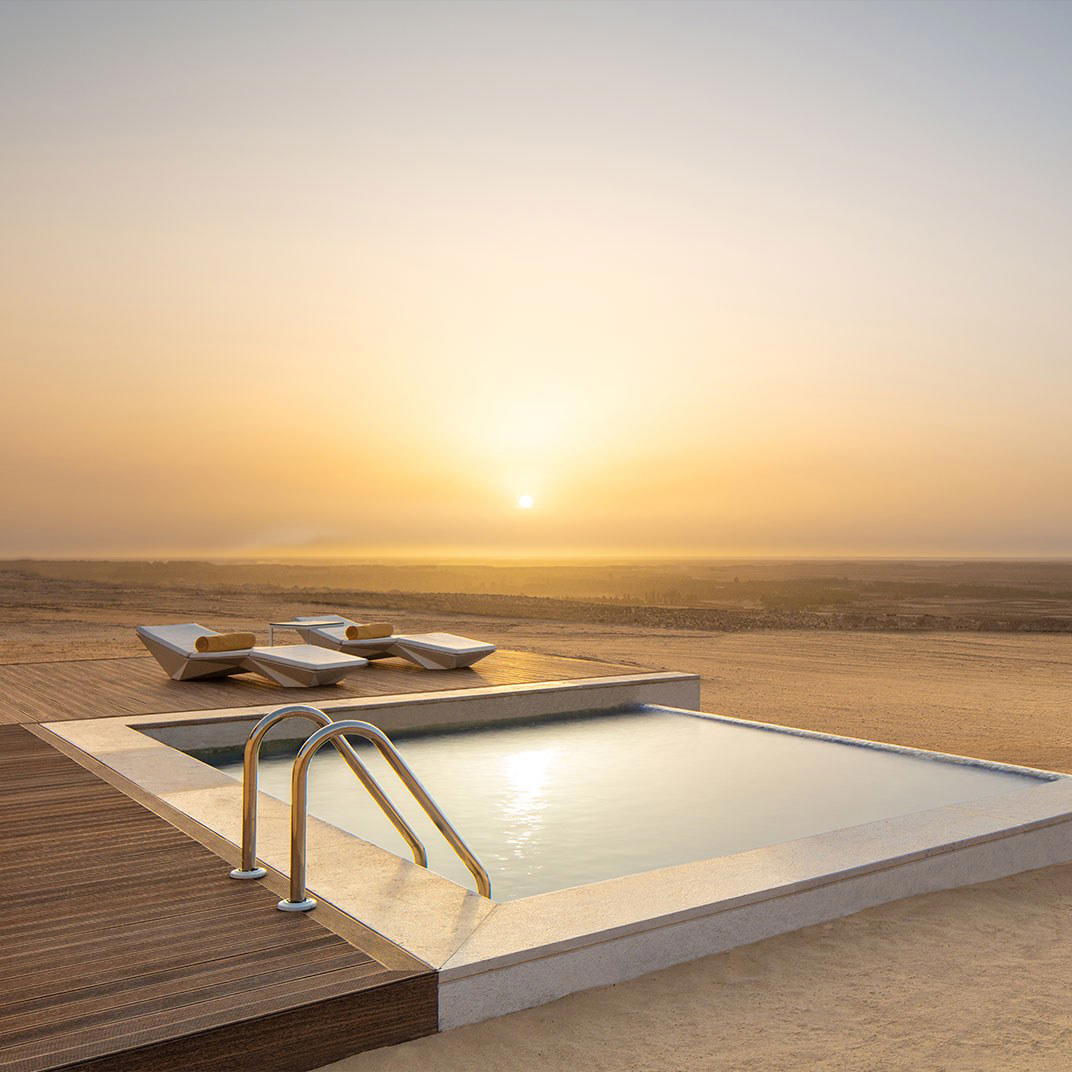
Where the Sahara Begins to Assert Itself
Tozeur occupies a specific position in North African travel: it is neither a coastal resort corridor nor a medina city, but the threshold point where Tunisia's inhabited oasis belt gives way to open desert. Visitors who fly into Tunis and spend time at properties like Four Seasons Hotel Tunis in Gammarth or The Residence Tunis before heading south find themselves crossing a significant environmental register. The air dries out. The palette narrows to ochre and pale sand. The architecture shifts from Moorish whitewash to the distinctive yellow brick of the Tozeur region, known locally as briques de Tozeur, a geometric, latticed masonry tradition that has defined the town's streetscapes for centuries. It is into this context that The Mora Sahara Tozeur positions itself.
The Architectural Logic of Desert Hospitality
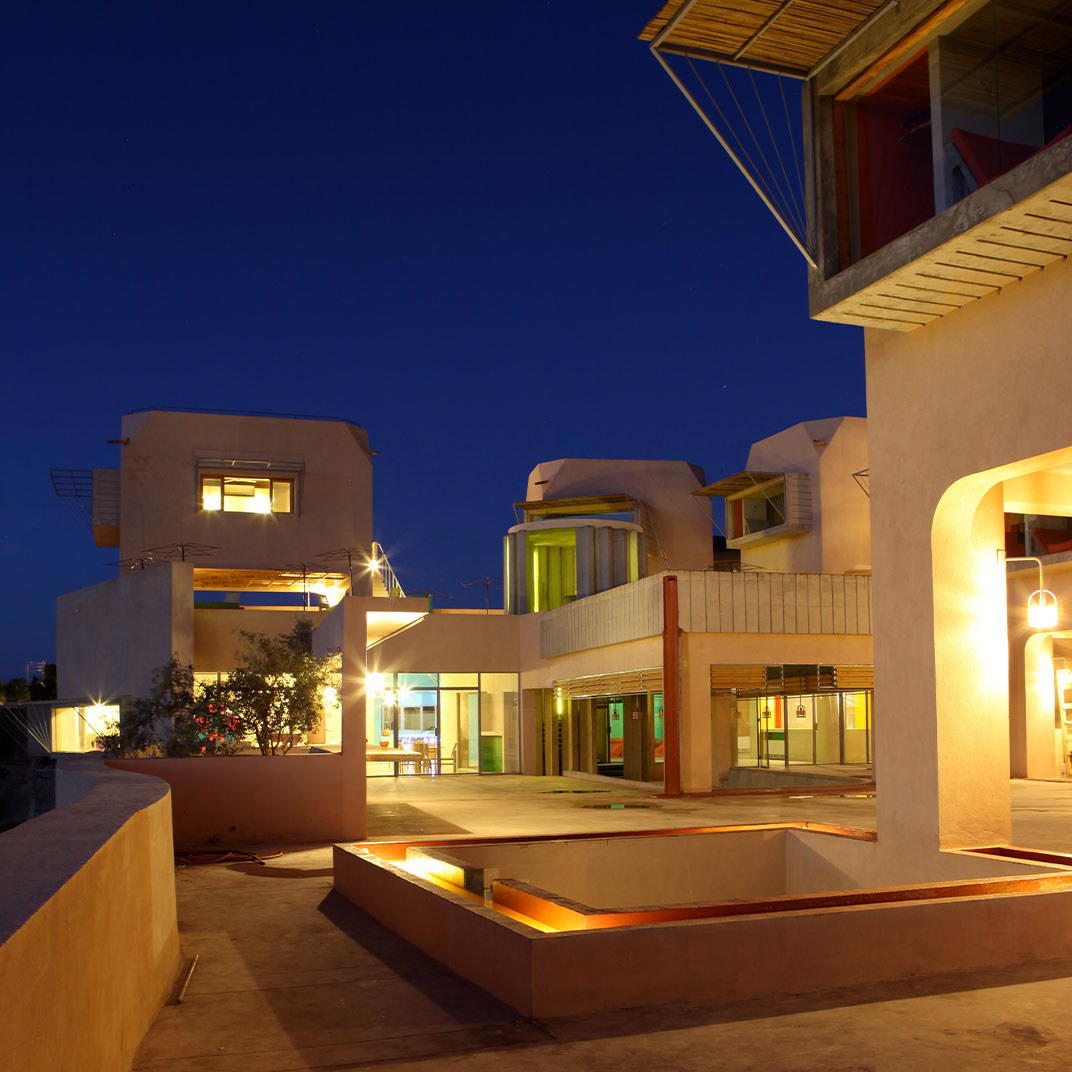
In desert destinations across North Africa and the Middle East, luxury accommodation has split into two broad approaches. The first is the large-footprint international resort, air-conditioned against the climate, importing materials and aesthetic frameworks from elsewhere. The second is the design-led property that takes its cue from the vernacular, treating local building tradition not as ornament but as structural logic. The Mora Sahara Tozeur belongs to the second category. Properties built in response to their physical environment rather than against it tend to age differently, drawing authority from context that imported luxury cannot replicate. The Anantara Sahara Tozeur Resort represents the international-brand tier in the same town; The Mora occupies a more intimate, design-specific register by comparison.
The spatial relationship between building and desert is the primary architectural question at properties like this. How do interior volumes open onto landscape without surrendering thermal control? How do courtyards, screens, and water features mediate between the 40-degree exterior and the cooled interior? These are centuries-old problems in Saharan and pre-Saharan architecture, solved in the traditional ksar and caravanserai through geometry and mass rather than mechanical cooling. A property that engages seriously with those problems reads differently from one that imports glass curtain walls and high-capacity HVAC. The Mora's address at Mrah Lahwar, on Tozeur's periphery, places it at a point where the oasis edge and the open desert come into close proximity, which is exactly the siting logic a property of this type requires.
Michelin's Desert Selection and What It Signals
The Michelin Guide's inclusion of The Mora Sahara Tozeur in its Hotels 2025 selection is a meaningful credential in a context where independent quality signals are sparse. Tunisia's hotel sector carries a limited international critical infrastructure compared to Morocco or Egypt, which means Michelin selection carries disproportionate weight as a sorting mechanism. The guide's hotel selection criteria weight atmosphere, service coherence, and setting quality alongside physical plant, which makes it a more useful signal for properties of this type than a star-rating system focused on room amenities. In the North African desert tier, Michelin-selected properties sit in a defined peer group: Dar HI in Nefta, the adjacent oasis town, represents another design-led desert property in the same regional bracket. For calibration on Tunisian coastal Michelin selections at a different price point and format, La Badira in Hammamet and Maison Dedine in Sidi Bou Said provide useful reference points further north.
Globally, the Michelin hotel selection spans properties at different scales and price tiers, from Badrutt's Palace Hotel in St. Moritz and Hôtel de Paris Monte-Carlo at the high-heritage end, to smaller, design-specific properties where the selection is less about scale and more about coherence of experience. The Mora sits firmly in the latter category, where selection is an editorial act rather than a confirmation of known luxury.
Tozeur as a Base: What the Town Offers
Tozeur's draw is specific. The Chott el-Djerid salt lake, one of the largest in the Sahara, begins just beyond the town's western edge. The Belvedere viewpoint above the oasis gives spatial orientation to a palm grove of around 200,000 trees. The old medina quarter of Ouled el-Hadef contains some of the leading examples of the decorative brick architecture that defines the region, and the archaeology of the nearby Chak Wak gardens connects to the broader Saharan trade route history of the town. This is not beach tourism or city-break tourism; the visitor profile skews toward those who have made a deliberate routing decision to reach this part of Tunisia, which shapes the character of the hospitality environment accordingly.
For travellers planning a wider Tunisian itinerary, the south-to-north arc that passes through Tozeur before returning via the coast is especially coherent structure. Those adding a northern coastal segment can reference our full Tozeur restaurants guide for dining context, while the coastal end of the trip might draw on the hotel tier represented by La Badira or, at the capital, Four Seasons Hotel Tunis. The Michelin-selected northern outpost at Meliá hotel in Tabarka adds another data point for those extending to the northwest coast.
Planning Your Stay
The optimal window for Tozeur runs from October through March, when daytime temperatures sit in the 15-25°C range and the light conditions for desert photography and excursion are at their most productive. Summer months push daytime highs well above 40°C, which compresses the usable outdoor hours considerably and places heavier load on any property's cooling infrastructure. Booking well in advance is advisable for the high autumn and winter weeks, particularly around the Tozeur International Festival of the Oases (typically November), when regional accommodation absorbs significant demand. The nearest commercial airport, Tozeur-Nefta International Airport (TOE), operates seasonal and regional connections; most international travellers route through Tunis-Carthage before connecting south. Those comparing Tozeur as a desert destination against alternatives further afield might weigh it against properties like Hotel Esencia in Tulum or Castello di Reschio in Lisciano Niccone in terms of the design-led, limited-key format, even if the landscape register is entirely different.
Comparable Spots, Quickly
Comparable venues nearby, for context on price, style, and recognition.
| Venue | Cuisine | Price | Awards | Notes |
|---|---|---|---|---|
| The Mora Sahara TozeurThis venue — the venue you are viewing | Luxurious desert resort with central oasis and Moorish-inspired architecture | $$$$ | 5-Star | Not listed |
| Anantara Sahara Tozeur Resort | Contemporary luxury desert retreat with lush palm oases amid the Sahara. | $$$$ | Michelin 1 Key | Tozeur |
| Dar HI | Contemporary eco-lodge designed as a futuristic Tunisian foundouk with polished tower rooms. | $$$$ | 4-Star | Quartier Ezzaouia |
| Maison Dedine | luxurious seaside villa converted boutique hotel | $$$$ | 4-Star | Sidi Bou Said |
| Meliá hotel in Tabarka | beach resort | $$$ | 4-Star | Zone Touristique |
| Four Seasons Hotel Tunis | Contemporary Arabesque luxury resort with open-floor plan allowing Mediterranean breezes and sea views throughout. | $$$$ | 5-Star | Gammarth |
Recognition history
Dated appearances from independent guides and award organizations, with the underlying list record or original source where available.
Michelin Selected
Michelin
Continue exploring
More in Tozeur
Hotels in Tozeur
Browse all →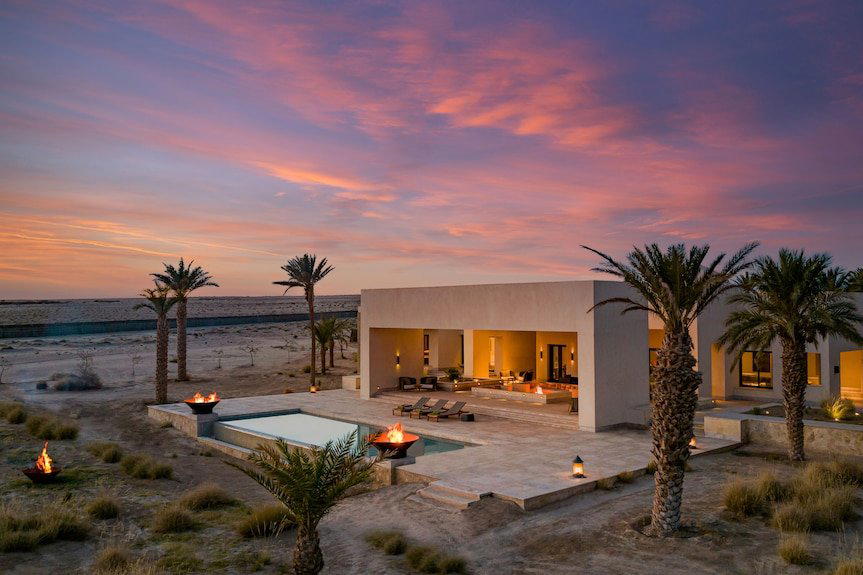
At a Glance
- Elegant
- Scenic
- Sophisticated
- Romantic
- Cozy
- Romantic Getaway
- Family Vacation
- Wellness Retreat
- Weekend Escape
- Infinity Pool
- Private Villa
- Destination Spa
- Panoramic View
- Garden
- Terrace
- Wi Fi
- Pool
- Spa
- Fitness Center
- Room Service
- Concierge
- Kids Club
- Tennis
- Garden
- Wi Fi
- Pool
- Spa
- Fitness Center
- Room Service
- Concierge
- Kids Club
- Tennis
Laid-back luxury blending contemporary elegance with Moorish and Berber influences, featuring warm desert hues, panoramic desert views, and a relaxing spa atmosphere.