The Lautner Compound
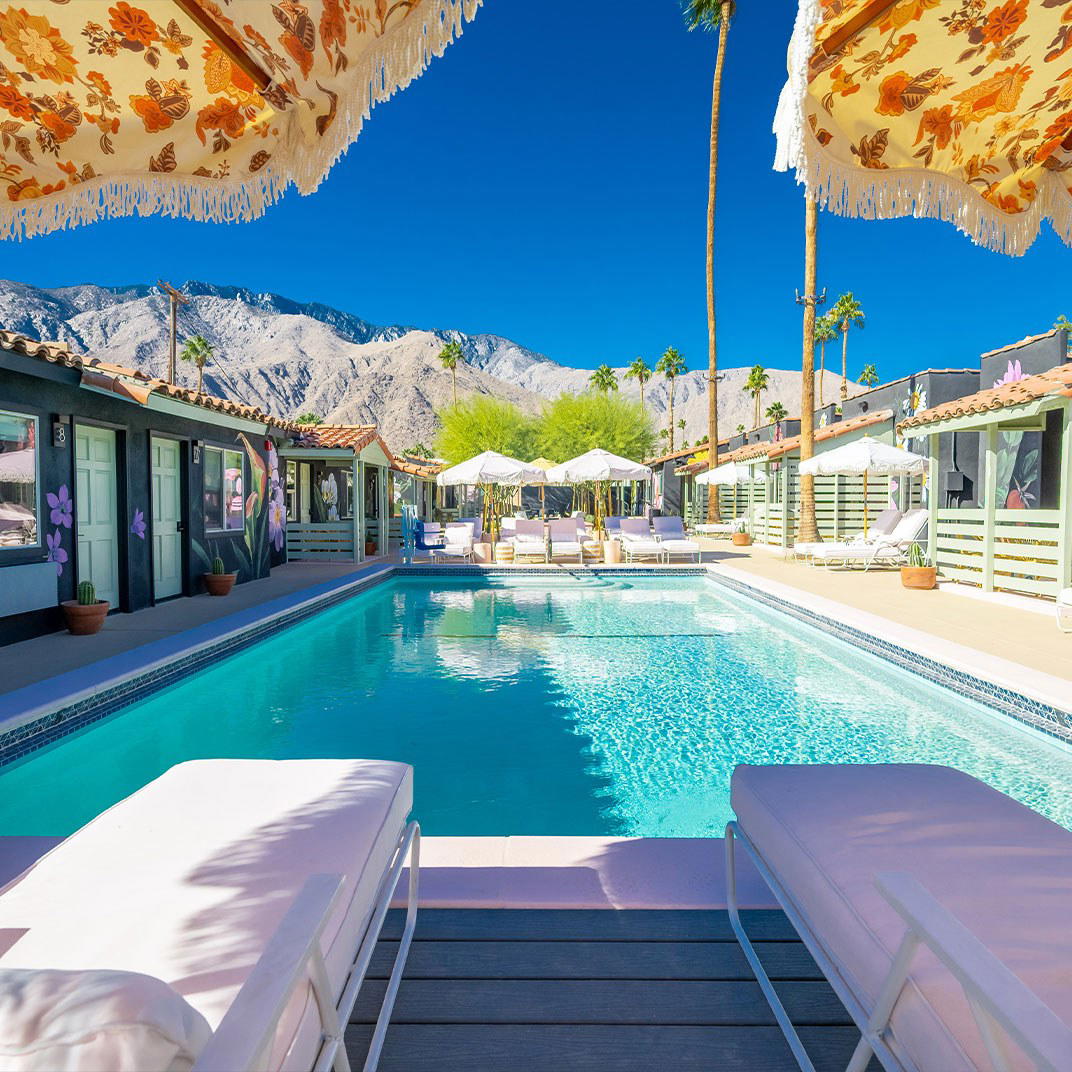
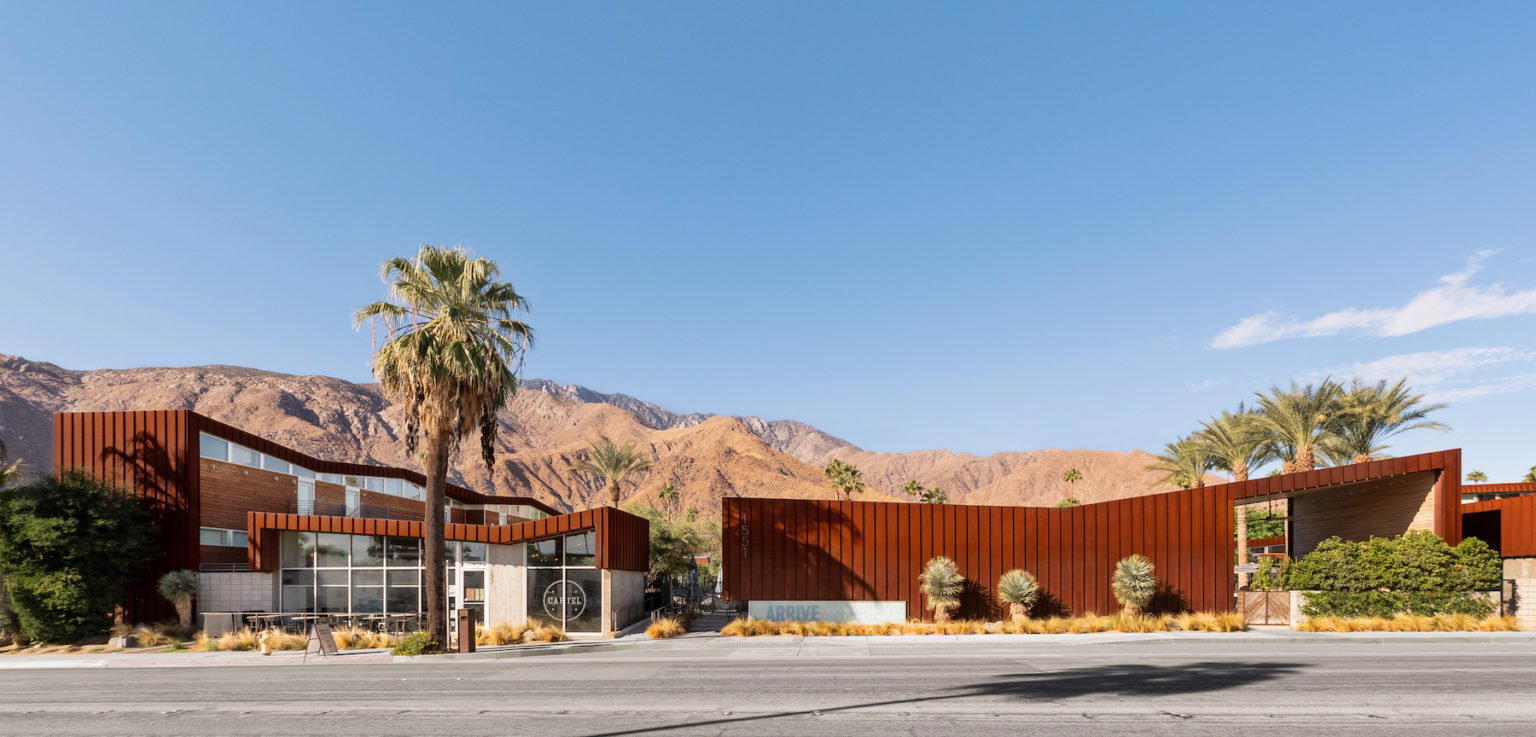
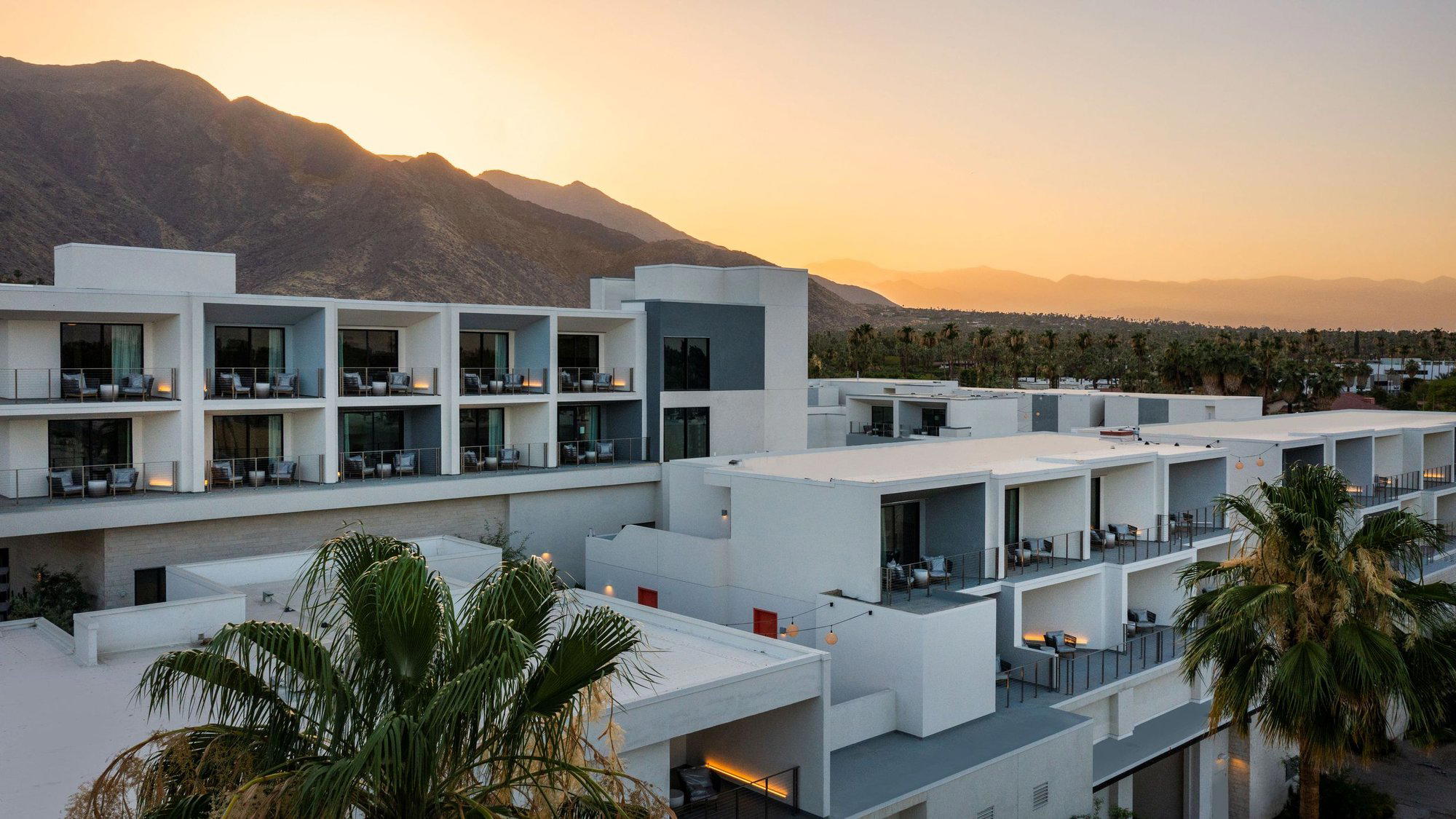
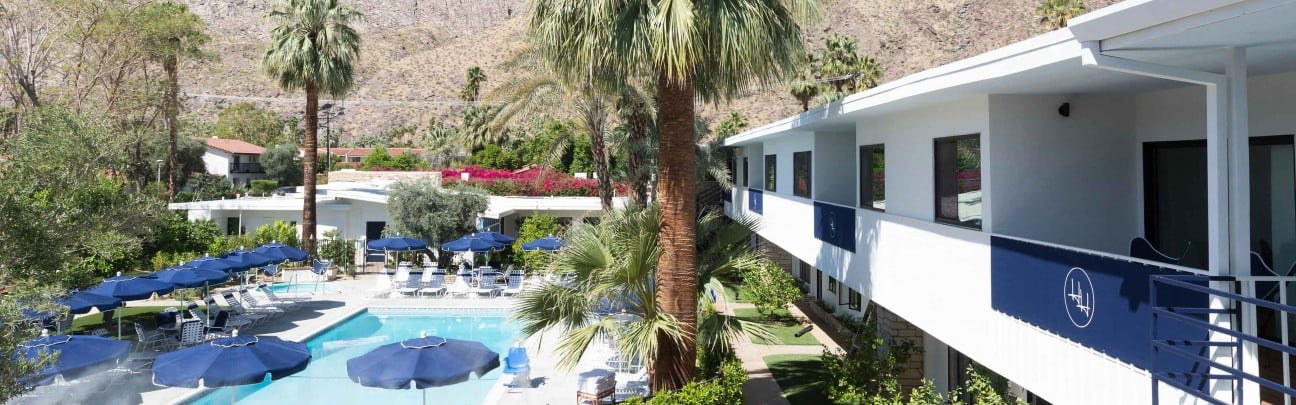
The Lautner Compound in Desert Hot Springs occupies a mid-century modernist compound designed by John Lautner, among the more architecturally significant hotel properties in the California desert. Low-profile bungalows, volcanic stone walls, and mineral pool terraces place it firmly in the design-led, small-capacity tier that has come to define premium desert accommodation outside Palm Springs proper.
Pearl is the En Primeur Club membership app — saves, bookings, and concierge access live there. Same editors, same standards.
- Address
- 67710 San Antonio St, Desert Hot Springs, CA 92240
- Phone
- +1 760 832 5288
- Website
- thelautner.com
- Directions
- Get directions
 Saves & bookings on Pearl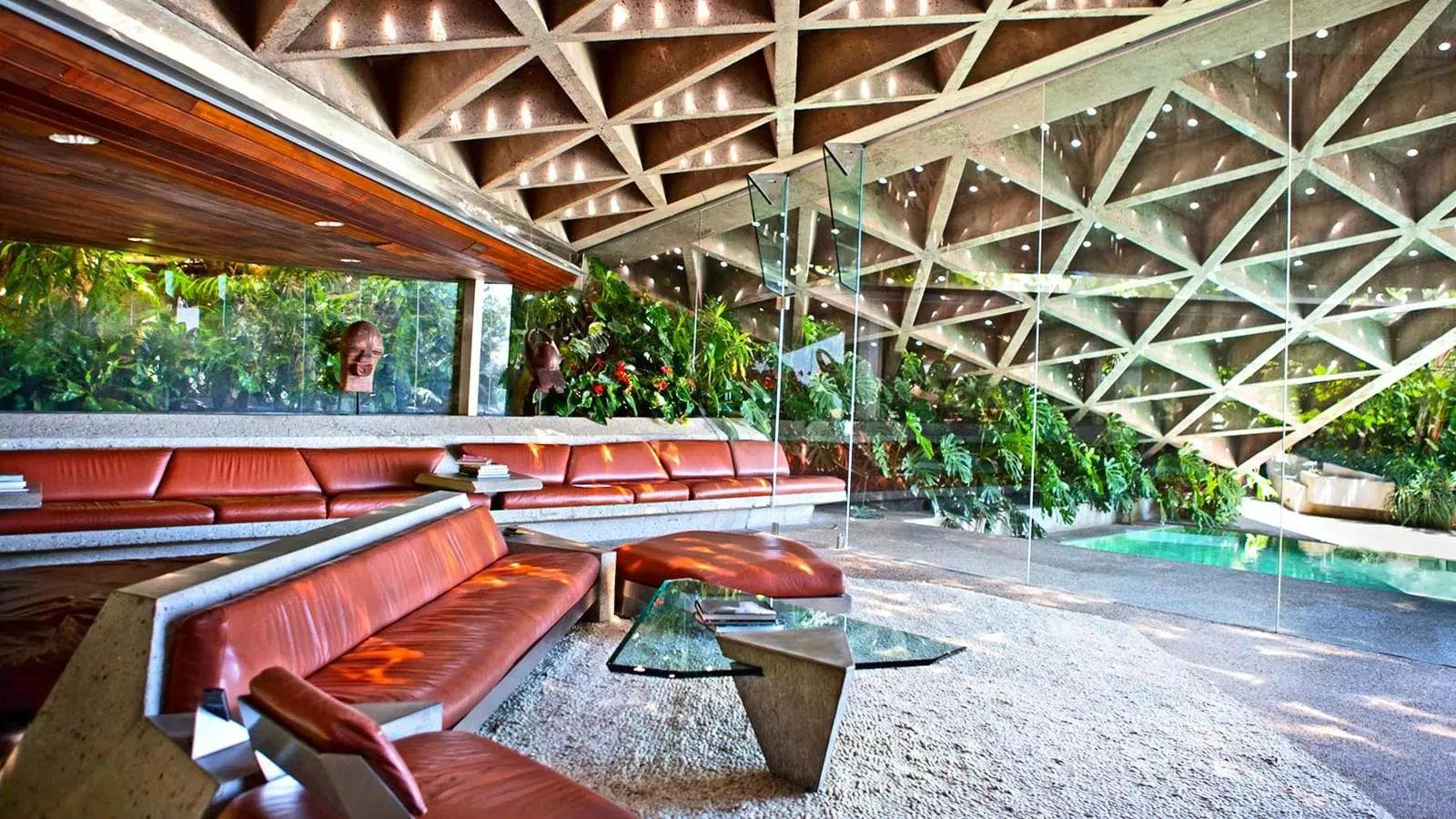
Where the Desert Floor Becomes the Architecture
Approaching Desert Hot Springs from the south, the Coachella Valley opens wide on either side of Gene Autry Trail before the road climbs toward a quieter plateau. The built environment thins. The San Jacinto range fills the western horizon. It is in this interval, where the Mojave gives way to the Colorado Desert's lower elevation and year-round geothermal warmth, that a particular kind of mid-century modernism took root. The Lautner Compound, a hotel in Desert Hot Springs at 67710 San Antonio St, is one of the clearest surviving expressions of that tradition.
John Lautner, the Frank Lloyd Wright apprentice who went on to define a distinctly Californian strain of organic modernism, designed the compound in an era when Desert Hot Springs was still largely overlooked by the leisure class gravitating toward Palm Springs. That displacement from the obvious address turned out to be architectural good fortune. Without the development pressure that reshaped Palm Springs proper, Lautner's structure has survived more or less intact, which makes it a rarity in a region where mid-century properties have too often been demolished or compromised by renovation. For travellers who track design, the property occupies a category of its own: a functioning residential compound that doubles as a piece of built American cultural history.
The Grammar of the Space
Lautner's design vocabulary here follows the principles that defined his most celebrated projects, the Sheats-Goldstein Residence, Chemosphere, Elrod House: materials drawn from the site, structural logic that expresses itself honestly rather than hiding behind cladding, and spatial sequences that feel discovered rather than imposed. At the Compound, volcanic stone anchors the walls to the desert geology beneath them. Low rooflines track the horizontal drama of the Coachella Valley rather than competing with it. Pools and terraces are positioned as extensions of interior space rather than amenities bolted on afterward.
This approach places the Lautner Compound in a specific competitive tier. Properties like Amangiri in Canyon Point and Ambiente, A Landscape Hotel in Sedona represent the contemporary version of the same architectural commitment: buildings that read as extensions of their terrain rather than impositions on it. Both have been designed from the ground up with that logic. The Lautner Compound predates the trend by decades and achieves a similar effect through a different route, not contemporary sustainability branding but mid-century structural thinking applied to a specific desert site.
That distinction matters. Design-led small properties have proliferated across the American Southwest since roughly 2015, many deploying the aesthetic vocabulary of organic modernism without the underlying discipline. What separates the properties that endure critically from those that read as pastiche is typically the quality of the original decision-making. At the Lautner Compound, the decisions were made by one of the twentieth century's most rigorous architectural minds.
Desert Hot Springs in Context
Desert Hot Springs has occupied a specific position in the Southern California leisure geography for the better part of a century: geothermally active, mineral-rich, and consistently undervalued relative to its neighbours. The city sits on the northern edge of the Coachella Valley, separated from Palm Springs by Interstate 10. Palm Springs proper attracted the mid-century entertainment industry set and has since been aggressively curated as a modernist tourism destination. Desert Hot Springs attracted the more genuinely eccentric: architects testing ideas, buyers priced out of Palm Springs, and a geothermal culture built around the aquifer system that feeds the town's mineral pools.
That character makes it a plausible alternative to the more visited desert properties. Travellers comparing the hotel against, say, Hotel Bel-Air in Los Angeles or the large-format resort experience represented by Four Seasons at The Surf Club in Surfside are making a different kind of choice altogether. The hotel offers architectural specificity and a geothermal mineral pool tradition that connects to Desert Hot Springs' older identity rather than to contemporary resort programming. Small-footprint properties, from Troutbeck in Amenia to Post Ranch Inn in Big Sur, have built their reputations on exactly this logic: stronger design identity, a place that rewards attention.
The comparison is not purely aesthetic. Properties in the design-led, low-capacity segment, whether SingleThread Farm Inn in Healdsburg or Blackberry Farm in Walland, tend to attract guests who have moved past the benchmark of scale and are instead optimising for specificity. At the hotel, that specificity is architectural first and geothermal second.
Planning a Stay
Desert Hot Springs is served most practically by Palm Springs International Airport, which handles direct routes from Los Angeles, San Francisco, Phoenix, and a rotating set of seasonal US cities. The drive from the airport to the Compound takes roughly twenty minutes. Los Angeles by road runs approximately two hours on Interstate 10, though desert travellers familiar with the route will account for Palm Springs area congestion on holiday weekends. Given the compound's small capacity, advance planning matters: design-focused properties at this scale typically see their strongest demand during the Modernism Week period in February, when Palm Springs draws visitors from across the country and Desert Hot Springs benefits from the overflow of design-oriented travellers who prefer quieter accommodation. Those arriving outside that window will find October through April the comfortable window climatically, with daytime temperatures that permit outdoor living rather than requiring retreat from the heat.
For travellers building a wider California desert itinerary, the hotel pairs naturally with the broader Coachella Valley design trail or extends into the approaches to Joshua Tree National Park to the north. Travellers whose interest runs to other architecturally significant American properties might also consider Amangani in Jackson Hole or Bernardus Lodge and Spa in Carmel Valley as itinerary companions that share the design-led, landscape-specific logic.
Other design-attentive properties that occupy comparable positions in their respective markets include 1 Hotel San Francisco in San Francisco, Chicago Athletic Association in Chicago, Raffles Boston in Boston, and The Fifth Avenue Hotel in New York City. For those whose travel programme runs to international properties with comparable architectural seriousness, Aman Venice in Venice and Badrutt's Palace Hotel in St. Moritz offer a comparable level of site-specific historical weight.
How It Stacks Up
Comparable venues nearby, for context on price, style, and recognition.
| Venue | Cuisine | Price | Notes |
|---|---|---|---|
| The Lautner CompoundThis venue — the venue you are viewing | Mid-century modern compound designed by John Lautner in 1947, renovated as a micro resort. | $$$$ | Not listed |
| The Lodge at the Presidio | Historic boutique hotel in restored Army barracks with modern amenities. | $$$$ | Presidio |
| Hotel Ynez | Restored mid-century motor lodge with modern wine country retreat vibe | $$$$ | Santa Ynez Valley |
| The Bungalows at Retreat by Homestead Modern | Mid-century modern post-and-beam bungalows architecturally restored in 2022 on a historic retreat campus. | $$$$ | Joshua Tree |
| RESET Hotel Joshua Tree | Modular design-forward hotel blending modern minimalism with desert nature. | $$$$ | Twentynine Palms |
| Villa Royale | Eclectic mix of old California Mission Revival architecture with mid-century modern glamour. | $$$$ | Deepwell |
At a Glance
- Modern
- Quiet
- Intimate
- Scenic
- Minimalist
- Romantic Getaway
- Weekend Escape
- Anniversary
- Historic Building
- Design Destination
- Panoramic View
- Garden
- Terrace
- Pool
- Mountain
- Garden
- Pool
Current opening hours
- Monday
- 9 AM–7 PM
- Tuesday
- 9 AM–7 PM
- Wednesday
- 9 AM–7 PM
- Thursday
- 9 AM–7 PM
- Friday
- 9 AM–7 PM
- Saturday
- 9 AM–7 PM
- Sunday
- 9 AM–7 PM
Hours can change for holidays and private events. Last verified .
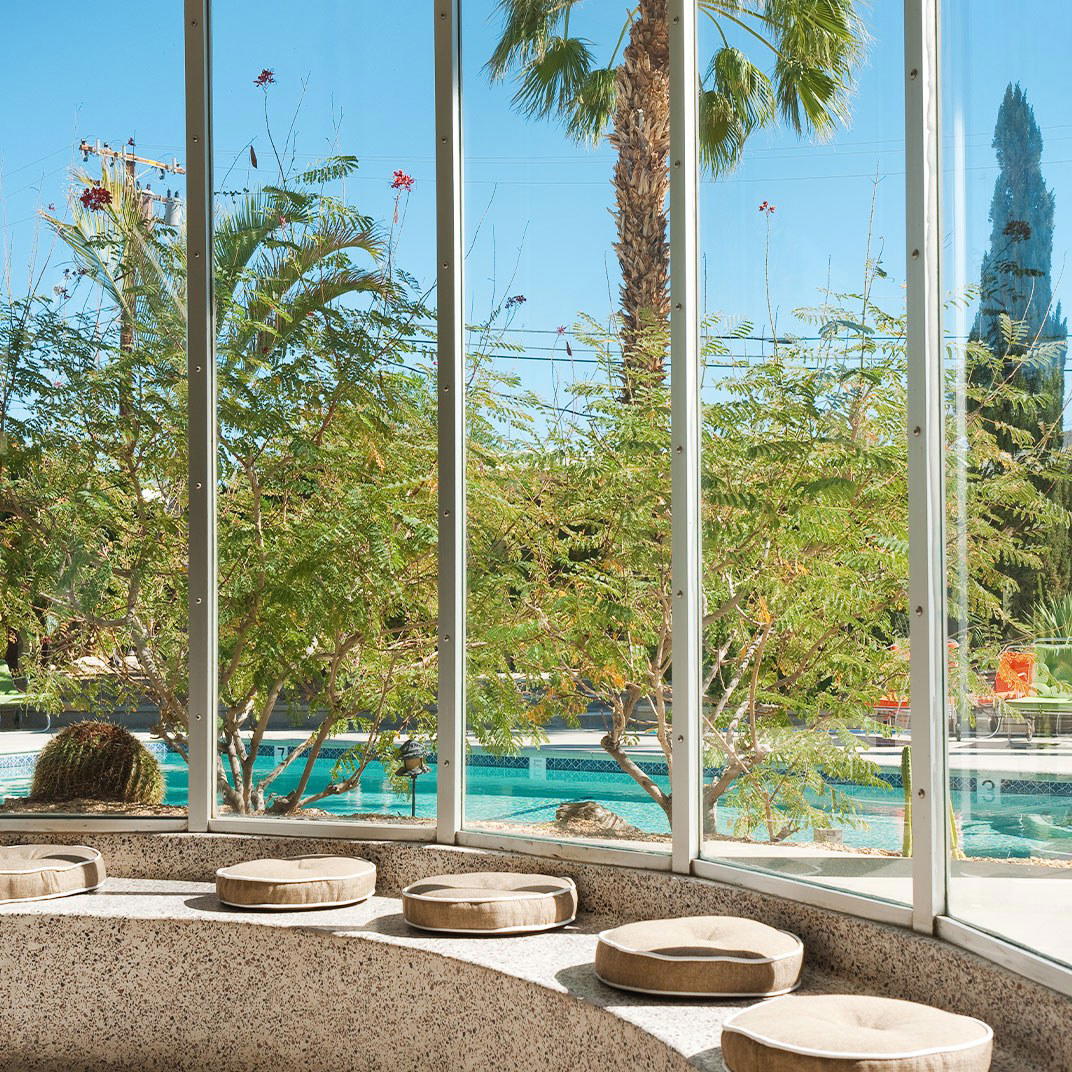
Quiet and respectful atmosphere with sunken living rooms enclosed by large glass sheets overlooking cactus gardens and mountains, fostering an intimate and settled connection to the desert landscape.