
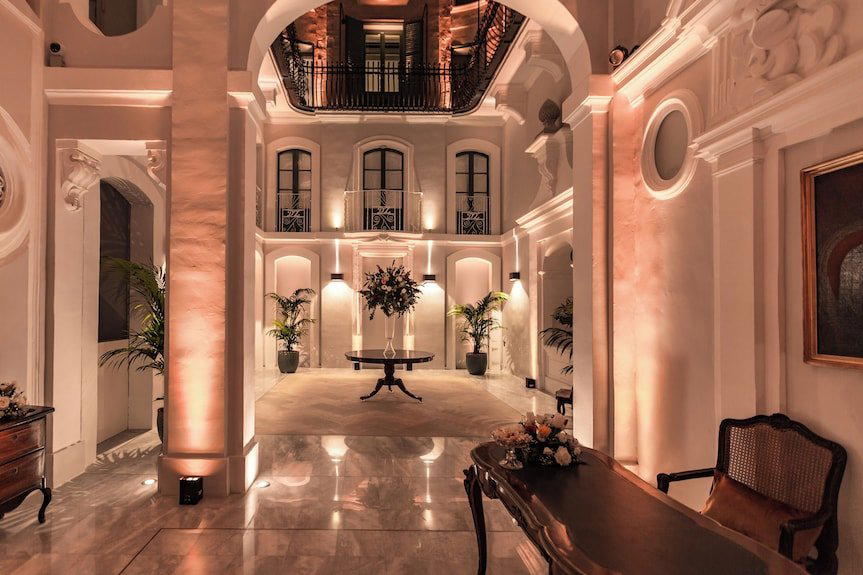
The Capital Boutique Hotel Valletta holds dual recognition as both a Regional Winner for Luxury Service Boutique Hotel and a Country Winner for Luxury Boutique Hotel, placing it at the top of Malta's boutique accommodation tier. Set on Archbishop Street in the heart of the UNESCO-listed capital, it operates within a growing cohort of small, design-conscious properties that have repositioned Valletta as a serious destination for considered luxury travel.
Pearl is the En Primeur Club membership app — saves, bookings, and concierge access live there. Same editors, same standards.
- Address
- 48 Archbishop St, Valletta VLT 1447, Malta
- Phone
- +356 2799 8657
- Website
- thecapitalvallettahotel.com
- Directions
- Get directions
 Saves & bookings on Pearl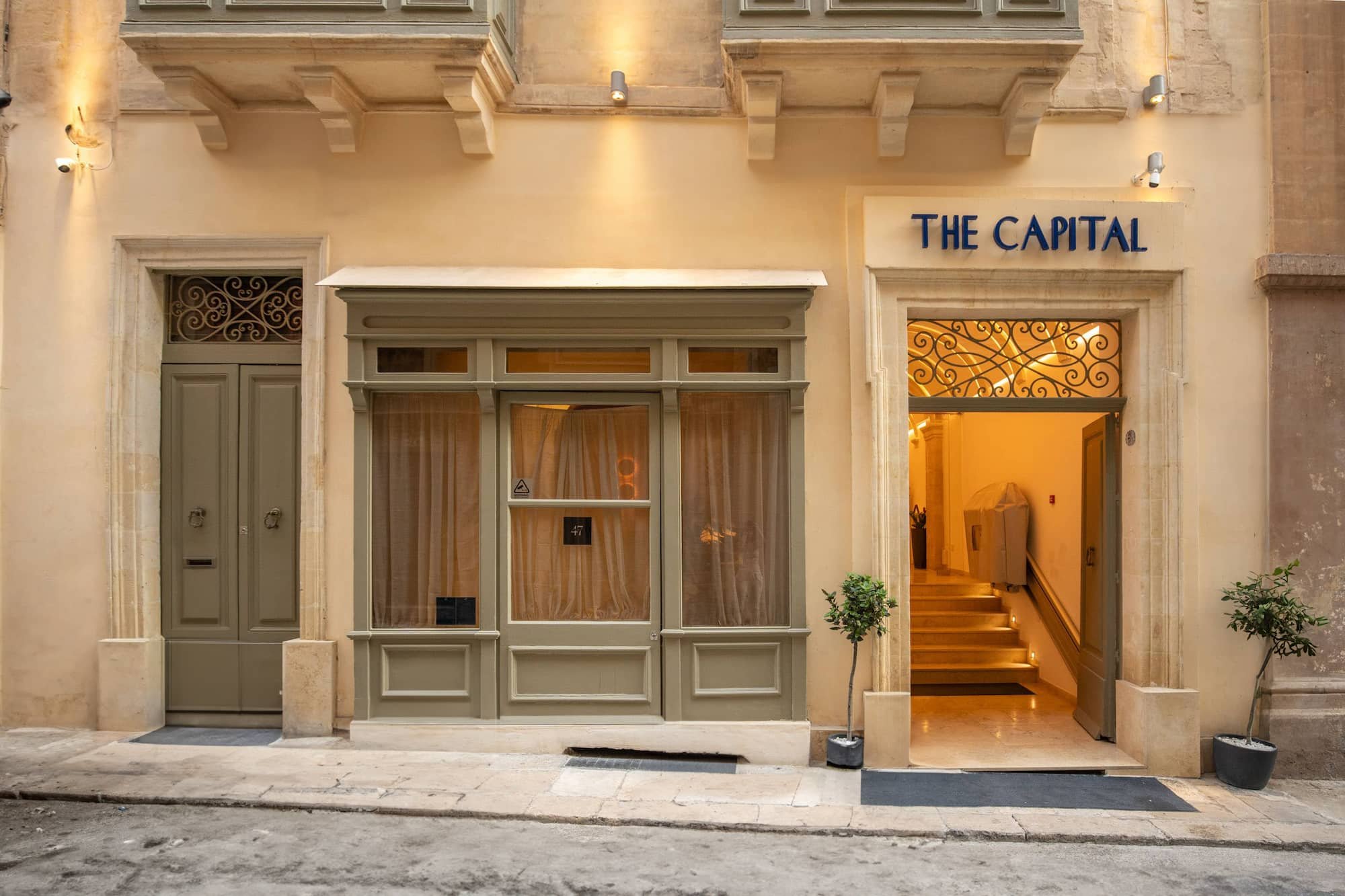
Valletta's Boutique Tier and Where The Capital Sits
Valletta's hotel market has undergone a measurable shift over the past decade. The city, a UNESCO World Heritage Site since 1980, spent much of the late twentieth century under-served by accommodation that matched the weight of its baroque architecture and deep-water harbour drama. That changed as boutique operators recognised what larger international chains had overlooked: that the capital's dense grid of carved limestone facades and 16th-century palazzi offered the raw material for genuinely characterful hospitality at a small scale. Today, a distinct upper tier of independent and semi-independent boutique properties operates alongside the established full-service hotels, each staking a claim on a different version of Maltese refinement. The Capital Boutique Hotel, at 48 Archbishop Street, occupies the awarded end of that tier, having taken both the Regional Winner title for Luxury Service Boutique Hotel and the Country Winner title for Luxury Boutique Hotel — a double recognition that positions it against peers including Casa Ellul, Domus Zamittello, and Palazzo Consiglia.
Archbishop Street: The Physical Address as Editorial Statement
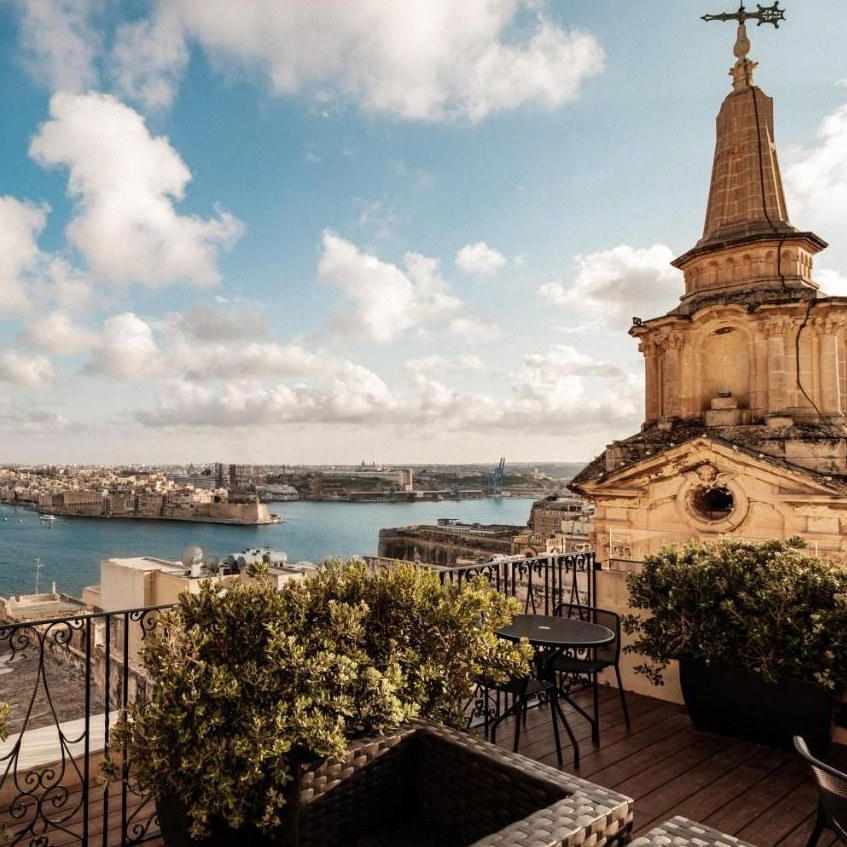
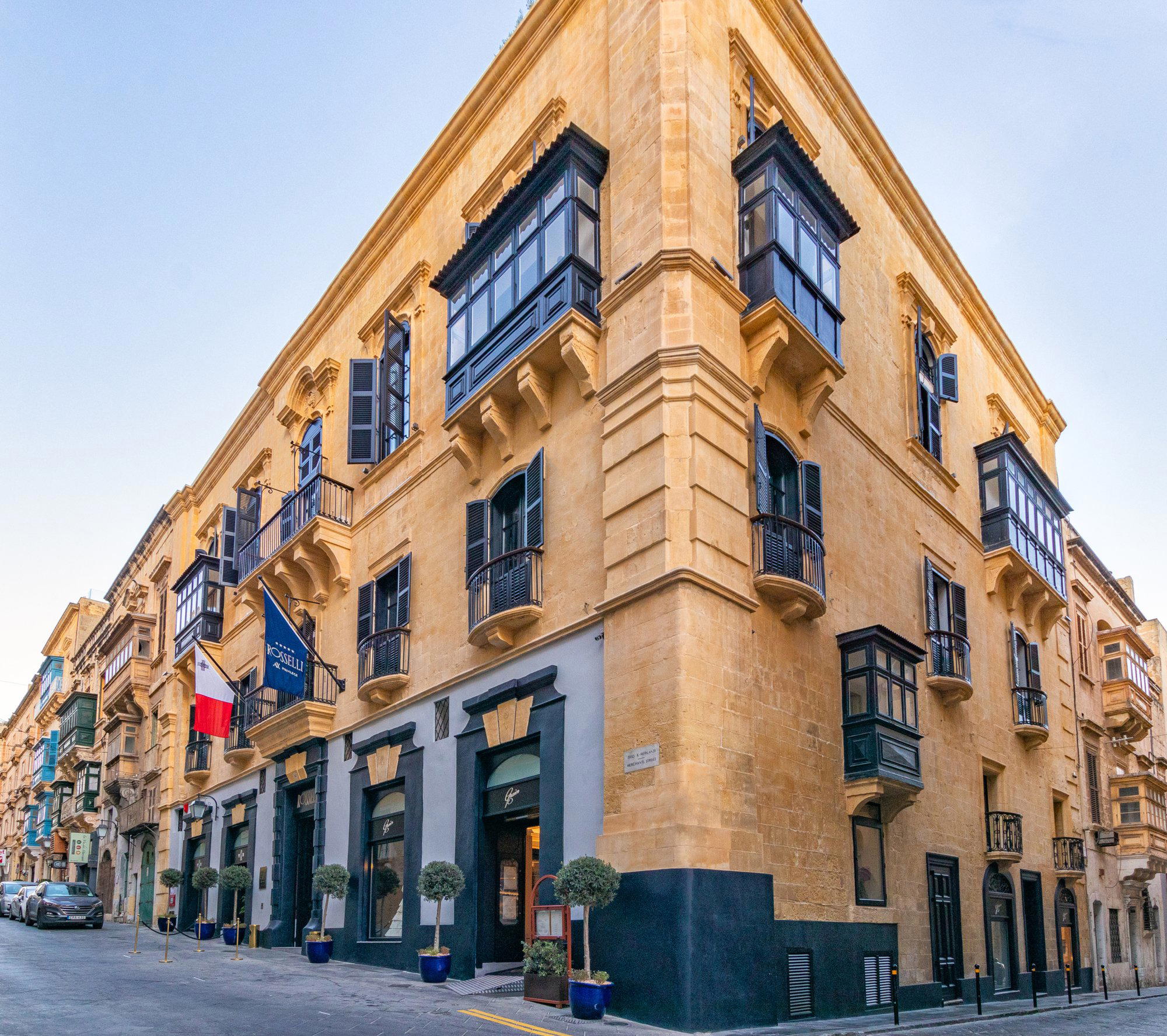
Archbishop Street runs through one of Valletta's most concentrated zones of civic and religious heritage. Arriving here means approaching through streets narrow enough that limestone balconies on opposing buildings nearly touch overhead, their painted timber frames in ochre and deep green catching the Mediterranean light at angles that shift across the day. This is not a hotel set apart from the city; it is embedded in it, and the physical environment outside the door is as much a part of the guest experience as anything inside. That integration into the urban fabric is something the larger properties — Grand Hotel Excelsior or The Phoenicia Malta in nearby Floriana, cannot replicate. Scale makes adjacency impossible. The boutique format makes it structurally necessary.
That positioning matters for responsible luxury travel in a specific way. Valletta is a living city of roughly 5,000 residents, not a resort zone. Properties that integrate into existing street patterns rather than occupying isolated footprints tend to contribute more directly to the local commercial ecosystem, restaurants, artisans, and service providers on adjacent streets see spend from guests who walk rather than take hotel shuttles. Archbishop Street's central location makes walking the default, which is both the most sustainable and most rewarding way to read a city this compressed.
Sustainability and the Boutique Model in a Heritage Capital
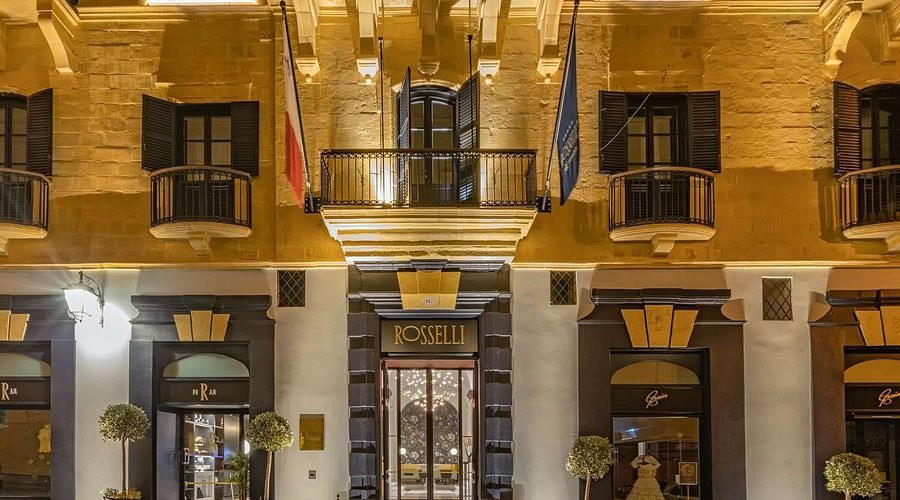
Across European heritage cities, the most credible case for responsible luxury hospitality is often made by smaller properties operating within existing building stock rather than constructing new footprints. Valletta's development constraints are strict, interventions within the UNESCO boundary require approval processes that slow and limit the kind of large-scale building that characterises resort development elsewhere in Malta. That regulatory environment, frustrating for some operators, effectively mandates an approach to sustainability that larger properties in St Julian's or Sliema have less pressure to adopt. Hotels like Rosselli - AX Privilege and AX The Saint John operate under similar constraints, and the category as a whole tends toward adaptive reuse of historic structures rather than new build.
For The Capital, the address itself is the sustainability argument. Adaptive reuse in a UNESCO city means working within existing thermal mass, thick limestone walls that regulate internal temperatures without the energy demands of glass-and-steel construction in a hot climate. The material logic of Maltese vernacular architecture, developed over centuries before air conditioning, is genuinely suited to the island's heat load. Whether any specific efficiency measures are in place at this property is not information available in the record, but the structural typology it occupies carries inherent environmental advantages over purpose-built resort alternatives. Travellers whose choices are informed by footprint considerations will find the boutique-in-heritage-fabric model meaningful regardless of the specific operational details.
The broader comparison set across Malta shows clear geographic clustering: the larger, amenity-heavy properties concentrate along the northeastern coast in St Julian's and Sliema, where Corinthia St George's Bay and InterContinental Malta define the full-service resort tier. Smaller islands offer their own format: Kempinski Hotel San Lawrenz in Gozo represents international chain presence at scale. The boutique-in-capital model that The Capital represents is a distinct category, and its award credentials confirm it performs at the leading edge of that category nationally.
Service as the Award Signal
The dual award structure is worth reading carefully. Country Winner for Luxury Boutique Hotel addresses the property type and its execution within that format. Regional Winner for Luxury Service Boutique Hotel specifically foregrounds service delivery as a distinct dimension of quality, an acknowledgment that the hospitality standard, not just the physical product, has been assessed and found to rank above comparable properties across the region. In a small-footprint property where staff-to-room ratios tend to be more favourable than in larger hotels, service character is often where boutique properties differentiate most clearly.
Planning a Stay: Practical Orientation
Valletta is compact enough that almost any address within the city walls is walkable from the main arrival points on foot. Archbishop Street sits within the upper section of the city's grid, relatively close to the Republic Street spine that runs from City Gate to Fort St Elmo. The Valletta Waterfront and ferry connections to the Three Cities are reachable on foot within ten to fifteen minutes depending on pace and inclination to stop. For guests arriving from Malta International Airport, the journey by cab or rideshare runs roughly thirty minutes; the X4 express bus service connects the airport to the city gate bus terminus directly.
Valletta's boutique hotel tier books more tightly than the larger coastal resorts, particularly in spring (April through June) when the combination of pleasant temperatures, reduced crowds, and festival programming pulls demand. The city hosts the Malta International Arts Festival in summer and various Baroque-season programming in February and March, both of which compress availability. Booking The Capital at least six to eight weeks ahead is a reasonable baseline for these windows; the narrower the property, the more quickly specific room configurations will fill. The hotel's contact information is not listed in the current record, so booking through the property's own direct channel or a trusted platform is the route to take. For wider context on eating and drinking in the capital, our full Valletta guide covers the city's restaurant and bar scene in detail.
Travellers weighing Valletta boutique options against properties elsewhere in Malta should note that the experience type diverges substantially by location. Urban properties like The Capital sit inside a working, historically dense city with foot traffic, heritage institutions, and neighbourhood commerce within metres of the door. Coastal alternatives such as Lure Hotel and Spa in Mellieha or Verdi Gzira Promenade offer a different rhythm entirely. Neither is a lesser choice, they answer different travel objectives. For guests whose primary interest is the capital's heritage, galleries, and concentrated dining scene, the Archbishop Street address puts everything within reach without requiring transport.
Recognition history
Dated appearances from independent guides and award organizations, with the underlying list record or original source where available.
World Luxury Hotel Awards WLHA Regional Winner
World Luxury Hotel Awards
World Luxury Hotel Awards WLHA Country Winner
World Luxury Hotel Awards
Continue exploring
More in Valletta
Hotels in Valletta
Browse all →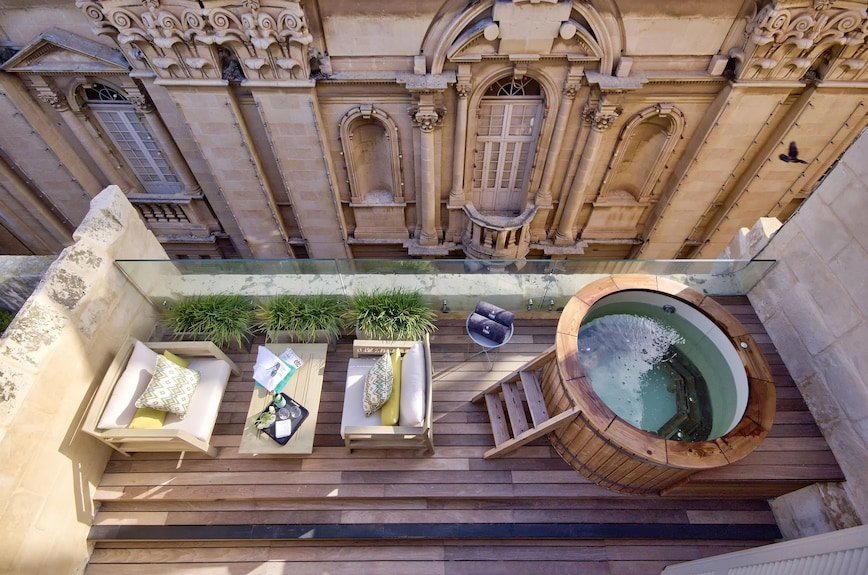
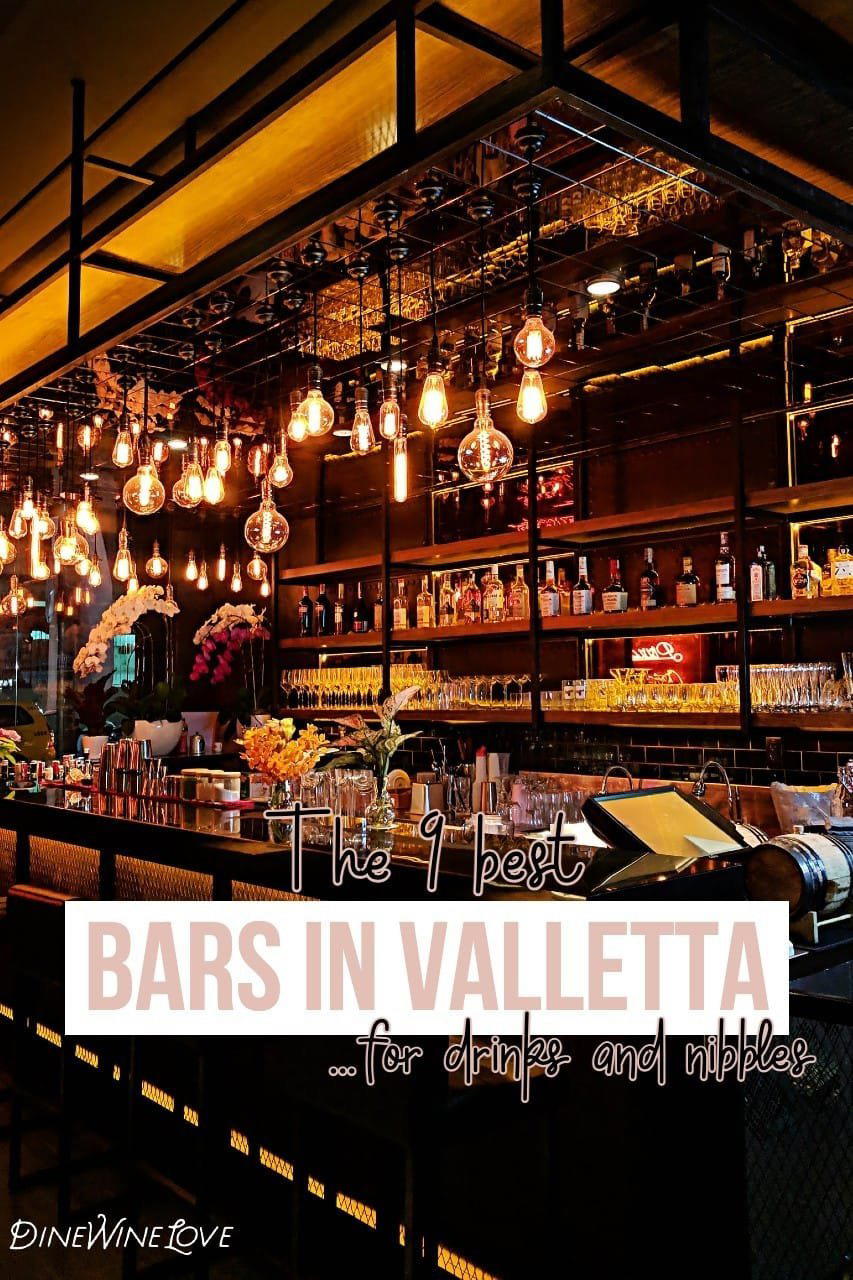
Bars in Valletta
Browse all →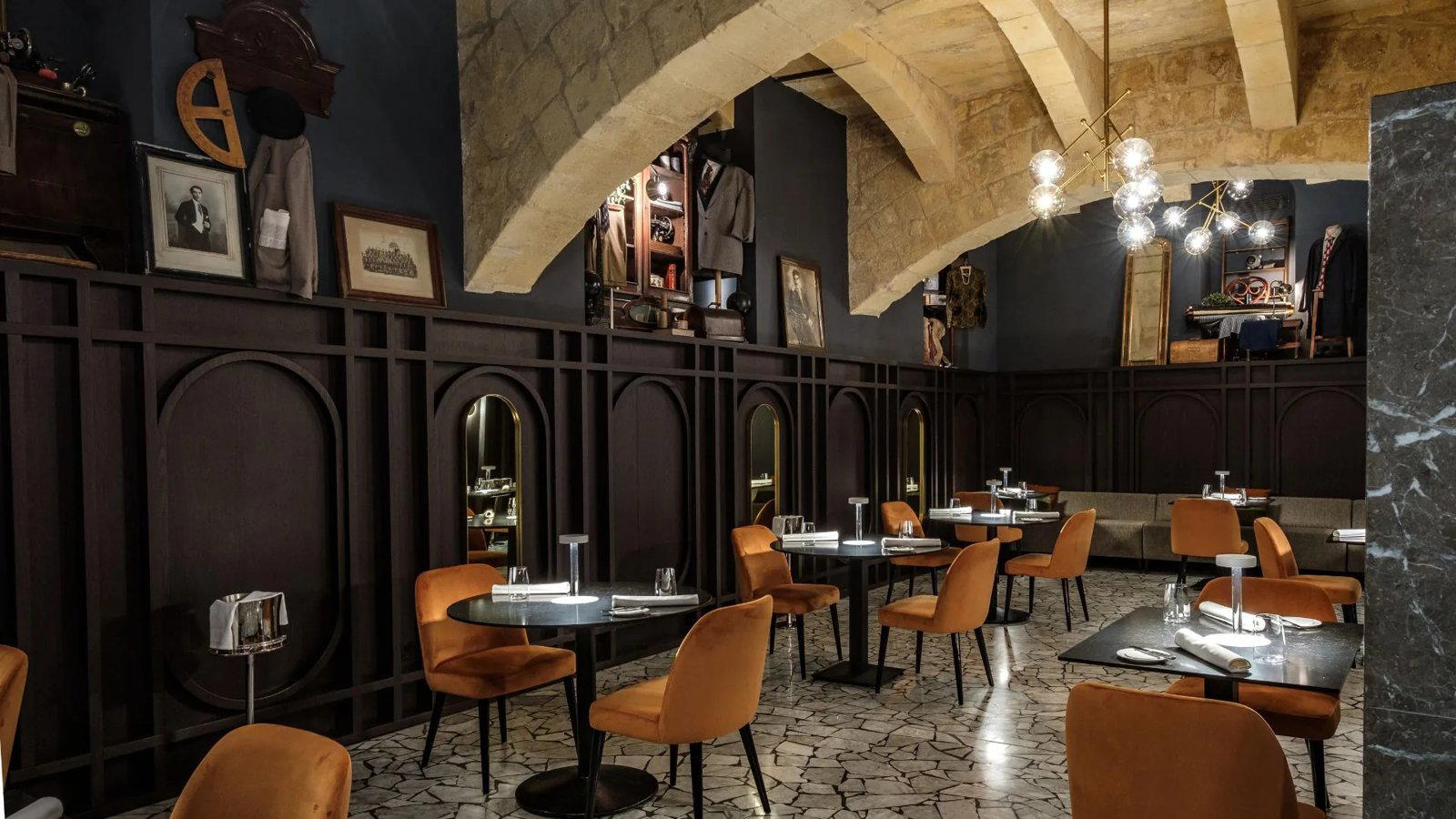
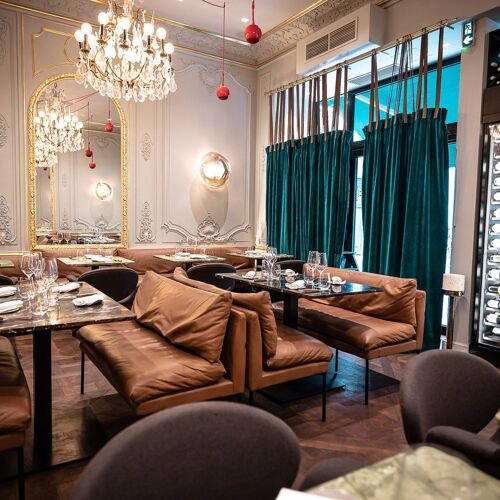
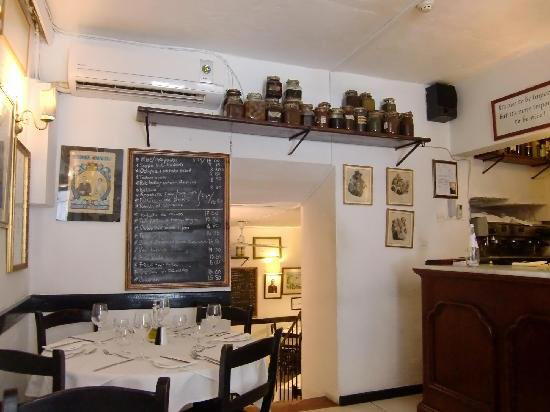
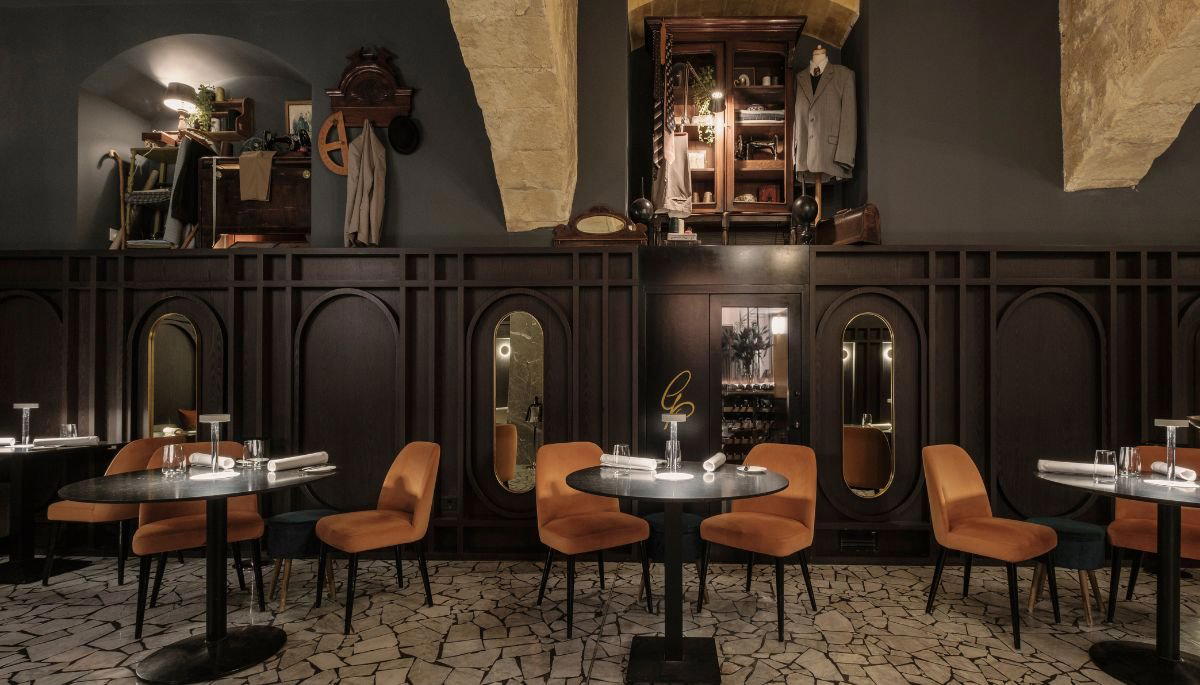
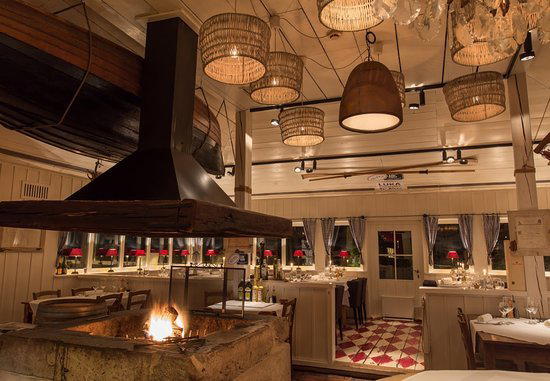
Restaurants in Valletta
Browse all →
Wineries in Valletta
Browse all →
At a Glance
- Elegant
- Modern
- Sophisticated
- Intimate
- Romantic Getaway
- Business Trip
- Weekend Escape
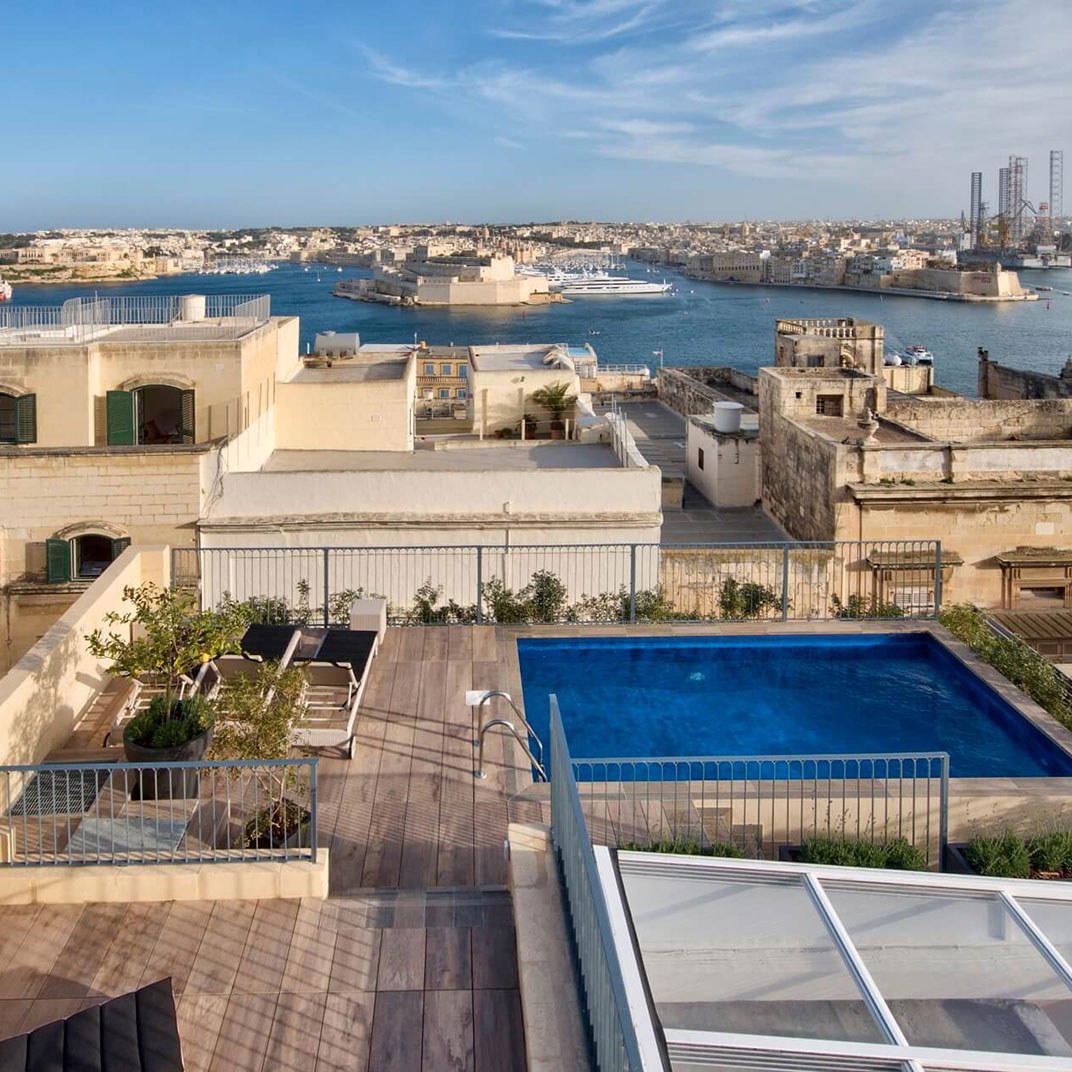
- Rooftop Pool
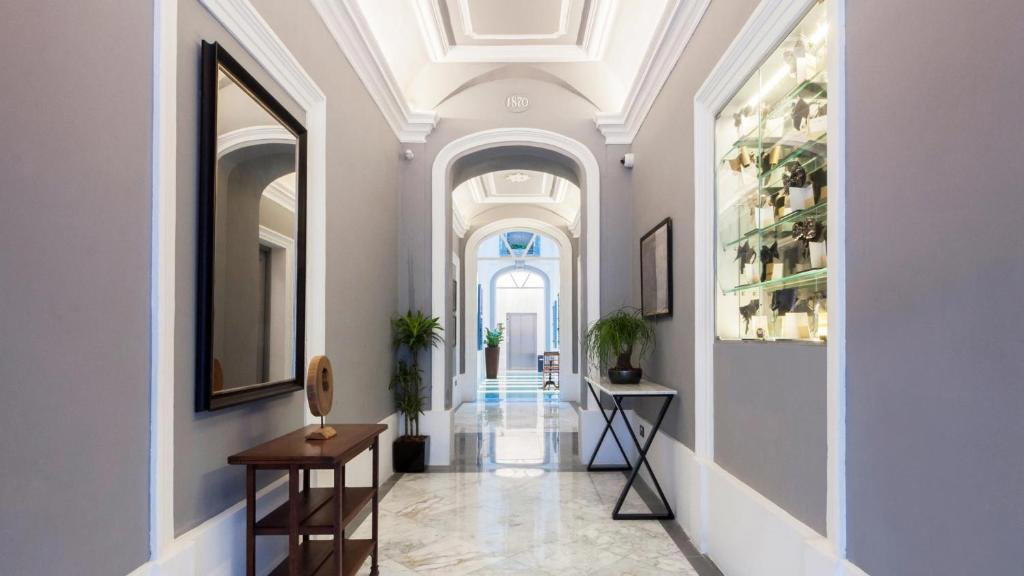
- Historic Building
- Panoramic View
- Terrace
- Wi Fi
- Pool
- Room Service
- Concierge
- Bar
- Hot Tub
- Street Scene
- Skyline
- Wi Fi
- Pool
- Room Service
- Concierge
- Bar
- Hot Tub
Modern and elegant with clean lines, soundproofed rooms, and a sophisticated lounge atmosphere.