

Michelin Selected · Star Wine List
A 17th-century merchant's townhouse on Merchant Street, AX The Saint John occupies one of Valletta's most historically layered addresses. The property earned recognition from Star Wine List in 2026, placing its wine program among Malta's noted hotel offerings. Positioned within walking distance of the Maltese capital's UNESCO World Heritage Site core, it sits in the smaller, design-led tier of Valletta's boutique accommodation scene.

Pearl is the En Primeur Club membership app, where members save venues, book tables and use the concierge.
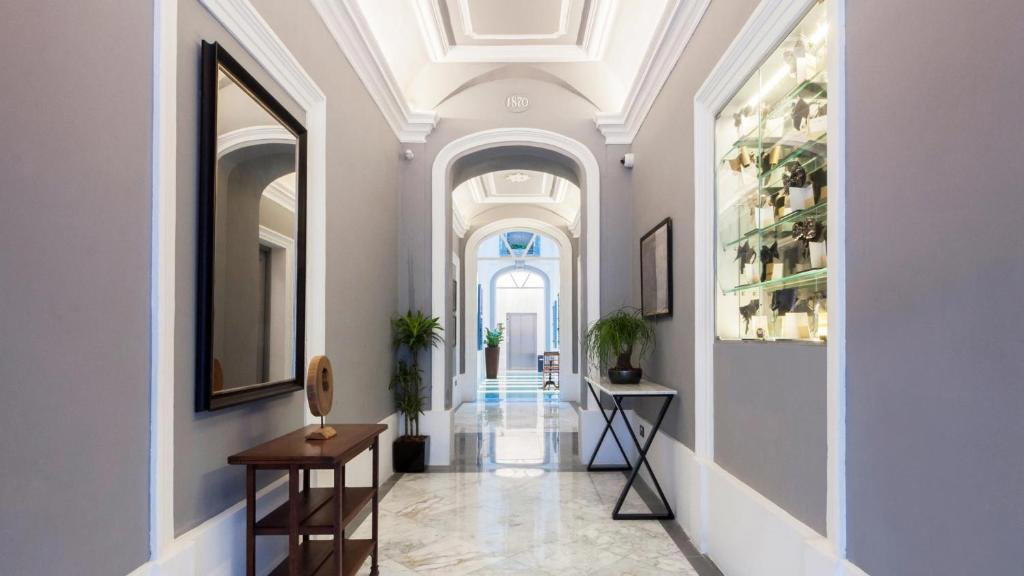
A Merchant Street Address in a City Built from Stone and History
Valletta does not accumulate history quietly. The Maltese capital compresses four centuries of fortification, baroque architecture, and Mediterranean trade into a grid barely a kilometre long. Merchant Street, which runs through the heart of that grid, was once the commercial spine of a city the Knights of St John built from limestone hauled from Malta's own quarries. Walking its length today, you pass facades that have functioned as residences, warehouses, and places of business across successive ruling orders. AX The Saint John occupies one of those facades, a 17th-century townhouse that served as both a merchant's home and shop before its conversion into a boutique hotel. The building's origin is not decorative backstory; it is the structural fact that defines what staying here means.
Among Valletta's accommodation options, the city has developed a clear bifurcation. On one side sit larger, internationally branded properties designed for convention-scale capacity; on the other, a smaller cohort of intimately scaled boutique addresses that treat the building itself as the primary design statement. Casa Ellul, Domus Zamittello, and Palazzo Consiglia all operate in this second tier, each adapting a historic Valletta structure for contemporary hospitality. AX The Saint John belongs to this cohort, where the preservation logic of the original building shapes the guest experience in ways that no purpose-built property can replicate.
What a 17th-Century Townhouse Does to the Experience of a Room
Historic conversion hotels in cities like Valletta present a consistent design tension: how much of the original fabric survives, and how much is period-suggestive renovation? In properties across Malta and comparable Mediterranean UNESCO cities, the strongest outcomes come from additions that read as additions, contemporary insertions that make the historic shell more legible rather than concealing it. The thick limestone walls that define traditional Valletta construction are not merely atmospheric; they provide natural thermal regulation that Malta's summers demand, and their texture under morning light produces a quality that no applied finish matches.
The merchant townhouse format that AX The Saint John occupies is a specific Maltese typology: a ground-floor commercial space with living quarters above, built around the practical needs of a family conducting business from the same address. These buildings were designed with vertical circulation as their organising logic, with different floors serving different functions across the day. That original sectional quality, the sense that each floor has its own character and purpose, tends to carry through into boutique conversions, producing a guest experience that feels more like inhabiting a layered building than occupying a hotel floor.
For travellers comparing Valletta's boutique tier, the physical address matters as much as the interior. Merchant Street's position near Republic Street and the city's main institutional buildings places AX The Saint John within a few minutes' walk of St John's Co-Cathedral, the Grand Master's Palace, and the main arrival axis from City Gate. Valletta's walkable scale means that a central Merchant Street address functions as genuine logistical convenience, the city is small enough that almost everything within the UNESCO-listed core is reachable on foot.
The Wine Program and What the Star Wine List Recognition Signals
In 2026, AX The Saint John received recognition from Star Wine List, one of the few specialist wine media platforms that evaluates hotel and restaurant wine programs on technical criteria rather than list length. Within Malta's hotel sector, Star Wine List recognition places a property's wine offering in a specific tier: curated rather than simply comprehensive, with selection criteria that go beyond default distributor relationships. This matters in a market where Maltese wine production has been developing its own regional identity, with local varieties like Gellewza and Ġellewża alongside international plantings gaining recognition beyond the island.
For a guest whose trip includes serious wine consideration, Star Wine List recognition functions as a signal worth weighing when choosing between Valletta's boutique properties. It does not indicate the largest cellar or the most expensive list; it indicates a program that met editorial criteria for selection quality and curation discipline. Among Valletta's comparable boutique addresses, not all carry equivalent wine credentials, which gives AX The Saint John a differentiated position for wine-focused travellers.
Valletta's Boutique Hotel Scene and Where AX The Saint John Sits Within It
Malta's capital has attracted considerable hospitality investment since its designation as European Capital of Culture in 2018, with a cluster of boutique openings filling Valletta's historic palazzo and townhouse stock. The AX Hotels group operates across multiple Malta properties, including AX The Palace in Sliema and Rosselli - AX Privilege, the latter operating under the group's premium Privilege sub-brand, which means AX The Saint John sits within a structured portfolio rather than as a standalone independent. That group context provides operational consistency, but the Saint John property's historic building and Merchant Street address give it a distinct identity from the group's other Malta offerings.
The competitive set within Valletta itself includes Iniala Harbour House, which operates at the design-forward end of the spectrum, and Grand Hotel Excelsior, which represents the larger, full-service format. The Capital Boutique Hotel Valletta occupies a similar small-scale tier. For travellers whose priority is immersion in Valletta's historic fabric rather than resort-scale amenities, the boutique townhouse format, represented here and by peers like Domus Zamittello, consistently produces a different kind of stay than the larger properties.
Beyond Valletta, Malta's broader hotel landscape includes properties distributed across the island's geography: Cesca Boutique Hotel in Il Munxar, Corinthia Palace Malta in Attard, Kempinski Hotel San Lawrenz in San Lawrenz, Lure Hotel & Spa in Mellieha, Cugó Gran Macina Malta in Senglea, Corinthia St George's Bay in St Julian's, InterContinental Malta in St. Julian's Bay, Verdi Gzira Promenade in Gzira, Royale Sainte Hélène Boutique Hotel in Birkirkara, Palazzo Bifora in Mdina, The Phoenicia Malta in Floriana, and Conrad Rabat Arzana in Rabat. Each represents a different entry point into Malta depending on whether proximity to the capital, coastal access, or quieter rural positioning is the priority.
Planning a Stay: What to Know
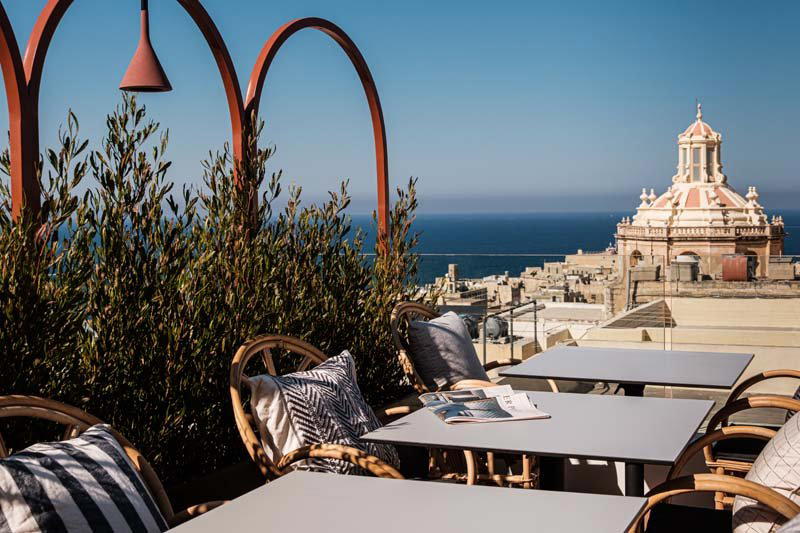
AX The Saint John sits on Merchant Street in central Valletta, within the UNESCO World Heritage Site boundary. Valletta is Malta's capital and a compact, walkable city, the hotel's address puts the principal sights, restaurants, and cultural institutions within a short walk. Malta International Airport lies south of Valletta, and the transfer is typically under 30 minutes by taxi. For dining beyond the hotel, our full Valletta restaurants guide covers the city's food scene in detail.
Comparable Venues
Comparable venues nearby, for context on price, style, and recognition.
| Venue | Cuisine | Price | Awards | Notes |
|---|---|---|---|---|
| AX The Saint JohnThis venue (the venue you are viewing) | Smart luxury boutique in historic building | $1–100 | Michelin Selected · Star Wine List | Not listed |
| The Capital Boutique Hotel Valletta | Contemporary boutique fusing Maltese heritage with modern luxury. | $100–200 | World Luxury Hotel Awards WLHA Regional Winner | Valletta City Centre |
| The Gomerino | Restored Baroque nobility palace blending historical grandeur with modern luxury | $100–200 | Michelin Selected | City Centre |
| Ursulino Valletta | Restored historic townhouse blending art nouveau charm with modern luxury | $100–200 | Michelin Selected | Valletta |
| Domus Zamittello | Family-owned boutique palazzo hotel blending 16th-century baroque architecture with contemporary luxury and warm hospitality. | $100–200 | 1 Michelin Key · Star Wine List | Upper Valletta |
| Grand Hotel Excelsior | Luxurious heritage property blending historic fortifications with modern 5-star amenities | $100–200 | Preferred Hotels L.V.X. Collection | Floriana |
Recognition history
Dated appearances from independent guides and award organizations, with the underlying list record or original source where available.
Michelin Selected
Michelin
Star Wine List
Star Wine List
Continue exploring
More in Valletta
Hotels in Valletta
All hotels in Valletta →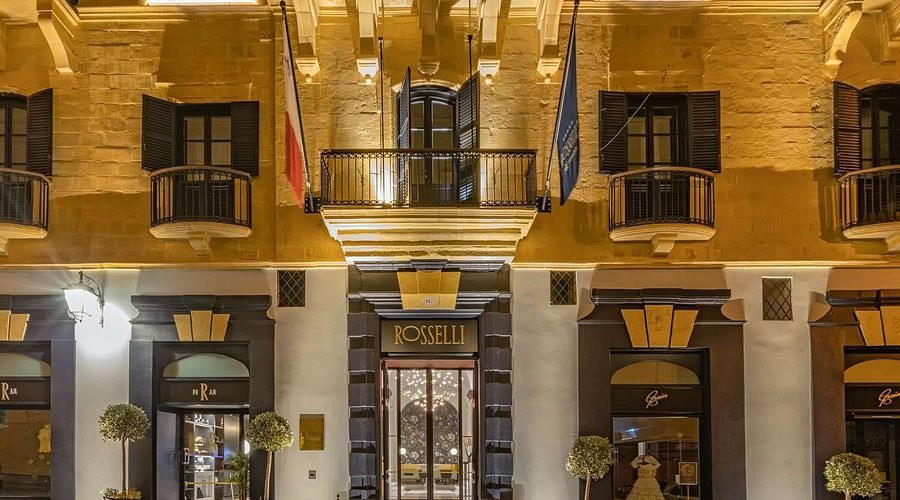
Bars in Valletta
All bars in Valletta →
Restaurants in Valletta
All restaurants in Valletta →
Wineries in Valletta
Browse all →
Details
- Modern
- Elegant
- Sophisticated
- Romantic Getaway
- Weekend Escape
- Historic Building
- Terrace
- Wi Fi
- Restaurant
- Bar
- Room Service
- Concierge
- Elevator
- Air Conditioning
- Fitness Center
- Street Scene
- Elevator
- Wheelchair Accessible
Inviting and stylish atmosphere with well-lit, immaculate bathrooms and comfortable, contemporary rooms praised for cleanliness and service.