
World Travel Awards
Tamanu on the Beach Resort and Spa took Vanuatu's Leading Boutique Resort at the 2025 World Travel Awards, placing it at the front of a small tier of design-led properties along the Eratap coastline. The resort sits in the lower-capacity bracket where material choices, spatial arrangement, and direct beach access define the offer rather than facility count or brand affiliation.

Pearl is the En Primeur Club membership app, where members save venues, book tables and use the concierge.
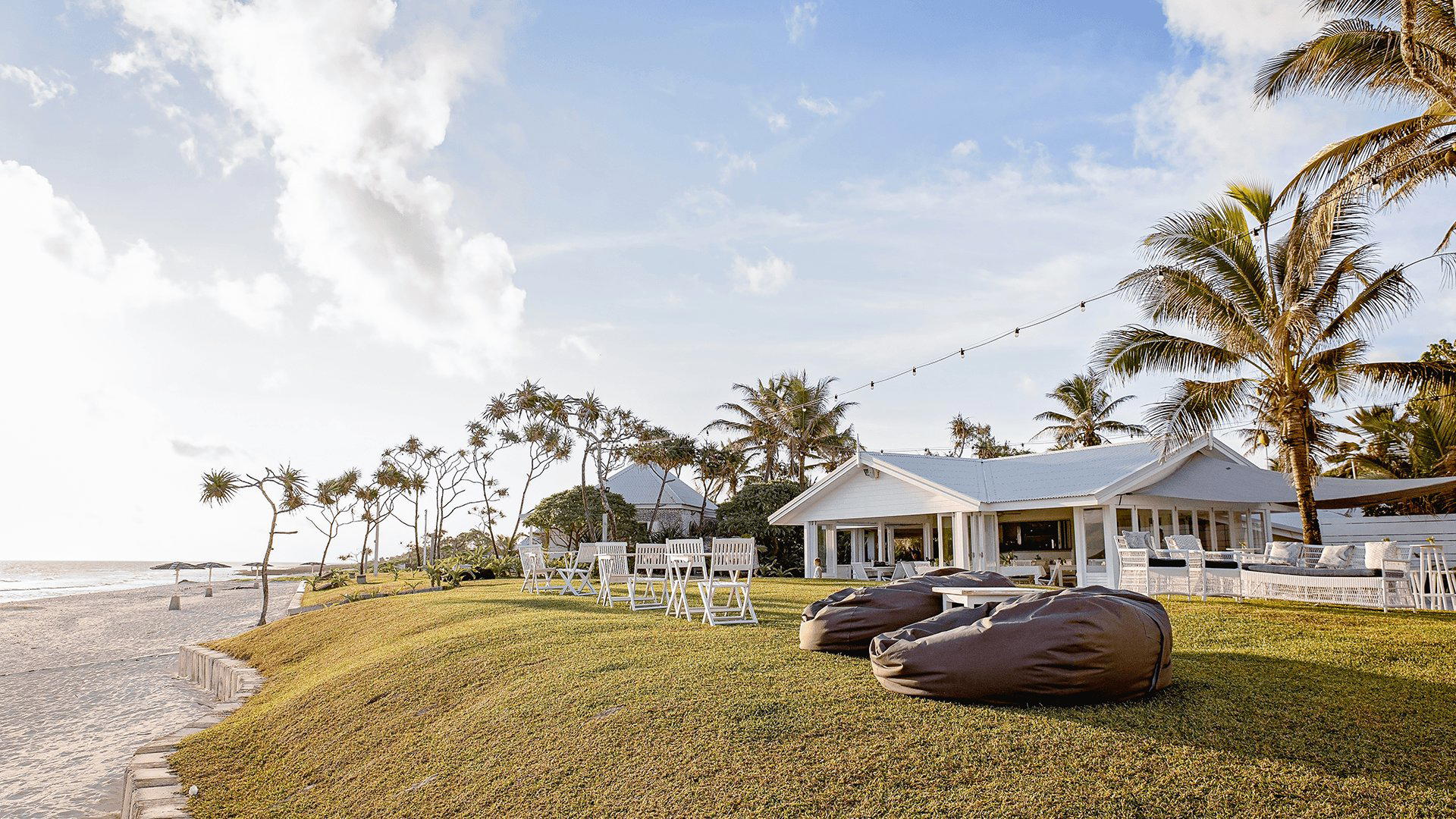
Where the Pacific Dictates the Architecture
The boutique resort category in the South Pacific has divided sharply over the past decade. On one side sit the large-footprint international brands, stacking amenities against each other in an escalating competition for the mainstream luxury traveler. On the other sits a smaller cohort of properties where restraint is structural: fewer keys, tighter spatial sequences, and a design language drawn from the immediate environment rather than imported from a global brand manual. Tamanu on the Beach Resort and Spa, in Eratap on the southwest coast of Efate, belongs firmly to the second group, and its 2025 World Travel Awards recognition as Vanuatu's Leading Boutique Resort confirms its position at the front of that local tier.
Eratap itself is low-key by design. Located roughly twenty minutes south of Port Vila by road, it sits outside the capital's commercial traffic while remaining close enough to use the airport without significant transfer logistics. The area has attracted a small number of design-conscious properties precisely because of this positioning: accessible enough for connecting travelers, removed enough to generate genuine seclusion. Tamanu reads as a product of that calculation rather than a coincidence of geography.
The Design Logic of Low-Impact Luxury
In the Pacific island context, architecture earns its credibility by how well it steps aside. Properties that impose hard-edged contemporary forms onto coral-sand settings tend to read as misplaced regardless of build quality. The more persuasive approach, pursued across the region's better boutique properties, is a structural conversation between the built form and the natural frame: pitched roofs that echo local building traditions, open-sided pavilions that trade air-conditioning for prevailing breezes, and material palettes pulled from the site itself rather than flown in from international suppliers.
It draws comparison not with properties measured by room count or spa square footage but with places like Thomas' Yasur View Lodge in Tanna, where the accommodation offer is shaped entirely by the surrounding environment. Across the broader Pacific and beyond, the parallel logic shows up in properties ranging from Hotel Esencia in Tulum to One&Only Mandarina in Riviera Nayarit, where site-responsiveness is the primary design argument. At Tamanu, the beach itself is the organizing principle: the resort's name references the tamanu tree, a coastal hardwood native to tropical Pacific and Indian Ocean islands, historically used in boat-building and known for its dense, figured grain. A property taking that name is making a quiet statement about material seriousness.
Boutique Scale and What It Delivers
Scale is not incidental in the boutique category. It is the mechanism through which the experience differs from large-resort alternatives. Lower key counts mean that staff-to-guest ratios can be maintained at levels that make personalized service operationally realistic rather than a marketing promise. It also means that common spaces, beachfronts, and dining areas remain genuinely quiet during peak occupancy. The World Travel Awards, which assess Vanuatu's hospitality sector annually, have placed Tamanu in the leading position in this category for 2025, which reflects performance across precisely these dimensions: design coherence, service calibration, and the ability to deliver intimacy at a consistent standard.
For context on what that award designation means in competitive terms: Vanuatu's boutique sector is small but not undifferentiated. The island group spans over eighty islands with a range of accommodation styles, from eco-lodges oriented toward volcanic tourism on Tanna to beachfront villas on Santo. The Efate coastal market, where Eratap sits, is the most competitive of these sub-markets, drawing travelers who combine Port Vila access with a preference for non-urban settings. Holding the leading boutique position in this market in 2025 positions Tamanu against a real field of alternatives, not a nominal category.
How Tamanu Fits the Broader Luxury Travel Conversation
The properties that attract sustained critical attention in the design-led boutique tier share a common characteristic: they resist the pressure to expand their offer in ways that would undermine their spatial logic. This is a different set of priorities than those governing properties like Badrutt's Palace Hotel in St. Moritz or Hôtel de Paris Monte-Carlo, where grandeur and facility depth are inseparable from the identity. It is also distinct from the urban luxury model exemplified by Aman New York or Cheval Blanc Paris, where city-center density and cultural programming are core to the proposition. Properties like Amangiri in Canyon Point or Castello di Reschio in Lisciano Niccone offer a closer analogy: remote settings where the landscape provides most of the programming and the architecture's job is to frame rather than compete with the natural environment.
Tamanu's Vanuatu context adds a specific layer to this comparison. Vanuatu sits in one of the Pacific's genuinely less-trafficked corridors for international tourism, which means that a property here operates with less infrastructure support and more logistical complexity than comparable boutique properties in better-connected markets. Reaching Eratap from most origin cities involves a connection through either Australia or New Zealand, with Bauerfield International Airport in Port Vila as the entry point. That additional friction filters the guest profile toward travelers who have made a deliberate choice rather than a default one, which in turn shapes the atmosphere of a low-key resort like Tamanu in ways that are difficult to manufacture.
Planning a Stay
The most practical approach to booking a property at this level in Vanuatu is to contact the resort directly or work through a travel specialist familiar with Pacific island logistics, as availability in boutique properties with limited keys can tighten quickly during Australian and New Zealand school holiday periods, particularly in July and the December-January window. The dry season, roughly May through October, offers more reliable weather for outdoor dining and beach use, with southeast trade winds keeping temperatures moderate. Our full Eratap restaurants guide covers dining options in the area for those planning extended stays.
Comparable Spots, Quickly
| Venue | Price | Awards |
|---|---|---|
| Tamanu on the Beach Resort and SpaThis venue (the venue you are viewing) | $200–300 | World Travel Awards |
Recognition history
Dated appearances from independent guides and award organizations, with the underlying list record or original source where available.
World Travel Awards
World Travel Awards
Continue exploring
More in Eratap
Details
- Romantic
- Quiet
- Scenic
- Elegant
- Intimate
- Honeymoon
- Romantic Getaway
- Family Vacation
- Anniversary
- Wedding
- Beachfront
- Private Villa
- Destination Spa
- Wi Fi
- Pool
- Spa
- Room Service
- Concierge
- Beach Access
- Waterfront
- Garden
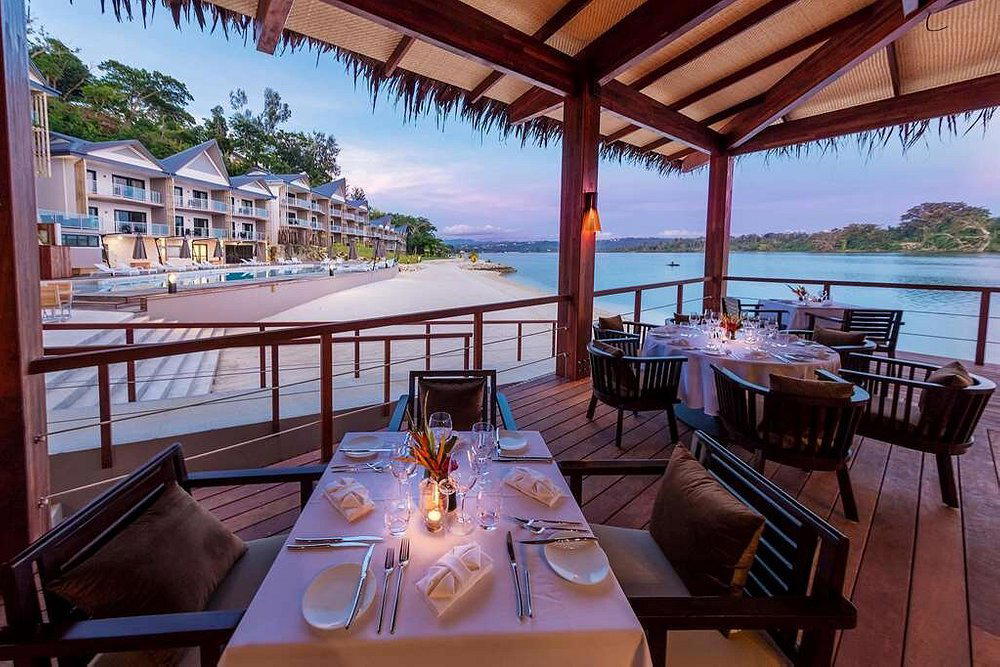
Relaxed and serene beachfront atmosphere with ocean breezes, swaying palms, and lush tropical gardens, ideal for unwinding.