
Somalisa Camp sits within Hwange National Park's private Somalisa Concession, recognized for the extraordinary frequency with which elephant herds visit the waterhole directly in front of camp. The setup is intimate by design, oriented around sustained wildlife proximity rather than scale. For travelers prioritizing genuine bush immersion over resort amenity, this is where the calculation tips decisively.
 Discover on Pearl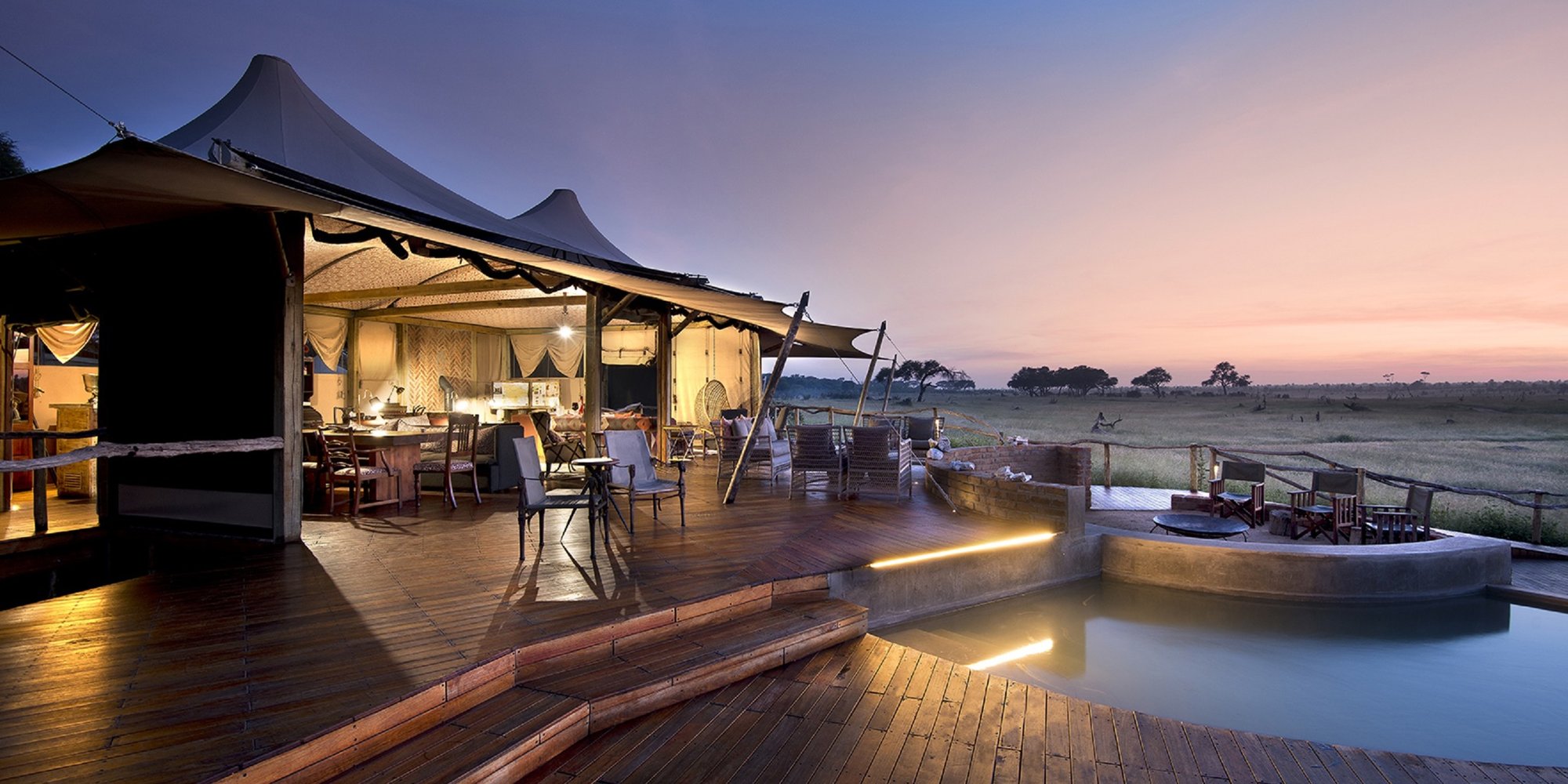
Where the Bush Comes to You
Most safari camps position themselves near wildlife corridors and send guests out by vehicle. Somalisa Camp inverts that dynamic. Situated on a private concession inside Hwange National Park, Zimbabwe's largest game reserve, the camp is built around a waterhole that acts as a daily gathering point for elephant herds. The animals arrive on their own schedule, not the camp's, and the physical layout of the property means guests can observe from a fixed point without the distraction of an engine or the choreography of a game drive. That distinction shapes everything about the camp's design logic and explains why the waterhole, rather than any architectural flourish, functions as the property's defining feature.
Hwange sits in the northwest of Zimbabwe, roughly 700 kilometres from Harare and around 100 kilometres from Victoria Falls. The park covers over 14,600 square kilometres of mixed woodland and savanna, and the Somalisa Concession occupies a private zone within it, separating the camp from the higher-traffic areas that border the main roads. For context on Zimbabwe's broader safari offer, properties like Tembo Plains Camp in Mana Pools Region and Singita Pamushana Lodge & Malilangwe House in Chiredzi occupy different ecosystem types entirely, with Mana Pools centered on canoe safaris and Malilangwe on dense, mixed-species density. Somalisa's specific draw is Hwange's elephant population, which is among the largest concentrations of the species on the continent.
The Architecture of Proximity
The camp's physical arrangement is not incidental. In southern African bush camps, the placement of communal structures relative to water sources is an architectural decision with direct consequences for the quality of wildlife observation. At Somalisa, the main guest areas face the waterhole at close range, meaning the elephant pool encounter is not a curated excursion but a recurring ambient event. This is a fundamentally different spatial proposition from camps where the lodge looks out over open plains or riverine vegetation without a concentrated draw point.
Across the premium bush camp category, design philosophy tends to split between properties that prioritize comfort infrastructure (pools, spa facilities, larger tent footprints) and those that prioritize ecological intimacy, accepting fewer amenities in exchange for closer, less-mediated wildlife contact. Somalisa belongs clearly to the second camp. The tented accommodation format, standard at this tier of the African bush camp market, keeps the boundary between guest space and bush deliberately permeable. Canvas rather than masonry, open sides that admit both air and sound, and refined platforms that align sightlines with the waterhole's activity level all serve the same purpose: reducing the distance, physical and experiential, between guest and environment.
Comparable camps in Zimbabwe's private concession network, including Matetsi Victoria Falls, which operates along a private stretch of the Zambezi with a more resort-oriented footprint, occupy a different tier of the market. Matetsi leans into river-facing luxury amenities; Somalisa's value proposition rests almost entirely on wildlife proximity. Neither is a compromise, but they serve different traveler priorities.
Sustainability as Operational Logic
The camp's reputation sits explicitly around sustainability, though the term in safari contexts needs unpacking. In practice, sustainable bush camp operation at Hwange means management of the waterhole to ensure it remains functional through dry season when natural sources diminish, limiting guest numbers to reduce ecological footprint, and structuring activities around observation rather than intervention. The elephant pool's draw depends on the waterhole's reliability, which makes its maintenance a direct condition of the camp's commercial proposition, not an add-on to it. This alignment of ecological and business incentives is the structural logic that distinguishes genuinely sustainability-oriented camps from those that use the language without the practice.
Small-capacity camps in the African wilderness segment increasingly compete on this basis. The case for keeping numbers low is partly experiential (fewer guests at the waterhole means less noise and movement) and partly ecological. For travelers accustomed to comparing properties across the global luxury tier, where sustainability commitments often manifest as solar panels and reusable amenity bottles, the bush camp version is more structurally embedded in the product itself.
Planning a Stay
Hwange is accessible by light aircraft from Victoria Falls, which has an international airport with connections to Johannesburg. Drive time from Victoria Falls town is approximately two and a half hours on tarred road, with the final section through the park on gravel. Most guests arrive by charter flight, which eliminates the drive and lands closer to the concession. The dry season, running broadly from May through October, concentrates wildlife around waterholes as surface water elsewhere diminishes, making this the period when the elephant pool encounters are most frequent and most dramatic. The wet season, November through April, brings lush vegetation and calving herds but disperses animals across the park, reducing the intensity of waterhole activity.
Booking for Hwange's peak dry season typically requires advance planning of several months, consistent with the broader pattern at sought-after small-camp properties across southern Africa. Given the camp's limited capacity, availability at short notice during peak months is unlikely. Travelers building a multi-destination Zimbabwe itinerary would typically combine Hwange with Victoria Falls and, depending on budget and time, Mana Pools or the Lowveld. For orientation across Zimbabwe's broader accommodation options, our full Hwange hotels guide maps the spectrum from owner-run bush camps to larger lodge operations.
For those planning around the wider region, properties including Aman Venice, Amangiri in Canyon Point, and Cheval Blanc Paris represent the global luxury property peer group in terms of design-led, low-key-footprint hospitality philosophy, though the comparison is contextual rather than categorical. Within Africa specifically, the intimacy-over-scale model Somalisa represents finds parallels at properties like Singita's smaller camp formats. Our guides to Hwange restaurants, Hwange bars, Hwange wineries, and Hwange experiences provide further context for building a complete stay in the area.
FAQs
- What's the atmosphere like at Somalisa Camp?
- The atmosphere is governed by the bush rather than by the camp's interior design. Hwange National Park provides a dry woodland setting with minimal ambient noise beyond wildlife. The camp's position relative to the waterhole means elephant herds, sometimes in groups of dozens, move through the immediate camp area during their drinking cycles. The effect is observational rather than theatrical: no amplified narration, no staged timing. Guests accustomed to resort-style social atmospheres will find this quiet and unscripted by comparison, which is precisely the point. Zimbabwe's private concession camps, sitting outside the national park's general visitor zones, deliver a material reduction in other-visitor traffic, and Somalisa's small scale reinforces that.
- Which room category should I book at Somalisa Camp?
- Given the camp's design orientation around the waterhole, the priority when booking is proximity to the main viewing area rather than tent size or ancillary features. In small bush camps with this specific format, the accommodation is a secondary consideration to the sightline and platform access. Book directly through the operator to clarify which tent positions face the waterhole most directly, particularly for early morning elephant activity, which tends to peak before and around dawn. No room-tier data is published in our database at this time, so confirmation directly with the property is the appropriate step before finalizing.
- What's the defining thing about Somalisa Camp?
- The elephant pool encounter is the single element that distinguishes Somalisa from comparable camps in Hwange and in Zimbabwe more broadly. Several of Hwange's camps offer good elephant sightings on game drives, but the concentration of herds at a waterhole immediately adjacent to the camp's communal areas, observable from a stationary position over extended periods, is a specific architectural and ecological condition that is not replicated at scale elsewhere in the region. That combination of intimacy, sustained observation time, and sheer elephant volume at close range is the primary reason guests choose Somalisa over larger or more amenity-rich alternatives.
In Context: Similar Options
These are the closest comparables we have in our database for quick context.
| Venue | Cuisine | Price | Awards | Notes |
|---|---|---|---|---|
| Somalisa Camp | An authentic bush camp famous for its "elephant pool," where elephants… | This venue | ||
| Tembo Plains Camp | ||||
| Matetsi Victoria Falls | ||||
| Singita Pamushana Lodge & Malilangwe House |
Preferential Rates?
Our members enjoy concierge-led booking support and priority upgrades at the world's finest hotels.
Get Exclusive Access