
2 Michelin Keys
Six Senses Zighy Bay sits on Oman's Musandam Peninsula, accessible only by paraglider, boat, or a mountain pass through the Hajar range. The resort holds a Michelin One Key for 2025, placing it in the upper tier of recognised hospitality on the Arabian Peninsula. Architecture built from local stone and palm-thatch keeps the property rooted in its dramatic fjord setting.

Pearl is the En Primeur Club membership app — saves, bookings, and concierge access live there. Same editors, same standards.
- Address
- Zighi Bay, Musandam Peninsula, Dibba, Oman
- Phone
- +968 26735 555
- Directions
- Get directions
A Fjord at the End of the Hajar Mountains
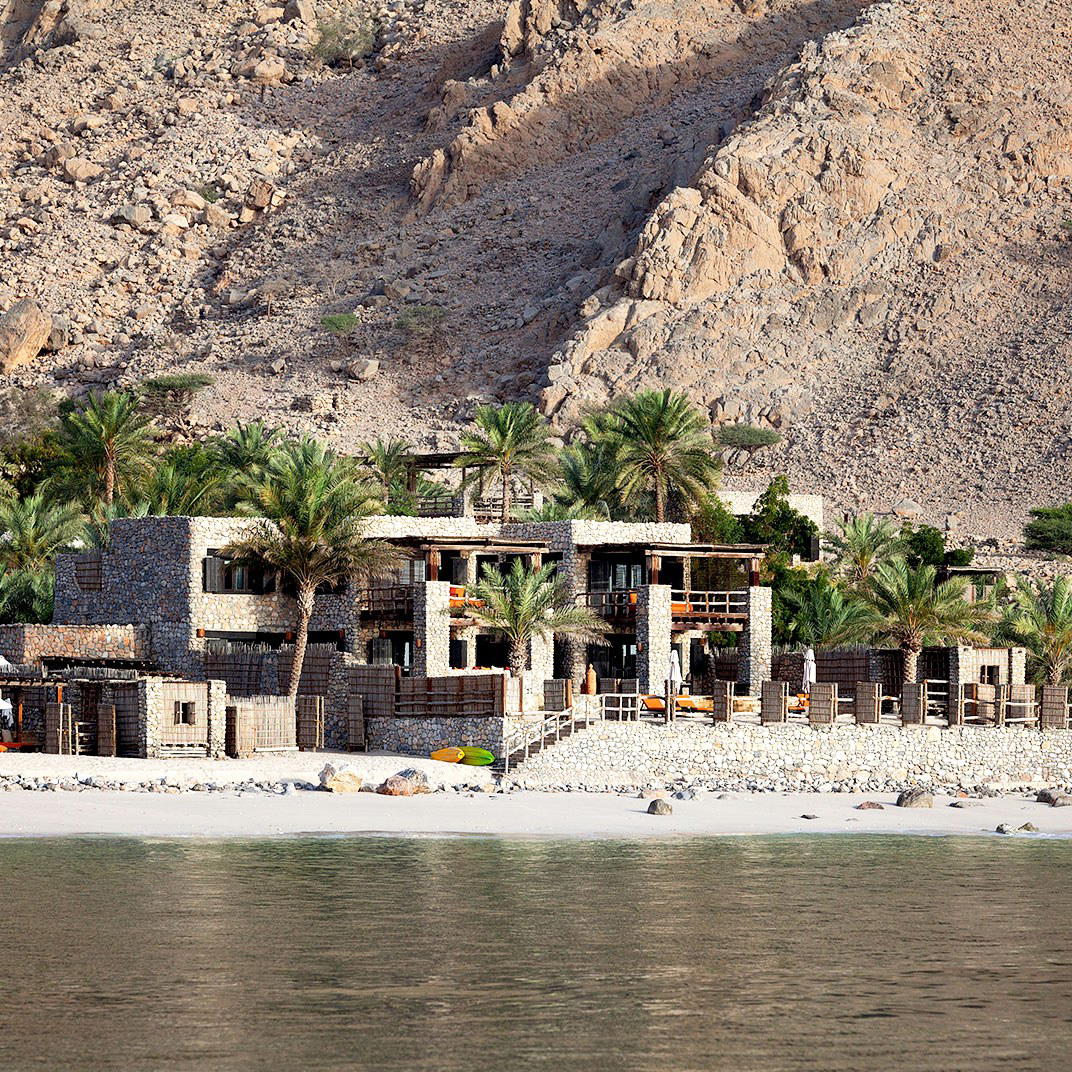
The Musandam Peninsula sits at the northern tip of Oman, separated from the rest of the country by a corridor of UAE territory and defined geologically by the Hajar mountain range dropping directly into the Strait of Hormuz. The fjords here, locally called khors, are among the most structurally dramatic coastal formations on the Arabian Peninsula. Six Senses Zighy Bay occupies one of those inlets, and the physical approach to the property is part of the experience: guests arrive by descending a steep mountain pass, by boat across the bay, or by tandem paraglider from the ridge above. Each option is a different argument for why the setting works on its own terms before a room or a meal enters the picture.
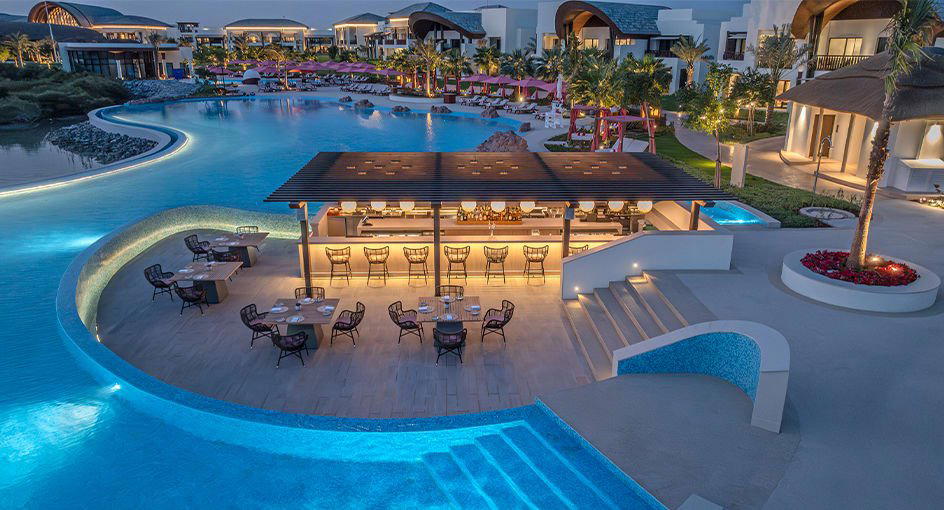
That geography shapes everything about the architecture. Across the Musandam and broader Oman, the premium resort tier has split between international luxury templates dropped into landscape and properties that read as indigenous to their sites. Six Senses Zighy Bay belongs to the second category. The built environment uses materials, forms, and construction logic drawn from the Omani fishing village tradition: rough-cut stone, palm-thatch roofing, low horizontal profiles that follow the contours of the hillside rather than interrupt them. The result is a property that does not announce itself from the bay. You find it by arriving, not by spotting it.
Architecture as Argument
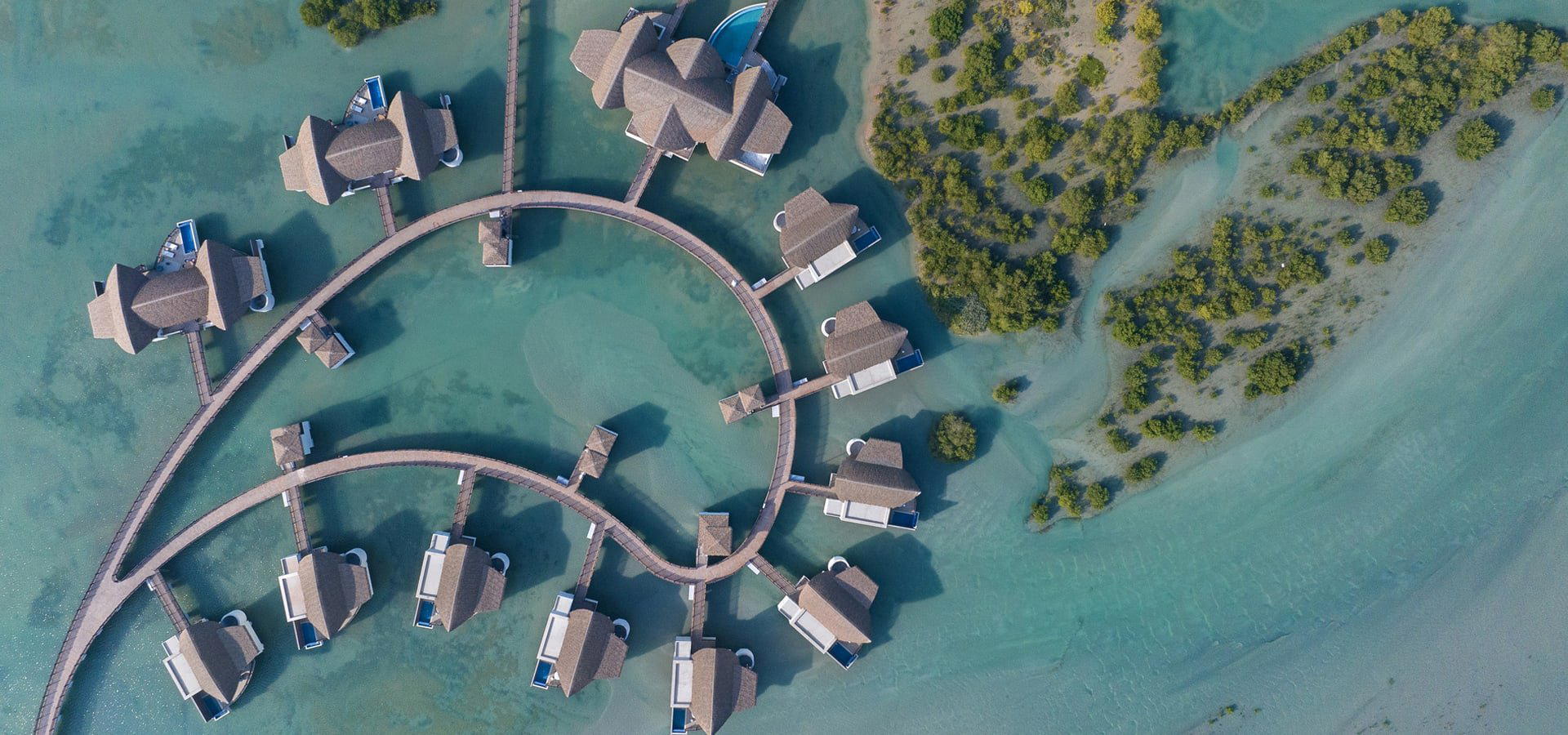
The design approach at Zighy Bay reflects a broader pattern in destination resorts that earned recognition across the 2000s and 2010s: building as restoration rather than intervention. The villas reference the form vocabulary of traditional Omani coastal settlements, where thick walls moderate heat, interior courtyards create private shade, and rooflines pitch toward prevailing wind rather than toward aesthetic effect. At this property, those vernacular principles are applied at a scale that serves individual villas with private pools, so the traditional village morphology is essentially reversed: the density is there, but the privacy logic of a resort replaces the communal logic of a settlement.
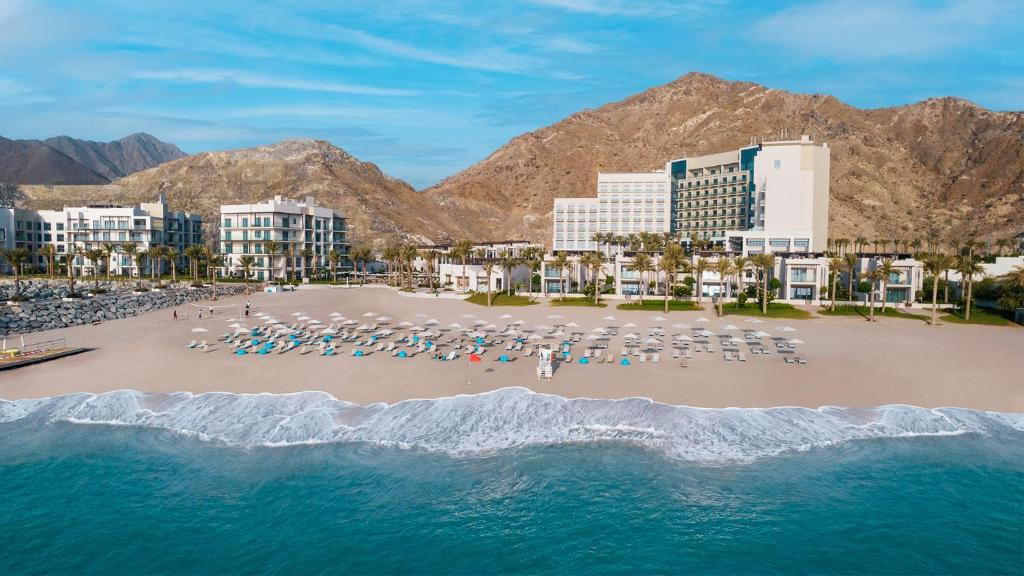
The practical consequence is that villas feel embedded rather than placed. Guests moving between the beach, the spa, and the dining areas cross ground that reads as continuous with the terrain, not as manicured property. Stone paths, existing rock formations kept in place, and plantings that follow what grows in the surrounding wadis all contribute to a physical coherence that distinguishes this property from peers in the Gulf region that default to marble lobbies and imported palms. Properties like the Fairmont Fujairah Beach Resort, located along the same Dibba coastline, represent a different architectural register entirely: larger, more conventionally resort-coded, oriented toward the broad beach rather than into a bay. The two properties share a general geography but operate in distinct design idioms.
Regionally, the comparison set for this kind of vernacular-committed design includes properties like Alila Jabal Akhdar, which works with a similar philosophy on Oman's Green Mountain, and the Anantara Al Jabal Al Akhdar Resort in Nizwa. Both sit on the same geological backbone as the Musandam range and both operate with design briefs that respond to existing topography. Zighy Bay's coastal position sets it apart: the architecture here has to negotiate between mountain and sea simultaneously, which produces a different visual logic than the cliff-leading or plateau properties further south.
Recognition and Where This Property Sits
The 2025 Michelin Guide recognised Six Senses Zighy Bay with One Key, the entry-tier designation in the guide's hotel programme that covers Oman. Michelin Keys assess the overall hospitality offer including physical environment, service quality, and food and beverage, not accommodation alone. The recognition places Zighy Bay within a select group of Omani properties that the guide considers worthy of a deliberate stay. For context on the Oman tier, the guide's hotel coverage in the country spans properties from Muscat to Salalah; Zighy Bay's inclusion in a remote coastal location signals that the panel assessed the complete destination proposition, not just the rooms.
Other properties in the Six Senses portfolio appear across the region, and for those planning a broader Oman itinerary, the Six Senses Zighy Bay Resort in Muscat provides an urban counterpoint. Properties from the Jumeirah Muscat Bay in Bandar Jissah and the Al Baleed Resort Salalah by Anantara round out the southern and coastal premium tier for those crossing multiple Omani destinations. For the full Dibba accommodation picture, see our full Dibba restaurants and hotels guide.
Globally, the vernacular-embedded resort category that Zighy Bay occupies has close peers in properties like Castello di Reschio in Lisciano Niccone, which operates with comparable site-specific architecture in Umbria, and Hotel Esencia in Tulum, where tropical materials and low intervention define the aesthetic. Neither of those carries the same geological drama as Musandam, but both demonstrate that the design approach Zighy Bay applies is recognised internationally as its own distinct hospitality category. For properties that represent a more urbane, heritage-palace tradition, Le Bristol Paris, Badrutt's Palace Hotel in St. Moritz, and Hotel Du Cap-Eden-Roc in Cap d'Antibes represent the counterpoint: properties where the architecture announces rather than recedes.
Planning a Stay
The Musandam Peninsula requires specific logistics. The most direct overland route from Dubai crosses into Oman at Tibat, a border point that requires a valid Omani visa and, depending on nationality, an advance e-visa obtained through the Royal Oman Police portal. The drive from Dubai International Airport to the property is approximately two hours under normal traffic conditions at the border, making this an accessible long-weekend destination from the UAE. The cooler months from October through March represent the period when the Musandam climate is most hospitable for outdoor activity: the khors are calm, the visibility for diving and snorkelling is at its clearest, and temperatures on the mountain passes are moderate. Summer bookings are possible but the heat between June and September limits time outdoors. Given the Michelin recognition and the property's low-key profile among international travellers relative to Gulf peers like those in Aman New York's tier, lead times of two to three months are advisable for peak winter dates. For those considering the broader regional picture before committing, Magic Camps Wahiba Sands in Sharqiya Sands offers a starkly different Omani landscape for comparison.
How It Stacks Up
Comparable venues nearby, for context on price, style, and recognition.
| Venue | Cuisine | Price | Awards | Notes |
|---|---|---|---|---|
| Six Senses Zighy Bay, OmanThis venue — the venue you are viewing | Traditional Omani village-inspired eco-luxe resort with low-rise stone-walled villas and private enclaves. | Not listed | 2 Michelin Keys | Not listed |
| Kempinski Hotel Muscat | Luxury beach resort blending contemporary style with Arabic influences | Not listed | Virtuoso Luxury Hotel Partner | Al Mouj |
| Anantara Al Jabal Al Akhdar Resort | Omani luxury resort blending traditional architecture with modern comforts | Not listed | La Liste Top Hotels · Virtuoso Luxury Hotel Partner | Jabal Al Akhdar |
| Shangri-La Al Husn Resort & Spa | Exclusive adults-only luxury resort inspired by royal Arabian palaces | $300–500 | Forbes Recommended | Barr Al Jissah |
| JW Marriott Hotel Muscat | Modern luxury with Omani charm, meticulously designed to blend contemporary comfort with traditional elements and natural surroundings. | Not listed | World Luxury Hotel Awards WLHA Country Winner | Oman Convention and Exhibition Centre area |
| Al Bustan Palace, a Ritz-Carlton Hotel | Luxurious beachfront resort blending Omani palace heritage with modern Ritz-Carlton elegance. | $200–300 | La Liste Top Hotels · Forbes Recommended | Al Bustan |
Recognition history
Dated appearances from independent guides and award organizations, with the underlying list record or original source where available.
Michelin 2 Keys
Michelin
Full recognition history (2 entries)
Michelin 1 Key
Michelin
Details
- Quiet
- Scenic
- Elegant
- Rustic
- Sophisticated
- Honeymoon
- Romantic Getaway
- Family Vacation
- Wellness Retreat
- Beachfront
- Infinity Pool
- Private Villa
- Destination Spa
- Pool
- Spa
- Kids Club
- Beach Access
- Waterfront
- Mountain
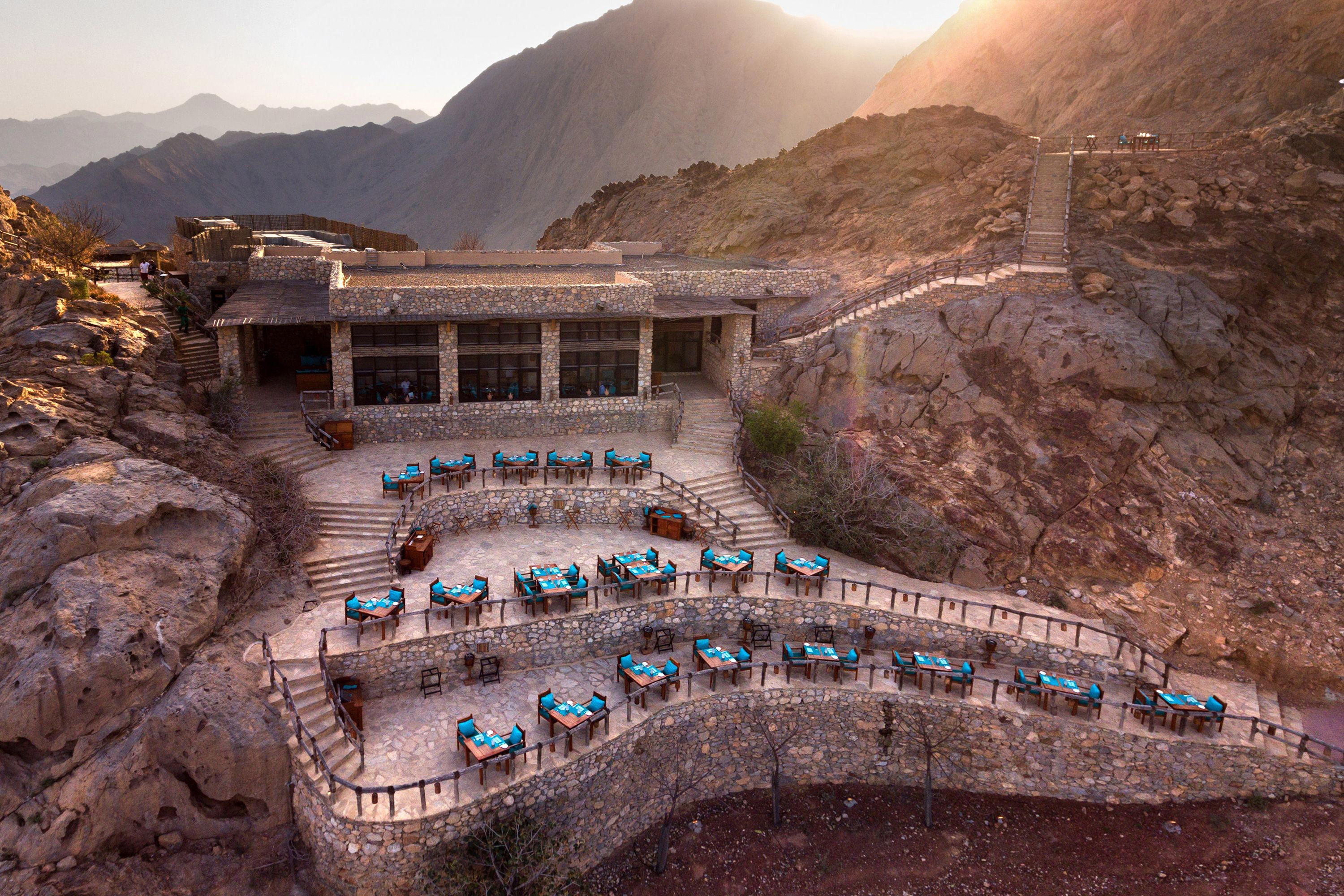
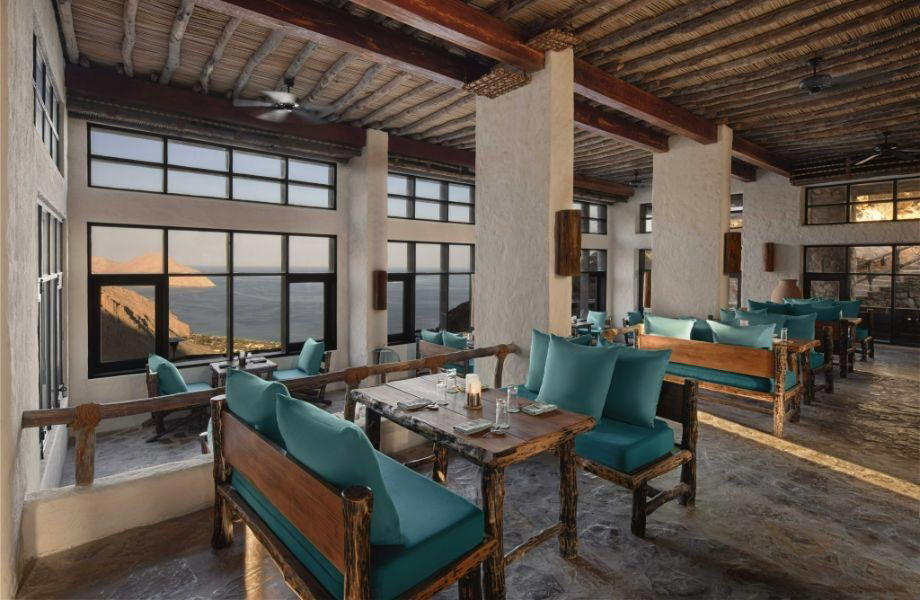
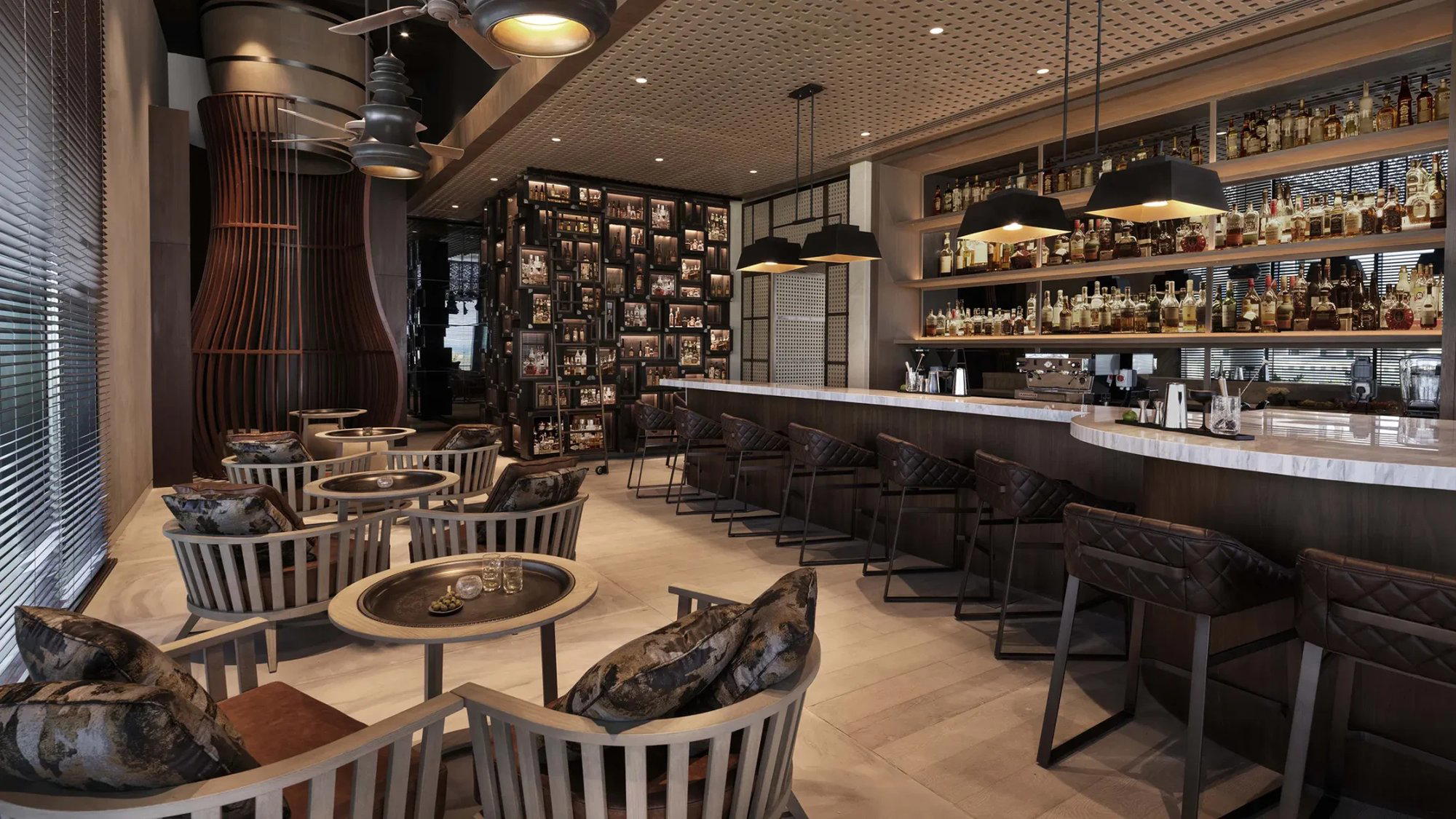
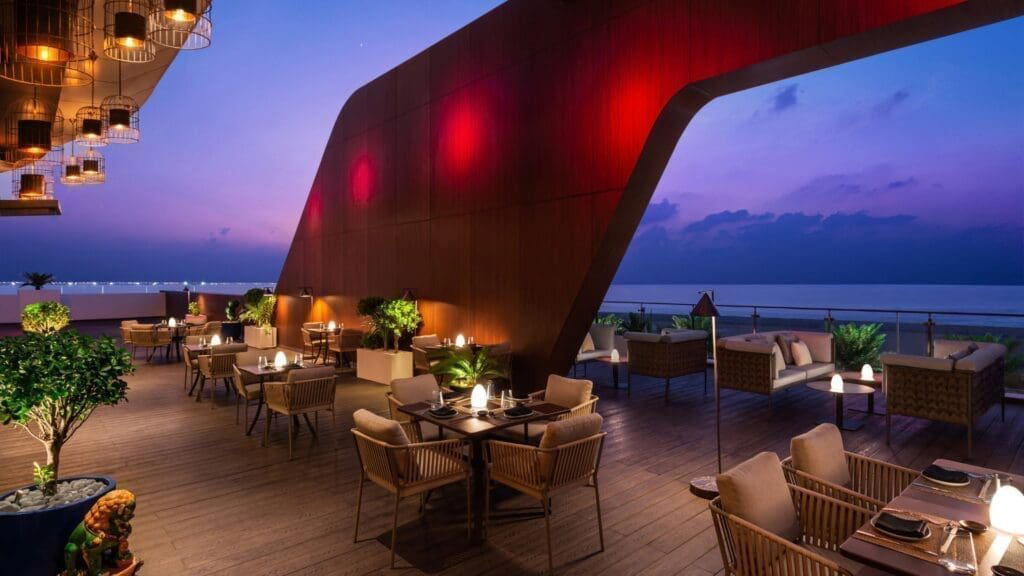
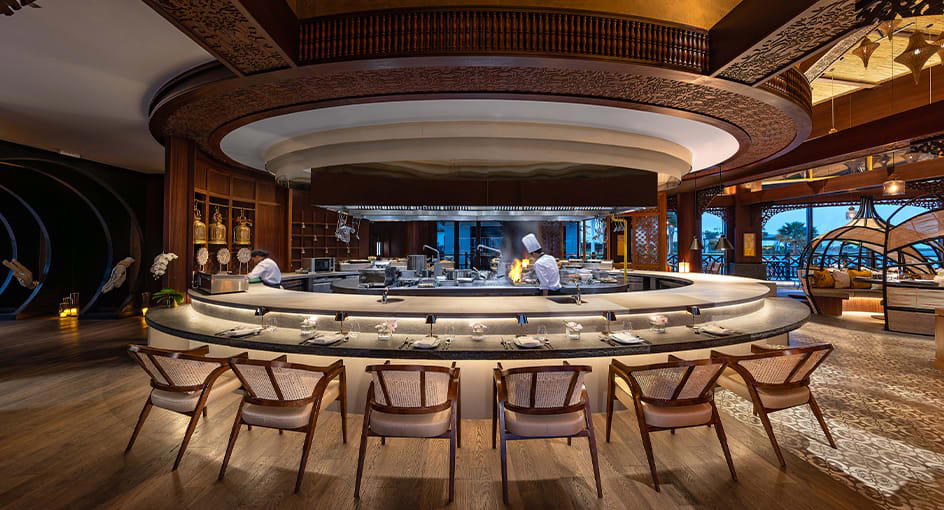
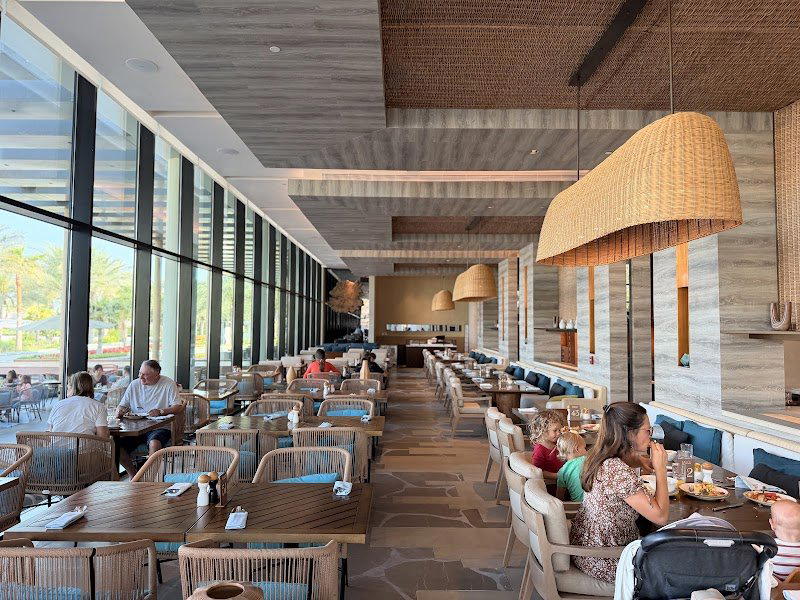
Rustic-chic with natural stone, timber, dark wood furnishings, and soft lighting from antique lanterns creating a soothing, tranquil, and culturally authentic atmosphere.