Rancho de la Osa

USA Today Best Ranches Best Ranches #14
Arizona's most historic guest ranch sits in the high desert grasslands near the Mexican border, where adobe architecture, Native American ruins, and open riding country define the experience. Rancho de la Osa is where the working West meets unhurried hospitality: horseback access to borderlands terrain, exceptional food, and a built environment that has accumulated more than a century of use and memory.

Pearl is the En Primeur Club membership app, where members save venues, book tables and use the concierge.
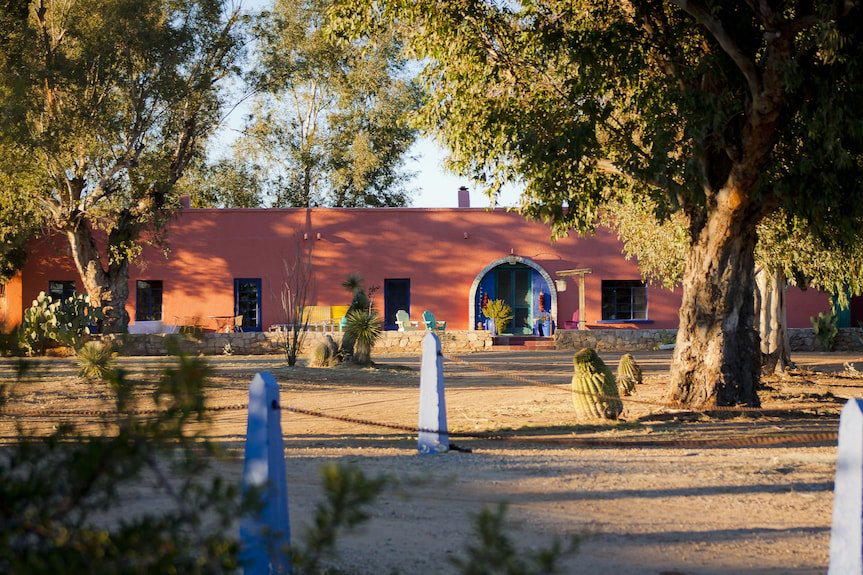
Where the Sonoran Desert Does the Work
Approaching Sasabe from Tucson, the road thins and the sky broadens in equal measure. The Baboquivari Mountains hold the western horizon, and by the time the gates of Rancho de la Osa appear off the main route, the elevation has climbed into grassland country that feels taxonomically different from the saguaro-studded lowlands most visitors associate with southern Arizona. This is the high desert, where the Sonoran meets the semi-arid plains of the borderlands, and where a ranch has occupied this particular piece of ground for well over a century.
That duration matters architecturally. The built environment at Rancho de la Osa is not a recent recreation of frontier aesthetics, the adobe construction, the low-slung casitas, the shaded corridors and interior courtyards, these are structures that carry genuine age. Adobe is a material with specific thermal logic: thick walls absorb daytime heat and release it slowly after dark, which in this climate means interior spaces remain measurably cooler in summer and warmer on cold desert nights without mechanical intervention. The architecture is functional before it is romantic, though it is also that.
The Physical Logic of the Ranch
American ranch architecture has been romanticized and reproduced so many times that the genuine article is easy to underestimate. The distinction at Rancho de la Osa is that the built form predates the genre's popularization. Hacienda-style construction in the Arizona borderlands borrowed from Spanish colonial precedent, which itself adapted to the Sonoran climate over generations. The result is a compound logic: separate structures rather than a single large building, arranged around outdoor space that functions as the actual center of daily life. At a property where horseback riding into the surrounding grasslands is a primary activity, and where the land itself carries traces of Native American habitation across archaeological sites on the grounds, the architecture reads as one layer in a longer sequence of human presence.
That layering gives the property a different register from purpose-built luxury ranches that opened in the last two decades. For comparison, properties like Amangiri in Canyon Point or Ambiente in Sedona operate within a design-led idiom where the physical form is conceived to be photographed as much as inhabited. Rancho de la Osa belongs to a different category, historic properties where the structure accrued meaning through use rather than through a single design commission. The same distinction applies, in different contexts, to places like Troutbeck in Amenia or Blackberry Farm in Walland, where age and accumulated character separate the property from newer entrants in the rural-retreat category.
Land Access and the Activity Tier
The primary activity at the ranch is horseback riding through high desert grasslands and borderlands terrain that is not accessible by road. This is consequential. Most Arizona properties that offer equestrian programming do so at a level that functions as an amenity, a trail ride that returns within an hour. Access to open grassland country in the Baboquivari foothills operates differently: the scale of the land changes the relationship between guest and landscape. For context, Sage Lodge in Pray and Alpine Falls Ranch in Superior work within a comparable logic of land-anchored experience in the American West, where the physical scale of the surroundings is itself the program.
The Sonoran Desert grasslands at this elevation host a specific ecology: perennial grasses, mesquite, and seasonal wildflowers that mark a transitional zone between desert and highland. The ranch's position near Sasabe, close to the US-Mexico border, also places it within reach of land formations and ruins that carry archaeological significance. Native American sites on the property add a layer to the guest experience that is harder to replicate and impossible to reconstruct elsewhere in the region.
Food and Hospitality at the Property Scale
Ranch-format dining in the American West has evolved considerably since the all-inclusive model of the mid-twentieth century. At the premium end, properties now treat food as a differentiator rather than an afterthought: SingleThread Farm Inn in Healdsburg and Auberge du Soleil in Napa represent how deeply food quality can define a property's identity in the rural-luxury tier. The records for Rancho de la Osa describe the food as exceptional within the context of the ranch's hospitality offer, though the property's specific culinary program falls outside what can be documented here with precision. What the property's historic positioning does suggest is that the dining experience operates within the rhythms of ranch life, communal, grounded in the region, and timed around outdoor activity rather than the other way around.
Hospitality at properties of this type tends to operate at a different pace from urban luxury. The absence of a large hotel apparatus, the concierge desk, the spa treatment menu, the bar program calibrated for Instagram, is typically the point. For guests coming from properties like The Fifth Avenue Hotel in New York City or Aman New York, the contrast is structural, not accidental. Ranch-format properties ask a different thing of the guest: presence rather than service, and activity rather than comfort as the primary offer.
Planning a Stay at Rancho de la Osa
Sasabe sits roughly 65 miles southwest of Tucson via Highway 286, a route that passes through open rangeland and into the Buenos Aires National Wildlife Refuge before reaching the property. Tucson International Airport is the practical arrival point for most guests, with the drive taking approximately ninety minutes under normal conditions.
The high desert grasslands around Sasabe are most comfortable from October through April, when daytime temperatures fall within a range that suits extended outdoor activity. Summer months bring monsoon weather to southern Arizona from July onward, which changes both the landscape character and the logistics of riding programs. Booking well in advance is advisable for peak shoulder-season dates, particularly October and November, when the grasslands are at their most accessible and the light in the Baboquivari foothills has the quality that has drawn landscape photographers to this part of the borderlands for generations.
For travelers building a wider Arizona itinerary, Canyon Ranch Tucson represents a very different model, wellness-focused, high-amenity, urban-adjacent, that pairs logistically with a stay at Rancho de la Osa without duplicating the experience. Those extending into the broader Southwest might also consider Amangani in Jackson Hole or Post Ranch Inn in Big Sur as properties that work within a related premise, landscape-anchored, architecturally considered, remote, but in markedly different ecosystems. See our full Sasabe restaurants guide for additional context on the area.
At-a-Glance Comparison
Comparable venues nearby, for context on price, style, and recognition.
| Venue | Cuisine | Price | Awards | Notes |
|---|---|---|---|---|
| Rancho de la OsaThis venue (the venue you are viewing) | Historic guest ranch | $300–500 | USA Today Best Ranches Best Ranches #14 | Not listed |
| The Downtown Clifton | neighborhood boutique hotel | Not listed | Not listed | Armory Park |
| RISE Uptown | mid-century modern boutique | $100–200 | Michelin Selected | Uptown Phoenix |
| Canopy by Hilton Scottsdale Old Town | Mid-century modern sophistication blended with lively Southwest energy | $100–200 | Michelin Selected | Old Town Scottsdale |
| WHITE STALLION RANCH | Historic dude ranch with resort upgrades | Not listed | USA Today Best Ranches Best Ranches #20 · Top 50 Ranches | Picture Rocks |
| The REMI, Scottsdale, Autograph Collection | Contemporary boutique hotel merging bold design with sensory experiences; experience-forward hospitality positioned as a multi-sensory journey through Scottsdale's cultural landscape. | Not listed | Michelin Selected | Old Town Scottsdale Entertainment District |
Recognition history
Dated appearances from independent guides and award organizations, with the underlying list record or original source where available.
USA Today Best Ranches Best Ranches #14
USA Today Best Ranches
Details
- Rustic
- Historic
- Quiet
- Scenic
- Cozy
- Romantic Getaway
- Weekend Escape
- Group Retreat
- Historic Building
- Wi Fi
- Pool
- Breakfast Included
- Garden
- Bar
- Laundry Service
- Meeting Rooms
- Mountain
- Garden
- Step Free Entrance
Peaceful and restful with a laid-back historic ranch atmosphere, cozy fireplaces, and relaxing outdoor seating areas.