
A Baroque palace on the eastern bank of the Douro, Pestana Palácio do Freixo converts an eighteenth-century royal manor into a Leading Hotels of the World member property. The building's architectural pedigree and riverside setting place it at the heritage end of Porto's hotel spectrum, well outside the historic centre crowds yet connected to the city by water and road.
Where the Douro Meets the Eighteenth Century
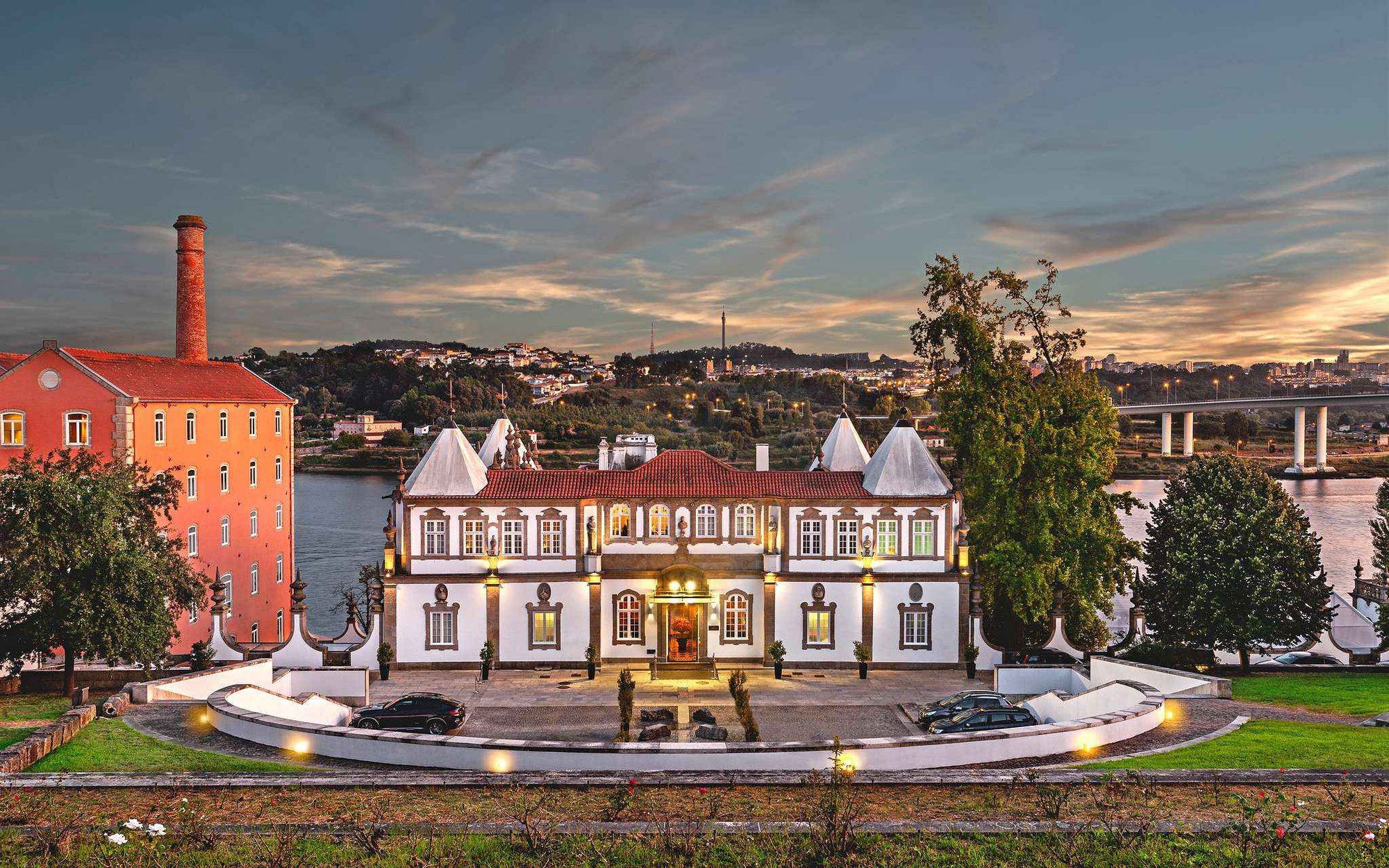
Arrive at Pestana Palácio do Freixo from the river side, if you can arrange it, and the full architectural argument lands at once. The Baroque palace that anchors the property was constructed in the early eighteenth century, a period when Portugal's commercial wealth — built substantially on Port wine exports moving through exactly this stretch of the Douro — was being translated into monumental stone. The building's relationship to that river is not decorative; it is structural. The Douro was the economic artery, and the estates along its banks were built to command it. Standing before the facade today, with the water below and the terraced gardens descending toward it, the logic of that ambition is still legible.
The address, Estrada Nacional 108, places the property on the eastern fringe of Porto, upstream from the Ribeira and the tourist density of the historic core. That distance is, depending on your priorities, the property's most useful characteristic or its one inconvenience. For visitors who want immediate access to the Livraria Lello, the Se Cathedral, or the bar-dense streets around Rua Galeria de Paris, proximity matters and the Freixo's location requires planning. For visitors who want the city at a remove , who prefer to enter Porto deliberately rather than be absorbed by it , the riverfront position on EN108 functions as a genuine editorial choice, not a compromise.
The Heritage Tier in Porto's Hotel Market
Porto's premium hotel market has stratified in a way that reflects the city's larger transformation over the past fifteen years. The historic centre accommodates a cluster of addresses that put guests inside the UNESCO-listed cityscape: the InterContinental Porto Palacio das Cardosas occupies a nineteenth-century neoclassical palace on Praça da Liberdade, while Hospes Infante Sagres Porto works within an early twentieth-century building in the city centre. Meanwhile, Maison Albar Le Monumental Palace and GA Palace Hotel & SPA represent the design-led contemporary end of the spectrum.
Pestana Palácio do Freixo occupies a different position in that set. It is the property that trades most heavily on architectural age and setting rather than on centrality or contemporary programming. Leading Hotels of the World membership, the property's primary verifiable credential for 2025, signals positioning within an international peer group that prizes historic fabric, property scale, and a certain formality of experience. That membership places the Freixo alongside properties across Portugal , from Casa da Calçada in Amarante to Bela Vista Hotel & Spa in Praia da Rocha , that similarly convert historical structures into high-category hospitality rather than building from scratch.
Within the Pestana group's own Porto portfolio, the contrast is instructive. The Pestana Douro Riverside Porto Premium Hotel occupies the river's edge in a different configuration and price register. The Freixo is the group's heritage asset in the city, the property that most directly converts architectural patrimony into a stay.
The Building as Argument
Portuguese Baroque architecture of the early eighteenth century has a specific visual register that distinguishes it from Italian or German contemporaries: granite rather than marble, restrained ornamental flourishes compared to the exuberance found further south, and an engagement with topography that tends to terrace and cascade rather than dominate flat ground. The Freixo palace fits that template. The building is classified as a national monument in Portugal, a designation that both constrains and defines what the property can be. Conservation requirements shape how guest spaces are configured, which materials appear in renovation, and how the original structure is presented. For a certain kind of traveller, those constraints are precisely the attraction.
The estate's history includes use as an industrial facility before its conversion to hospitality, a biographical detail common to many Portuguese palaces that makes their current form as hotels feel genuinely hard-won rather than convenient. The transition from industrial site to Leading Hotels of the World member required the kind of structural and historical restoration that few hotel projects attempt, and the result carries evidence of that effort in its materials and proportions.
Setting the Itinerary from This Address
Guests staying at the Freixo need to think about Porto differently than guests at the Altis Porto Hotel or the One Shot Palácio Cedofeita, both of which embed visitors inside walkable neighbourhoods. From Estrada Nacional 108, the city's core requires a car or a deliberate taxi journey. The Douro riverfront is immediately accessible, however, and for guests with an interest in the wine trade that built this stretch of the river, that proximity to the Port wine lodges across in Vila Nova de Gaia holds real value. A morning exploring the Freixo's gardens and river terraces followed by an afternoon in the lodges and a dinner in Ribeira is a structurally sound day from this base.
Porto's food and bar scene is covered in depth in our full Porto restaurants guide and our full Porto bars guide. For wine-focused visitors, our Porto wineries guide maps the Port lodge visits on the Vila Nova de Gaia bank, which are reachable from the Freixo without passing through the historic centre. The broader Portuguese hotel context, from Carmo's Boutique Hotel in Ponte de Lima to Casa das Penhas Douradas in Manteigas and south to Casa Mãe Hotel in Lagos or Anantara Vilamoura Algarve Resort in Quarteira, helps frame what the Freixo offers relative to Portugal's wider heritage property spectrum.
For travellers building a Portugal itinerary outward from Porto, the Altis Avenida Hotel in Lisbon and the 3HB Faro in Faro anchor the southern end of common routing. The Artsy in Cascais represents a contrast in register if the trip extends to the Atlantic coast. Planning from our full Porto hotels guide provides the full comparison set for the city. For guests arriving from or departing to longer international itineraries, the contrast with flagship urban hotels such as The Fifth Avenue Hotel in New York City, Aman New York, or Aman Venice clarifies that the Freixo belongs to a tradition of palace conversion rather than purpose-built luxury.
Booking lead times for Leading Hotels of the World members in Porto compress during summer (June through September) and over the Festa de São João in late June, when the city draws its largest visitor numbers. Guests targeting spring , April and May, when riverside gardens are at their greenest and daytime temperatures sit in the high teens to low twenties Celsius , can typically plan with shorter notice, but the Freixo's limited inventory relative to larger city-centre hotels means early confirmation remains sensible regardless of season. Direct booking through the property or the Leading Hotels of the World reservation network is the standard channel for this membership tier. Our Porto experiences guide rounds out trip-planning for guests who want to build beyond the hotel into the wider city.
Frequently Asked Questions
- What is the signature room at Pestana Palácio do Freixo?
- The property's defining spatial experience is the original Baroque palace structure itself, a classified national monument, rather than any single room category. Leading Hotels of the World membership signals that the property meets a verified standard for historic property hospitality, and the palace rooms within the original eighteenth-century building carry the fullest architectural character. For the most complete engagement with the heritage fabric, rooms within the original structure rather than any later additions would be the logical starting point.
- What makes Pestana Palácio do Freixo worth visiting?
- The combination of an eighteenth-century national monument, a riverfront position on the Douro, and Leading Hotels of the World membership in 2025 places this property in a small peer group of Portuguese heritage hotels operating at the upper end of the market. Porto's city-centre hotels offer more immediate access to the historic core, but few offer this scale of historical architecture or the specific relationship to the river that defined the Port wine trade.
- How far ahead should I plan for Pestana Palácio do Freixo?
- Porto's peak summer season and late-June São João festival compress availability across all premium properties. For the Freixo specifically, the combination of Leading Hotels of the World standing and limited palace inventory makes advance booking advisable: six to eight weeks ahead for shoulder season (spring and autumn), and three or more months for high summer. There is no published phone number or website confirmed in EP Club's current data; booking through the Leading Hotels of the World reservation network is the most reliable route.
- Is Pestana Palácio do Freixo a good base for Douro Valley wine tourism?
- The property's position on Estrada Nacional 108 along the Douro riverbank makes it a logical staging point for guests whose itinerary extends east toward the Douro Valley wine country, which begins roughly an hour's drive upstream. Porto's Port wine lodges in Vila Nova de Gaia are reachable from the Freixo without entering the historic centre's traffic, and the hotel's architectural connection to the era of the Port wine trade adds contextual weight to that excursion. EP Club's Porto wineries guide covers the lodge visit options in detail.
Preferential Rates?
Our members enjoy concierge-led booking support and priority upgrades at the world's finest hotels.
Access the Concierge