

1 Michelin Key · Mr & Mrs Smith Seal of Approval
A 16th-century palazzo steps from Orvieto's cathedral, Palazzo Petrvs spent centuries abandoned before a meticulous restoration uncovered Renaissance frescoes, hand-restored coffered ceilings, and striped period textiles across nine rooms. Dinner is served in a deconsecrated church on the property. At $437 per night, it ranks among the more architecturally serious small hotels in Umbria.

Pearl is the En Primeur Club membership app — saves, bookings, and concierge access live there. Same editors, same standards.
- Address
- Via del Duomo, 23, 05018 Orvieto TR
- Phone
- +39 0763 967230
- Website
- palazzopetrvs.com
- Directions
- Get directions
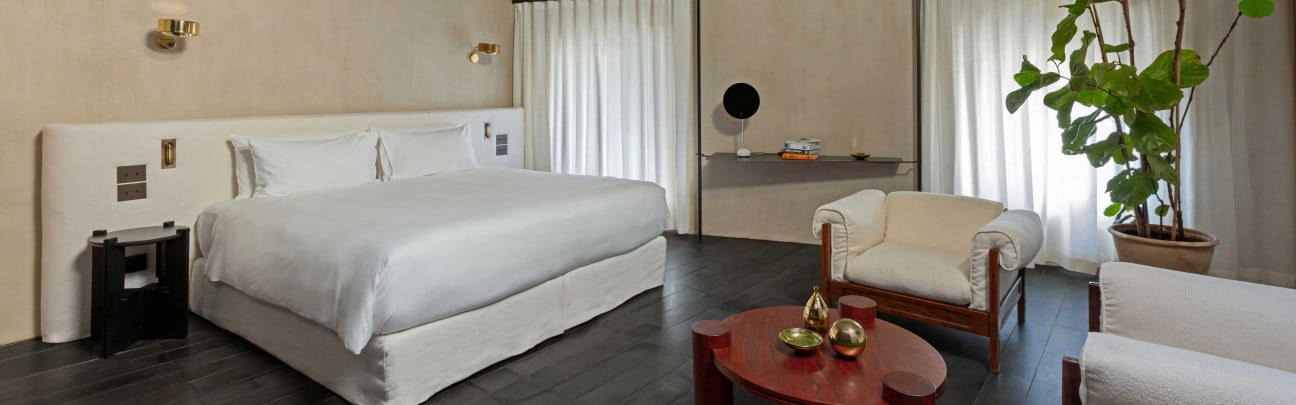
Stone, Fresco, and Five Centuries of Silence
Via del Duomo cuts through the center of Orvieto like a stone spine, flanked by medieval facades and shadowed by the cathedral's striped marble bulk. At number 23, a carved doorway gives onto a 16th-century palazzo that spent long stretches of its life empty — the address of Renaissance notary Petrvs Facienus, then abandoned, then forgotten beneath layers of plaster and accumulated decades. What has emerged from its restoration is one of the more architecturally honest small hotels in central Italy: nine rooms set inside a structure where the building itself is the primary argument for staying.
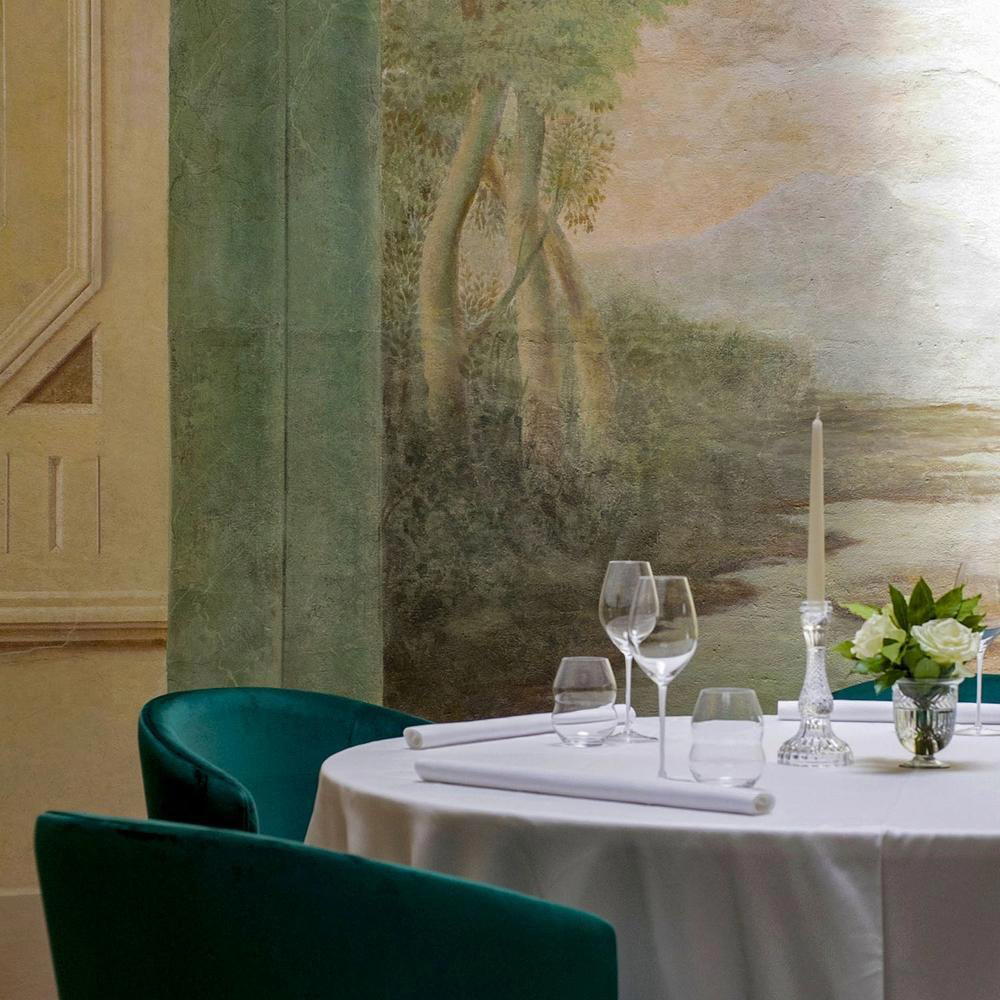
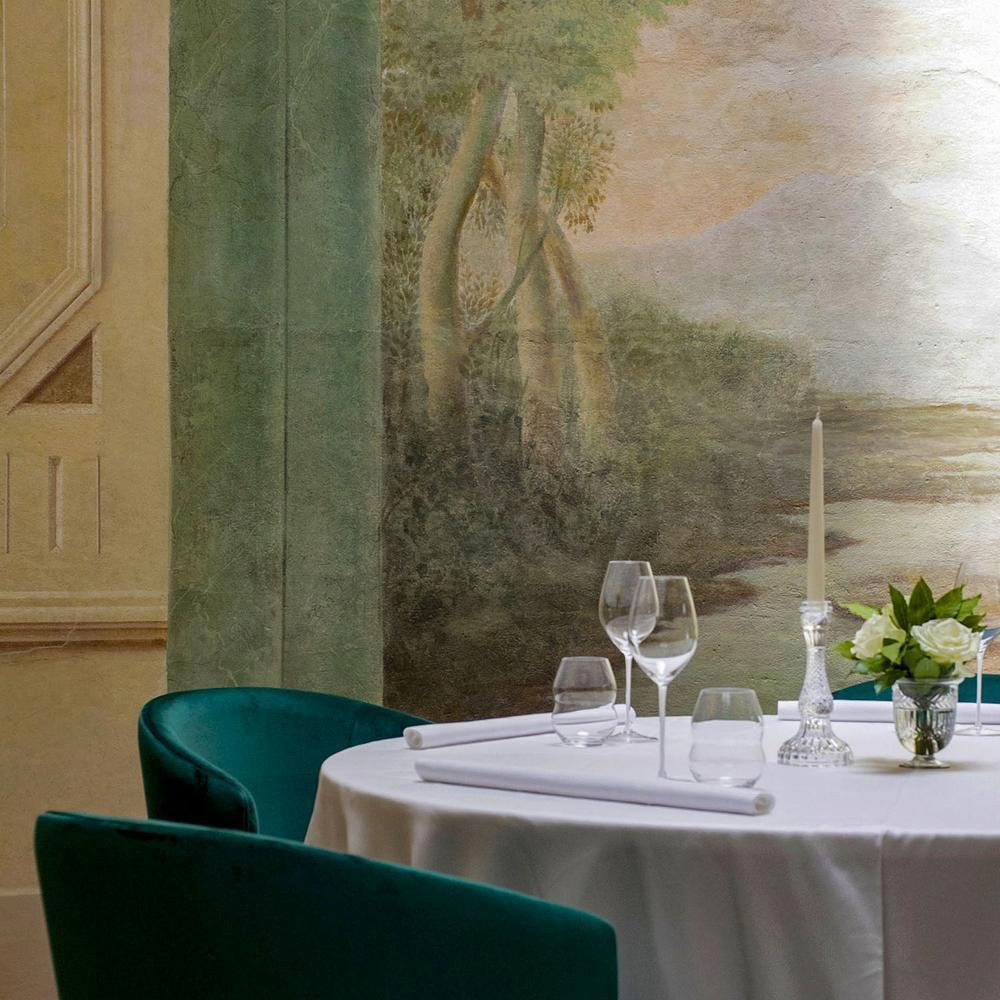
That argument is made in physical terms from the moment you enter. Frescoes uncovered during the restoration process cover walls that were plastered over for centuries, their pigments muted but legible, depicting figures and ornamental registers that predate nearly every hotel in this part of Umbria. Coffered ceilings, restored by hand rather than replicated, sit overhead in proportions that reflect the original commission rather than any contemporary taste for grandeur. The striped textiles used throughout the rooms echo Orvieto's own visual identity — the Duomo's alternating bands of travertine and basalt, without gesturing too obviously at the reference.
What Small-Scale Restoration Means at This Tier
Italy's premium hotel market has split in instructive directions over the past two decades. At one pole sit the international group properties, Four Seasons Hotel Firenze in Florence and Bulgari Hotel Roma in Rome among them, where the restoration brief includes extensive reengineering of historic fabric to meet contemporary service standards. At the other pole, a smaller cohort of properties has taken a different approach: minimal intervention, nine rooms or fewer, and architecture that retains its historical grain rather than buffing it smooth.
Palazzo Petrvs sits firmly in the second category. With nine rooms and a price point at $437 per night, it occupies a tier comparable to other carefully restored small palazzo properties across Umbria and Tuscany, Corte della Maestà in Civita di Bagnoregio represents a nearby point of reference in the same rural-historic corridor. What distinguishes this end of the market is precisely its restraint: the rooms balance richness of surface with a controlled editorial sensibility. Ornamentation is present, but it is the ornamentation of the building's own history rather than anything applied during the renovation.
That approach has costs and benefits. The benefit is a quality of atmosphere that larger properties cannot reproduce regardless of budget: the sense that the space has its own continuous story, and that a guest occupies it briefly rather than owning it. The cost is that the small room count and high demand for exactly this kind of experience means availability compresses quickly, particularly in spring and autumn when Orvieto draws visitors for its wine festivals and the surrounding Umbrian countryside is at its most approachable.
The Deconsecrated Church as Dining Room
The restaurant at Palazzo Petrvs occupies a deconsecrated church, a spatial typology with its own particular atmosphere in central Italy, where surplus sacred architecture has been absorbed into civic and commercial use for centuries. The high vaulted ceiling, the proportions calibrated for congregational rather than intimate use, and the quality of light that enters through former ecclesiastical windows all work differently from a conventional dining room. The description from the property itself uses the phrase "conservatively theatrical," which captures something accurate: the drama of the space is architectural and historical rather than performative. The room does not need candlelight effects or design interventions to make an impression.
This kind of embedded dining space is among the harder things to manufacture in luxury hospitality, Aman Venice in Venice and Passalacqua in Moltrasio achieve something comparable through the quality of their historic fabric, but the specific combination of deconsecrated sacred space and palazzo accommodation at this scale has few direct equivalents in Italy's small-hotel sector.
Orvieto as a Hotel Context
Orvieto's position in Italy's premium travel circuit is particular. It is a cliff-leading Umbrian city with a cathedral considered among the finest Gothic monuments in Europe, a functioning underground city of Etruscan and medieval tunnels, and a wine denomination (Orvieto Classico) that has been producing white wines from the surrounding volcanic tufa plateau for centuries. Despite this concentration of historical and gastronomic material, it has remained more lightly visited than Tuscany's comparable hill towns, Montalcino, San Gimignano, Pienza, in part because its rail connection (on the Rome-Florence line) makes it accessible as a day trip, which has historically suppressed overnight stays.
That pattern is shifting. Properties like Palazzo Petrvs, which offer a reason to remain overnight that exceeds what a day visit provides, are part of a broader recalibration of how travelers engage with Orvieto. The surrounding region connects naturally to southern Tuscany and northern Lazio itineraries: Rosewood Castiglion Del Bosco in Montalcino lies within comfortable driving range to the north, as does Castelfalfi in Montaione. For travelers building an itinerary across this corridor, Orvieto functions as a historically dense overnight stop that anchors a trip without requiring the logistical overhead of a larger city.
For context on what else is available in the area's dining and accommodation circuit, our full Orvieto restaurants guide covers the broader food and drink picture across the city.
Planning a Stay
Palazzo Petrvs is located at Via del Duomo, 23, directly in Orvieto's historic center, within walking distance of the cathedral and the city's main pedestrian zone. Nine rooms at $437 per night positions the property in the upper bracket of small Umbrian boutique hotels, comparable in price-per-room to other carefully restored palazzo properties in the region. Given the limited inventory, booking in advance is advisable for visits during April through June and September through October, which represent Orvieto's most active periods. The property's address on the main cathedral street means the location involves some ambient activity during the day, with the characteristic quiet of a small hill town returning by evening.
Travelers comparing this property against larger Italian alternatives may also want to consider Borgo Santandrea on the Amalfi Coast, Casa Maria Luigia in Modena, or Il Pellicano in Porto Ercole for different regional positions, though the architectural depth on offer at Palazzo Petrvs, specifically the frescoes and deconsecrated-church dining room, reflects a set of constraints and decisions that no amount of contemporary design intervention can replicate.
Side-by-Side Snapshot
Comparable venues nearby, for context on price, style, and recognition.
| Venue | Cuisine | Price | Awards | Notes |
|---|---|---|---|---|
| Palazzo PetrvsThis venue — the venue you are viewing | Historic 16th-century palazzo blending Renaissance heritage with contemporary luxury. | $300–500 | 1 Michelin Key · Mr & Mrs Smith Seal of Approval | Not listed |
| Altarocca Wine Resort | rustic agriturismo with luxury amenities | Not listed | Michelin Selected | Rocca Ripesena |
| Locanda Palazzone | Medieval country residence with contemporary minimalist interiors; family-run winery and rural hotel blending 14th-century architecture with Scandinavian-chic design. | Not listed | Michelin Selected · Mr & Mrs Smith Seal of Approval | Rocca Ripesena |
| Casa Newton | Rural residence blending traditional Tuscan features with bespoke mid-century furnishings. | $300–500 | 1 Michelin Key · Mr & Mrs Smith Seal of Approval | Val d'Orcia |
| Monastero di Cortona Hotel & Spa | Converted historic monastery with modern luxury | Not listed | 1 Michelin Key | Cortona Old Town |
| Singer Palace Hotel | Boutique luxury hotel in a historic landmark building blending Art Deco influences with contemporary Italian design. | Not listed | 1 Michelin Key · Virtuoso Luxury Hotel Partner | Colonna |
Recognition history
Dated appearances from independent guides and award organizations, with the underlying list record or original source where available.
Michelin 1 Key
Michelin
Mr & Mrs Smith Seal of Approval
Mr & Mrs Smith
Full recognition history (3 entries)
Michelin 1 Key
Michelin
Continue exploring
More in Orvieto
Hotels in Orvieto
Browse all →
Bars in Orvieto
Browse all →
Restaurants in Orvieto
Browse all →

Details
- Romantic
- Elegant
- Sophisticated
- Historic
- Intimate
- Romantic Getaway
- Honeymoon
- Anniversary
- Historic Building
- Terrace
- Panoramic View
- Wi Fi
- Restaurant
- Bar
- Room Service
- Concierge
- Air Conditioning
- Elevator
- EV Charging
- Pool
- Street Scene
- Wheelchair Accessible
- Elevator
- Accessible Parking
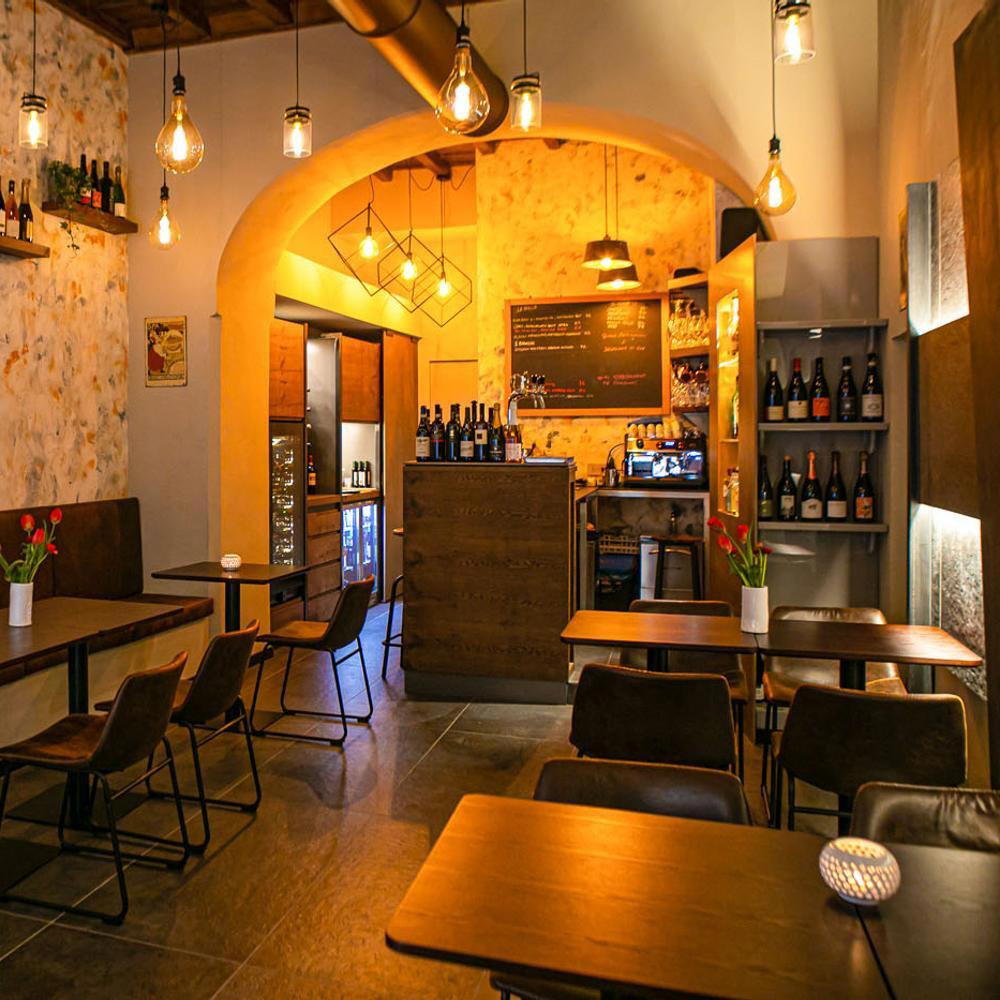
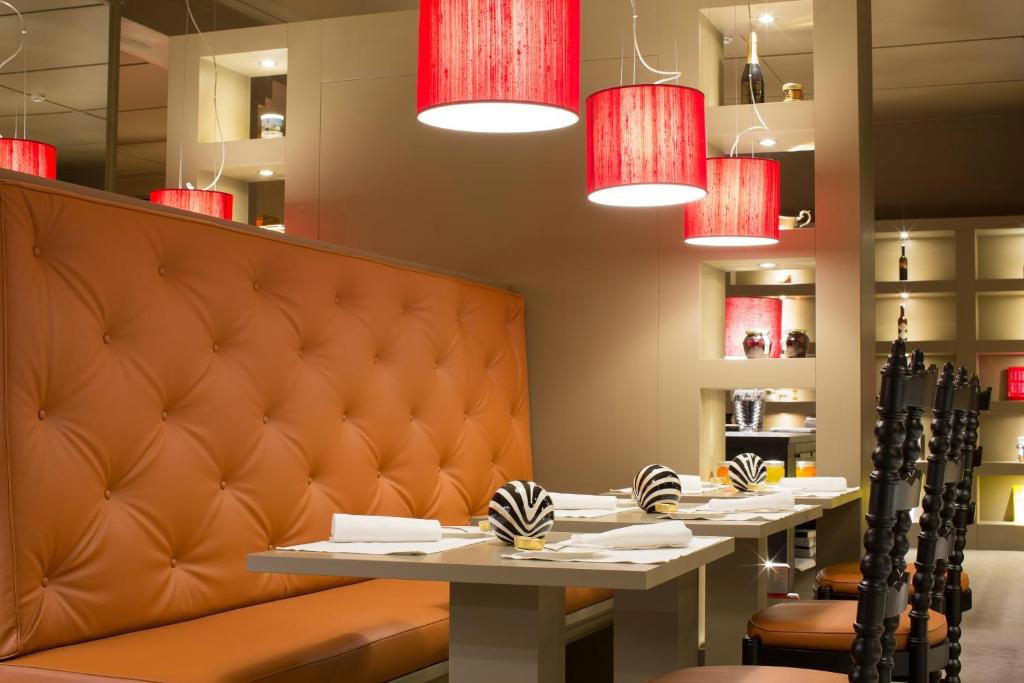
Refined and romantic with gentle lighting from vintage lamps, fresco-inspired art, lofty ceilings, and a mystical candlelit restaurant atmosphere.