
An 18th-century palace on Calle Granada places Palacio Solecio inside Málaga's most historically concentrated corridor, where original stone staircases and preserved architectural details set the physical tone before a guest unpacks a bag. The property sits at the intersection of heritage fabric and considered retreat, occupying a tier of Old Town accommodation where the building itself carries much of the editorial weight.
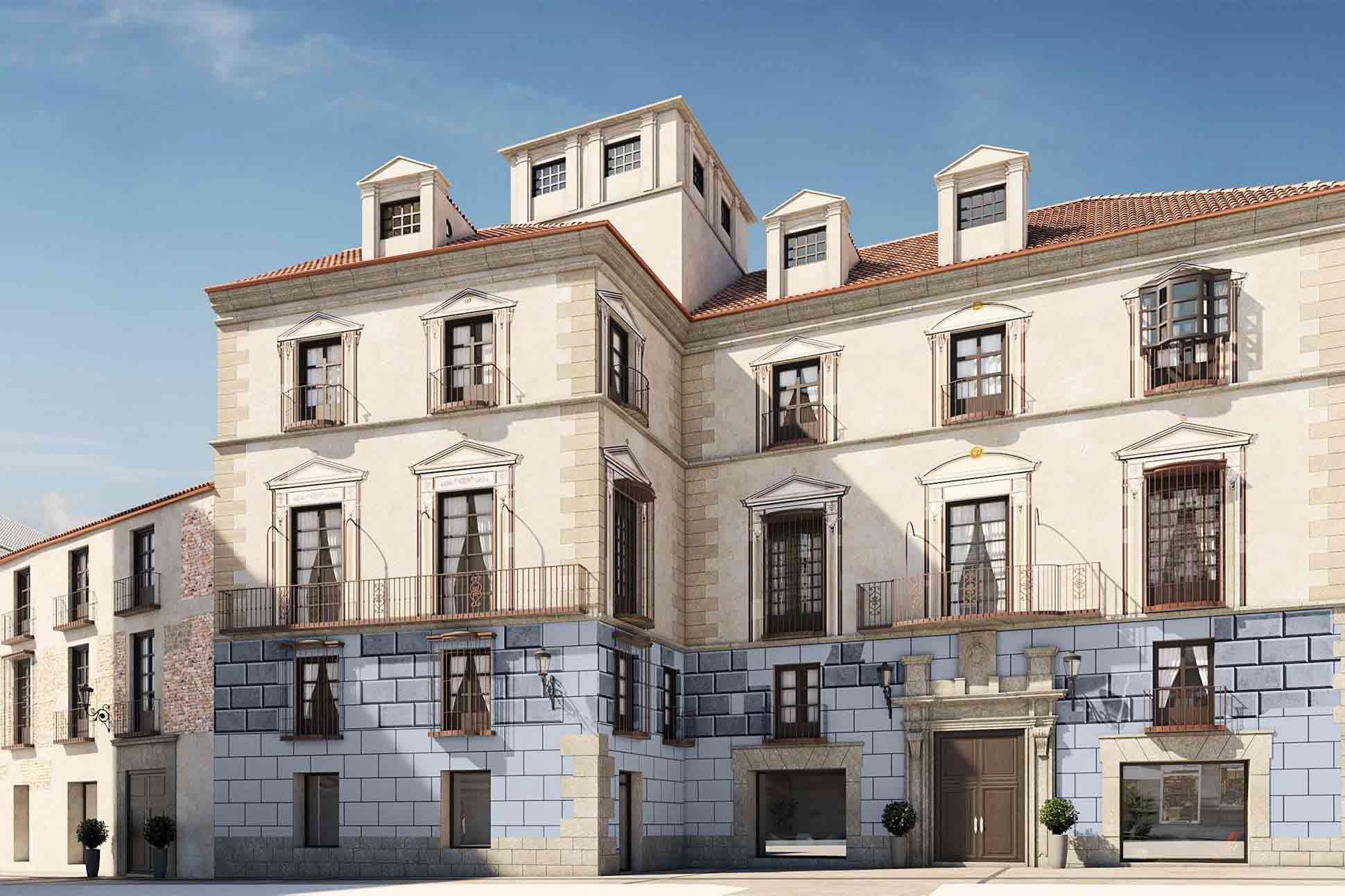
A Palace on Calle Granada: What the Building Tells You Before You Check In
Málaga's Old Town has undergone a quiet but consequential transformation over the past decade. The city that once served primarily as an airport transit point for the Costa del Sol has accumulated a serious cultural and hospitality layer, anchored by the Museo Picasso, the Carmen Thyssen, and a growing tier of properties that treat the city as a destination rather than a waypoint. Within that shift, the question of where to stay in the centro histórico has become genuinely interesting. The options now split between large internationally branded hotels, apartment-style residences like Leiro Residences, and a smaller cohort of palace conversions that use the building's own history as a primary asset.
Palacio Solecio belongs to that last category. The property occupies an 18th-century palace on Calle Granada, the long pedestrian artery that connects the old city's commercial strip to the Alcazaba hill. From the moment the entrance is crossed, the architectural record of the building does most of the communicating: original stone staircases, lobby details that carry visible traces of the palace's domestic past, and a physical scale that resists the anonymity of purpose-built hotel design. For a certain kind of traveller, the building is the argument.
The Retreat Logic of a Historic Building
There is a particular type of rest that old stone buildings seem to facilitate, and it is worth being specific about why. The thermal mass of thick masonry walls regulates interior temperature in a way that modern construction rarely replicates. In Málaga, where summer heat peaks above 35°C on a reliable basis, this matters practically. The Old Town's narrow street grid, of which Calle Granada is a central axis, also limits vehicle traffic and the associated noise intrusion that undermines lighter-built hotels on wider avenues. The physical environment of Palacio Solecio, in other words, creates retreat conditions through architectural fact rather than marketing positioning.
This aligns with a broader pattern visible across the Spanish palace-hotel category. Properties like Atrio Restaurante Hotel in Cáceres and Terra Dominicata in Escaladei have demonstrated that heritage buildings in secondary Spanish cities can command a premium tier when the conversion is handled with architectural restraint, preserving original materials rather than papering over them. The stone staircase at Palacio Solecio, which leads from the entrance lobby to the first-floor guest areas, functions as exactly this kind of retention signal: the building has not been erased and rebuilt in a neutral international style.
For guests oriented around a retreat-minded stay, the implication is that decompression here begins at the ground level rather than in a dedicated wellness suite. The architecture provides the first layer of separation from the city's pace, before any additional programming adds to it. Compare this with larger-footprint properties on Málaga's seafront, such as Gran Hotel Miramar, where the wellness offer is more formally structured and the building's scale produces a different register entirely.
Old Town Location as Both Asset and Consideration
Calle Granada, 61 places the property within walking distance of Málaga's principal museums and the central market, but this proximity is a two-directional fact. The same streets that make a morning walk to the Alcazaba effortless carry pedestrian activity into the evening hours, particularly during the summer months when the city's outdoor dining culture extends well past midnight. Guests who prioritise absolute quiet should weigh this honestly. Those who want immersive access to the city's social life, and who see the ability to return to a calm interior after it, will read the address as an advantage.
The Old Town's hospitality tier also includes Cristine Bedfor Málaga and La Fonda Heritage Hotel, both of which operate at a similar scale and heritage orientation. The competitive set is coherent: these are not resort hotels or large urban conference properties. They share a format logic built around architectural character, manageable room counts, and an implicit assumption that guests are choosing Málaga deliberately rather than passing through. For context on the full range of accommodation options across the city, our full Málaga hotels guide maps the field in more detail.
Situating Palacio Solecio in Wider Spanish Hospitality
Spain's premium heritage hotel tier is deep and geographically distributed. At the upper end, properties like Mandarin Oriental Ritz, Madrid and Akelarre in San Sebastián operate with international brand infrastructure and formal wellness programming built into their offer. In the island properties, La Residencia, A Belmond Hotel, Mallorca and Hotel Can Ferrereta in Santanyí demonstrate how historic rural buildings translate into self-contained retreat formats with strong spa programming. Cap Rocat in Cala Blava takes this further, with a converted 19th-century military fortress that makes physical isolation the central experience.
Palacio Solecio occupies a different position: an urban palace conversion in a mid-sized Andalusian city with genuine cultural density. It is closer in format logic to Hotel Can Cera in Palma, another Old Town palace property, than to the large resort-spa model. The retreat quality it offers is architectural and locational rather than programmatic. Travellers who want a structured spa itinerary as the core of their stay will need to look at properties with dedicated wellness infrastructure, or supplement with Málaga's growing independent spa and hammam offer. Those whose retreat preference runs toward slow mornings in a historically resonant building, with the city's restaurants and museums accessible on foot, will find the format here coherent.
For eating and drinking around the property, our full Málaga restaurants guide, our full Málaga bars guide, and our full Málaga wineries guide cover the options closest to the Old Town. For cultural and experiential programming around the city, our full Málaga experiences guide is the relevant starting point.
Planning a Stay
The property sits at Calle Granada, 61, within the Distrito Centro. Direct booking contact and current room rate information should be confirmed through the hotel directly, as pricing across the Old Town tier moves seasonally and booking platforms frequently carry different availability windows. Málaga is served by an international airport approximately eight kilometres southwest of the city centre, with the Cercanías rail line connecting the terminal to the city in under fifteen minutes. The Old Town is compact enough that the property is reachable from the central train station on foot in under twenty minutes, or by taxi in under five.
For international reference points, travellers familiar with urban palace properties like Aman Venice or Mandarin Oriental Barcelona will recognise the format premise, though Palacio Solecio operates at a different scale and without the associated brand programming. The comparison is useful for calibrating expectations: the appeal here is architectural authenticity in a city-centre location, not comprehensive amenity depth.
Frequently Asked Questions
Which room offers the leading experience at Palacio Solecio?
The property is set across an 18th-century palace structure, and rooms on the first floor, accessed via the original stone staircase, sit closest to the preserved architectural elements that define the building's character. Without confirmed room-category data, the strongest advice is to request upper-floor or courtyard-facing accommodation when booking, as palace conversions in this format typically position those rooms at the leading of their internal hierarchy. Confirming directly with the property will give the clearest picture of current room types and their relationship to the original structure.
Why do people go to Palacio Solecio?
Málaga's Old Town has developed into a genuinely compelling urban destination over the past decade, with the Museo Picasso, the Carmen Thyssen, the Roman Theatre, and the Alcazaba all within walking distance of Calle Granada. Palacio Solecio draws guests who want to stay inside that cultural density in a building with its own historical character, rather than in a purpose-built hotel on the seafront. The combination of a central address and an 18th-century architectural frame sits in a specific niche within the city's accommodation offer.
How hard is it to get in to Palacio Solecio?
The property's room count and booking pressure should be confirmed directly, as Old Town palace hotels in Spanish cities with strong tourism seasons, particularly between April and October, tend to book out at shorter lead times than their seafront equivalents. The city's overall hotel demand has increased as Málaga's cultural profile has risen. Booking two to three months ahead for peak summer dates is a reasonable working assumption based on comparable Old Town properties in the category.
Is Palacio Solecio a good base for exploring Málaga's wider Andalusian context?
The Calle Granada address puts the property in the heart of the Old Town's pedestrian network, making the Alcazaba, the cathedral, and the main museum cluster all accessible without a vehicle. For day trips into the wider region, the city's main rail station connects to Granada in under two hours and to Seville in a similar window, making the property a workable base for anyone building an Andalusian itinerary rather than a single-city stay. The Abadía Retuerta LeDomaine model of combining a heritage property base with regional exploration translates naturally to this format.
Preferential Rates?
Our members enjoy concierge-led booking support and priority upgrades at the world's finest hotels.
Access the Concierge