
A Leading Hotels of the World member occupying a restored early-20th-century palace on Málaga's Paseo de Reding, Gran Hotel Miramar sits at the eastern edge of the city centre where the seafront promenade begins to quiet. The property places itself in the upper tier of Málaga's hotel market, drawing guests who prioritise architectural scale and boulevard position over the boutique density of the historic quarter.
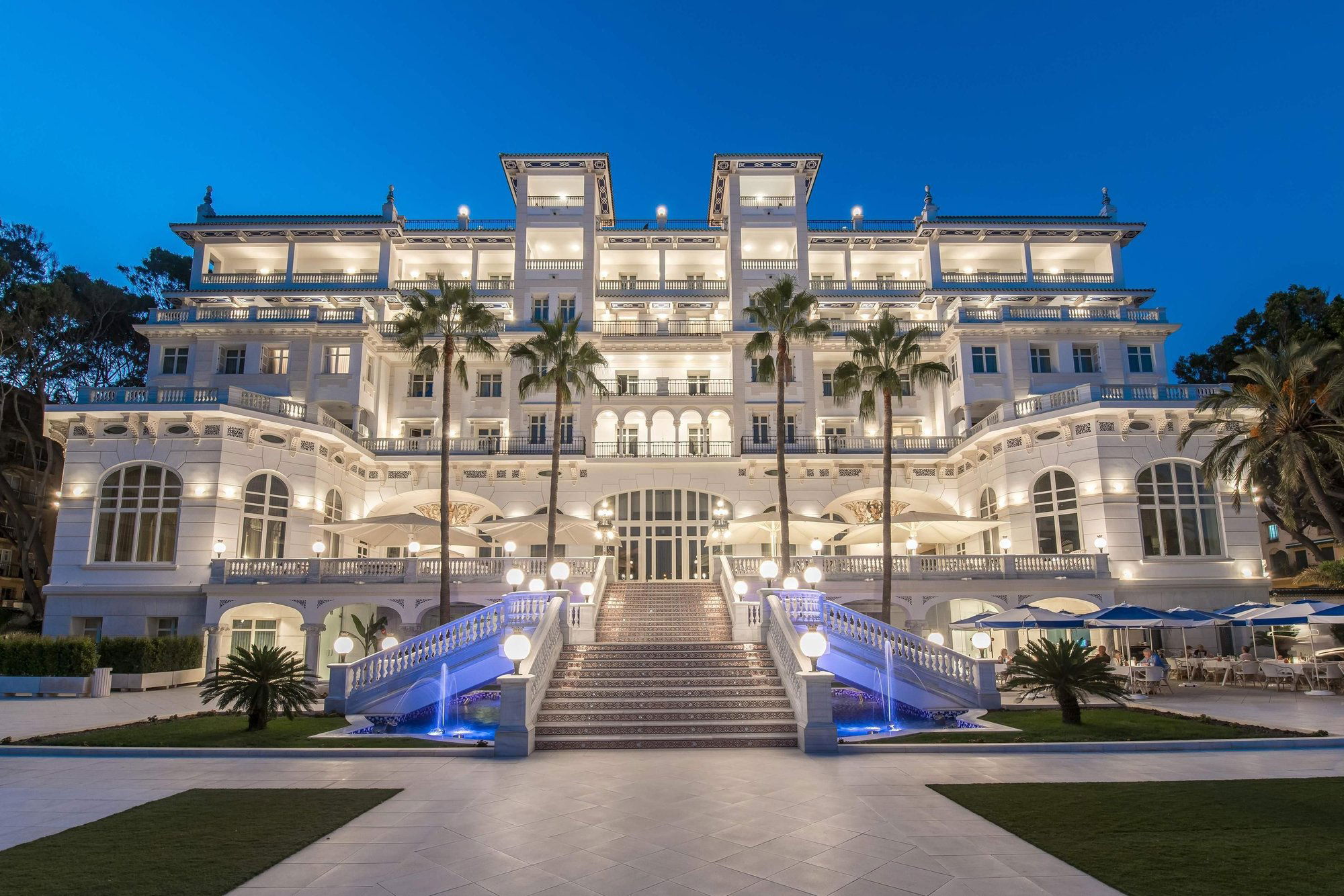
Where Málaga's Seafront Meets Formal Hotel Architecture
The approach along Paseo de Reding tells you something about what Málaga's premium hotel tier looked like before the boutique conversion wave arrived. Gran Hotel Miramar occupies a white-fronted early-20th-century palace at numbers 22 and 24, where the boulevard widens and the Mediterranean comes properly into view. The building's scale, with its layered facade and formal symmetry, belongs to an earlier model of grand hotel-making: one that prioritised civic presence and promenade visibility over the stripped-back intimacy that defines so many of the city's newer properties. That contrast is worth understanding before you book, because the two approaches serve different kinds of stay.
The hotel holds membership in the Leading Hotels of the World, a collection that uses inspection-based criteria to benchmark properties across service standards, facilities, and physical condition. In Málaga's market, where Palacio Solecio and La Fonda Heritage Hotel anchor the boutique end of the premium segment, and where Cristine Bedfor Málaga and Leiro Residences offer apartment-style alternatives, Miramar occupies the grand-hotel tier more or less alone. That positioning has its own logic: there is a cohort of travellers, particularly those arriving for longer Andalusian circuits or corporate events, for whom scale and formal service architecture matter more than neighbourhood immersion.
The Dining Programme in Context
Grand hotels of Miramar's structural generation tend to carry multiple food and beverage outlets by default: a main restaurant, a terrace or bar with outdoor service, and often a more casual poolside or lobby option. That format reflects how these properties were originally conceived, as self-contained civic destinations rather than urban launching pads. Whether the current kitchen programme at Miramar leans into Andalusian ingredients and southern Spanish technique or operates a more international hotel-restaurant format is information not independently verified here, but the building's position and Leading Hotels membership place it in a peer set where dining is expected to be a full programme, not an afterthought.
Across the Leading Hotels portfolio in Spain, there is a broad range of culinary ambition. At one end sit properties like Akelarre in San Sebastián, where the restaurant itself carries three Michelin stars and drives the hotel's identity entirely. At the other end are properties where the dining offering is competent but secondary to the accommodation. Between those poles, hotels like Mandarin Oriental Ritz in Madrid and Mandarin Oriental Barcelona demonstrate how branded international operators have used culinary investment to consolidate their premium positioning. Miramar's culinary tier relative to those comparators is leading assessed directly with the hotel before arrival.
What the location does guarantee is access to a strong broader dining scene. Málaga's restaurant culture has matured considerably over the past decade, with a combination of traditional marisquerías and espeto bars along the seafront, and a more contemporary programme concentrated in the historic centre and the emerging Soho district. The hotel's Paseo de Reding address puts it within walking distance of the former and a short taxi ride from the latter. For a fuller picture of where to eat beyond the hotel, the EP Club Málaga restaurants guide covers the city's dining options across price points and cuisines.
The Building and Its Neighbourhood Position
Paseo de Reding runs east from the port, connecting the city centre to the La Malagueta beach district. It is one of Málaga's more formal thoroughfares, lined with trees and mid-century apartment buildings, and it marks a transition zone between the tourist concentration of the centre and the residential fabric of the east. For guests arriving by car, the boulevard address is practical. For those arriving by train or air and travelling light, the walk from María Zambrano station is approximately 25 to 30 minutes on foot, or around ten minutes by taxi.
The La Malagueta bullring is nearby, one of the city's more architecturally significant 19th-century structures, and the Paseo Marítimo begins just beyond the hotel's immediate block. The proximity to the seafront without being embedded in the beach strip gives the hotel a slightly more composed setting than properties that sit directly on the sand, where summer noise and pedestrian density run higher.
For guests using Málaga as a base for broader Andalusian or southern Spanish travel, the city has strong connections. The Costa del Sol properties, including Marbella Club Hotel, are accessible within the hour. Further afield, Spain's hotel landscape offers strong alternatives in different registers: Abadía Retuerta LeDomaine for wine-estate stays, Atrio Restaurante Hotel in Cáceres for restaurant-led luxury, and island alternatives from Cap Rocat in Mallorca to Hotel Can Ferrereta in Santanyí.
Planning Your Stay
Málaga's tourist season concentrates between late spring and early autumn, with July and August bringing the highest hotel rates and the shortest booking windows across the premium segment. A Leading Hotels member of Miramar's scale and position will feel that demand curve, particularly for rooms with sea or boulevard views and for any event or private dining spaces. Guests targeting specific room configurations or dining reservations for peak summer should plan at least six to eight weeks in advance; for shoulder season visits in April, May, or October, the lead time can be shorter, though the hotel's position as one of the city's few grand-scale properties means availability is never guaranteed at short notice.
The hotel's address at Paseo de Reding 22-24 is the most reliable contact point for direct reservations in the absence of a published phone number or website in this record. Cross-referencing with the Leading Hotels of the World central reservations platform is the most direct route for confirmed availability and current rate information.
Guests building a broader Málaga stay around bars, wineries, and cultural experiences will find the EP Club city guides useful for extending beyond the hotel: the Málaga bars guide, wineries guide, experiences guide, and the full Málaga hotels guide cover the city's broader premium offer. For international comparisons on grand hotel formats, The Fifth Avenue Hotel in New York and Aman Venice represent different approaches to the palace-hotel typology that Miramar shares in its architectural DNA.
Frequently Asked Questions
- What is the main draw of Gran Hotel Miramar?
- The combination of Leading Hotels of the World membership, a grand early-20th-century palace building, and a seafront boulevard address on Paseo de Reding places it in a tier of Málaga's hotel market that has few direct comparators. Guests choosing it over the city's boutique alternatives are typically prioritising architectural scale, formal service infrastructure, and the promenade setting over the immersive neighbourhood character of historic-quarter properties.
- What is the most popular room type at Gran Hotel Miramar?
- Room configuration details are not independently verified in this record. As a Leading Hotels member with a seafront boulevard position, the property will carry sea-view and upper-floor rooms that tend to attract the highest demand at properties of this type. Direct contact with the hotel or the Leading Hotels reservations platform is the most reliable route to current room category availability and pricing.
- How far ahead should I plan for Gran Hotel Miramar?
- For peak summer travel between July and August, six to eight weeks of advance planning is a reasonable baseline for a property of this category in Málaga. The city's premium hotel supply is limited enough that last-minute availability at top-tier properties is not reliable in high season. Shoulder season visits in April, May, or October allow slightly shorter lead times, but direct confirmation is still advisable given the hotel's position as one of the city's few grand-hotel-format properties.
Preferential Rates?
Our members enjoy concierge-led booking support and priority upgrades at the world's finest hotels.
Access the Concierge