

A landmark building at Kato Mili, Mykonos Theoxenia has been newly renovated to honour its architectural heritage while introducing organic interiors that reference the simplicity of the Greek island summer. The result sits in a tier of Mykonos accommodation where the building itself carries the editorial weight, rather than amenity lists or pool counts. For travellers drawn to the Cycladic design tradition, this is where architecture becomes the stay.
Pearl is the En Primeur Club membership app — saves, bookings, and concierge access live there. Same editors, same standards.
- Address
- Mykonos 846 00, Greece
- Phone
- +30 2289 022230
- Website
- mykonostheoxenia.com
- Directions
- Get directions
 Saves & bookings on Pearl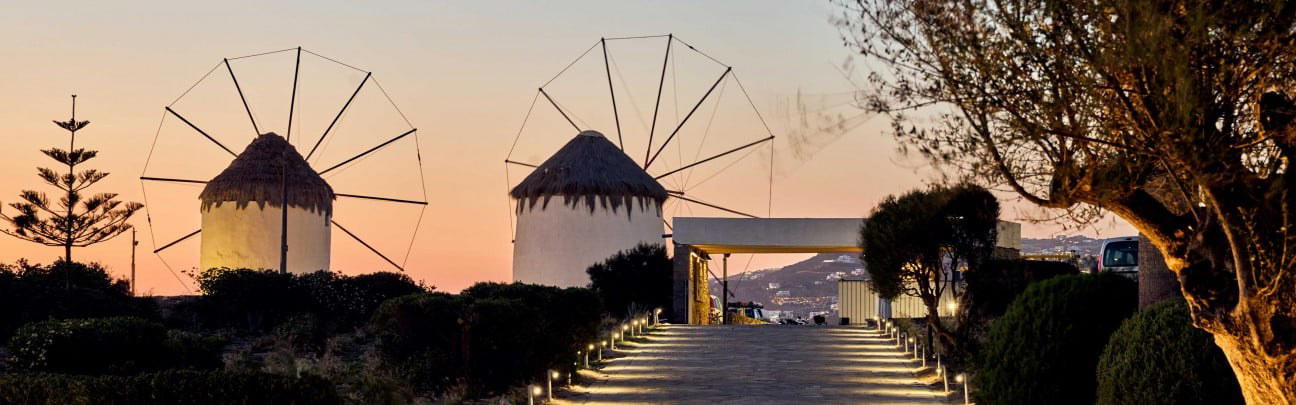
When the Building Is the Argument
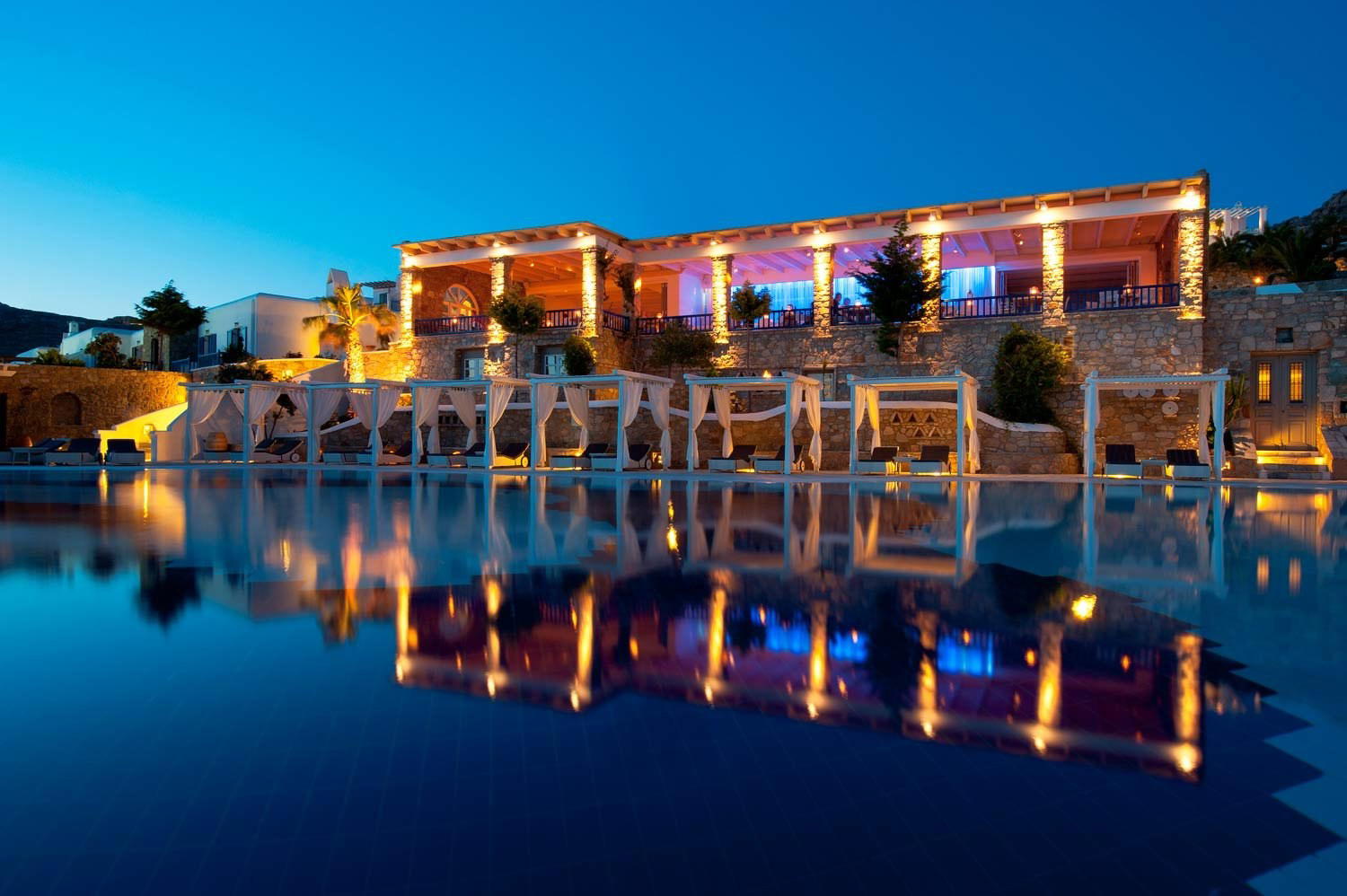
Mykonos has always exported a particular visual language: whitewashed cubic volumes, wind-catching windmill arms, bougainvillea threading through stone. What the island does less consistently is honour the buildings that defined that language before tourism arrived to reinterpret it. Mykonos Theoxenia, positioned at Kato Mili within reach of the famous windmills, belongs to a small category of properties where the renovation decision has been not to compete with the view but to become part of its longer history.
The newly completed renovation at Theoxenia treats the building's architectural bones as primary material rather than as a container for contemporary styling. That approach places it in a distinct tier of Cycladic hospitality, closer in spirit to properties like Belvedere Hotel and Bill&Coo Mykonos, which have built reputations around design coherence rather than sheer scale, than to the larger resort compounds that now ring the island's southern coast.
The Architecture of Restraint
Across the Aegean, a particular renovation argument has been playing out for the better part of a decade. One school converts Cycladic vernacular buildings into maximalist hospitality statements, importing materials and furniture vocabularies from elsewhere. The competing school, represented by Theoxenia's current iteration, reads the original structure as a design brief rather than a blank wall.
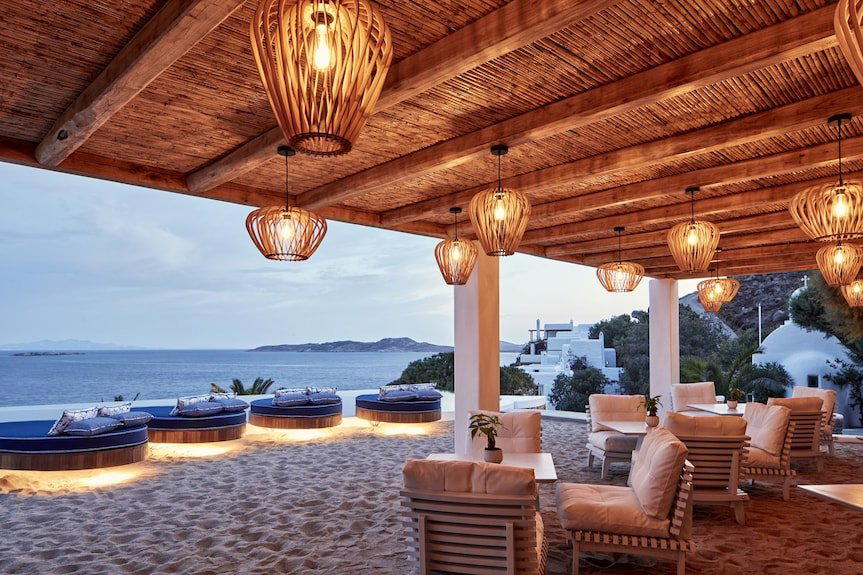
Theoxenia's interiors are described as luminous and organic, a pairing that in Cycladic terms typically signals natural fibres, unrendered surfaces, locally sourced stone, and light managed through small apertures rather than floor-to-ceiling glass. The simplicity referenced is not austerity but the specific sensory register of a Greek summer: bleached linen, warm plaster, afternoon shadow. Properties that achieve this register well tend to read as timeless in photographs taken a decade apart; those that over-design feel dated within a shorter cycle.
The Kato Mili location reinforces this reading. Sitting below the windmills of Mykonos Town, this is one of the few positions on the island where the built environment has retained enough of its pre-tourism scale to support the kind of quiet that architecture-led hospitality requires. The contrast with the Ornos and Psarou beach corridor, where construction density and sound levels work against contemplative design, is significant for guests choosing between property types.
Where Theoxenia Sits in the Mykonos Market
Mykonos accommodation has stratified sharply over the past fifteen years. At the leading end, a cluster of design-forward boutique properties competes on aesthetic coherence and location rather than on room count. Archipelagos Hotel, Boheme Hotel, and Cali Mykonos each occupy a distinct niche within this tier, differentiated by neighbourhood and design approach. Theoxenia, with its landmark building and organic renovation direction, argues for consideration in that same comparable set on grounds that have nothing to do with point tallies or amenity checklists.
Further along the price spectrum, options like De.light Boutique Hotel, Casa del Mar Mykonos, and BlueVillas | The Luxury Concept offer distinct entry points into the island's boutique sector. The degree to which Theoxenia's renovation positions it above or alongside these alternatives will depend on specific room categories and rates, both of which are worth confirming directly before booking, as post-renovation pricing structures on Mykonos can shift meaningfully between seasons.
For context across the wider Greek island circuit, the design-led renovation model Theoxenia is pursuing mirrors approaches taken at properties like Amoudi Villas in Oia and Eréma in Milos, both of which have staked their positioning on architectural integrity over programmatic breadth. On the mainland, Amanzoe in Porto Heli and the Four Seasons Astir Palace Hotel Athens represent the larger institutional end of heritage-aware hospitality in Greece, useful as reference points for understanding where Theoxenia's boutique scale differentiates rather than competes.
The Cycladic Design Tradition in Practice
Understanding what Theoxenia's renovation is drawing on requires some sense of what the Cycladic design tradition actually contains. The archipelago's vernacular architecture developed across centuries of limited material supply and practical necessity: thick walls for insulation, small windows against summer heat, cubic forms that minimised surface area exposed to the meltemi wind. The whitewash was functional before it became aesthetic, serving as a mild disinfectant and a reflector of intense Aegean light.
Contemporary hospitality interpretations of this tradition range from literal (unpainted plaster, handmade ceramics, rough-hewn wood) to loosely referential (white walls paired with international luxury fixtures). Particularly coherent renovations tend to treat the original material choices as a logic to be extended rather than a palette to be applied superficially. Where Theoxenia's approach falls on this spectrum is visible in the emphasis on organic interiors and preserved architectural bones, language that suggests extension rather than application.
For travellers who have moved between Cycladic properties and found the more produced versions aesthetically dissonant, this distinction matters practically, not just philosophically. It affects which spaces feel comfortable to inhabit over three or four days, not merely which photographs well on arrival.
Planning Your Stay
Mykonos Theoxenia is a 5-star hotel in Mykonos, Greece, with 52 rooms and rates from $171 per night. Mykonos Theoxenia is located at Kato Mili, 84600 Mykonos, Greece. The Kato Mili position places it within walking distance of Mykonos Town (Chora), which means access to the island's dining and nightlife concentration without requiring a vehicle for daily movement. Guests at properties in this zone consistently report that the Town's compact layout makes late evening returns on foot practical in a way that outlying properties do not permit.
Mykonos operates on a tight high-season window, with July and August representing peak demand across all property tiers. Post-renovation properties on the island frequently see compressed availability in the first seasons following reopening, as travellers with existing loyalty to the building return alongside new visitors drawn by coverage of the renovation. Booking well ahead of your intended travel window is advisable, particularly for June through September arrivals. Shoulder season in May or October offers materially different crowd conditions while the architectural character of the island remains fully legible.
International reference points for understanding how renovation-led boutique hotels perform at comparable scale include Aman Venice and Aman New York, both of which have navigated the challenge of placing contemporary hospitality inside buildings with prior architectural identities. For design-led options in the Cyclades region beyond Mykonos, Gundari and NOS Hotel & Villas provide useful points of comparison.
Category Peers
Comparable venues nearby, for context on price, style, and recognition.
| Venue | Cuisine | Price | Awards | Notes |
|---|---|---|---|---|
| Mykonos TheoxeniaThis venue — the venue you are viewing | Historic Art Deco with Cycladic heritage and mid-century modern refurbishment | $$$$ | 5-Star | Not listed |
| Mykonos Ammos Hotel | Beachfront luxury boutique | $$$$ | 5-Star | Mikonos |
| De.light Boutique Hotel | All-suite boutique hotel blending Aegean charm with contemporary luxury. | $$$$ | 5-Star | Mikonos |
| Mykonos Blu, A Grecotel Resort to Live | Cycladic boutique resort with whitewashed bungalows and villas | $$$$ | 5-Star | Mikonos |
| Nomad Mykonos | Boho-chic Cycladic boutique with earthy, minimalist luxury | $$$$ | 5-Star | Mikonos |
| Myconian Kyma | Contemporary luxury design hotel inspired by Mykonos' artistic heritage, featuring bespoke ceramics and minimalist white architecture. | $$$$ | 5-Star | Mikonos |
Recognition history
Dated appearances from independent guides and award organizations, with the underlying list record or original source where available.
Design Hotels Member
Design Hotels
Mr & Mrs Smith Smith Seal of Approval
Mr & Mrs Smith
Michelin Selected
Michelin
Continue exploring
More in Mykonos
Hotels in Mykonos
Browse all →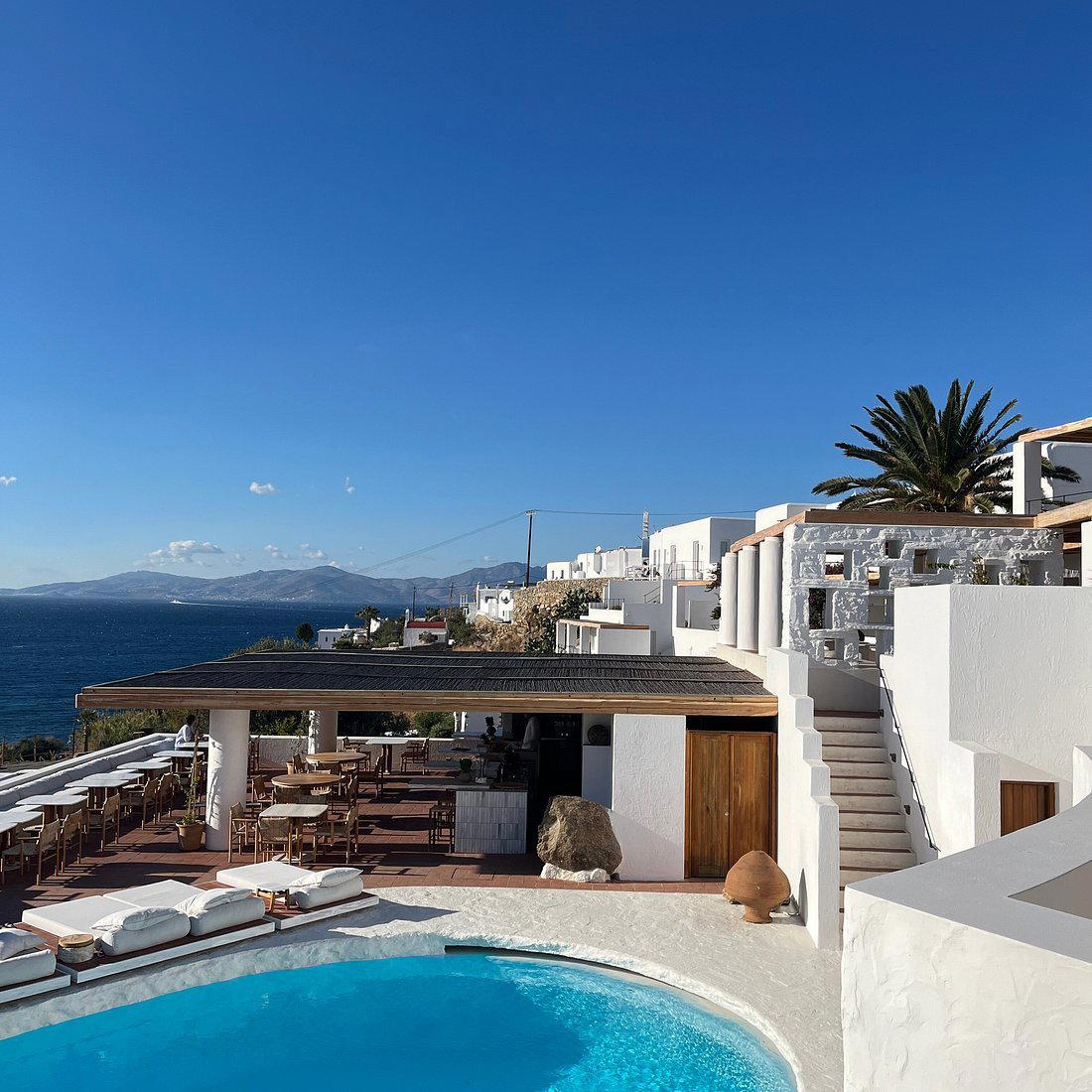
Bars in Mykonos
Browse all →
Restaurants in Mykonos
Browse all →
Wineries in Mykonos
Browse all →
At a Glance
- Elegant
- Sophisticated
- Scenic
- Classic
- Honeymoon
- Romantic Getaway
- Wedding
- Beachfront
- Panoramic View
- Pool
- Spa
- Fitness Center
- Room Service
- Concierge
- Restaurant
- Wi Fi
- Garden
- Waterfront
- Garden
- Pool
- Spa
- Fitness Center
- Room Service
- Concierge
- Restaurant
- Wi Fi
- Garden
Serene and relaxing atmosphere with comfortable poolside loungers, soundproofed rooms, and a quiet pool area praised by guests.