

Aristi Mountain Resort occupies a hillside village on the edge of Greece's Vikos-Aoös National Park, in the Zagori region near the Albanian border. The 18-room property trades in stone-built vernacular architecture, Duxiana beds, and a restaurant drawing on wild boar, foraged mushrooms, and local cheese. It sits roughly 45 minutes from Ioannina airport and requires a two-night minimum stay.
Pearl is the En Primeur Club membership app — saves, bookings, and concierge access live there. Same editors, same standards.
- Address
- Aristi 440 04, Greece
- Phone
- +30 2653 041330
- Website
- aristi.eu
- Directions
- Get directions
 Saves & bookings on Pearl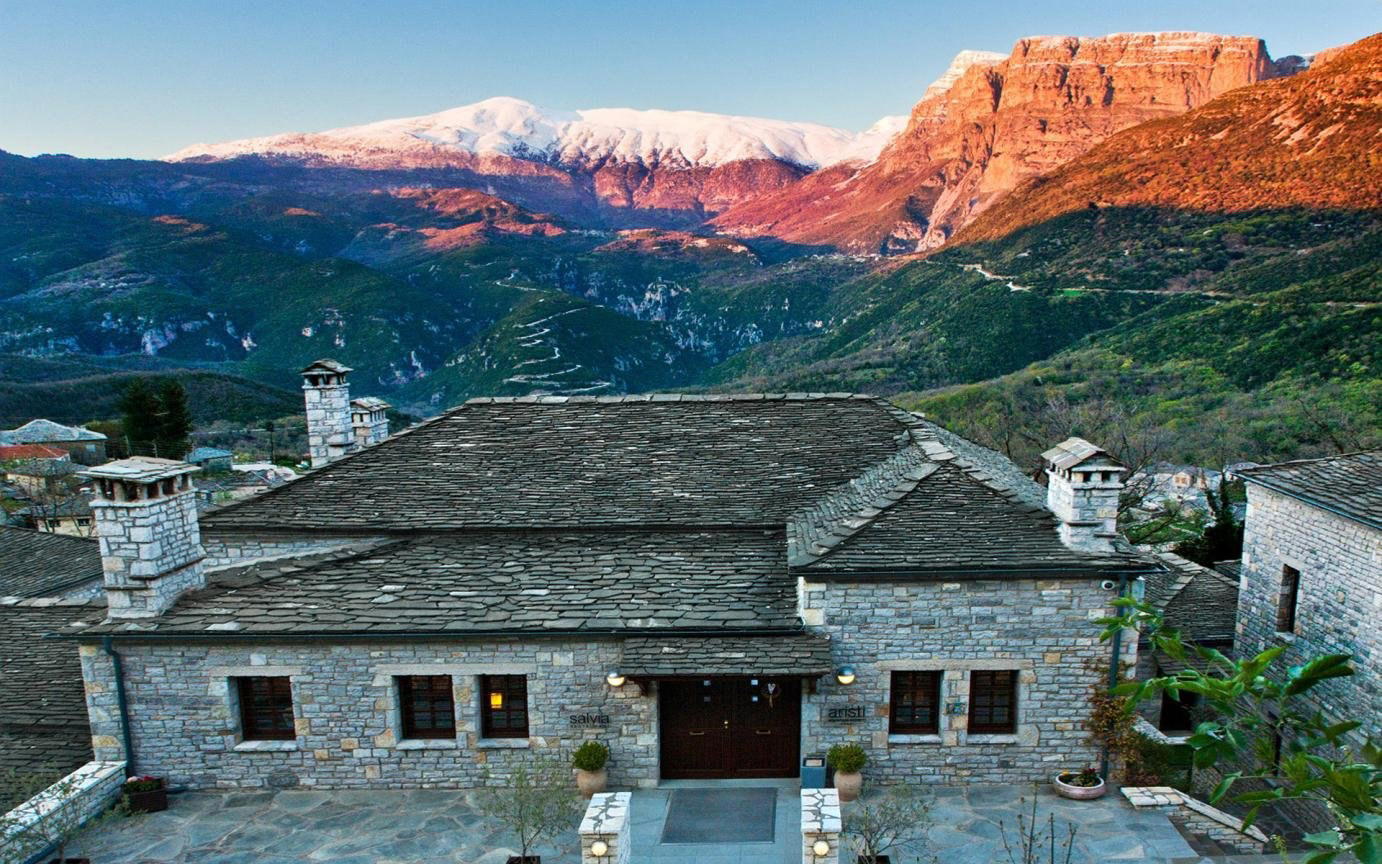
Stone, Valley, and the Architecture of Deliberate Isolation
Northwestern Greece operates on a different register from the Aegean coast. The Zagori region, which pushes up against the Albanian border through a sequence of limestone gorges and beech-forested ridgelines, has always attracted a particular kind of traveller: one who prefers the drama of altitude to the drama of a waterfront terrace. The villages here, some 46 of them collectively known as the Zagorochoria, were built during the Ottoman period from the grey-brown stone that defines the local geology, and they have changed little since. Aristi, perched at the edge of the Vikos-Aoös National Park, is among the more coherent of them, a concentration of traditional houses that read, from a distance, more like a geological feature than a settlement.
It is into this architectural grain that Aristi Mountain Resort fits itself. The property's stone structures sit high on the village hillside, and the design logic throughout is one of extension rather than imposition: materials and massing that echo what was already there rather than announce themselves against it. That restraint is notable in a category where mountain resorts often default to either alpine pastiche or aspirational brutalism. Here, the built form defers to the valley dropping away below, a steep declivity that frames every outward view and gives the property its most persuasive asset.
How the Rooms Are Organised
At 18 rooms across what the property describes as 24 available configurations, Aristi Mountain Resort sits firmly in the small-scale end of Greece's non-island accommodation market. Properties at this size operate differently from larger resort formats: the ratio of staff to guests shifts, communal spaces carry more weight in the daily rhythm, and room design has to work harder because there is no volume-based averaging of the experience.
The baseline here includes king-size Duxiana mattresses and modern bathrooms, both practical commitments that signal the property is not pitching itself as a rustic retreat in the austerity sense. The upper-tier rooms move further from that baseline with wood-burning fireplaces and a choice between private gardens, decks, or outdoor jacuzzis. Those configurations are worth noting because they change the character of a stay materially: a fireplace room in shoulder season, when Zagori's altitude makes evenings genuinely cold, becomes a different proposition from the same room in midsummer. The valley-facing outlook applies across the property, which means the room tier primarily affects the private outdoor format rather than the quality of the view itself.
For comparison within Greece's premium small-resort tier, properties like Amanzoe in Porto Heli and Amoudi Villas in Oia operate on similar low-key-count logic but in coastal and island contexts respectively. Aristi's distinction is that it occupies a part of Greece those properties don't reach, and functions within a vernacular tradition that has no coastal equivalent.
The Public Spaces and What They Prioritise
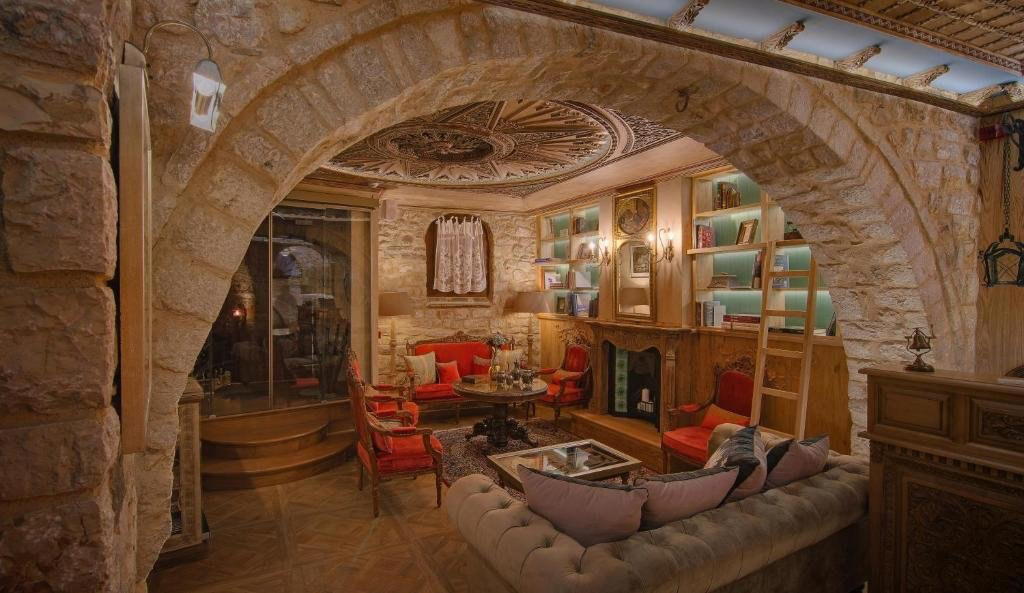
Mountain properties in this category typically organise their communal areas around a central hearth logic, and Aristi follows that pattern with a lounge built around an open fire. It is a practical design choice as much as an atmospheric one: Zagori's elevation means the resort is genuinely usable in spring and autumn when much of Greece's island accommodation closes or operates at reduced capacity, and a warm interior anchor matters in that seasonal context.
The spa is described as simple and tranquil, which at this scale and in this location is appropriate. A small heated pool overlooks the valley. Neither is the primary draw, that remains the landscape itself, but both extend the hours in which the property functions as a destination rather than just a base for outdoor activity. The homey quality that runs through the public areas is worth taking at face value: this is not a resort where the lobby makes a large claim. The architecture already made that claim outside.
Salvia and the Logic of Hyperlocal Sourcing
The in-house restaurant, Salvia, operates within a sourcing framework that reflects Zagori's actual food culture rather than a curated approximation of it. Wild boar from local hunters, foraged mushrooms and greens from the surrounding mountainside, and cheese from a nearby farm are the structural ingredients of a menu built on traditional recipes. The cellar carries Greek wines.
This approach to restaurant programming, where the kitchen's supply chain is determined by geography and season rather than chef ambition or trend, sits within a broader pattern visible across Greece's interior regions. The Epirus kitchen tradition is among the country's least exported, it has a different DNA from Aegean seafood cooking or the produce-forward style associated with Crete, and Salvia's menu is one of the few accessible points of entry for visitors unfamiliar with it.
The Outdoor Context
Vikos Gorge, one of the world's deepest canyons relative to its width, is the defining geographic feature of the national park that borders the village. The surrounding area sustains a range of activities that shift by season and by threshold of effort: driving circuits between the stone-bridge villages for those who want landscape without exertion; rafting on the Voidomatis river; horseback riding; and hang gliding for those who want the aerial version of the same views the resort delivers from its pool terrace. None of these require specialist preparation to access, and the region's relatively low visitor density compared to Greece's coastal circuits means most of them operate without the booking friction that applies elsewhere.
Planning a Stay
Aristi Mountain Resort operates with a two-night minimum stay, which is standard for properties of this type and this remoteness, and positions the resort as a destination visit rather than a single-night transit stop. Rates from approximately $180 per night place it in the accessible-premium tier for European mountain accommodation.
Visitors building a wider Greek itinerary around this property will find it occupies a genuinely distinct position from the Aegean island and Athens hotel circuit. Properties like the Four Seasons Astir Palace Hotel Athens represent the opposite end of that spectrum in terms of scale and urban orientation. Smaller island-focused properties such as Eréma in Milos, Pegasus Suites in Fira, or Andronis Minois in Paros share the low-key-count format but operate in fundamentally different natural settings. Aristi is the argument for what Greece looks like when you turn away from the sea.
At-a-Glance Comparison
Comparable venues nearby, for context on price, style, and recognition.
| Venue | Cuisine | Price | Awards | Notes |
|---|---|---|---|---|
| Aristi Mountain ResortThis venue — the venue you are viewing | Traditional stone mountain resort blending rustic charm with eco-luxury | $$$$ | Michelin 2 Key | Not listed |
| Amanzoe | Contemporary classical Greek temple-inspired architecture with freestanding pavilions and villas | $$$$ | Michelin 2 Key | Porto Heli |
| Four Seasons Astir Palace Hotel Athens | Modernist architecture with retro-chic design in two distinct buildings: intimate Arion wing and expansive Nafsika. | $$$$ | World's 50 Best #17, 5-Star | Vouliagmeni |
| KAMARES Historic Boutique Hotel & Spa | Historic boutique mansion with refined luxury and cultural heritage. | $$$$ | Michelin 1 Key | Siarava |
| Mykonos Blu Grecotel Boutique Resort | Cycladic luxury resort with bungalows and villas | $$$$ | 5-Star | Psarou |
| Anandes Hotel | Contemporary Cycladic chic redefining luxury hospitality through homage to timeless Greek elegance and vintage Mykonos aesthetics. | $$$$ | 5-Star | Mykonos Town (Chora) |
Recognition history
Dated appearances from independent guides and award organizations, with the underlying list record or original source where available.
Michelin 2 Keys
Michelin
Preferred Hotels Member
Preferred Hotels
Continue exploring
More in Zagori
Hotels in Zagori
Browse all →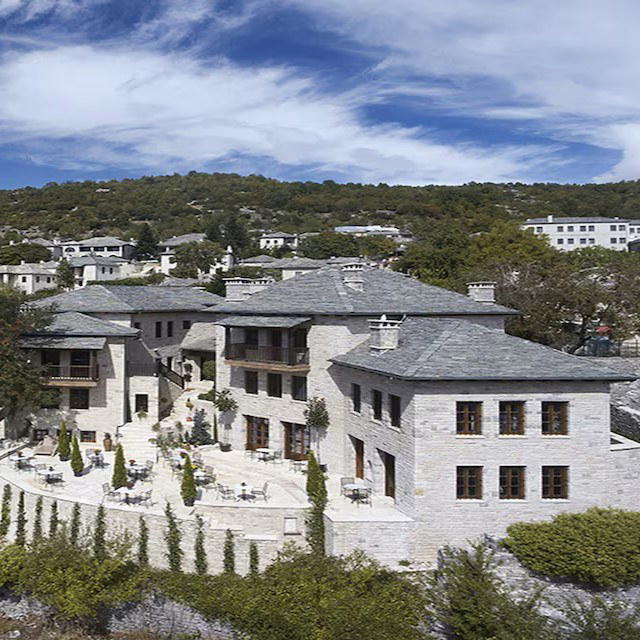
Restaurants in Zagori
Browse all →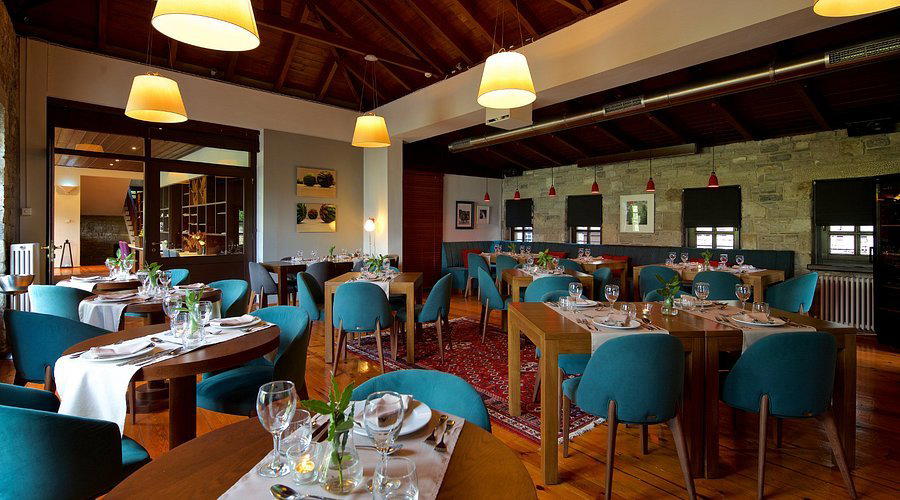
Wineries in Zagori
Browse all →
At a Glance
- Rustic
- Scenic
- Cozy
- Elegant
- Romantic Getaway
- Honeymoon
- Wellness Retreat
- Family Vacation
- Panoramic View
- Wi Fi
- Pool
- Spa
- Sauna
- Restaurant
- Room Service
- Concierge
- Free Parking
- Breakfast Included
- Indoor Pool
- Mountain
- Wi Fi
- Pool
- Spa
- Sauna
- Restaurant
- Room Service
- Concierge
- Free Parking
- Breakfast Included
- Indoor Pool
Cozy and tranquil with warm fireplaces, soft lighting in stone-walled spaces, and a relaxing spa atmosphere overlooking dramatic mountain valleys.