Hotel Bornmühle

Michelin Selected
A Michelin Selected hotel set in the Mecklenburg lake district, Hotel Bornmühle occupies a converted mill estate outside Groß Nemerow that places it firmly in Germany's growing category of rural retreat properties chosen for spatial character over urban convenience. The selection signals a standard of hospitality that earns recognition in the 2025 Michelin Hotels guide, placing it alongside a small cohort of German properties distinguished by setting and atmosphere.

Pearl is the En Primeur Club membership app, where members save venues, book tables and use the concierge.
Where the Mecklenburg Lake District Sets the Terms
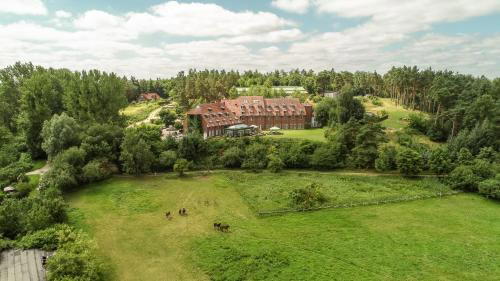
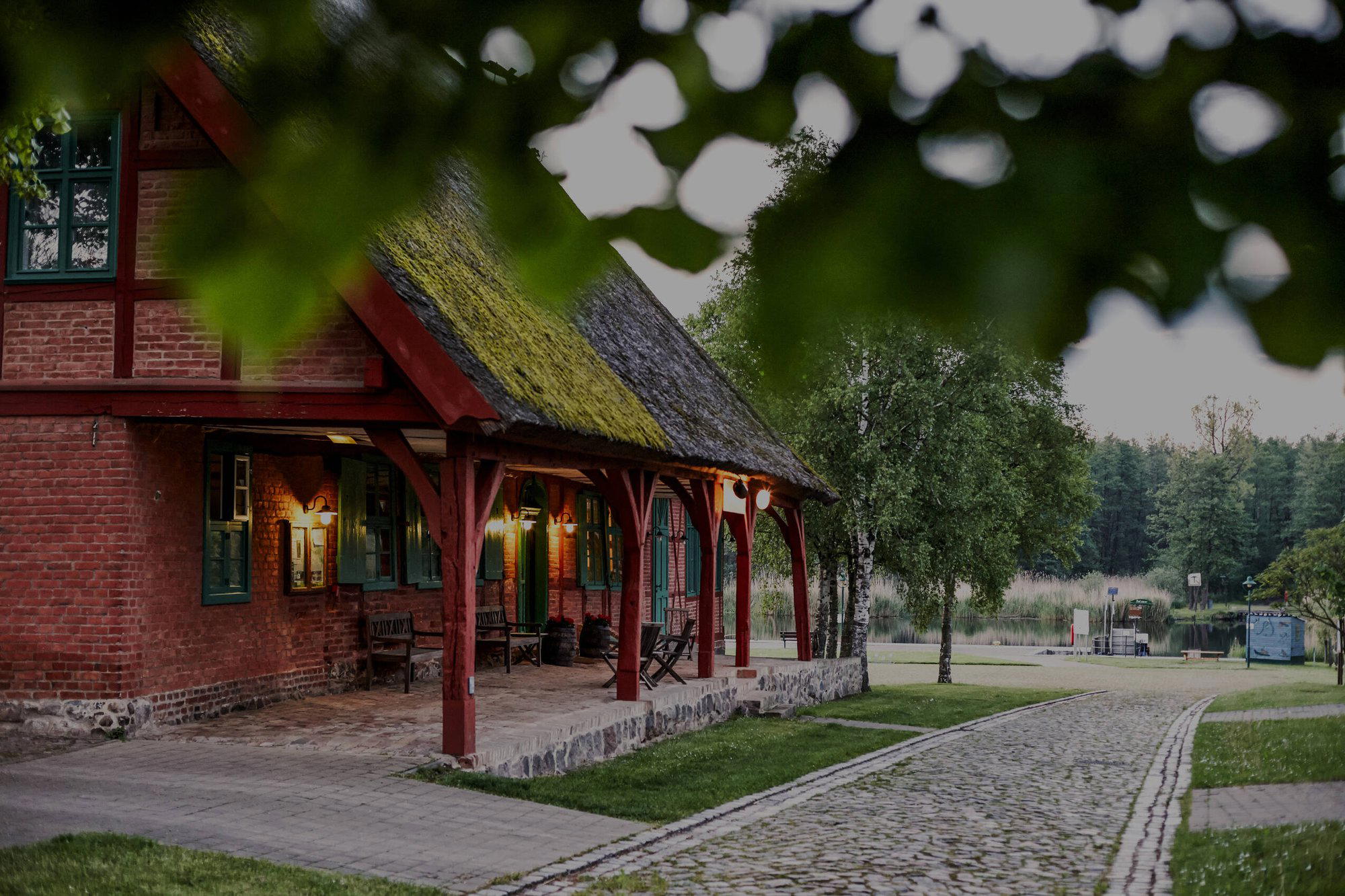
The lake district of Mecklenburg-Vorpommern operates by a different logic than Germany's urban hotel scene. Where cities like Hamburg or Frankfurt reward proximity and brand recognition, properties such as the Fairmont Hotel Vier Jahreszeiten in Hamburg or the Sofitel Frankfurt Opera in Frankfurt on the Main compete on address and scale, this region rewards patience with landscape and silence. The roads narrow. The sky opens. Mill ponds and forest tracks replace boulevards. Hotel Bornmühle sits at Bornmühle 35, Groß Nemerow, and it is that address alone, a working mill estate repurposed as a place to stay, that establishes what kind of property this is before a single door is opened.
Arriving at a converted mill in rural Mecklenburg is an architectural experience distinct from checking into any urban counterpart. Mill estates in this part of northern Germany were built for function: water management, grain processing, the practical rhythms of agricultural life. The bones of such buildings, heavy timber framing, stone foundations laid for permanence, proportions dictated by machinery rather than aesthetics, give them a spatial character that contemporary hotel design rarely replicates. When that framework is retained and adapted, the result is a physical environment with genuine historical depth rather than the simulated rusticity that characterises many countryside hotel conversions.
The Physical Logic of a Mill Estate Conversion
Converted mill properties across northern Germany share a common set of spatial conditions: ceilings that reflect original roof structures, sight lines shaped by water channels and millraces, and a relationship between interior and exterior that puts the working landscape immediately at the threshold. What distinguishes better conversions from generic rural hotels is how far the design respects those original conditions rather than smoothing them into generic hospitality comfort. The rural retreat properties that earn Michelin recognition in 2025, Hotel Bornmühle holds a Michelin Selected designation in the 2025 Michelin Hotels guide, tend to share a discipline in that regard: the architecture is allowed to do its work without being overwhelmed by conventional hotel furniture and amenity layering.
Germany has a cohort of such properties that have built reputations on landscape-first positioning: Weissenhaus Private Nature Luxury Resort in Weissenhaus operates along the Baltic coast on a similar estate logic; Das Kranzbach Hotel & Wellness Retreat in Kranzbach positions itself through Alpine meadow setting; Gut Steinbach Hotel Chalets Spa in Reit im Winkl draws on Bavarian farmstead architecture. Hotel Bornmühle belongs to that same category: properties where the building's history and the surrounding landscape are the primary design arguments, and where Michelin recognition reflects the coherence of that positioning rather than the density of branded amenities.
The Groß Nemerow Setting in Context
Groß Nemerow is a small municipality in the Mecklenburgische Seenplatte district, a region defined by more than a thousand lakes and the forested terrain connecting them. This is not a tourist infrastructure zone in the conventional sense: there are no dense concentrations of visitor attractions, no heritage railway circuits or established spa towns. What the Seenplatte offers instead is water access, cycling routes through beech and pine forest, and a degree of spatial quiet that has become increasingly difficult to find within reasonable driving distance of Berlin. The capital lies roughly two to two-and-a-half hours southwest by road, which places Hotel Bornmühle in a practical range for weekend stays from northeastern Germany while remaining genuinely remote in character.
That position in the market is meaningful. Germany's rural luxury tier has expanded steadily over the past decade as urban travellers seek longer stays in environments with lower sensory intensity. Properties that can offer Michelin-recognised hospitality standards at that distance from a major city serve a specific demand that urban-adjacent retreats cannot satisfy. The Villa Contessa in Bad Saarow addresses a comparable Berlin-proximate retreat demand from a lakeside position southeast of the city. Hotel Bornmühle operates further north and deeper into agricultural countryside, which gives it a different quality of remoteness.
Michelin Selection and What It Signals Here
Michelin's hotel selection process in Germany now covers a broad range of property types, from urban grand hotels to design-led rural conversions. The Selected designation, the entry tier of Michelin's hotel recognition framework, indicates that a property meets the guide's criteria for quality of welcome, comfort, and setting without necessarily competing for the starred tiers that larger or more elaborate properties occupy. Hotel Bornmühle earns its place in that cohort through setting and architectural identity rather than resort-scale programming.
Compared with German properties that compete on amenity density, Schloss Elmau Luxury Spa Retreat & Cultural Hideaway in Elmau or Althoff Seehotel Überfahrt in Rottach-Egern, which carry fuller Michelin designations and expansive programming, the Bornmühle model is deliberately quieter. The gap between those formats is intentional and reflects different traveller priorities: one group reads amenity lists before booking; the other reads topographic maps.
Planning a Stay: Practical Considerations
Hotel Bornmühle's address at Bornmühle 35, Groß Nemerow places it outside any town centre, which means a car is the practical entry point for most guests. Public transport options in rural Mecklenburg are limited, and the experience of the surrounding lake district is significantly richer with independent mobility. The Mecklenburgische Seenplatte is at its most navigable in the warmer months, late spring through early autumn, when cycling routes are passable and water access is at its most useful. Winter in the region is quiet in a particular northern-German way: shorter days, frost on the lake surfaces, and a stillness that some guests actively seek. For a broader orientation to the area and other options worth considering, our full Groß Nemerow restaurants and hotels guide covers the regional context in more depth.
For travellers building a longer itinerary through northern Germany, properties like Seesteg Norderney in Norderney or Söl'ring Hof in Sylt and BUDERSAND Hotel in Hörnum extend the coastal and island possibilities of the region, while Telegraphenamt in Berlin provides a sharp urban counterpoint for those moving between city and countryside. For reference points further afield in Europe's premium rural hotel category, Badrutt's Palace Hotel in St. Moritz and Hôtel de Paris Monte-Carlo in Monte Carlo represent the upper end of the European destination hotel spectrum, against which the Bornmühle model occupies a deliberately different register: quieter, more local, and defined by the specificity of a converted agricultural building in northern German countryside.
How It Stacks Up
Comparable venues nearby, for context on price, style, and recognition.
| Venue | Cuisine | Price | Awards | Notes |
|---|---|---|---|---|
| Hotel BornmühleThis venue (the venue you are viewing) | Modern wellness resort close to nature | $100–200 | Michelin Selected | Not listed |
| Dorint City - Hotel Bremen | City business hotel | Not listed | 4-Star | City Center |
| Hotel Q! | Boutique design hotel | $100–200 | Michelin Selected | Charlottenburg |
| HENRI Hotel Berlin Kurfürstendamm | 19th-century Wilhelminian Gründerzeit building with preserved historic charm | $100–200 | Michelin Selected | Charlottenburg |
| AMERON Hamburg Speicherstadt | Mid-century modern in historic warehouse building | $100–200 | Michelin Selected | Speicherstadt |
| The Dean Berlin | Contemporary Art Deco boutique hotel with modern luxury positioning in an upscale urban setting. | $1–100 | Not listed | Charlottenburg-Wilmersdorf |
Recognition history
Dated appearances from independent guides and award organizations, with the underlying list record or original source where available.
Michelin Selected
Michelin
Continue exploring
More in Gro Nemerow
Hotels in Gro Nemerow
All hotels in Gro Nemerow →
Restaurants in Gro Nemerow
All restaurants in Gro Nemerow →
Wineries in Gro Nemerow
Browse all →
Details
- Quiet
- Modern
- Scenic
- Elegant
- Romantic Getaway
- Wellness Retreat
- Family Vacation
- Weekend Escape
- Waterfront
- Panoramic View
- Terrace
- Wi Fi
- Pool
- Spa
- Fitness Center
- Room Service
- Restaurant
- Bar
- Parking
- Waterfront
- Garden
Quiet and relaxing with modern, elegant rooms overlooking the lake, pretty gardens, and peaceful spa areas.