Alte Schule - Klassenzimmer


1 Michelin Star · We're Smart World 1 Radish
Our verdict
A Michelin-starred restaurant operating from a converted schoolhouse in the lakes district of Mecklenburg, Alte Schule - Klassenzimmer places regional vegetables, fish, and game at the centre of a serious tasting menu. Austrian chef Alessandro Frau brings JRE membership credentials and a We're Smart Green Guide commendation to one of Germany's more remote fine dining addresses. The €€€€ price tier reflects the ambition, not the postcode.

Pearl is the En Primeur Club membership app, where members save venues, book tables and use the concierge.
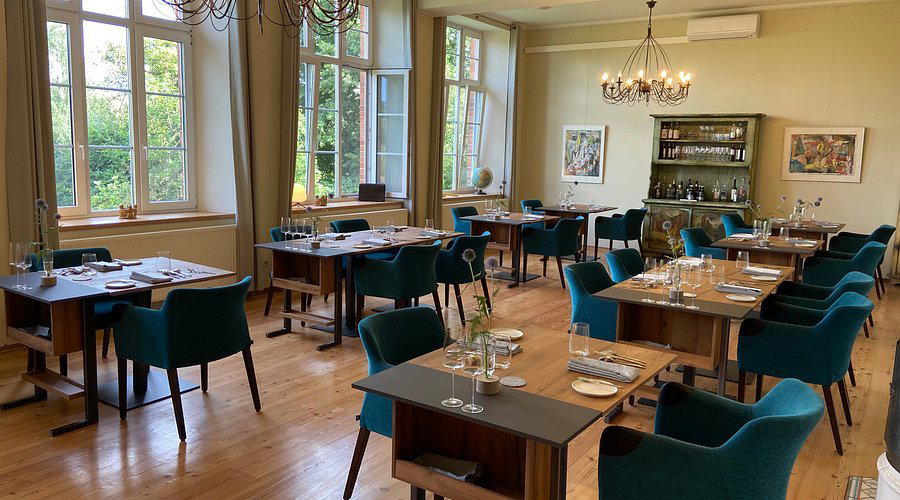
A Schoolhouse at the Edge of the Lakes
The dining rooms of rural Germany's most serious kitchens rarely announce themselves with urban fanfare. Alte Schule - Klassenzimmer sits in Feldberger Seenlandschaft, a sparsely populated stretch of lake country in Mecklenburg-Vorpommern, where the landscape does the contextualising that a city neighbourhood would otherwise provide. Arriving at Zur alten Schule 3-5, the building reads exactly as its name suggests: a former village school repurposed into a restaurant with genuine architectural character. The classroom setting is not a gimmick. It frames what happens at the table as something deliberate and considered, removed from the competitive noise of metropolitan dining.
This kind of rural fine dining has found growing traction across northern Europe. Germany's Michelin circuit has long rewarded city-centre addresses, but the last decade has seen a quiet shift toward countryside destinations, where proximity to primary producers and lower overhead costs allow kitchens to commit resources directly to the plate. Alte Schule sits squarely within that shift, holding a Michelin star in both 2024 and 2025, and carrying JRE membership, the cross-border association that positions young talent alongside peers in France, Belgium, Spain, and beyond.
The Logic of Regional Produce in a Green-Guided Kitchen
Germany's fine dining scene has historically defaulted to French technique as its prestige grammar. What makes the current generation of starred addresses interesting is how many have started to rewrite that grammar using local ingredients as the primary text. At Alte Schule, vegetables hold a structural role in the menu rather than functioning as accompaniment.
Regional meat and fish appear alongside the vegetable work, grounding the menu in the ecology of Mecklenburg rather than importing a globalised fine dining vocabulary. That geographic specificity matters: Feldberger Seenlandschaft is a region of glacial lakes and managed forests, which means freshwater fish and game are logical seasonal anchors. The kitchen does not need to reach far for its raw materials, and that proximity tends to sharpen the editorial clarity of a tasting menu. For context on how other German kitchens approach this kind of regionally anchored precision, Schanz in Piesport and Waldhotel Sonnora in Dreis represent comparable countryside fine dining in different German regions, each working within a distinct local produce logic.
Chef Background and the Austrian Connection
The editorial angle on Alte Schule's kitchen is not the chef's biography in isolation, but rather what an Austrian training lineage contributes to a northeastern German regional menu. Austrian gastronomy has developed a distinct fine dining identity, one that sits between the classical French tradition and a Central European respect for dairy, game, and preserved vegetables. When that background meets the particular ecology of Mecklenburg, the result is a menu that does not simply reproduce its landscape but interprets it through a lens shaped elsewhere.
JRE membership reinforces this cross-border positioning. The association connects chefs across national lines, and its members tend to be in active dialogue with European peers rather than operating as regional specialists in isolation. That network matters for kitchens in remote locations: it provides a reference frame that prevents insularity and keeps the cooking in conversation with what is happening in other JRE houses across Germany and Europe. For comparison, JAN in Munich and ES:SENZ in Grassau represent the southern German side of that fine dining ecology, operating in different price brackets and regional traditions but within the same broad commitment to technically serious contemporary cooking.
Where Alte Schule Sits in the German Starred Field
Germany's €€€€ Michelin tier includes addresses of substantially different character. At one end, Aqua in Wolfsburg and Vendôme in Bergisch Gladbach operate as flagship urban destinations with multi-star recognition and large international profiles. At the other, kitchens like Alte Schule work within a single Michelin star and a rural address to deliver precision dining to a smaller, more intentional audience. The two models are not in direct competition: they serve different reader decisions.
What the single star at Alte Schule signals is consistent kitchen performance at a level that Michelin's inspectors consider worth a dedicated journey, which, given the location, is exactly the appropriate threshold. Feldberger Seenlandschaft is not a city with overflow dining options. The decision to eat here is a destination decision, and the kitchen is calibrated accordingly. Comparable destination-format starred dining in Germany, where the address rather than the neighbourhood draws the guest, includes Restaurant Haerlin in Hamburg and Victor's Fine Dining by Christian Bau in Perl, each occupying a specific geography that demands prior commitment from the diner.
For readers interested in the creative end of the contemporary German scene, CODA Dessert Dining in Berlin and Schwarzwaldstube in Baiersbronn offer contrasting reference points, the former reordering the meal around dessert technique, the latter rooted in the French-German classical tradition of the Black Forest. Alte Schule sits between these poles: technically contemporary, regionally specific, and committed to a produce hierarchy that prioritises the vegetable without abandoning the meat and fish of its immediate geography.
For those interested in the modern cuisine format beyond Germany, Frantzén in Stockholm and FZN by Björn Frantzén in Dubai represent the Scandinavian-inflected end of the same broader European movement toward produce-led tasting menus, albeit at different price points and scales.
Planning a Visit
Getting to Feldberger Seenlandschaft requires planning. The nearest significant rail hub is Neustrelitz, with onward road travel to the lakes district. A car is the practical means of arrival. Given the remoteness, the restaurant functions most naturally as a centrepiece around which a longer stay is built, and the region has considerable appeal for outdoor activity. Our full Feldberger Seenlandschaft hotels guide covers accommodation options suited to a multi-night stay, and our full Feldberger Seenlandschaft experiences guide provides context on the broader region. The €€€€ price point positions this as a special-occasion or destination-dining spend, and booking well in advance is advisable given the restaurant's limited capacity and Michelin-starred profile. Those exploring the wider dining and hospitality offer in the area will find useful coverage in our full Feldberger Seenlandschaft restaurants guide, as well as our bars guide and our wineries guide for the region.
Frequently asked questions
What does dinner at Alte Schule - Klassenzimmer typically cost?
Pricing at Alte Schule - Klassenzimmer is listed as €€€€.
Side-by-Side Snapshot
| Venue | Cuisine | Price | Awards | Notes |
|---|---|---|---|---|
| Alte Schule - KlassenzimmerThis venue (the venue you are viewing) | Modern Regional German with Austrian Influences | $150–200 | 1 Michelin Star · We're Smart World 1 Radish | Not listed |
| Schwarzwaldstube | Modern French Fine Dining | $150–200 | 3 Michelin Stars · World's 50 Best #47 | French, Classic French |
| Aqua | Contemporary German, Italian/Japanese, Creative | Not listed | Michelin 3 Star | Not listed |
| CODA Dessert Dining | Dessert-Inspired Fine Dining | $200–300 | 2 Michelin Stars · World's 50 Best #79 | Creative |
| Tantris | Modern French, French Contemporary | Not listed | Michelin 2 Star | Not listed |
| Vendôme | Modern German Haute Cuisine | $200–300 | 2 Michelin Stars · World's 50 Best #47 | Modern European, Creative |
Recognition history
Dated appearances from independent guides and award organizations, with the underlying list record or original source where available.
Michelin 1 Star
Michelin
We're Smart World 1 Radish
We're Smart World
Full recognition history (4 entries)
Michelin 1 Star
Michelin
Michelin 1 Star
Michelin
Continue exploring
More in Feldberger Seenlandschaft
Restaurants in Feldberger Seenlandschaft
All restaurants in Feldberger Seenlandschaft →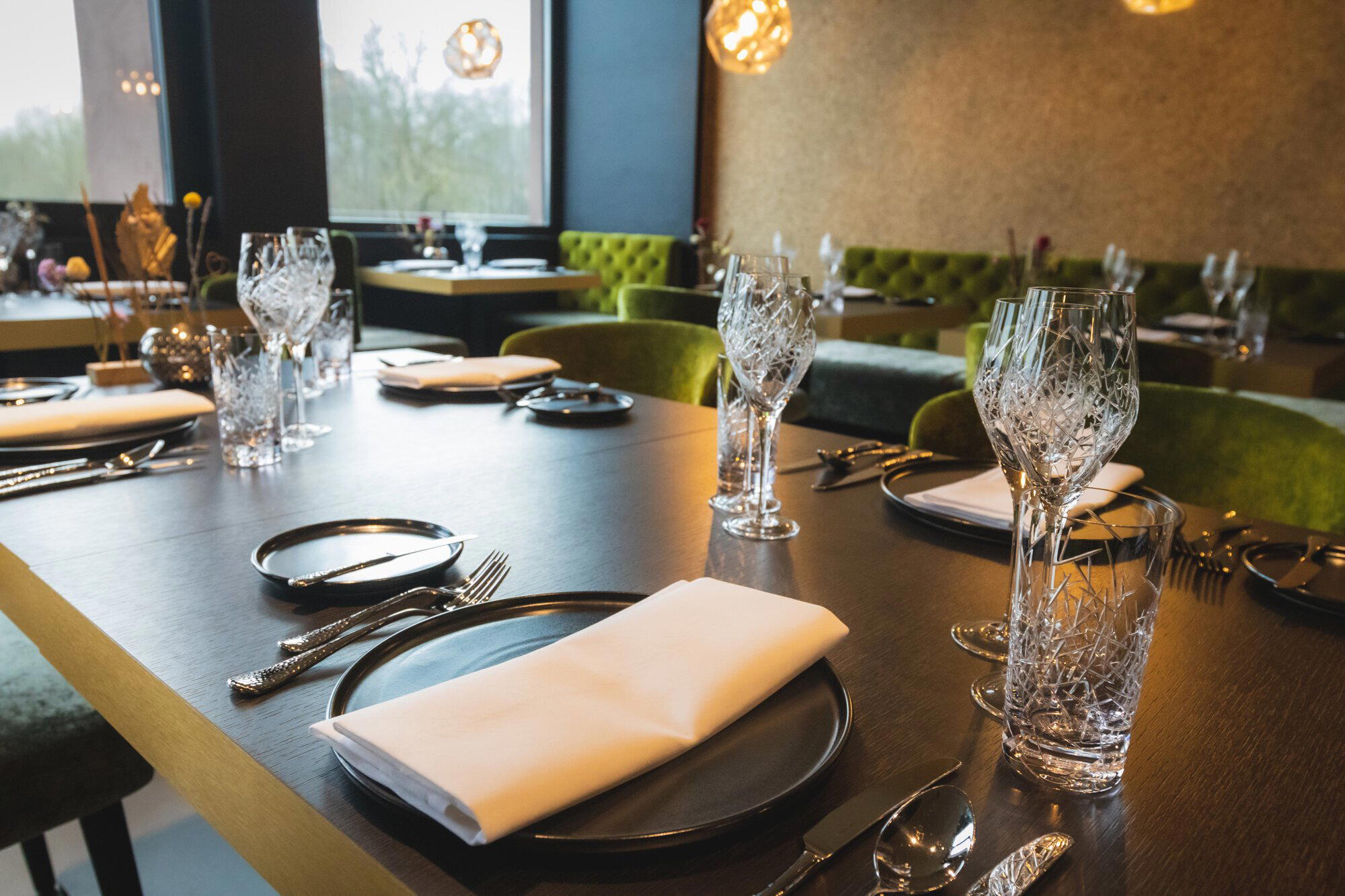
Hotels in Feldberger Seenlandschaft
Browse all →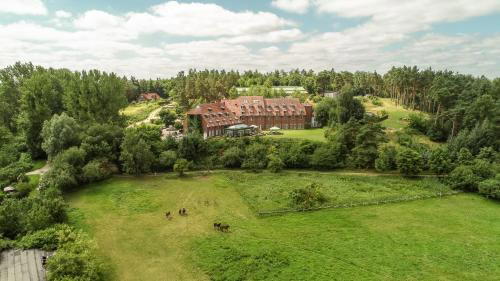
Wineries in Feldberger Seenlandschaft
Browse all →
Alte Schule - Klassenzimmer
The wine
- Extensive wine list
Details
- Cozy
- Rustic
- Intimate
- Scenic
- Date Night
- Special Occasion
- Historic Building
- Extensive Wine List
- Local Sourcing
- Farm To Table
- Tasting Menu
- Vegetarian Friendly
Geradlinig-stilvoll with old tiled stove, parquet flooring, high mullioned windows, and homely relaxed atmosphere.