



1 Michelin Key · Mr & Mrs Smith Seal of Approval · Design Hotels Member
A Cultural Heritage site since 1982, Hospes Palacio Del Bailio occupies a 16th-to-18th-century agrarian estate in the heart of Córdoba's historic centre, earning a Michelin 1 Key in 2024. Fifty-one rooms wrap around five patios, with a glass floor revealing Roman ruins four and a half metres below. The Bodyna Spa sits directly above ancient Roman thermal infrastructure, while the Arbequina Restaurant draws on the flavours of Andalusia.

Pearl is the En Primeur Club membership app, where members save venues, book tables and use the concierge.
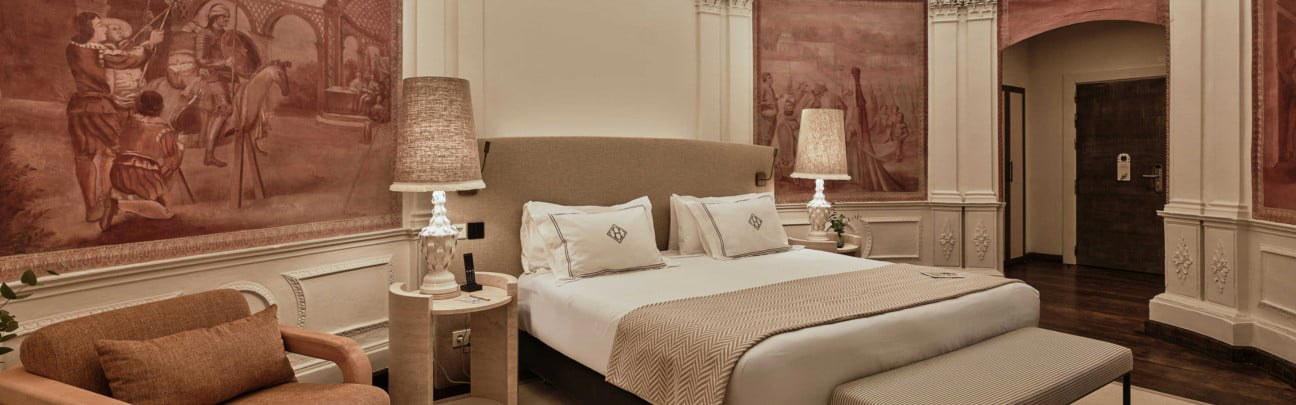
Where Roman Foundations Meet Moorish Ornament
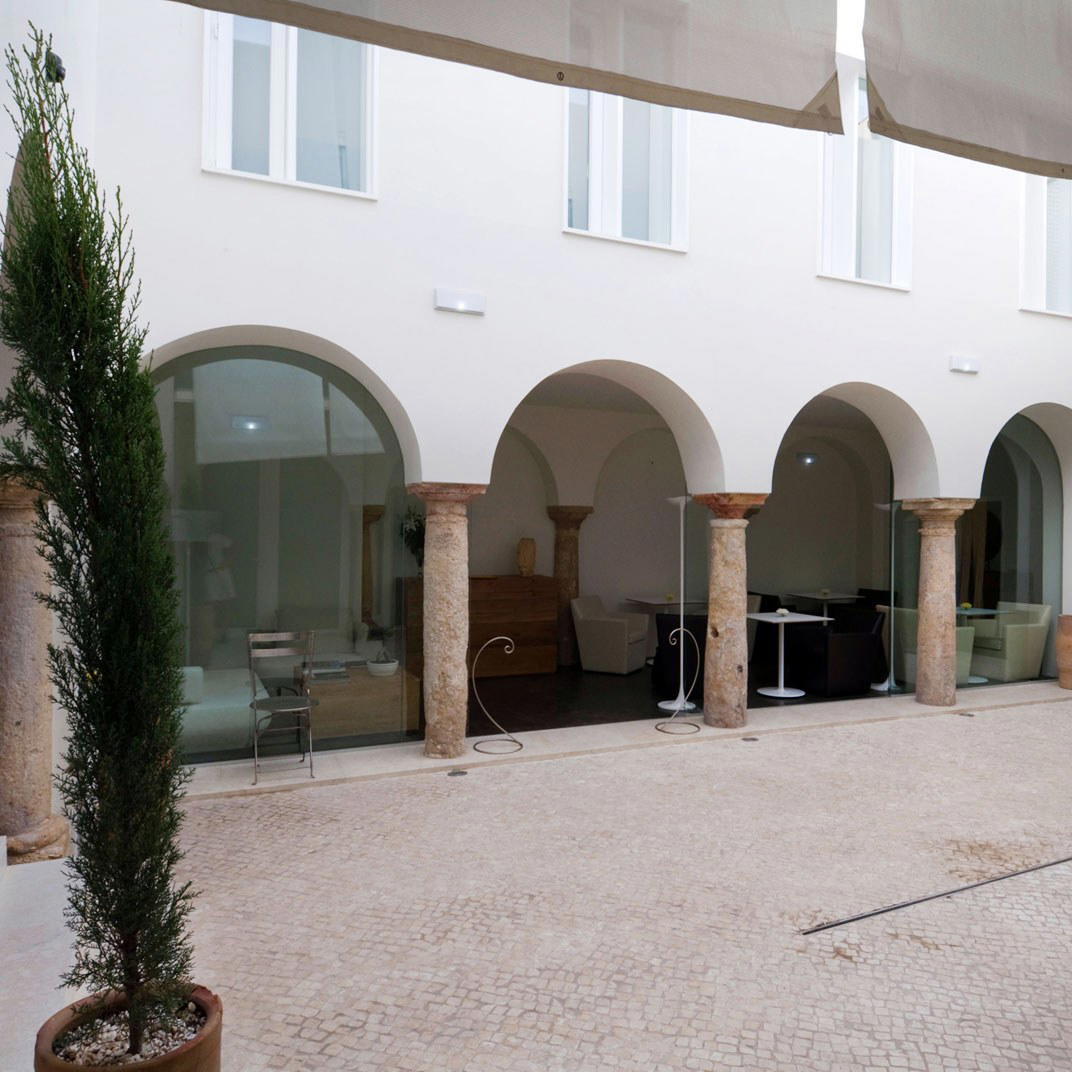
Córdoba's historic centre is one of the more architecturally layered urban environments in southern Europe: Visigoth columns repurposed inside a mosque that became a cathedral, Roman bridges maintained by successive civilisations, and Renaissance mansions built over earlier foundations. The Palacio del Bailio sits squarely inside that tradition of architectural accumulation. The estate was constructed between the 16th and 18th centuries on land whose story runs considerably deeper, and the hotel's designers made the deliberate choice to expose rather than conceal what lay beneath. The main atrium's glass floor reveals the remains of a Roman-era villa four and a half metres down, a spatial decision that reframes the building's entire history: guests are not simply passing through a restored mansion, they are standing above two thousand years of continuous habitation.
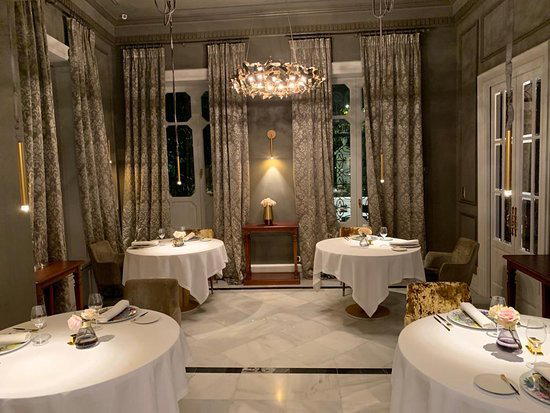
That choice is the defining gesture of the property's design philosophy. Across comparable Spanish heritage hotels, the instinct is often to smooth history into a coherent period aesthetic. Atrio Restaurante Hotel in Cáceres takes a sharply contemporary approach inside medieval walls; Abadía Retuerta LeDomaine makes the 12th-century monastery its dominant visual register. The Palacio del Bailio refuses both routes. Instead, the design holds multiple periods in deliberate tension: original wrought-iron balcony railings and terracotta tiles coexist with polished marble floors; Moorish decorative elements share walls with restrained contemporary furniture in champagne and copper tones offset by dark walnut. The architectural layering is not decorative pastiche but something closer to a conservation argument made visible.
Five Patios, Fifty-One Rooms, and the Logic of the Andalusian Courtyard
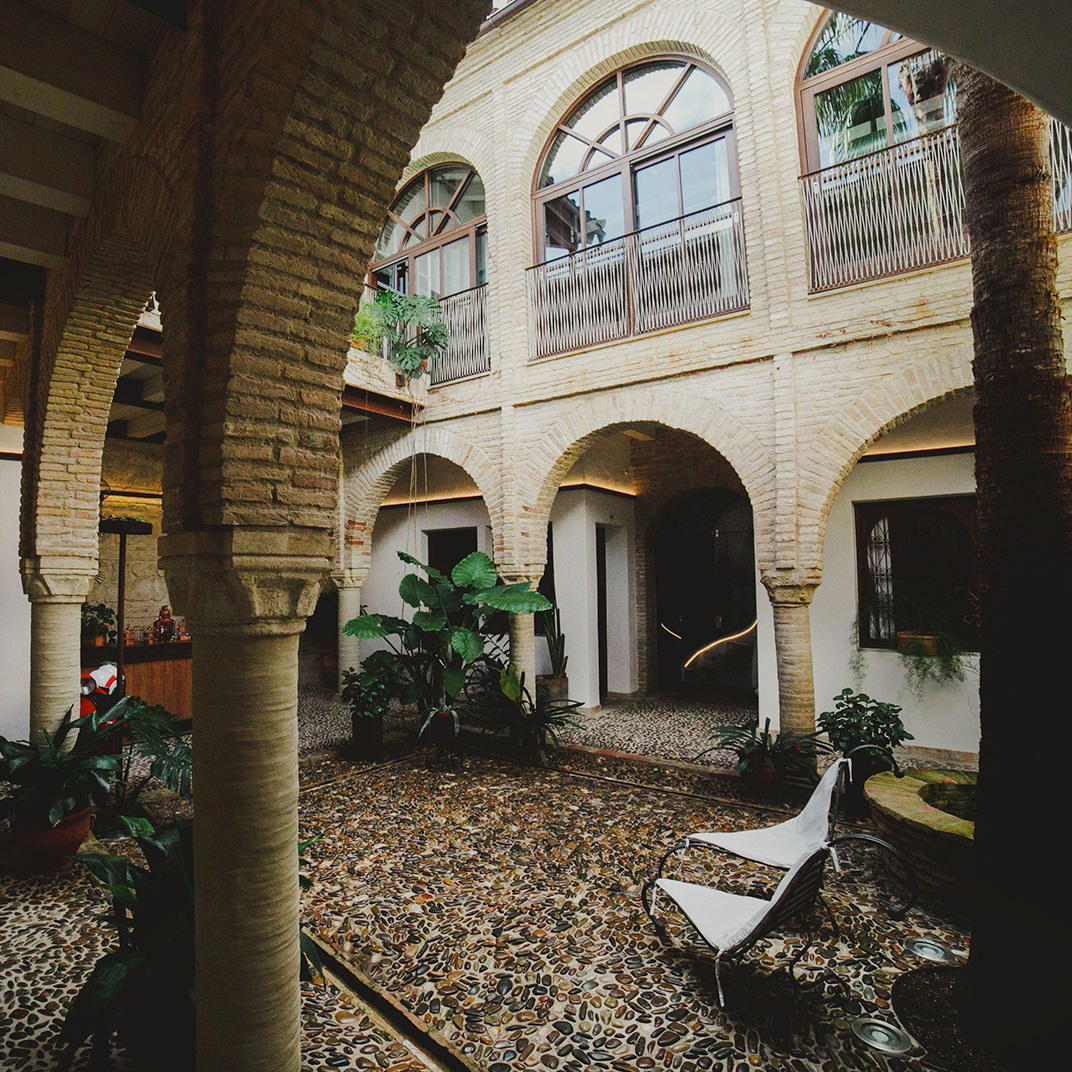
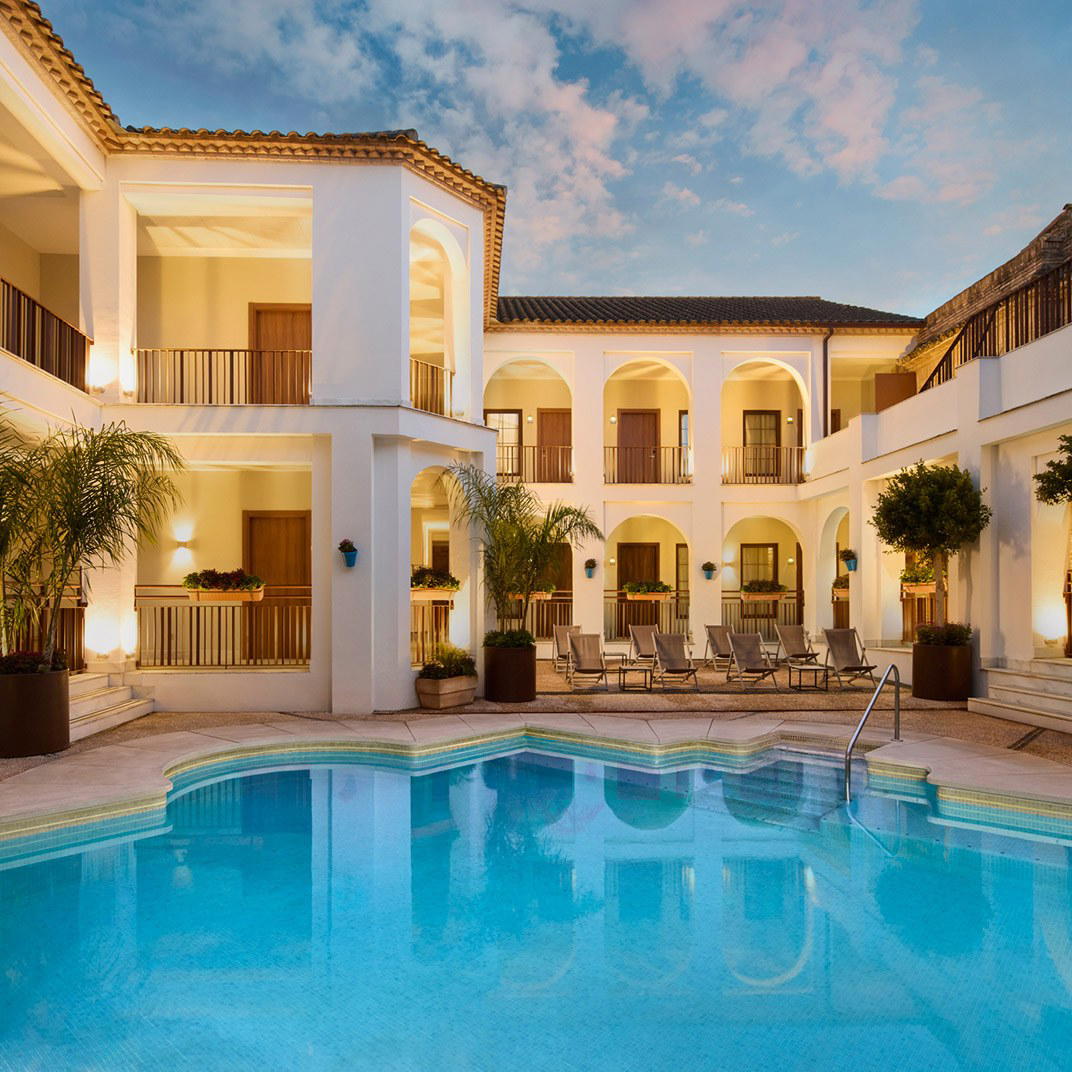
The building's organisation follows the logic of the traditional Andalusian agrarian estate. Five patios structure the complex, each functioning as a microclimate within the larger whole. In southern Spain, where summer heat is not incidental but defining, the courtyard is not an amenity but an architectural strategy: shade, airflow, and the sound of water do the work that northern European hotels assign to air-conditioning units. The main patio, with its glass floor over the Roman ruins and its mature palms, operates as the property's spatial centrepiece. Secondary patios provide quieter counterpoints, some opening to rooms in the ancillary buildings where century-old frescoes or ancient stone arches appear behind antique doors.
Fifty-one rooms across the complex means the property occupies a scale that avoids both the anonymity of large resort hotels and the occasional constraint of very small boutique properties. The Hospes group has developed a recognisable register across its properties: spare but not minimal interiors, an emphasis on dark surfaces and cool stone in climates where solar gain makes darkness a practical luxury, and a consistent avoidance of the kind of ornamental excess that heritage properties can mistake for atmosphere. Rooms opening onto citrus and palm gardens, a pool positioned in deliberate shade, and the underground spa create a self-contained circuit that makes extended stays coherent rather than repetitive.
The Bodyna Spa and Its Roman Infrastructure
The spa's positioning beneath the main building is not a marketing coincidence. The Roman villa ruins visible through the glass floor above connect directly to the thermal bathing culture of the same period, and the Bodyna Spa occupies that underground level in a way that makes the historical reference legible rather than decorative. Roman bathing infrastructure in Córdoba, then the Roman city of Colonia Patricia Corduba and later the capital of the Umayyad Caliphate, was not incidental to civic life but central to it. Operating a contemporary spa on the site of those original thermal structures is an architectural argument about continuity, and the design makes that argument without overstatement.
For guests comparing heritage spa experiences across Spain, this is a distinguishing feature. Properties like Terra Dominicata in Escaladei or Torre del Marqués Hotel Spa & Winery embed their wellness offer within wine-producing estates; the Palacio del Bailio's reference point is urban archaeology rather than agricultural landscape. The underground setting also delivers a practical benefit: the below-ground thermal environment maintains consistent temperatures regardless of Andalusian summer conditions above.
Arbequina Restaurant and the Regional Kitchen
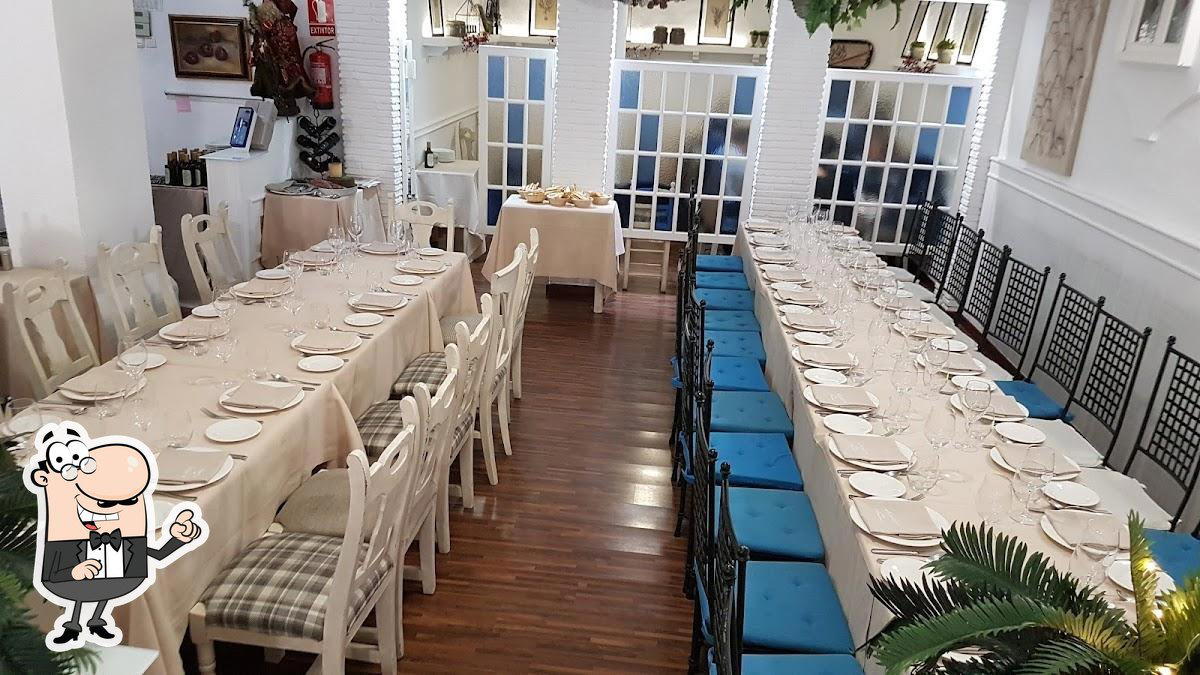
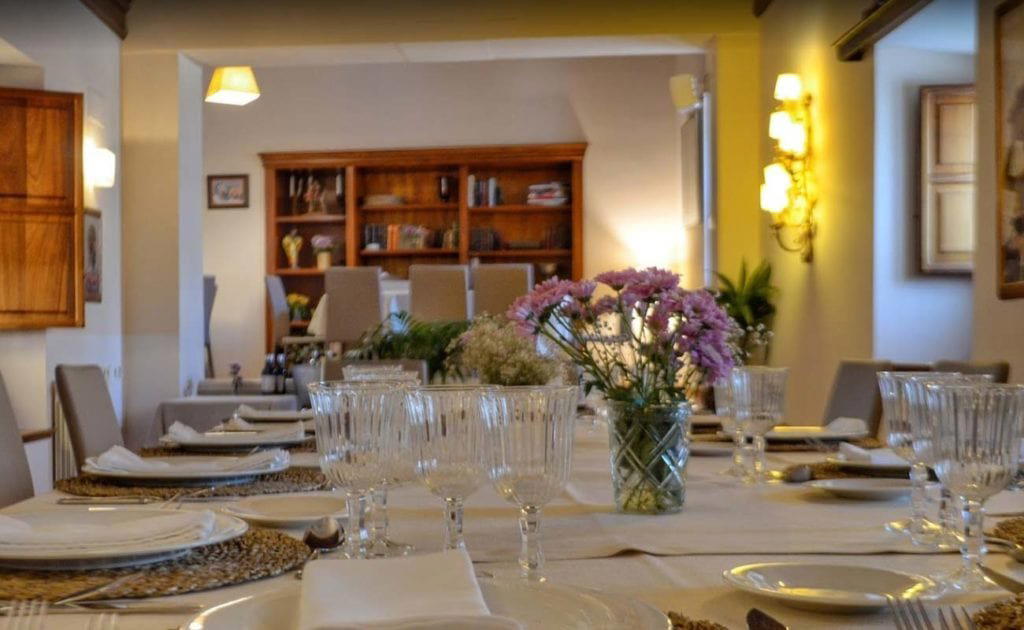
The Arbequina Restaurant and Tapas Bar draws from the Andalusian pantry without the kind of self-consciously modern reinvention that characterises the more celebrated restaurants elsewhere in Spain. Córdoba's culinary identity is rooted in olive oil (the region produces a significant share of Spain's total output), cold soups such as salmorejo, and the slow-braised meat traditions of the interior. The restaurant's name references the arbequina olive variety, a direct signal of the kitchen's regional orientation. This is not a property where the hotel restaurant operates as a destination draw independent of the rooms; it functions as a coherent part of a self-contained stay, with an aperitif terrace overlooking the nearby Roman villa ruins providing one of the more historically specific outdoor drinking settings in the city. For broader context on where to eat across the city, our full Córdoba restaurants guide maps the wider dining scene.
Location, Heritage Status, and the Case for Córdoba
The property's Cultural Heritage designation, granted in 1982, predates its conversion to hotel use and places it within a civic register rather than simply a hospitality category. The address on Calle de Ramírez de las Casas Deza puts guests within the old city, approximately fifteen minutes on foot from the Mezquita-Catedral, the mosque-cathedral whose hypostyle hall of 856 columns constitutes one of the most consequential surviving examples of Umayyad architecture in the western Mediterranean. Being within the medina rather than adjacent to it is a material difference for visitors whose primary interest is the historic city.
Rail access makes Córdoba practical as a standalone destination rather than a day trip from Seville or Granada. The high-speed AVE service connects Córdoba to Seville in approximately 40 minutes, to Málaga in around 50 minutes, and to Madrid in under two hours. That connectivity places the Palacio del Bailio within a plausible multi-city Andalusian itinerary alongside properties such as the Mandarin Oriental Ritz in Madrid for the capital leg, or further afield toward the Atlantic coast with Pepe Vieira Restaurant & Hotel in Poio.
Michelin's hospitality key programme evaluates the overall hotel experience rather than the restaurant alone, and a single key at launch positions the Palacio del Bailio within a select tier of Spanish heritage properties receiving that recognition. Booking through the Hospes group directly is the standard route; the property's 51-room scale means availability during Córdoba's spring festival season, particularly around the celebrated Patio Festival in May, narrows considerably. Planning around those dates warrants advance reservation of several months.
For travellers building wider Iberian itineraries, comparable heritage conversion properties that share the Palacio del Bailio's commitment to architectural honesty include Cap Rocat in Cala Blava, Akelarre in San Sebastián, and Mas de Torrent Hotel & Spa in Torrent. Those seeking the Hospes group's urban boutique approach in other Spanish cities might also consider Mandarin Oriental Barcelona or Hotel Can Cera in Palma as reference points for the broader category. Island alternatives in a similar heritage register include La Residencia, A Belmond Hotel, Mallorca, Hotel Can Ferrereta in Santanyí, and Can Alberti 1740 Hotel Boutique in Mahón. Further afield, Aman Venice offers an instructive parallel in how historic palazzi absorb contemporary hospitality programmes without architectural compromise. For Galician alternatives with a similarly self-contained character, A Quinta da Auga Hotel & Spa in Santiago de Compostela and Casa Beatnik Hotel in A Coruña cover the northwest. Other Spanish properties in the wider comparison set include Bahia del Duque in Adeje, BLESS Hotel Ibiza, Can Mascort Eco Hotel in Palafrugell, Canfranc Estación, a Royal Hideaway Hotel, and Marbella Club Hotel. For international reference points in the heritage-hotel category, Aman New York and The Fifth Avenue Hotel in New York City represent the North American equivalent of the same design-led conversion approach.
How It Stacks Up
Comparable venues nearby, for context on price, style, and recognition.
| Venue | Cuisine | Price | Awards | Notes |
|---|---|---|---|---|
| Hospes Palacio Del BailioThis venue (the venue you are viewing) | Restored 16th-century Andalusian palace blending historic courtyards with contemporary design. | $200–300 | 1 Michelin Key · Mr & Mrs Smith Seal of Approval | Not listed |
| NH Collection Palacio de Córdoba | Contemporary luxury heritage hotel housed in restored 18th-century palaces with modern amenities and refined elegance. | $100–200 | Michelin Selected | Jewish Quarter (Judería) |
| La Ermita Suites | Historic monument hotel restored as boutique suites preserving multi-cultural heritage. | $100–200 | Michelin Selected | Córdoba Old City |
| H10 Palacio Colomera | Historic palace conversion maintaining original architectural heritage while incorporating contemporary luxury and eco-friendly design principles. | $200–300 | Michelin Selected | Plaza de las Tendillas |
| Hotel Boutique Patio del Posadero | Contemporary boutique hotel honoring traditional Andalusian architecture and Mediterranean hospitality within a restored 15th-century posada. | $100–200 | Michelin Selected | Centro Histórico |
| Viento 10 | Restored historic city house with modern boutique charm. | Not listed | Michelin Selected | Jewish Quarter |
Recognition history
Dated appearances from independent guides and award organizations, with the underlying list record or original source where available.
Michelin 1 Key
Michelin
Design Hotels Member
Design Hotels
Mr & Mrs Smith Seal of Approval
Mr & Mrs Smith
Virtuoso Luxury Hotel Partner
Virtuoso
Full recognition history (6 entries)
Michelin 1 Key
Michelin
Michelin 1 Key
Michelin
Continue exploring
More in Córdoba
Hotels in Córdoba
All hotels in Córdoba →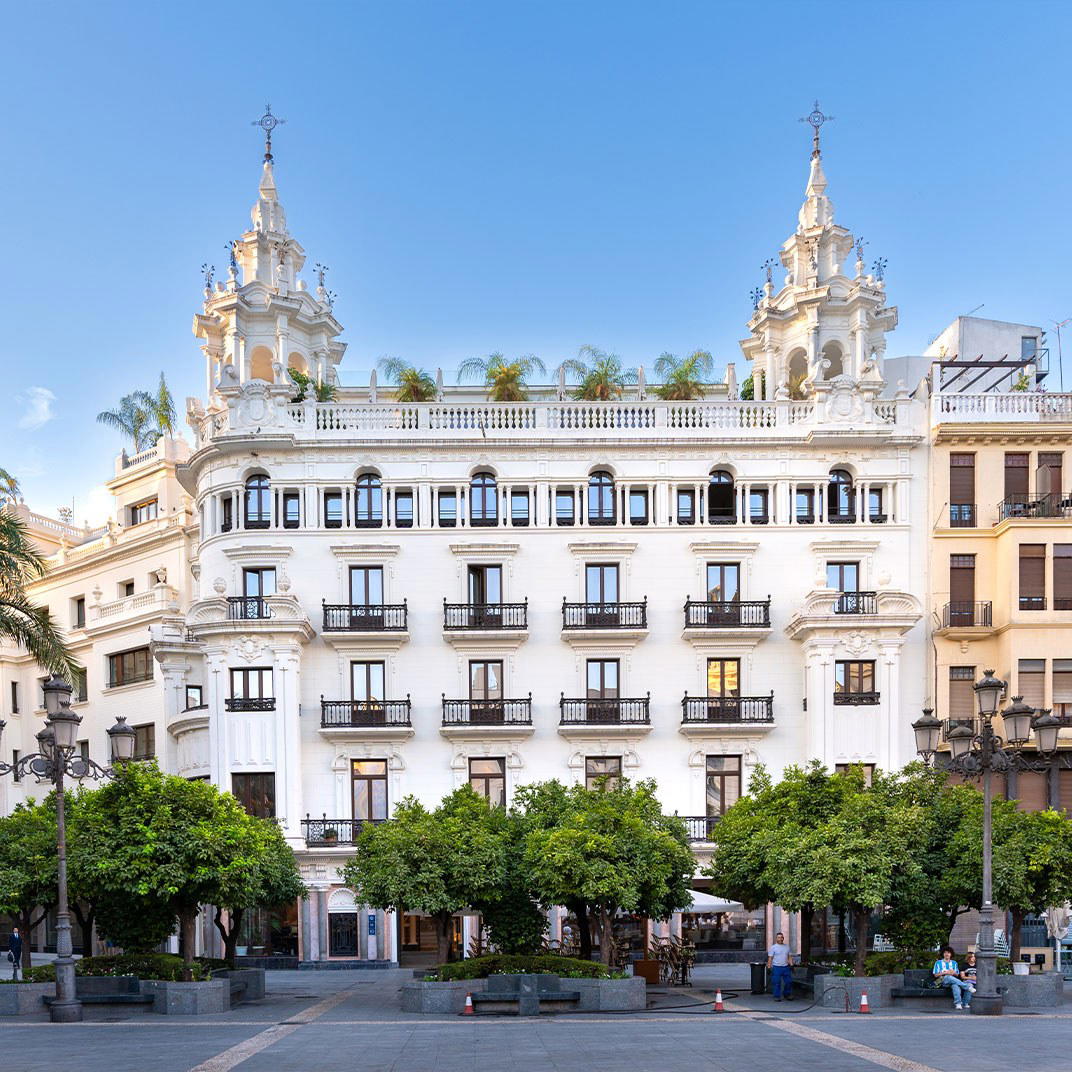
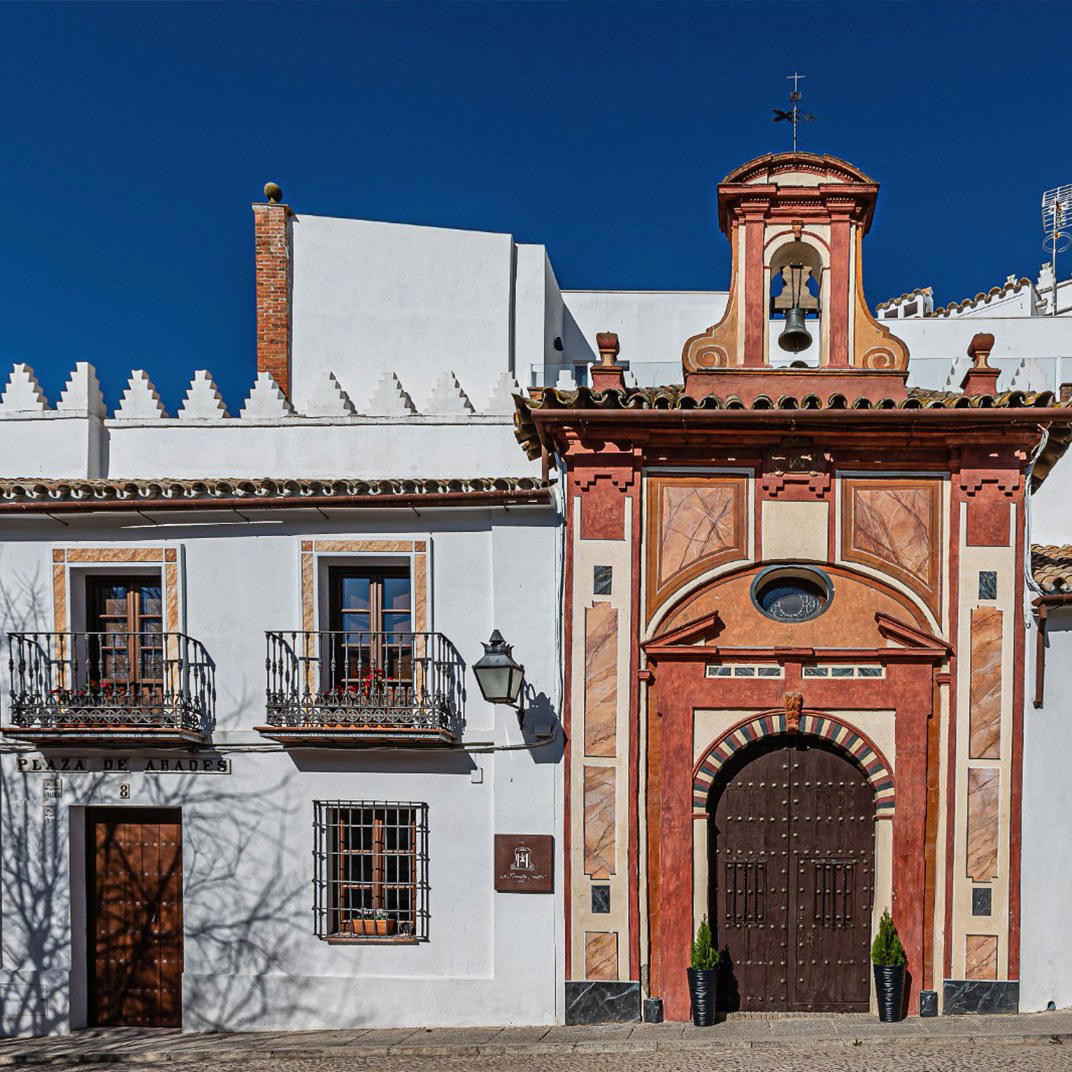
Bars in Córdoba
All bars in Córdoba →

Details
- Romantic
- Elegant
- Quiet
- Sophisticated
- Ornate
- Honeymoon
- Romantic Getaway
- Anniversary
- Wellness Retreat
- Historic Building
- Garden
- Terrace
- Wi Fi
- Pool
- Spa
- Room Service
- Concierge
- Business Center
- Garden
- Wheelchair Accessible
- Elevator
Peaceful oasis with tranquil courtyards shaded by citrus trees, soft lighting, and a harmonious blend of historic elegance and modern luxury.