Hideaway Beach Resort and Spa

Michelin Selected for 2025, Hideaway Beach Resort and Spa sits in the remote northern reaches of Haa Alifu Atoll, where the Maldives operates at a slower frequency than the crowded atolls closer to Malé. The property belongs to an increasingly rare category of Maldivian resort: private-island stays where physical distance from the main tourist corridors is itself part of the offer.
Pearl is the En Primeur Club membership app — saves, bookings, and concierge access live there. Same editors, same standards.
- Address
- Haa Alifu Atoll, Haa Alifu Atoll, Maldives
- Directions
- Get directions
 Saves & bookings on Pearl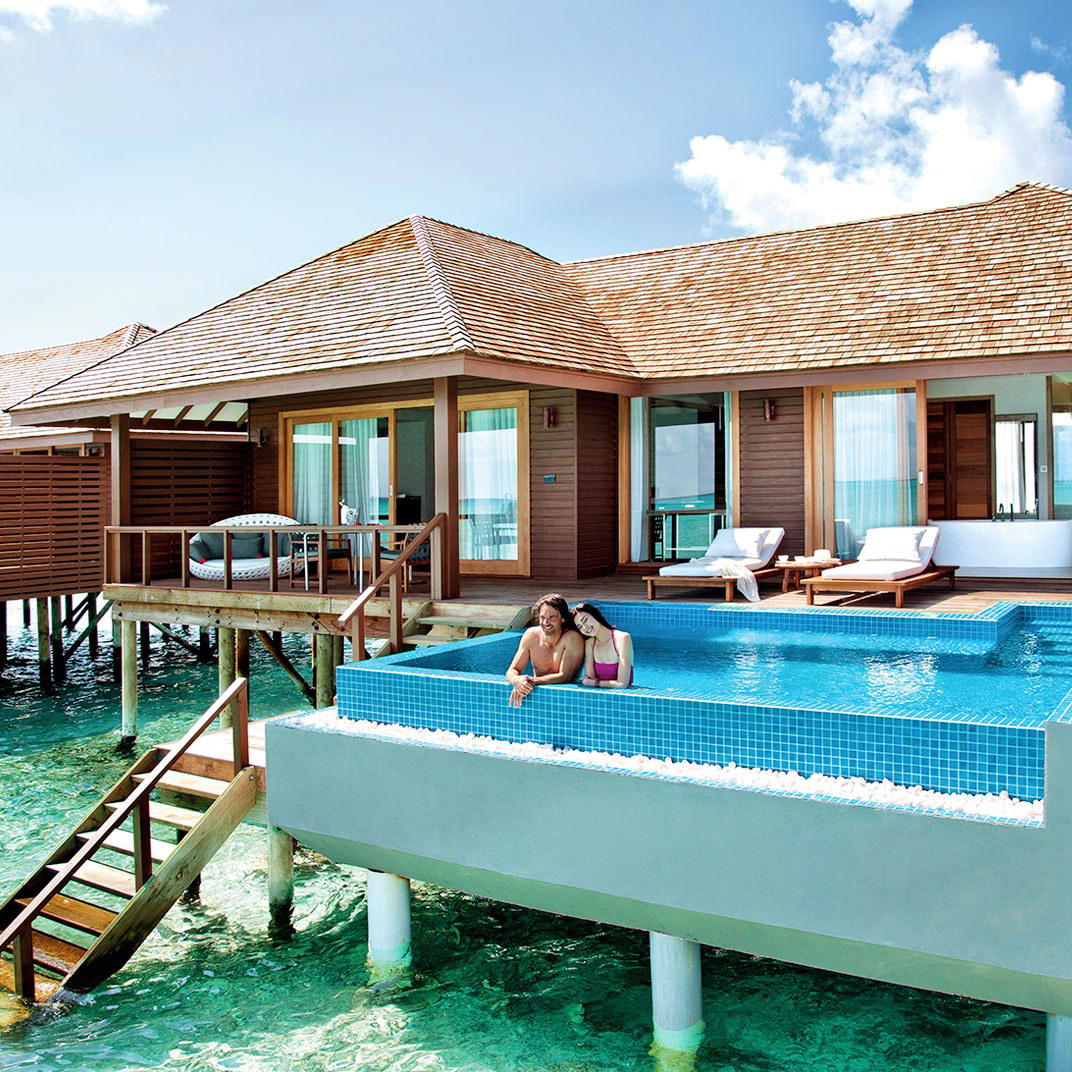
The Far North of the Maldives, and What Distance Actually Buys You
The Maldivian resort market has long sorted itself into two broad tiers: properties within a 30-minute speedboat ride of Velana International Airport, and those that require a domestic flight or seaplane transfer to reach. Haa Alifu Atoll sits firmly in the second category, roughly 270 kilometres north of Malé, and that geography is the first thing a traveller should understand about Hideaway Beach Resort and Spa. Remoteness here is not a drawback dressed up in marketing language; it is the structural condition that shapes everything from the pace of daily life on the island to the composition of the guest roster. Properties this far north attract visitors who have made a deliberate choice to put distance between themselves and the more trafficked atolls. The comparison set for Hideaway is not the speedboat-accessible resorts near the capital, but rather the northern and southern outliers of the Maldivian archipelago.
The nearest comparable private-island resort in the same northern range is JA Manafaru, which shares the atoll and occupies a similar position in the market.
Michelin Selection and What It Signals in a Hotel Context
The Michelin guide's expansion into hotel stays, formalised through its Selected Hotels programme, applies the same lens of editorial curation it uses for restaurants: inclusion signals that inspectors found the property worth recommending, not that it received a star equivalent. Hideaway Beach Resort and Spa appears in the 2025 Michelin Selected Hotels list, placing it in a curated tier that carries weight because Michelin's hotel inspections, like its restaurant ones, prioritise experience quality over marketing spend. In the Maldivian context, Michelin Selected status positions a property inside a relatively compact peer group. Properties like Soneva Jani in Noonu Atoll, Soneva Fushi in Eydhafushi, and Six Senses Laamu in Laamu Atoll represent the broader range of recognised Maldivian luxury. Michelin selection at Hideaway confirms that the property is recommended rather than simply commanding a high room rate.
Architecture and the Grammar of Overwater and Beach Design
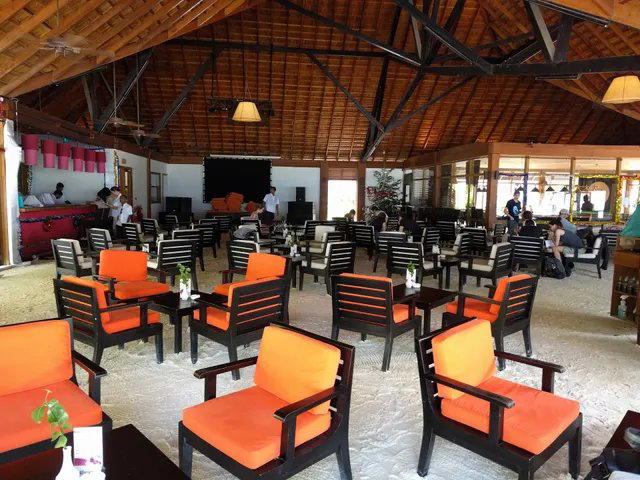
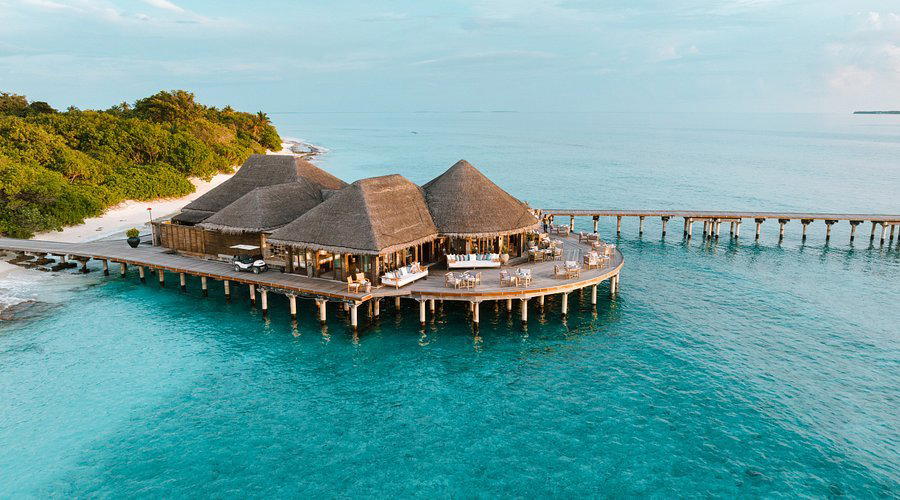
Maldivian resort architecture has converged on a recognisable vocabulary over the past two decades: overwater villas on stilted jetties, thatched rooflines that nod to traditional dhoni construction, and open-sided pavilions designed to dissolve the boundary between interior space and lagoon. What differentiates resorts within this shared grammar is the specificity of execution: the proportion of villa to lagoon view, the density of vegetation between structures, and the degree to which a resort feels like a designed environment versus a cleared island. Hideaway's name signals an orientation toward seclusion, and properties in this segment of the Maldivian market typically use landscaping and villa spacing to create a sense of private territory even within a shared resort footprint.
The broader pattern in northern atoll properties is that lower guest density per island tends to produce a more expansive spatial experience. Where atolls closer to Malé sometimes pack villas at intervals dictated by land cost, the northern islands have historically been developed at lower density, allowing resort architecture to breathe. This spatial logic is one reason properties in this range can command serious nightly rates while offering fewer keys than their southern counterparts. For a point of comparison in a different atoll, The Nautilus Maldives in Thiladhoo and Milaidhoo Maldives in Baa Atoll both operate at limited scale.
Placing Hideaway in the Maldivian Competitive Set
The Maldives has long had a two-track luxury market. One track is dominated by internationally branded properties with global loyalty programmes: Jumeirah Maldives Olhahali Island in North Malé Atoll, JW Marriott Maldives Kaafu Atoll Island Resort, and InterContinental Maldives Maamunagau Resort each draw guests partly on the strength of their parent brands. The second track, where Hideaway operates, is built around independent or smaller-group identity, where the resort itself is the brand and the experience is not calibrated to the expectations of a global loyalty tier system. This is a meaningful distinction for travellers deciding where to stay. Branded properties offer consistency and points accumulation; independent properties in this tier offer identity and, often, a higher degree of design coherence.
Further afield in the archipelago, JOALI Maldives in Raa Atoll and Naladhu Private Island Maldives in South Malé Atoll represent the independent-identity end of the spectrum, and both have been recognised by editorial and awards bodies for precisely the qualities that distinguish them from branded alternatives. Hideaway's Michelin selection places it in that recognised independent tier, even if its atoll location keeps it off the radar of travellers who limit their search to particularly accessible zones.
Planning a Stay: What to Understand Before You Go
Reaching Haa Alifu Atoll from Velana International Airport typically requires a domestic flight to Hanimaadhoo Airport, the regional hub serving the northern atolls, followed by a speedboat transfer. This two-leg arrival adds travel time that travellers should account for when planning itineraries. The upside is that the domestic flight leg provides an aerial view of the atoll chain that seaplane passengers in the central atolls rarely get at that altitude and clarity.
The northern Maldives operates on a slightly different seasonal rhythm than the central atolls. The northeast monsoon, which runs from roughly November through April, tends to deliver calmer seas and clearer visibility in this region, making that the primary high season for water-based activities. Diving and snorkelling in Haa Alifu is positioned around reef systems that see less boat traffic than the heavily dived sites around Baa Atoll's Hanifaru Bay, which is relevant for travellers who prioritise underwater solitude over guaranteed aggregation events. For all-inclusive options in other parts of the Maldives, Baglioni Maldives Luxury All-Inclusive in Dhaalu Atoll and Pullman Maldives Maamutaa in Gaafu Alifu Atoll offer structural alternatives worth considering depending on budget preferences and travel objectives.
A Quick Peer Check
Comparable venues nearby, for context on price, style, and recognition.
| Venue | Cuisine | Price | Awards | Notes |
|---|---|---|---|---|
| Hideaway Beach Resort and SpaThis venue — the venue you are viewing | Exclusive all-villa luxury resort on a spacious private island | $$$$ | 5-Star | Not listed |
| JA Manafaru | Luxurious private island resort with personalized villa service | $$$$ | 5-Star | Haa Alifu Atoll |
| Somewhere | Ultra-luxury minimalist private island resort emphasizing understated elegance and bespoke personalization with architectural sophistication. | $$$$ | 5-Star | Baa Atoll |
| COMO Cocoa Island, Maldives | Understated luxury overwater resort inspired by traditional Maldivian dhoni fishing boats with Keralan boathouse architecture. | $$$$ | 5-Star | South Malé Atoll |
| Huvafen Fushi | barefoot luxury resort with private villas | $$$$ | 5-Star | North Malé Atoll |
| Drift Thelu Veliga Retreat | barefoot luxury resort with traditional Maldivian charm | $$$$ | 5-Star | South Ari Atoll |
Recognition history
Dated appearances from independent guides and award organizations, with the underlying list record or original source where available.
Michelin Selected
Michelin
Continue exploring
More in Haa Alifu Atoll
Hotels in Haa Alifu Atoll
Browse all →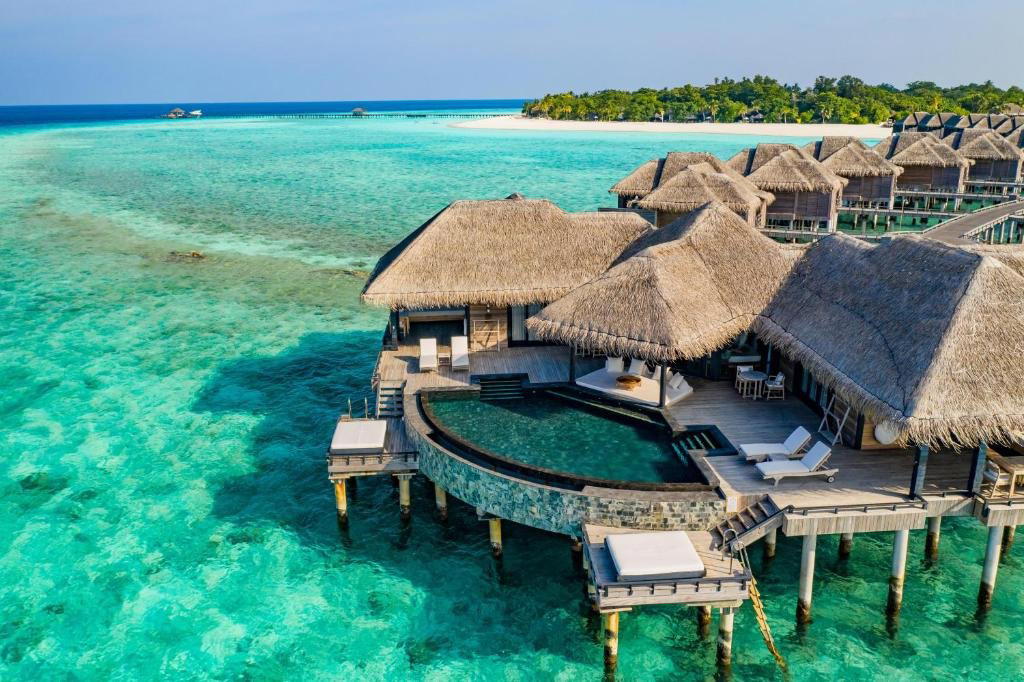
Bars in Haa Alifu Atoll
Browse all →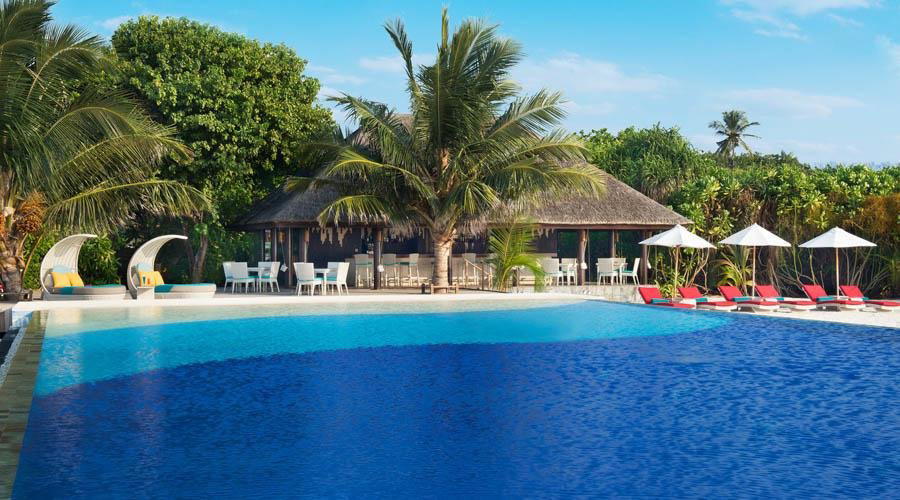
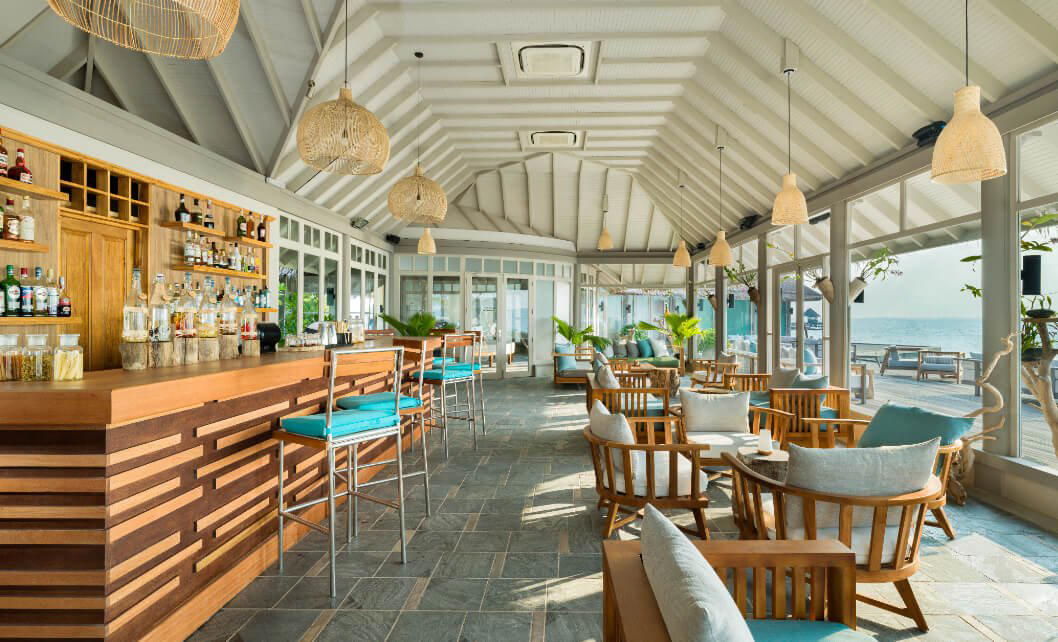
Restaurants in Haa Alifu Atoll
Browse all →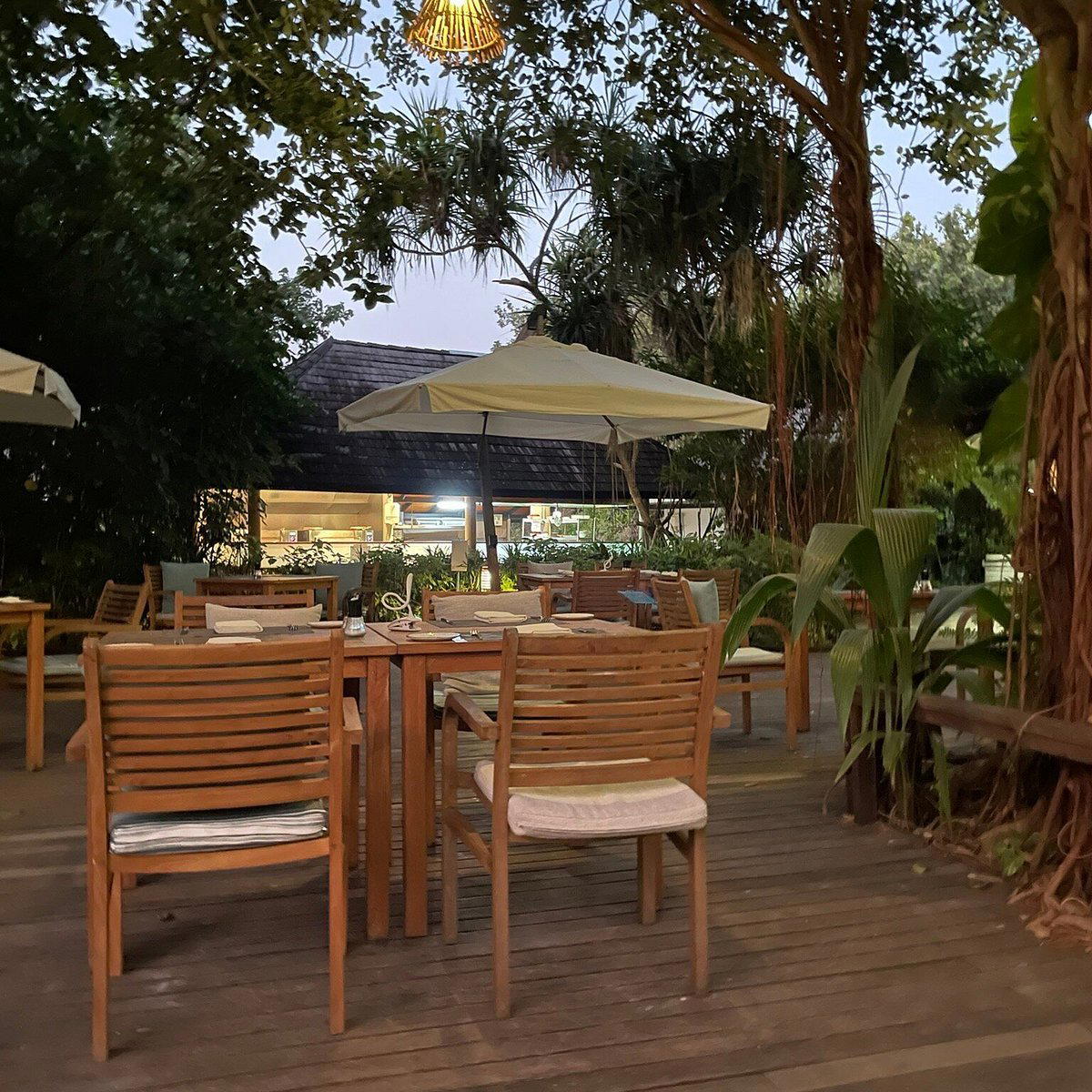
At a Glance
- Romantic
- Quiet
- Elegant
- Scenic
- Intimate
- Sophisticated
- Ornate
- Honeymoon
- Romantic Getaway
- Family Vacation
- Wellness Retreat
- Beachfront
- Private Villa
- Infinity Pool
- Destination Spa
- Pool
- Spa
- Fitness Center
- Room Service
- Concierge
- Kids Club
- Beach Access
- Waterfront
- Pool
- Spa
- Fitness Center
- Room Service
- Concierge
- Kids Club
- Beach Access
Tranquil and secluded atmosphere with pristine beaches, lush vegetation, and a serene tropical paradise vibe emphasized in guest reviews.