

Hacienda Xcanatun, Angsana Heritage Collection occupies a restored 18th-century henequen estate twelve kilometres north of Mérida, with 54 suites spread across four acres of private gardens. Its Casa de Piedra restaurant has built a loyal following among locals for Yucatecan cuisine developed with French techniques. The property sits in the Angsana Heritage Collection, positioning it within a niche of historically significant luxury conversions.
Pearl is the En Primeur Club membership app — saves, bookings, and concierge access live there. Same editors, same standards.
- Address
- Calle 20 S/N X 19 y 19A, Comisaria Xcanatun, Km. 12 Merida-Progreso
- Phone
- +52 999 930 2140
- Directions
- Get directions
 Saves & bookings on Pearl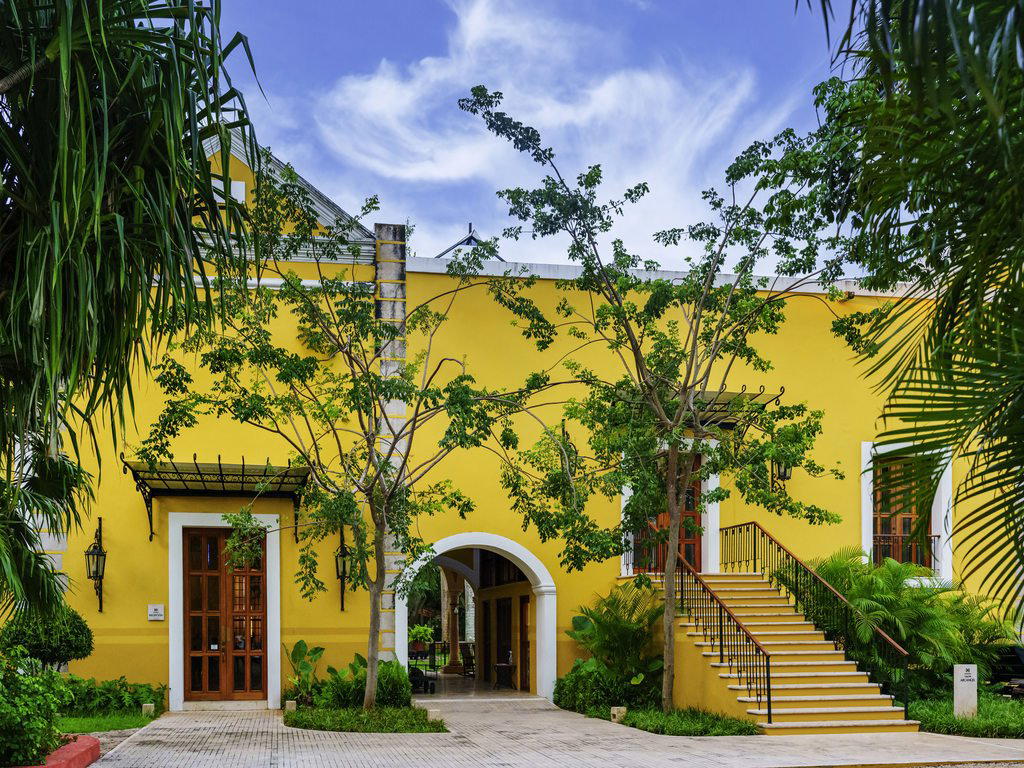
Where the Henequen Economy Left Its Architecture Behind
The Yucatan Peninsula's henequen boom produced particularly architecturally elaborate agricultural estates in 19th-century Mexico. When sisal fibre demand collapsed in the 20th century, it left behind a scattered inventory of stone haciendas, most too large to maintain privately and too significant to demolish. A handful have been converted into hospitality properties, and Hacienda Xcanatun, now operating under the Angsana Heritage Collection, is among the more carefully restored. The address, twelve kilometres north of central Mérida on the road toward Progreso, places it at a comfortable remove from the city's colonial centro, close enough for day excursions, distant enough to read as a destination in its own right.
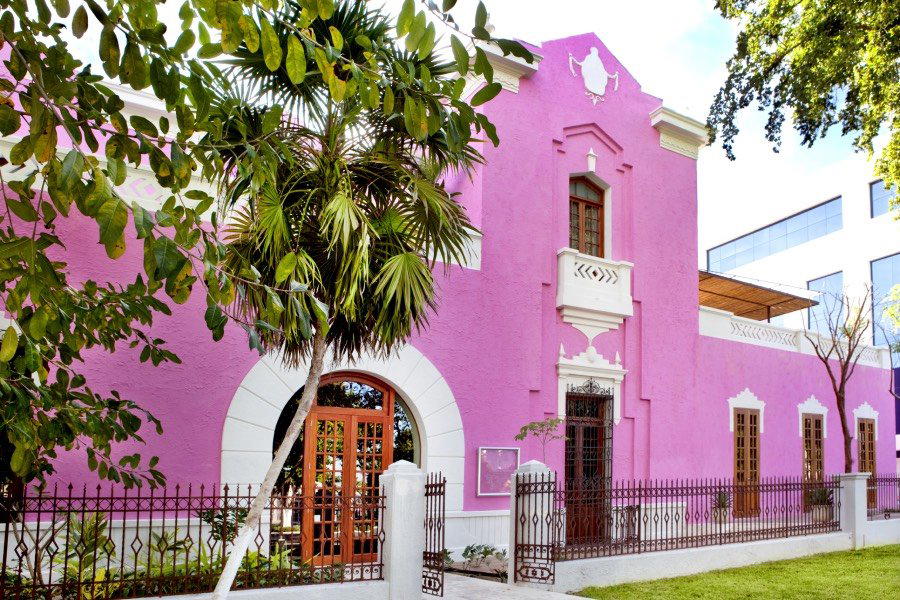
The Angsana Heritage Collection positions properties of this type in a specific tier: historically grounded conversions that prioritise architectural preservation alongside contemporary comfort. That framing matters when comparing Hacienda Xcanatun against the broader Mérida luxury market. Properties like Chablé Yucatán also occupy converted hacienda settings, and the city's newer boutique entrants, Rosas & Xocolate Boutique Hotel + SPA and Decu Downtown, take the opposite approach, working with colonial-era urban structures rather than agricultural estates. Hacienda Xcanatun's distinction is the scale and specificity of its agricultural heritage: the henequen hacienda typology is Yucatecan rather than broadly Mexican, and the property leans into that regional identity throughout.
The Suites: Two Eras of Stone Under One Roof
Property holds 54 rooms across two distinct wings. Eighteen historic suites occupy the original hacienda structures, retaining the proportions and materiality of 18th-century construction, thick limestone walls, high ceilings, the kind of thermal mass that keeps interior temperatures lower than the surrounding gardens even in the Yucatan's more demanding months. The 36 newer suites take a different approach: designed around a combination of natural wood, leather, regional limestone and native pasta tile floors, the material palette is explicitly drawn from the henequen hacienda tradition, but the spatial logic is contemporary. The result is a property where guests can choose their degree of historical immersion, from the densest expression of the original architecture to a version that references that vocabulary with more restraint.
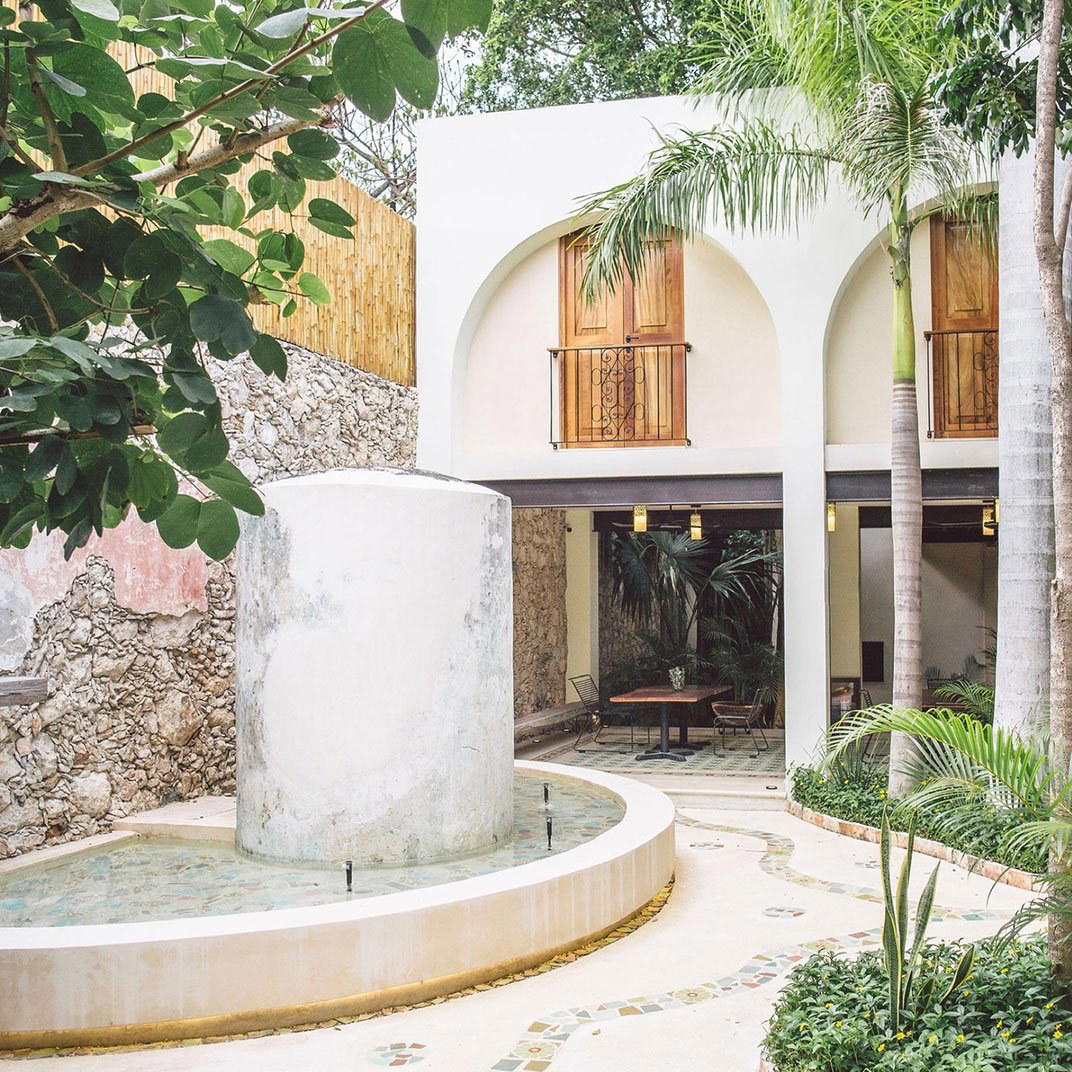
Four acres of private gardens surround both wings, with tropical vegetation and flowering plants that reflect the Yucatan's botanical diversity. That garden scale, rare in a property of 54 keys, functions as a spatial buffer, arrivals feel considered rather than compressed, and movement between the suites, restaurant, and shared spaces has room to breathe.
Casa de Piedra and the Yucatecan-French Conversation
The restaurant conversation in Mérida has intensified over the past decade, with the city drawing recognition as one of Mexico's more serious dining destinations. Yucatecan cuisine occupies a distinct position within Mexican gastronomy: ingredients and techniques shaped by Maya tradition, colonial Spanish influence, and a later wave of Lebanese immigration produce a regional profile that reads differently from Oaxacan or central Mexican cooking. The use of achiote, slow-cooked preparations in underground pits, and the habanero as a structural heat source (rather than a garnish) are markers of a cuisine with its own internal logic.
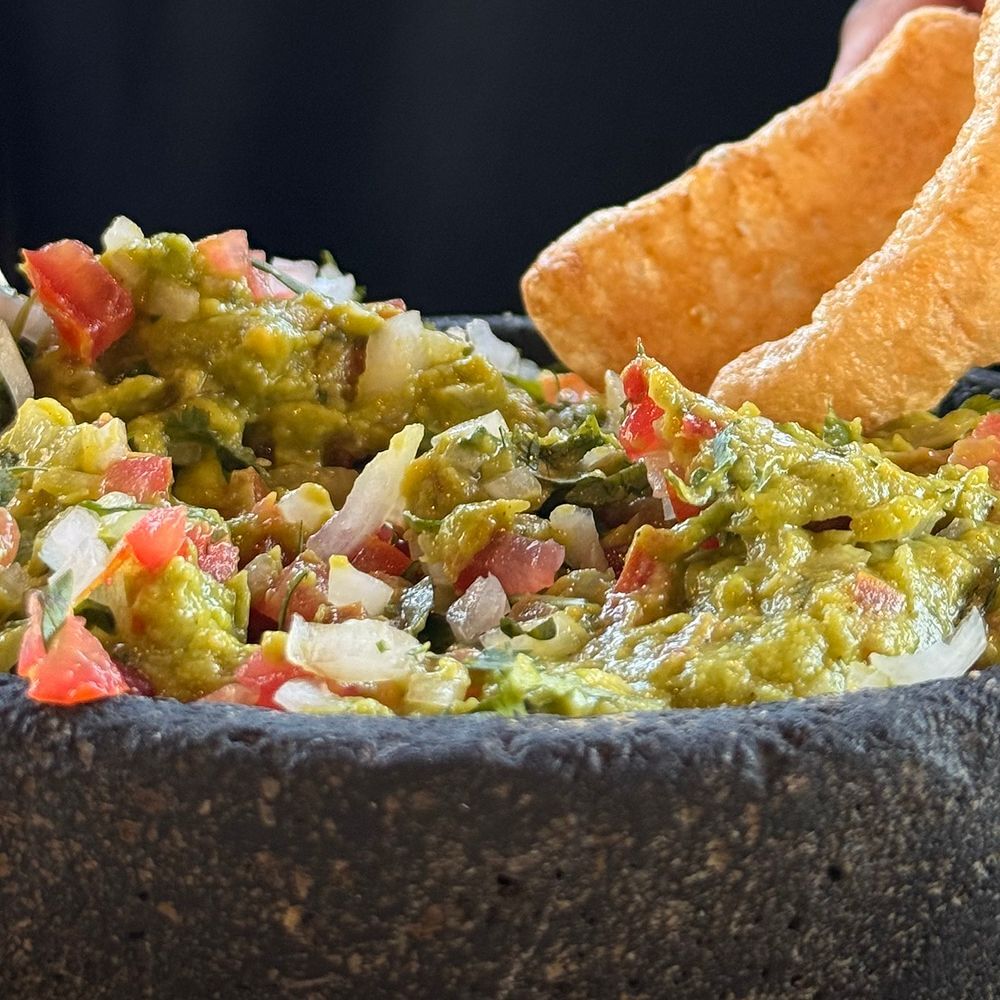
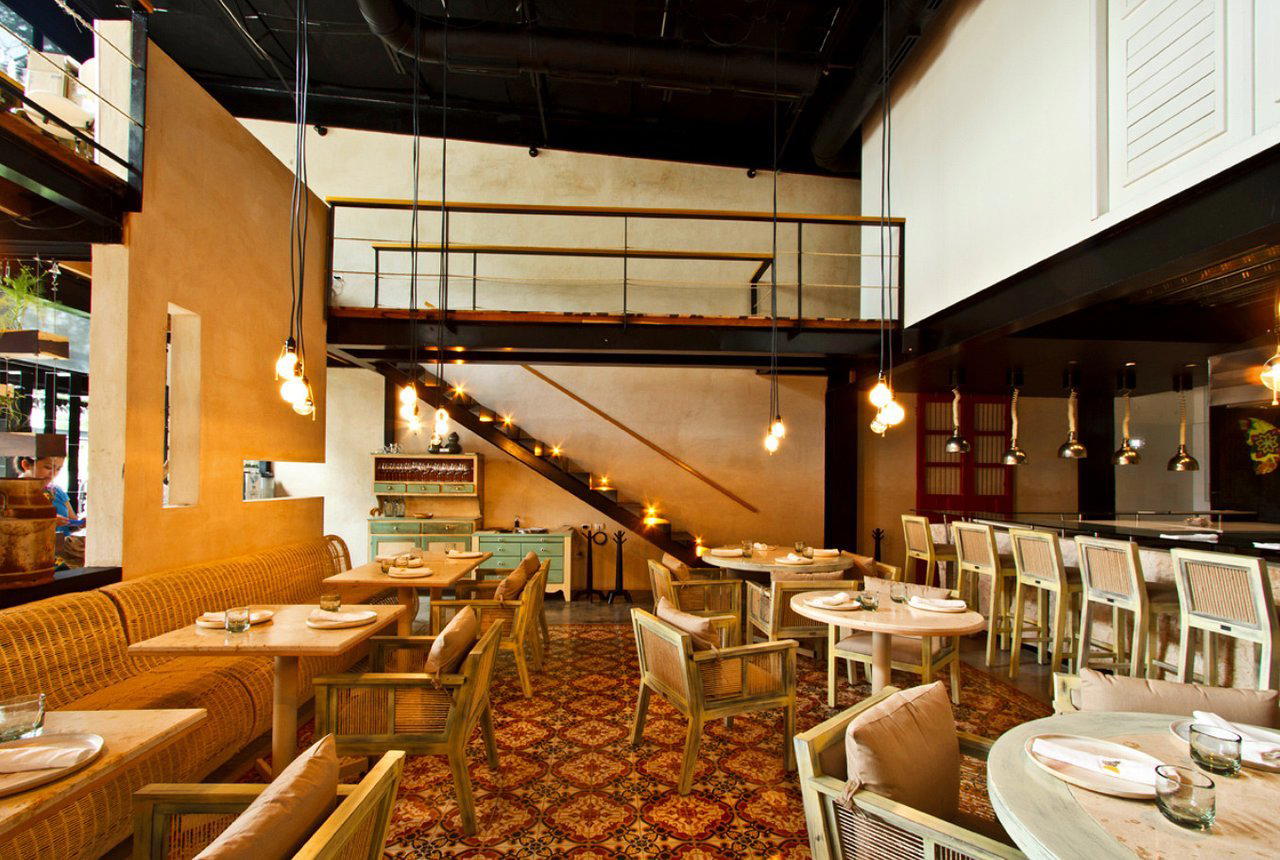
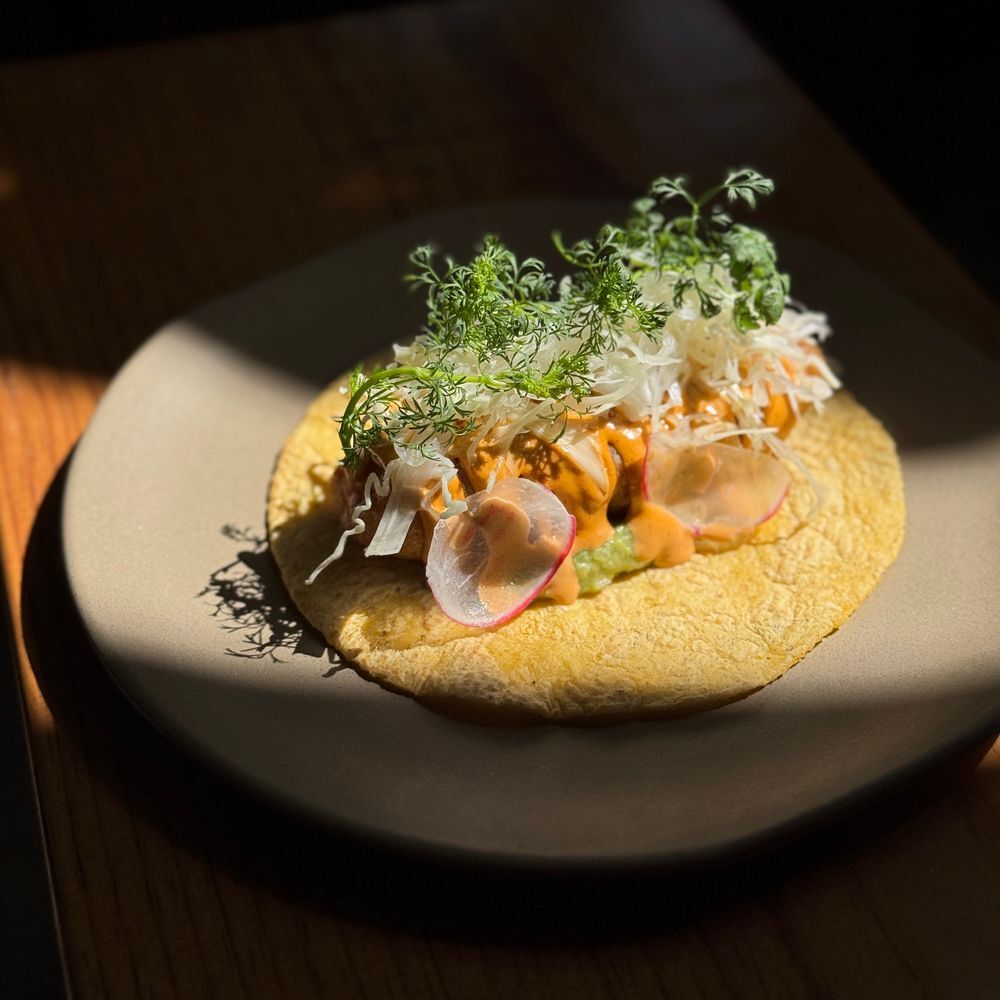
Casa de Piedra, the hacienda's restaurant, has operated as a local reference point within that context. Its approach applies French culinary technique to Yucatecan ingredients and preparations, a combination that has sustained a following among Mérida residents rather than positioning solely toward visiting guests. That local patronage matters as a trust signal: restaurants sustained primarily by hotel guests operate under different pressures than those that hold neighbourhood loyalty. The broader pattern of French-Yucatecan synthesis has been one of the more productive conversations in the region's dining scene for several years.
Service Architecture at a Heritage Property
Heritage conversions of this scale require a particular approach to service: the architecture carries meaning, and staff who can articulate that meaning become part of the guest experience in a way that a purely contemporary property does not demand. The Angsana brand's operating model within the Heritage Collection is built around properties where the story of the place is inseparable from the stay. That translates, in practical terms, to an expectation that staff are trained across the property's cultural and historical context, not only its operational logistics.
The distance from central Mérida, a twenty-five minute drive, amplifies this dynamic. Guests who are not using the property as a base for city exploration will spend a meaningful portion of their time within the hacienda's grounds, which puts more weight on the quality of on-property interaction: how a dinner at Casa de Piedra is framed, how the garden spaces are introduced, how excursions to Chichén Itzá or Uxmal are organised. Both Maya sites are among the more significant archaeological zones in the Americas and are reachable as day trips, though the logistics vary considerably by season. The Yucatan's summer months bring heat and humidity that affect how those excursions are leading structured.
Mérida's Wider Property Market
For travellers building a Yucatan itinerary, the decision between a hacienda property and a city-centre hotel involves a genuine trade-off rather than a hierarchy. Hotel CIGNO, Hotel Sureño, Diez Diez Collection, Las Brisas Merida, and TreeHouse Boutique Hotel all operate within the colonial centro, offering direct access to Mérida's markets, museums, and restaurant density. Hacienda Xcanatun's proposition is different: it trades that proximity for garden scale, architectural depth, and a quieter pace that suits travellers for whom the hacienda setting is the point, not a backdrop.
Within Mexico's broader luxury hacienda and heritage resort market, comparable properties include Casa de Sierra Nevada, A Belmond Hotel in San Miguel de Allende and Casa Silencio in Oaxaca, both of which work within a similar framework of historically significant architecture adapted for contemporary guests. Those who prefer resort scale with coastal access might look toward Maroma in Riviera Maya, Hotel Esencia in Tulum, or Etéreo, Auberge Resorts Collection in Punta Maroma, where the heritage dimension gives way to landscape-led design.
Planning Your Stay
The hacienda sits at Calle 20 S/N, Comisaria Xcanatun, on the Mérida-Progreso road at kilometre 12. The twenty-five minute drive from downtown Mérida is best managed with arranged transport. Booking is recommended in advance. Yucatan's dry season runs roughly from November through April, which is when outdoor garden use is most reliable and when regional festival programming in Mérida is at its densest. The summer months are quieter and hotter, with afternoon rains that, depending on your priorities, can either be a reason to avoid or an argument for lower rates and fewer fellow guests.
Frequently Asked Questions
What is the signature room at Hacienda Xcanatun, Angsana Heritage Collection?
The property has 54 rooms across two wings. The 18 historic suites within the original hacienda structures offer one direct engagement with the 18th-century architecture, with limestone walls and period proportions. The 36 newer suites reference the same material language, regional limestone, native pasta tile, natural wood, but in a contemporary spatial format. Neither tier is a direct upgrade over the other; the choice depends on how much architectural immersion a guest wants relative to a more open, modern layout.
What should I know about Hacienda Xcanatun, Angsana Heritage Collection before I go?
Property is twelve kilometres from central Mérida, which means it functions more as a destination than a base for intensive city exploration. Plan transfers in advance rather than relying on ad-hoc transport. Casa de Piedra, the on-site restaurant, has an established local following for its Yucatecan-French cooking, which means reservations for dinner are worth making before arrival. The hacienda's four-acre gardens and the Yucatan's agricultural and archaeological context are core to the experience; guests who engage with those elements will get considerably more from the stay than those who treat the property purely as a room.
How hard is it to get a reservation at Hacienda Xcanatun, Angsana Heritage Collection?
With 54 suites, the property is not a micro-boutique where availability closes months out, but Mérida's high season (November through April) coincides with significant demand from both domestic and international travellers. Booking two to three months ahead for that window is a reasonable baseline. The Angsana Heritage Collection handles reservations through its own channels; the property's website is the direct booking point. For travel during Mérida's major festivals or Mexican public holiday periods, earlier planning reduces the risk of date constraints.
Cuisine-First Comparison
Comparable venues nearby, for context on price, style, and recognition.
| Venue | Cuisine | Price | Awards | Notes |
|---|---|---|---|---|
| Hacienda Xcanatun, Angsana Heritage CollectionThis venue — the venue you are viewing | Restored historic hacienda with contemporary suites amid tropical gardens | $$$$ | 5-Star | Not listed |
| Adoro Hotel Boutique | Restored colonial mansion blending Yucatecan cultural elements with modern luxury | $$$$ | 5-Star | Centro |
| Rosas & Xocolate Boutique Hotel + SPA | Restored French-style colonial mansions with modern luxury | $$$$ | 5-Star | Paseo de Montejo |
| Rosas & Xocolate | Renovated colonial mansions with contemporary boutique hotel management, blending heritage architecture with modern luxury design. | $$$$ | 4-Star | Paseo de Montejo, City Center |
| Diez Diez Collection | Contemporary luxury boutique hotel positioned as a modern alternative to Merida's colonial-themed properties, designed for sophisticated travelers seeking 21st-century aesthetics. | $$$$ | 5-Star | Centro, near Paseo de Montejo |
| Galopina | contemporary classic residential escape | $$$$ | 4-Star | Seyé |
Recognition history
Dated appearances from independent guides and award organizations, with the underlying list record or original source where available.
Virtuoso Luxury Hotel Partner
Virtuoso
Michelin Selected
Michelin
Continue exploring
More in Mérida
Hotels in Mérida
Browse all →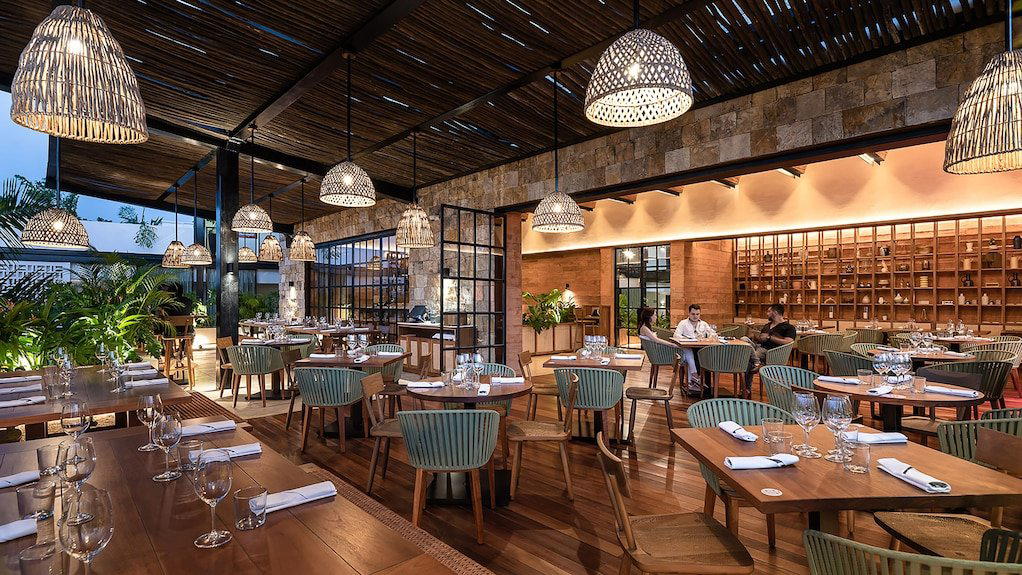
Bars in Mérida
Browse all →
Restaurants in Mérida
Browse all →
At a Glance
- Romantic
- Quiet
- Elegant
- Rustic
- Scenic
- Sophisticated
- Honeymoon
- Romantic Getaway
- Wellness Retreat
- Anniversary
- Destination Wedding
- Group Retreat
- Historic Building
- Garden
- Destination Spa
- Spa
- Pool
- Fitness Center
- Room Service
- Concierge
- Wi Fi
- Restaurant
- Garden
- Spa
- Pool
- Fitness Center
- Room Service
- Concierge
- Wi Fi
- Restaurant
Tranquil and serene atmosphere with lush gardens, natural surroundings, and relaxing pool and spa areas evoking peace and heritage.