GweGwe Beach Lodge

GweGwe Beach Lodge occupies a nine-room property on South Africa's Wild Coast, owned by a seven-village community trust and operated in partnership with Natural Selection. The land was returned to its original communities in 2004 following decades of colonial and apartheid-era displacement. Each room faces the Indian Ocean, with private plunge pools, large decks, and interiors composed of driftwood, sea grass, and stone.
Pearl is the En Primeur Club membership app — saves, bookings, and concierge access live there. Same editors, same standards.
- Address
- Nature Reserve, Mkambati, 4814
- Phone
- +27 72 246 6386
- Website
- gwegwelodge.com
- Directions
- Get directions
 Saves & bookings on Pearl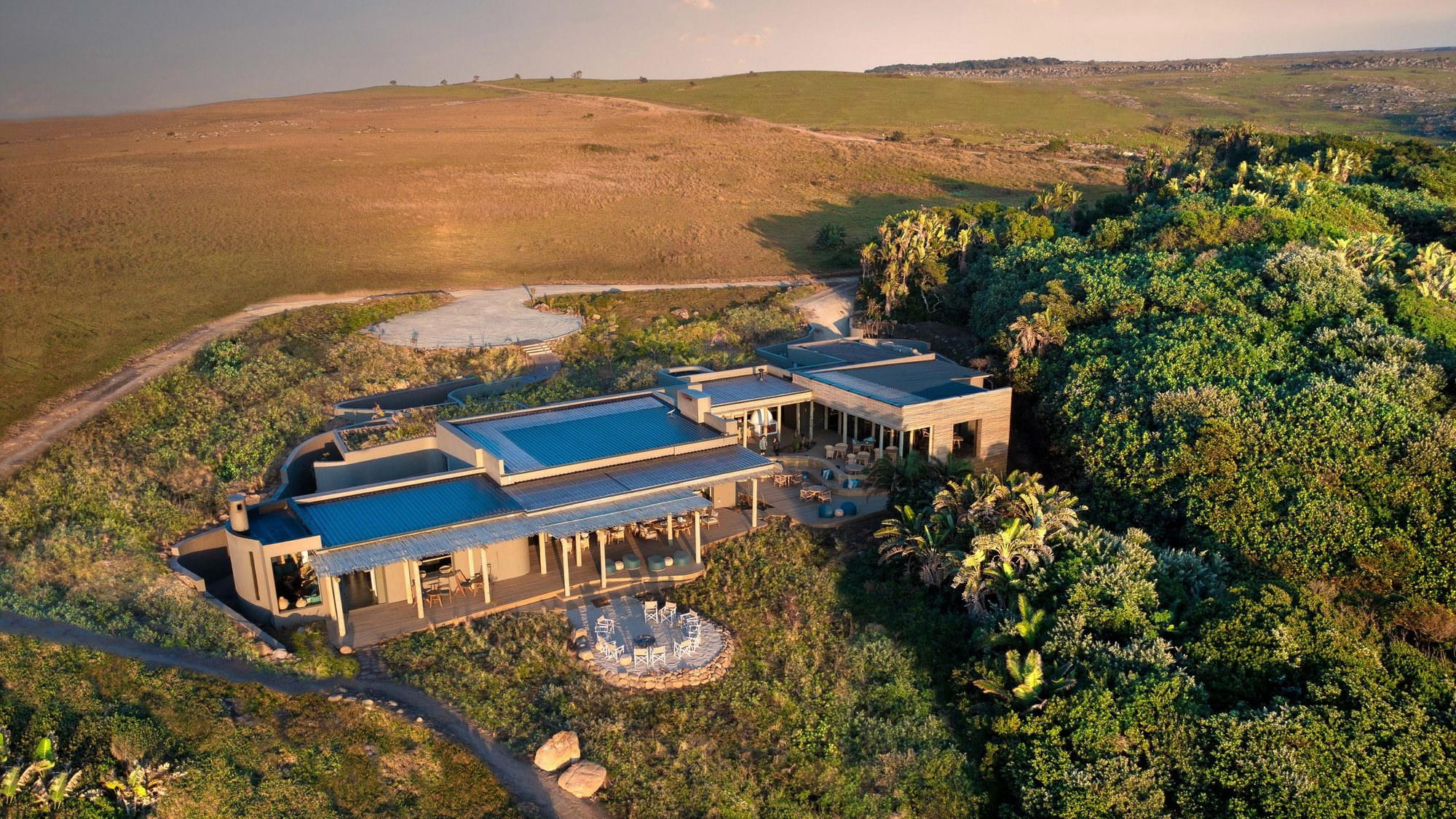
Where the Wild Coast Returns to Itself
South Africa's Wild Coast has a way of asserting itself on guests before they fully arrive. The road to Mkambati Nature Reserve narrows progressively, the signal drops away, and by the time GweGwe Beach Lodge comes into view above the shoreline, the distance from the country's urban centres feels structural rather than merely geographical. This is not a coastline softened for convenience. The cliffs are abrupt, the sea is open and frequently rough, and the landscape offers no concession to the expectation of resort polish. What it offers instead is something less common in South African hospitality: a property where the physical environment has been allowed to set the terms, and where the design responds accordingly.
Design as Landscape Dialogue
The nine rooms at GweGwe sit within a property that takes its palette directly from the terrain surrounding it. Interiors reference driftwood, sea grass, and stone, materials drawn from the immediate shoreline and coastal grasslands rather than imported from elsewhere. This is a specific design decision with consequences for atmosphere: the lodge does not feel installed onto its site so much as assembled from it. The distinction matters, because the Wild Coast's visual character is defined by the blurring of land and ocean, and the interior language of the rooms participates in that same blurring.
Every room has a direct ocean view, and the configuration of the spaces is arranged so that the sea remains in sight from both bed and bath. The private plunge pools and large decks extend that orientation outward, positioning guests between the interior and the open coastline rather than sheltering them from it. In the broader South African lodge category, this level of integration between interior design and natural site is most commonly found at properties operating in wilderness contexts with established conservation frameworks, such as Singita in Kruger National Park or andBeyond Phinda Forest Lodge. GweGwe applies that same principle to a coastal setting that has fewer precedents in the premium tier.
With nine rooms, the scale is deliberately limited. The lodge operates in the same small-footprint category as properties like Makanyane Safari Lodge or andBeyond Ngala Safari Lodge, where low capacity is a design feature rather than a limitation, shaping the density of the experience and the ratio of guests to landscape. At this scale, the architecture of a stay is quieter by default.
Land With a History
Understanding GweGwe's design requires understanding the ground it sits on. This stretch of Mkambati was returned to its original communities in 2004, following decades of forced removal under colonial and apartheid rule. The lodge is owned by a seven-village trust and operated in partnership with Natural Selection, a conservation-focused operator with a portfolio of low-impact properties across southern and East Africa. That ownership structure is not incidental to the experience of the place. It shapes what the property is for, how it relates to the surrounding communities, and why the design choices tend toward restraint and local material rather than imported luxury convention.
Community-owned models of this kind represent a distinct strand within southern African hospitality. Properties such as ! Xaus Lodge in the Kalahari operate within comparable frameworks, where the land's history of dispossession and return is part of the premise of the experience. These are not properties that treat heritage as decoration. The ownership history is the foundation, and the design follows from it.
The Wild Coast as Context
Mkambati Nature Reserve is one of the largest protected areas on the Eastern Cape coastline, and the Wild Coast more broadly remains one of South Africa's least developed coastal stretches. For guests arriving from the country's main hospitality hubs, Cape Town, with properties like Mount Nelson or the Hyatt Regency Cape Town, or Johannesburg, with options such as the African Pride Melrose Arch or Hyatt Regency Johannesburg, the shift in register is significant. The Wild Coast does not have the infrastructure those cities offer, and that absence is part of the proposition.
The coastline is characterised by river mouths, cliff edges, and grasslands that run to the sea, a physiography that is more dramatic than picturesque in the manicured sense. Properties positioned here are not competing on amenity density. They are competing on access to a specific kind of place, and GweGwe's nine rooms occupy one of the more direct points of access on this coast. Guests seeking comparable remoteness within South Africa's conservation estate might look at Bushmans Kloof in the Cederberg or Abelana River Lodge in Limpopo, though neither replicates the coastal specificity of this site.
Planning Your Stay
GweGwe Beach Lodge sits within Mkambati Nature Reserve in the Eastern Cape at postal address Nature Reserve, Mkambati, 4814. The lodge operates with nine rooms only, and the combination of low capacity, community-trust ownership, and Natural Selection's conservation model means availability moves quickly for the high season. Reservations are essential, and availability can be limited. Rates vary by room type and season. Guests with flexible timing have a broader window for access. The Wild Coast's most settled weather runs through the austral summer (November through March), though rainfall on this coast can arrive at any time of year.
Comparable Venues
Comparable venues nearby, for context on price, style, and recognition.
| Venue | Cuisine | Price | Awards | Notes |
|---|---|---|---|---|
| GweGwe Beach LodgeThis venue — the venue you are viewing | High-end boutique lodge inspired by local Mpondo traditions, blending into the Wild Coast wilderness. | $$$$ | Michelin 1 Key | Not listed |
| Shamwari Long Lee Manor | Restored Edwardian manor inspired by gracious living in nature | $$$$ | Michelin 1 Key | Shamwari Private Game Reserve |
| Nedile Lodge | luxury safari lodge | $$$$ | 5-Star | Welgevonden Game Reserve |
| Lion Sands River Lodge | Luxury safari lodge blending contemporary South African design with authentic bush atmosphere | $$$$ | Michelin 1 Key | Sabi Sand Game Reserve |
| The Manor House at Fancourt | Historic boutique manor house blending century-old heritage with modern eco-friendly luxury | $$$$ | Michelin 1 Key | Blanco |
| Sanbona | Multiple luxury lodges including restored farmhouse and tented camp in wildlife reserve | $$$$ | 5-Star | Barrydale |
Recognition history
Dated appearances from independent guides and award organizations, with the underlying list record or original source where available.
Michelin 1 Key
Michelin
At a Glance
- Scenic
- Rustic
- Quiet
- Intimate
- Cozy
- Romantic Getaway
- Family Vacation
- Weekend Escape
- Beachfront
- Panoramic View
- Wi Fi
- Pool
- Spa
- Fitness Center
- Restaurant
- Beach Access
- Waterfront
- Wi Fi
- Pool
- Spa
- Fitness Center
- Restaurant
- Beach Access
Relaxed barefoot luxury with natural light, ocean views, and a serene wilderness atmosphere blending local Mpondo culture.