Good Hotel Antigua


Michelin Selected · Design Hotels Member
The only contemporary hotel in Antigua Guatemala, Good Hotel occupies a reclaimed colonial mansion on Calle del Hermano Pedro with Dutch-inspired interiors that set it apart from the city's colonial-reproduction norm. The property operates as a social enterprise, channelling revenue toward NGOs supporting local children. A considered choice for travellers who prefer design clarity over heritage maximalism.

Pearl is the En Primeur Club membership app — saves, bookings, and concierge access live there. Same editors, same standards.
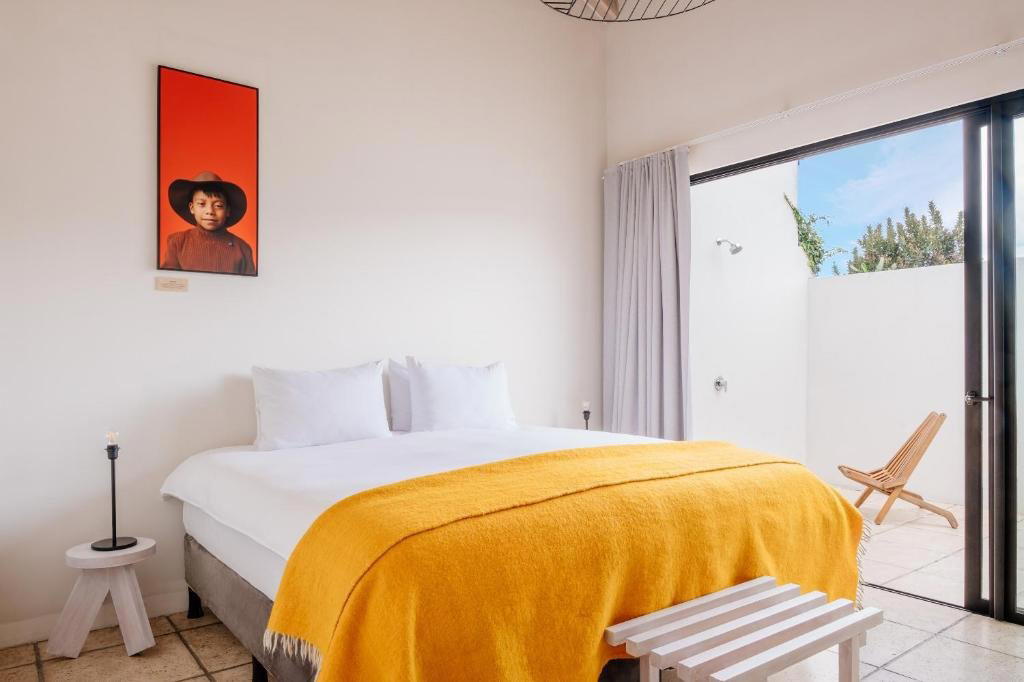
A Colonial Mansion Rethought for the Contemporary Traveller
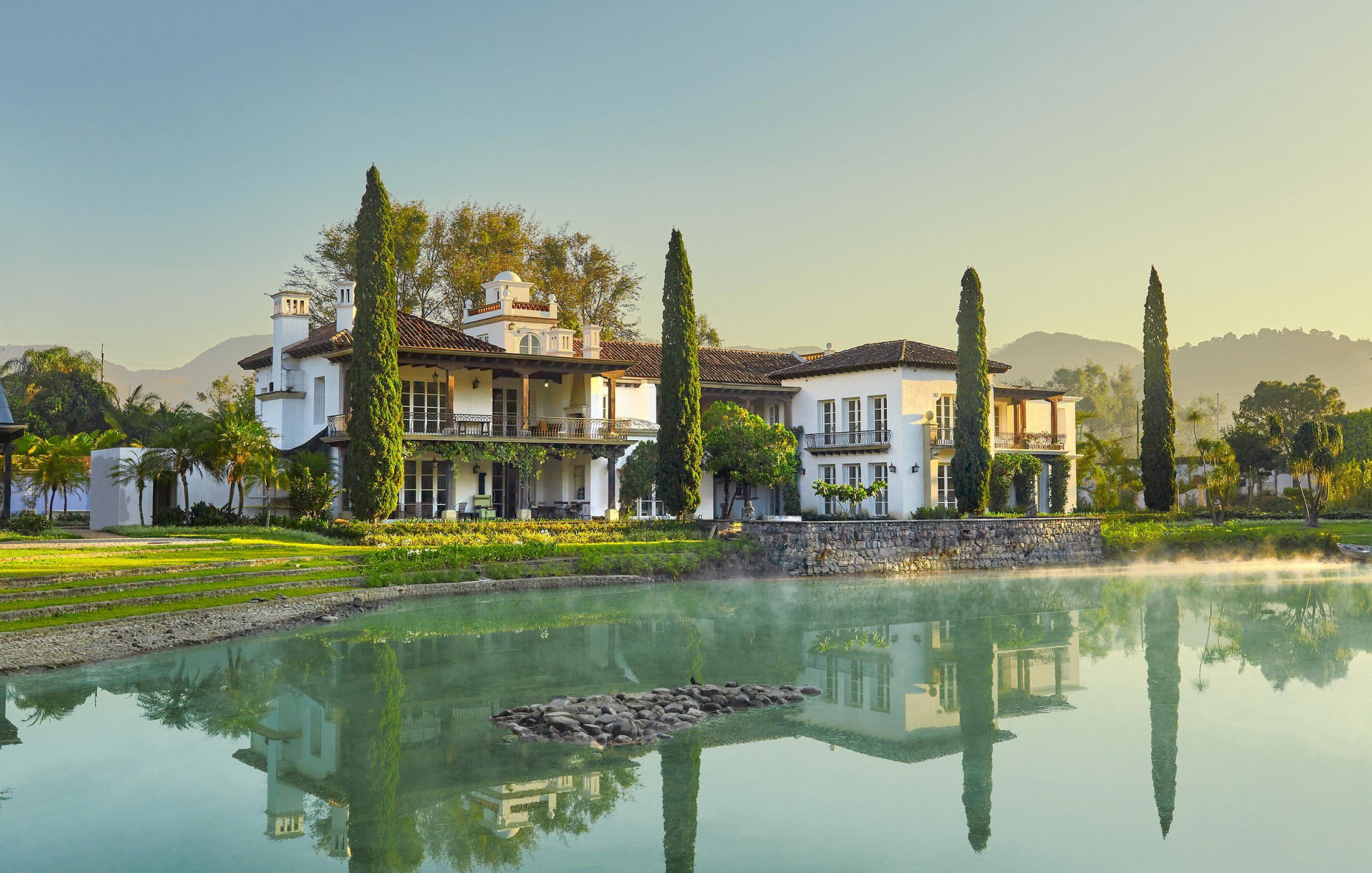
Antigua Guatemala operates on a particular kind of visual logic: cobblestone streets, ochre-and-terracotta facades, volcanoes framing the skyline at every turn. The city's architectural character has been preserved so deliberately that most of its hotels feel like extensions of the colonial fabric, converting former convents and private residences into guesthouses that honour the past more than they question it. Good Hotel Antigua takes a different position. Occupying a once-private mansion on Calle del Hermano Pedro, the property introduces a Dutch-inspired design sensibility into a streetscape where that choice is genuinely conspicuous. It is, by its own acknowledgement, the only contemporary hotel in the city, and that distinctiveness is less a marketing claim than a simple architectural fact.
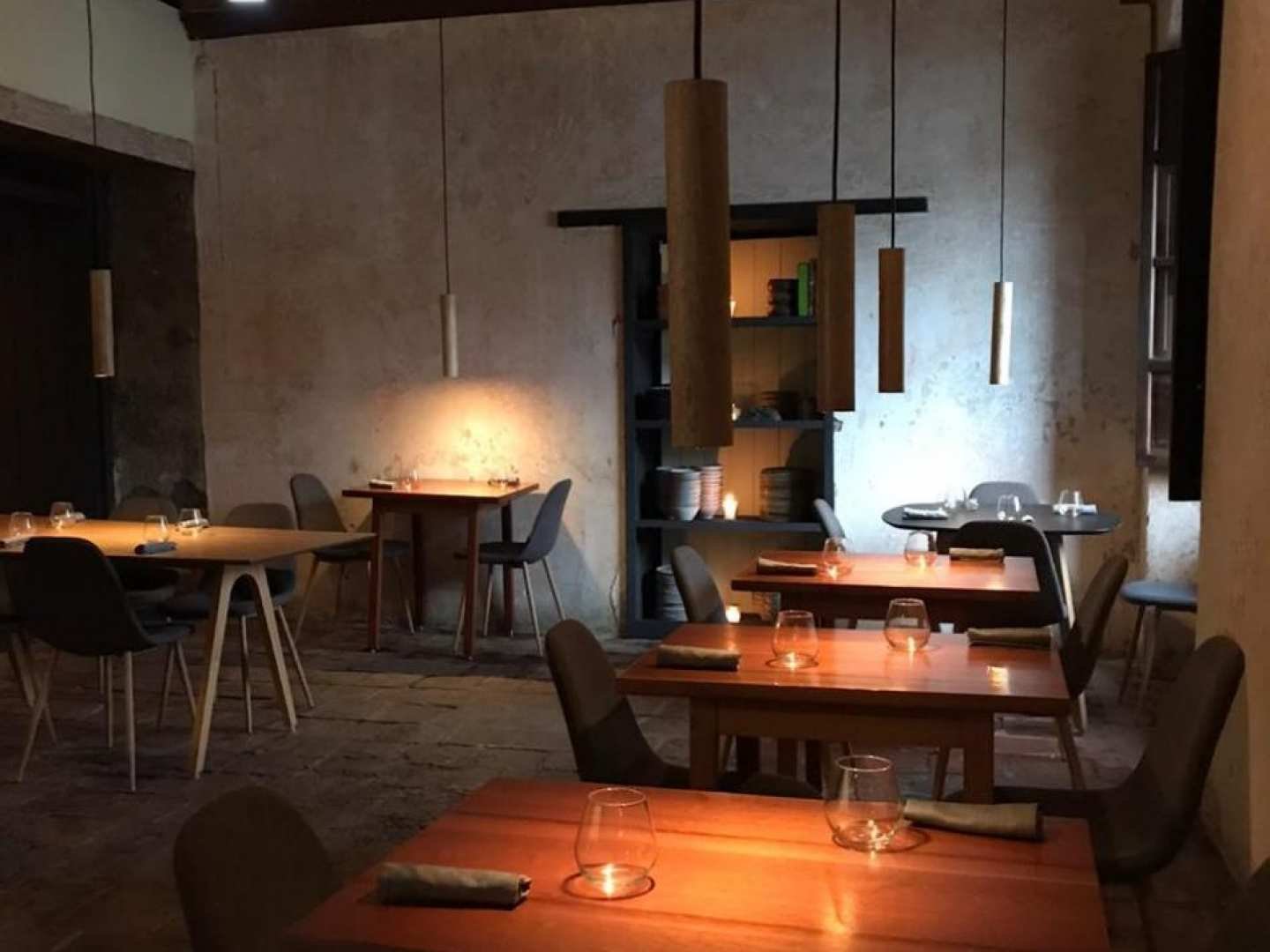
The tension between the building's colonial bones and its modern interior treatment defines the experience of staying here. Spanish Colonial mansions typically organise themselves around a central courtyard, with rooms arranged along covered walkways and proportions built for shade and ceremony. Good Hotel works within that inherited structure while introducing a cleaner, more restrained interior language: considered furniture choices, pared-back surfaces, and a design sensibility that reads closer to Amsterdam than to the Captaincy General of Guatemala. For travellers accustomed to colonial conversions across Latin America, where the prevailing instinct is to amplify the antique drama, this approach reads as a deliberate editorial choice.
What Contemporary Design Means in This Context
In cities where heritage conservation is both a UNESCO obligation and a genuine civic value, contemporary hotel design exists in conversation with constraint. Antigua's historic centre was designated a UNESCO World Heritage Site in 1979, and new construction is tightly controlled. This means that hotels operating within the colonial grid cannot simply rebuild to reflect their aesthetic ambitions; they must work with what exists. The interest in Good Hotel Antigua's design lies precisely in how it handles this negotiation: the mansion's structure remains, but the interior has been recalibrated toward clarity and restraint rather than reproduction or pastiche.
Dutch-inspired design, as applied here, carries certain consistent signals: functional elegance, quality of natural light, a preference for crafted simplicity over ornament. In a city where much of the accommodation category leans on exposed stone, hand-painted tiles, and heavy wood furniture, this represents a genuine departure. The comparison is not with properties like Posada del Angel in Antigua, which leans into the colonial tradition with its ornate interiors, but with a smaller cohort of internationally minded boutique hotels that bring an outside design grammar into a heritage setting.
Social Mission as Structural Commitment
Good Hotel Antigua belongs to the Good Hotel group, a social enterprise model that channels revenue toward NGOs supporting local children. This is not ancillary to the property's identity; it is the founding premise. Across the broader hospitality sector, social mission has increasingly been used as a brand differentiator, sometimes with more marketing substance than operational depth. The Good Hotel model inverts the usual priority: the charitable commitment came first, and the hotel business was built to fund it. For travellers weighing accommodation choices in a city where community impact is a meaningful consideration, the structure of the commitment matters more than its presence in a brochure.
Antigua itself sits within a Guatemalan tourism economy that, at its better moments, creates genuine economic channels into Indigenous and local communities. The city draws visitors for its Spanish language schools, its proximity to active volcanoes including Acatenango, and its concentration of colonial architecture. Hotels that operate within a social enterprise framework occupy a specific position in that economy, distinct from the luxury enclave model seen at properties like Casa Palopó in Santa Catarina Palopó, which targets a different price tier and visitor profile entirely.
Where This Property Sits in the Regional Context
Guatemala's premium accommodation market fragments geographically across Antigua, Lake Atitlán, and the Petén region near Tikal. Each zone attracts a different traveller archetype and supports different hotel formats. Antigua draws the broadest mix: language students, cultural tourists, short-break visitors from Guatemala City, and an increasing number of international travellers using the city as a base for volcano and coffee-region itineraries. The hotel infrastructure that serves this range is correspondingly uneven, running from basic guesthouses to restored colonial properties with serious design investment.
Within the Antigua tier, Good Hotel occupies an interesting middle position: contemporary in design and internationally minded in its mission, without sitting at the price ceiling occupied by the most expensive colonial conversions. For reference, Lake Atitlán properties such as Bolontiku Boutique Hotel and Spa in San Andres operate in a different micro-market, with lake access and a wellness focus that attracts a distinct booking profile. Further afield, La Lancha in Tikal sits within a jungle setting that makes it incomparable in physical terms.
Planning a Stay
Antigua Guatemala sits roughly 45 kilometres west of Guatemala City's La Aurora International Airport, a journey that takes between 45 minutes and two hours depending on traffic conditions on the Calzada Roosevelt and the Pan-American Highway. Most travellers arrange private transfers, particularly on arrival, when negotiating unfamiliar roads with luggage is a practical concern. The city itself is walkable at its core, with the central park, principal churches, and main restaurant streets all within easy reach of Calle del Hermano Pedro.
Booking directly through the hotel is advisable for any questions about availability and current rates; the property's website and contact details are best confirmed through current booking platforms, as specific operational information is subject to change. The dry season, roughly November through April, brings the most consistent conditions and peak visitor numbers; the wet season from May through October sees fewer crowds and greener surroundings, with rain typically concentrated in afternoon hours. For a broader orientation to where Good Hotel sits within the city's eating, drinking, and neighbourhood character, see our full Antigua Guatemala restaurants guide.
The Case for This Kind of Hotel
Premium hotel markets globally have shifted toward properties that offer a legible design point of view and an ownership model that carries some meaning beyond room revenue. In destinations as aesthetically saturated as Antigua, where colonial grandeur is the default offer, the hotel that breaks the pattern earns attention by contrast alone. Good Hotel Antigua's contemporary Dutch-influenced interiors, housed inside a reclaimed colonial mansion and structured around a social enterprise commitment, represent a coherent position in a market that otherwise defaults to atmospheric reproduction.
Travellers who gravitate toward properties with a stated purpose, and who prefer clean design to heritage maximalism, will find this an intelligible choice in Antigua. Those seeking the full colonial drama, the painted courtyards, the candlelit heavy-furniture atmosphere, will find it at properties like Posada del Angel and others that foreground that tradition. The two approaches are less competing and more complementary: different answers to what a stay in a colonial city can and should feel like.
Comparable Spots, Quickly
Comparable venues nearby, for context on price, style, and recognition.
| Venue | Cuisine | Price | Awards | Notes |
|---|---|---|---|---|
| Good Hotel AntiguaThis venue — the venue you are viewing | Contemporary boutique in restored colonial mansion | $100–200 | Michelin Selected · Design Hotels Member | Not listed |
| Good Hotel Antigua | Contemporary boutique in restored colonial mansion | $100–200 | Michelin Selected · Design Hotels Member | Historic Center |
| Bolontiku Boutique Hotel and Spa | Mayan-inspired lakeside sanctuary blending ancient spirituality with modern luxury | Not listed | 1 Michelin Key · Small Luxury Hotels of the World Member | Punta de Piedra Nitúm |
| Casa Palopó | Culturally inspired boutique with hillside villa perch | Not listed | Michelin 1 Key | Santa Catarina Palopó |
| Posada del Angel | Colonial-era boutique hotel with modern comforts and old-world charm, positioned as an intimate hideaway for informed travelers. | $200–300 | 1 Michelin Key | Antigua Guatemala city center |
| Bolontiku Hotel Boutique & Spa | Mayan-inspired luxury boutique resort seamlessly blended with rainforest and lake | Not listed | 1 Michelin Key · Small Luxury Hotels of the World Member | San Andres |
Recognition history
Dated appearances from independent guides and award organizations, with the underlying list record or original source where available.
Michelin Selected
Michelin
Design Hotels Member
Design Hotels
Continue exploring
More in Antigua Guatemala
Hotels in Antigua Guatemala
All hotels in Antigua Guatemala →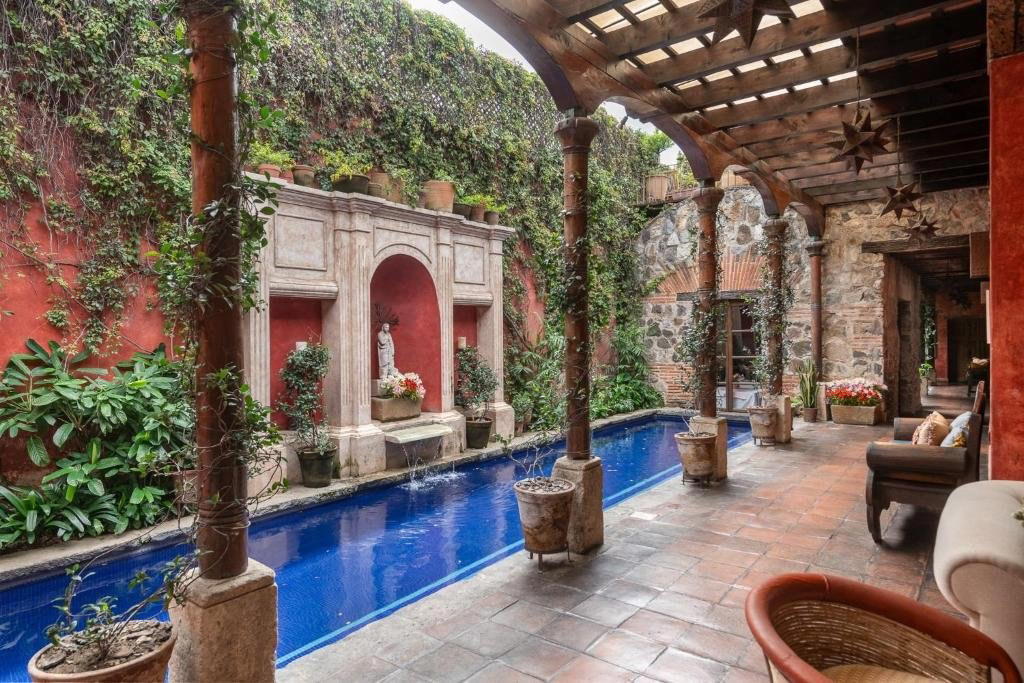
Bars in Antigua Guatemala
Browse all →
Details
- Minimalist
- Cozy
- Quiet
- Modern
- Romantic Getaway
- Weekend Escape
- Garden
- Terrace
- Historic Building
- Wi Fi
- Restaurant
- Room Service
- Concierge
- Garden
- Garden
- Wheelchair Accessible
Minimalist design with natural light, lush tropical garden courtyard, peaceful and serene atmosphere praised for tranquility.