Element by Marriott Boise Downtown
Element by Marriott Boise Downtown belongs to Boise’s practical urban hotel tier: useful for travelers who want a downtown base rather than a resort narrative. With no published EP Club rating, award data, room count, or design record in the database, the smarter read is comparative: assess it against Boise’s design-led independents and central business hotels before committing.
 Discover on Pearl
Pearl is the En Primeur Club membership app — saves, bookings, and concierge access live there. Same editors, same standards.
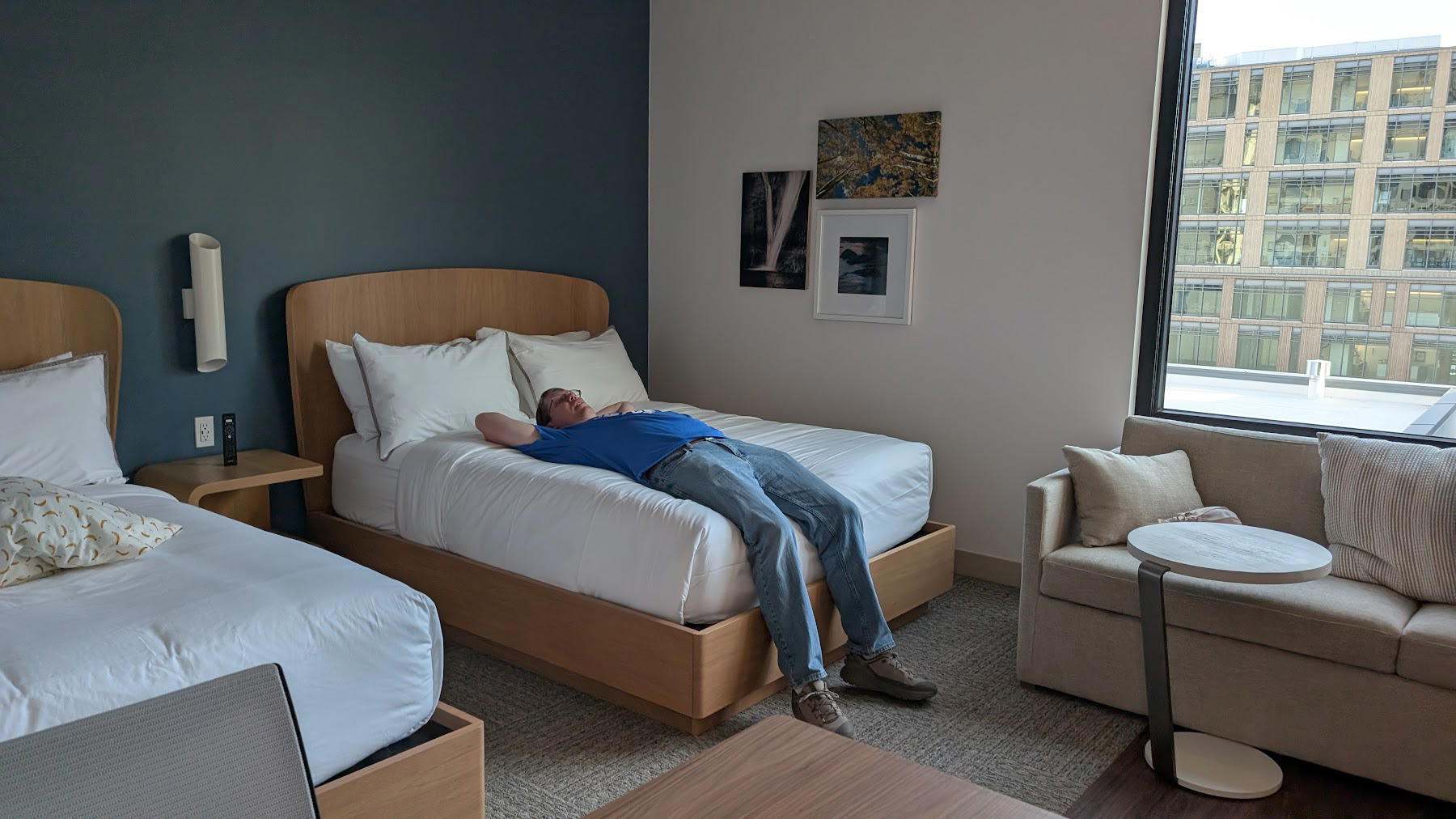
Downtown Boise Through a Hotel Lens
Approaching a downtown hotel in Boise usually means reading the city at street level first: low-rise blocks, government and business addresses, the pull of the Boise River corridor, and a compact core where restaurants, bars, offices, and event venues sit closer together than in larger Western capitals. That scale matters. A hotel here is rarely selling isolation or spectacle. It is selling position, efficiency, and a degree of architectural restraint that fits a city still balancing civic formality with outdoor-town informality.
Element by Marriott Boise Downtown enters that conversation as a practical urban lodging proposition rather than a grand hotel statement. The record does not list an address, star rating, awards, website, or phone number, so the editorial read has to stay disciplined. What can be said with confidence is that Boise’s hotel market has become more segmented: branded downtown hotels serve travelers who prioritize predictability and access, while smaller properties trade on adaptive reuse, local texture, and a more specific sense of place.
That distinction is useful because Boise is not a city where every central hotel answers the same brief. AC Hotel Boise Downtown sits in the same broad downtown-business category, where brand standards and location tend to matter more than narrative flourish. Hotel 43, Modern Hotel, The Avery Hotel, and The Sparrow suggest a different lane: smaller, more personality-led stays where the building or renovation often carries part of the appeal. Element by Marriott Boise Downtown should be judged against the former first, then compared with the latter only if design identity is the deciding factor.
What the Building Has to Do in Boise
Architecture in Boise hospitality tends to work under quieter pressure than in coastal luxury markets. There is less demand for theatrical arrival and more demand for a hotel that makes sense within a walkable, working downtown. The city’s appeal is split between public institutions, university energy, foothills access, river paths, and a dining scene that has grown beyond basic regional comfort. A good central hotel needs to handle all of that without pretending the city is larger, denser, or glossier than it is.
For a branded extended-stay or select-service property, the design test is specific: public spaces need to feel organized rather than ornamental, guest rooms need to support longer or work-heavy stays, and the ground-floor experience should connect cleanly to the street. The available record for Element by Marriott Boise Downtown does not confirm room layouts, amenities, lobby programming, food service, or materials. That absence is not a flaw in itself, but it changes the kind of confidence a traveler can have before booking. The hotel can be positioned as a sensible downtown candidate, not as a documented design destination.
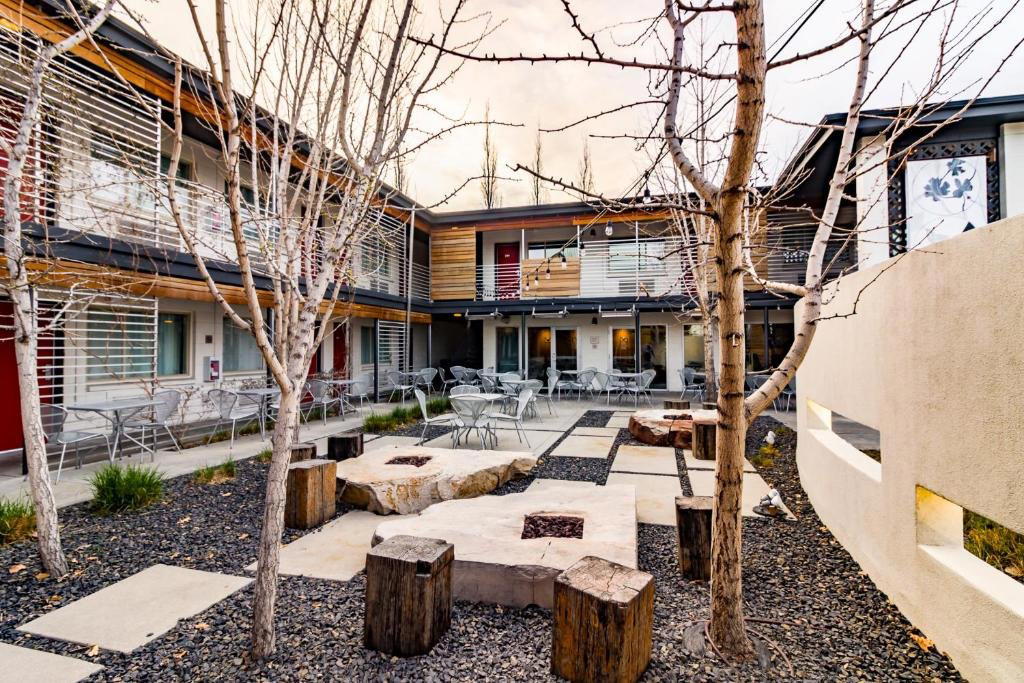
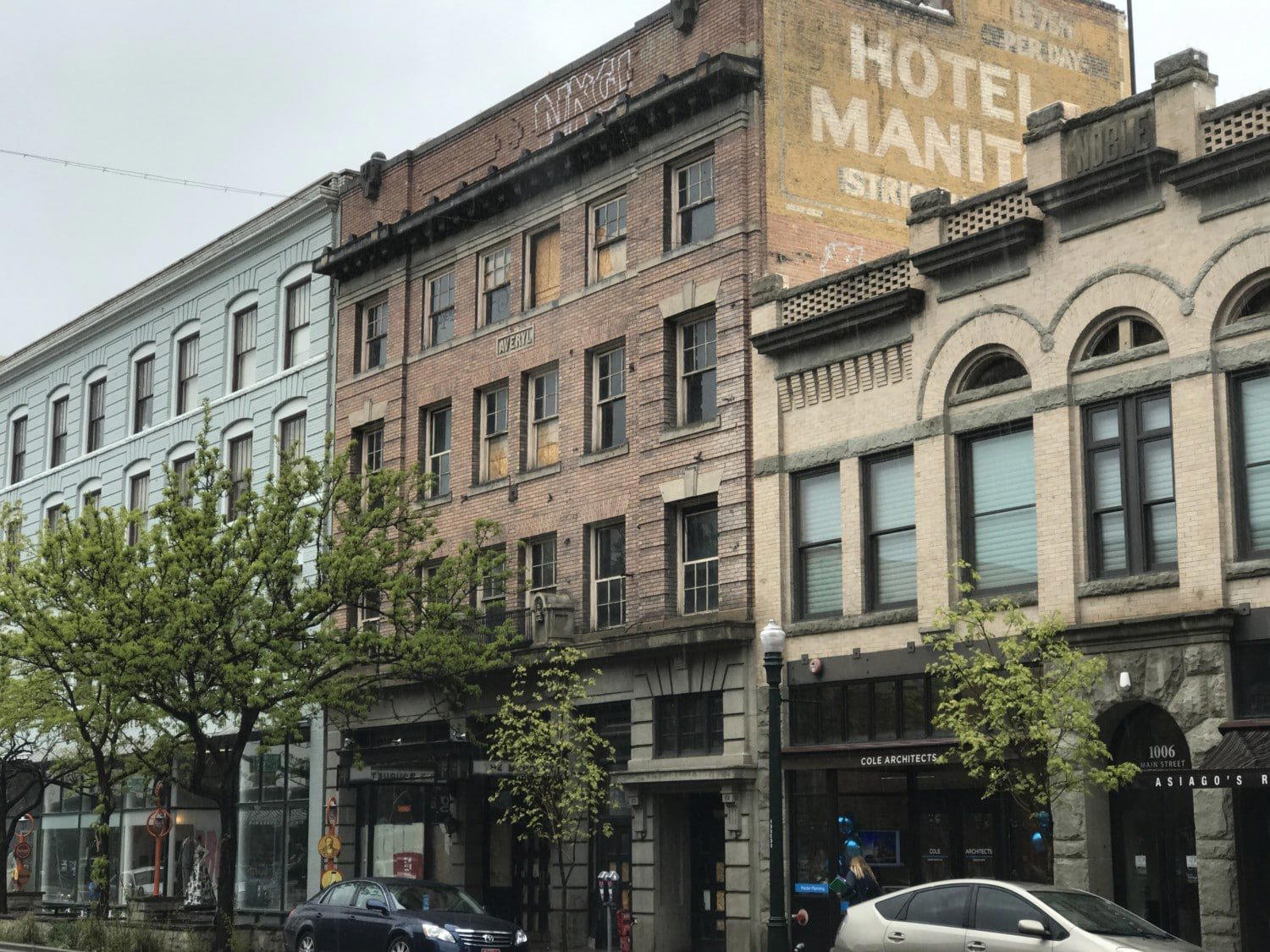
Boise’s smaller hotels sharpen that distinction. A motel conversion such as Modern Hotel invites discussion about adaptive reuse and local cultural tone. A property such as The Avery Hotel brings the reader into questions of historic fabric and central-city revival. A branded downtown property, by contrast, often wins on clearer expectations: standardization, operational consistency, and fewer surprises. For some trips, that is the smarter choice. For others, it may feel too neutral.
The Downtown Hotel Set: Predictability Versus Local Texture
Boise’s premium-hotel conversation is not built around palatial scale. It is built around fit. Business travelers, university visitors, road-trippers extending a Western itinerary, and diners using Boise as a compact weekend city all need different things from the same few blocks. The practical traveler may value a recognizable brand and a central base. The design-led traveler may give up a familiar format to gain a stronger architectural or neighborhood story.
Element by Marriott Boise Downtown belongs to the side of the market where predictability is the point. That does not make it lesser; it makes it narrower. In cities with young hotel scenes, branded properties often provide the baseline against which independents define themselves. The independents usually carry more editorial interest. The branded hotel usually carries less uncertainty. The decision is less about taste than trip structure.
For a short stay built around restaurants and bars, the broader Boise edit matters as much as the hotel. Our full Boise restaurants guide maps the dining side of the city, while Our full Boise bars guide helps separate cocktail-focused rooms from casual drinking addresses. Travelers building a broader itinerary can cross-check Our full Boise hotels guide, Our full Boise wineries guide, and Our full Boise experiences guide rather than treating the hotel as the entire trip.
Design Expectations Without Overclaiming
The design angle here requires caution. The record does not provide an architect, interior designer, opening date, renovation history, materials palette, or public-space description. That means any claim about a signature lobby, a notable facade, local art, skyline views, or specific room styling would be invented. This is a downtown branded hotel in a market where location and functional design usually carry more weight than high-concept hospitality theater.
That distinction separates Boise from luxury markets where the hotel is the destination. At Amangiri in Canyon Point, architecture is inseparable from desert landform and privacy. At Post Ranch Inn in Big Sur, the built environment frames coastal seclusion. At Four Seasons at The Surf Club in Surfside, heritage and resort culture shape the entire stay. Boise’s downtown hotels operate on a different scale and should not be evaluated by the same criteria.
A more relevant comparison is with American city hotels that use architecture to clarify purpose. The Fifth Avenue Hotel in New York City competes in a design-saturated market where visual identity is part of the rate logic. Raffles Boston in Boston works in a high-service urban-luxury bracket. Element by Marriott Boise Downtown has no published database evidence placing it in that comparable set. Its design value, for the reader, should be measured by usability: ease of arrival, comfort for work, access to downtown, and how little friction it adds to a Boise stay.
Who This Works For
The clearest audience is the traveler who wants a downtown Boise base with a familiar lodging framework. That may mean a work trip, a university-related visit, a weekend with restaurant reservations, or a stop that needs city access before continuing into Idaho’s outdoor regions. In that context, the lack of published awards or star rating is not disqualifying. It simply means the hotel should not be selected for prestige signals.
Travelers seeking a strong sense of local design should compare it with The Sparrow and other smaller Boise properties before deciding. Travelers seeking classic grand-hotel ceremony will need to look outside the city’s dominant hotel vocabulary or consider entirely different markets, from The Beverly Hills Hotel in Los Angeles to Hôtel de Paris Monte-Carlo in Monte Carlo or Badrutt's Palace Hotel in St. Moritz. Those comparisons are intentionally distant: they show why Boise should be read on its own terms rather than forced into a luxury language that does not fit the city.
For travelers combining Boise with a wider Western or food-led itinerary, the hotel can function as a clean urban hinge between stronger destination stays. A trip might pair Boise with ranch country at Sage Lodge in Pray, wine-country lodging such as Auberge du Soleil in Napa, or culinary lodging at SingleThread Farm Inn in Healdsburg. In that sequence, the Boise hotel’s job is not to dominate the itinerary. It should make the city portion easy.
Planning the Stay
Planning should start with verification through the hotel’s official channels or a trusted booking platform. Confirm the exact downtown location, nightly rate, cancellation terms, included amenities, and any fees before committing. This is especially relevant around Boise State events, state-government calendars, concert dates, and high-demand weekends, when central rooms can tighten across the city.
Room selection should be handled pragmatically. Without confirmed room-category data, the safest approach is to choose based on trip length and work needs: more space for multi-night stays, a quieter placement if sleep matters, and clear confirmation of bed type before arrival. If a kitchen or extended-stay setup is important, verify the details directly rather than assuming based on the brand name. The same applies to parking and breakfast; both can materially change the value of a downtown hotel stay.
For travelers whose hotel choice is design-led, the better method is comparative browsing. Look at the Boise hotel set side by side, then decide whether consistency or local character matters more. For a broader design vocabulary beyond Boise, properties such as Troutbeck in Amenia, Kona Village, A Rosewood Resort in Kailua Kona, Canyon Ranch Tucson in Tucson, and Aman Venice in Venice show how dramatically hotel architecture changes when wellness, resort culture, history, or urban palazzo life becomes the organizing idea. Boise asks a simpler question: does the hotel help the city work?
Comparable Venues Nearby
Comparable venues nearby, for context on price, style, and recognition.
| Venue | Cuisine | Price | Notes |
|---|---|---|---|
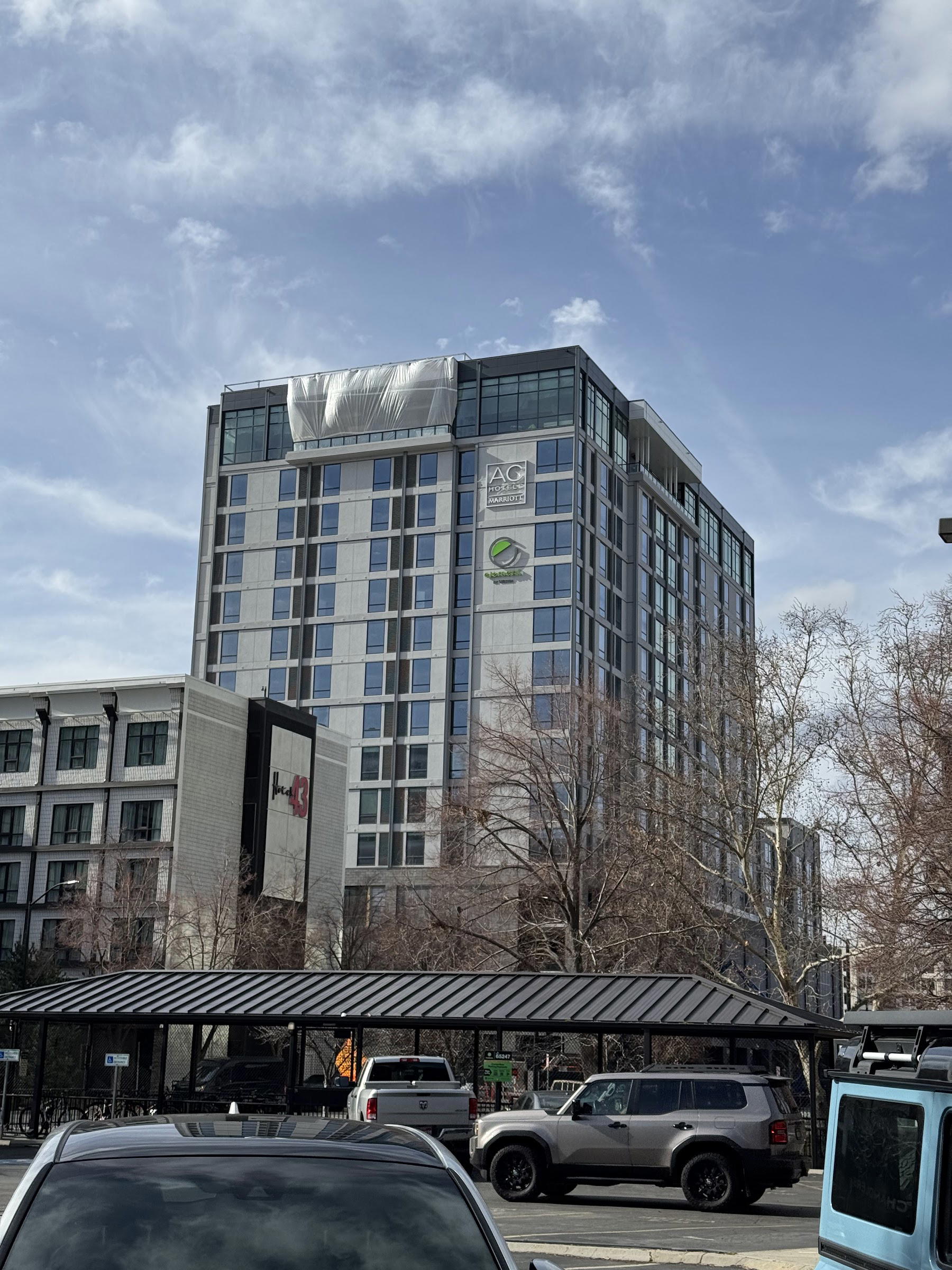
| Element by Marriott Boise DowntownThis venue — the venue you are viewing | Upscale, extended-stay urban hotel sharing a dual-branded tower with AC Hotel, oriented to corporate, relocation, and long-stay guests in downtown Boise.[10][12] | $$$ | |
| AC Hotel Boise Downtown | Large dual-branded urban Marriott complex combining short-stay design hotel and extended-stay suites with extensive meeting and event facilities. | $$$ | Downtown Boise |
| The Sparrow | Revived and repurposed historic building with distinctly Boise feel. | $$ | Downtown Boise |
| Modern Hotel | Mid-century modern boutique motor inn | $$ | Linen District |
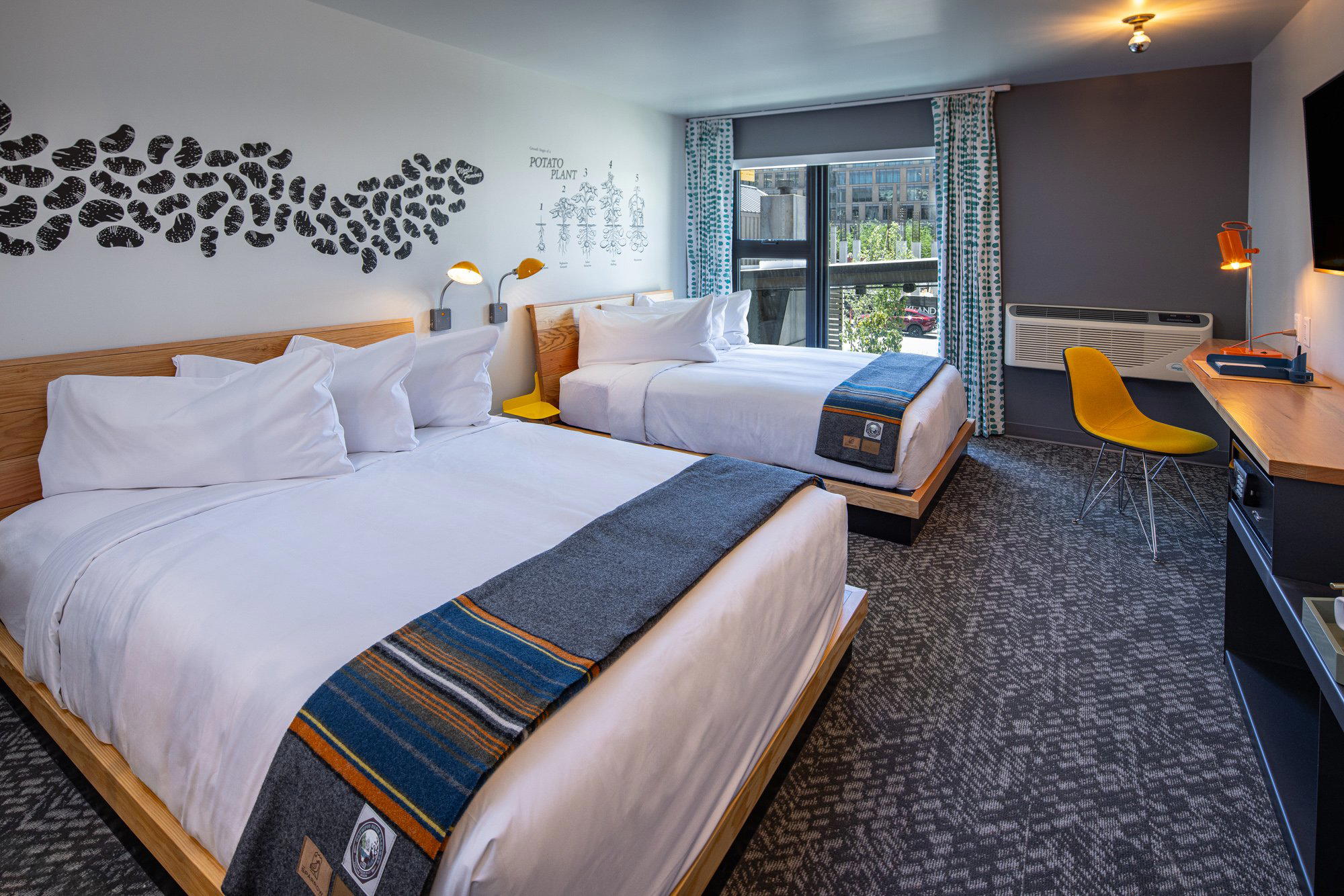
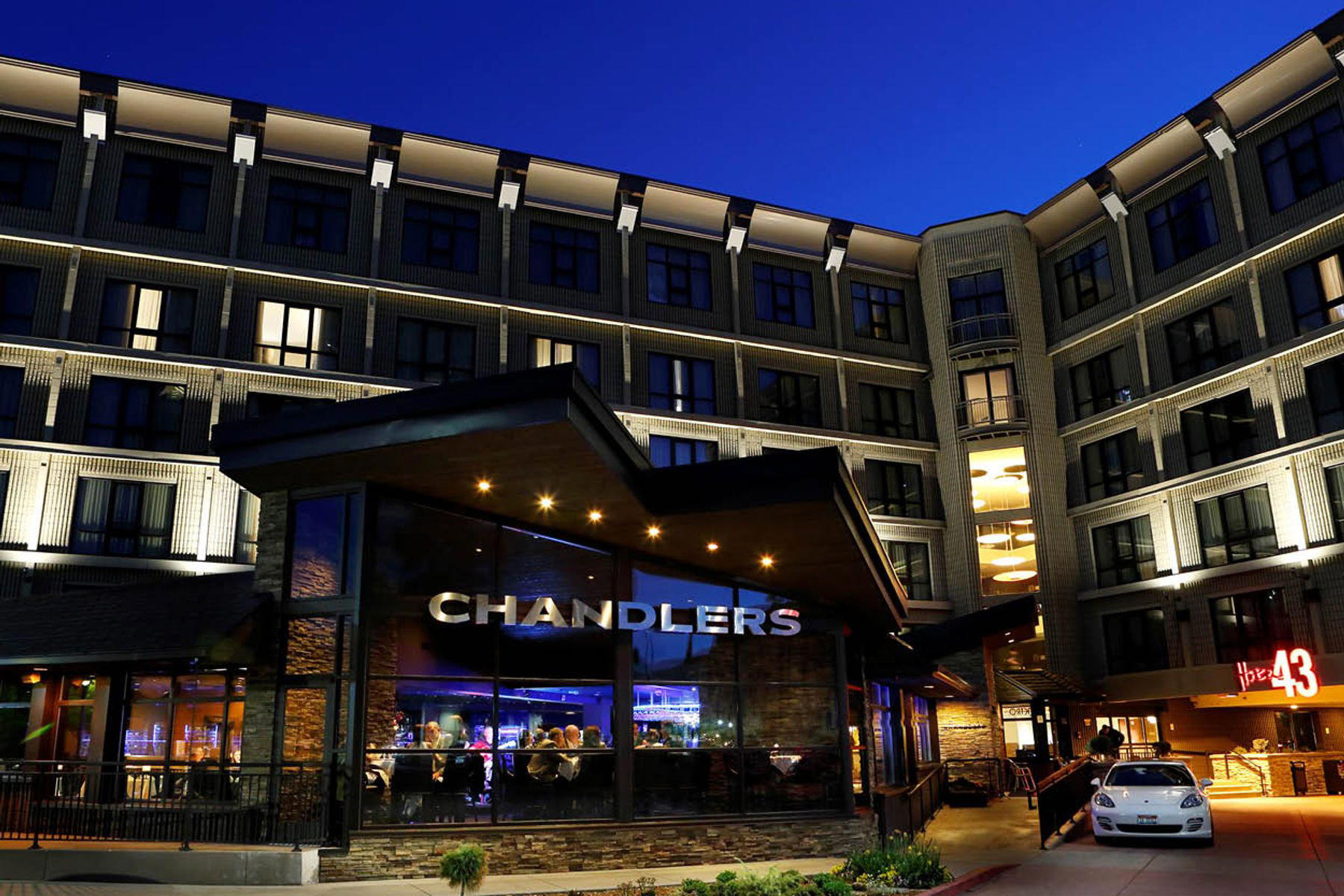
| Hotel 43 | Contemporary urban boutique hotel with upscale finishes and locally-inspired design elements positioned as a downtown destination. | $$$ | Downtown Boise |
| The Avery Hotel | Historic boutique hotel reimagined with old-world charm and contemporary comfort. | $$$$ | Downtown Boise |
At a Glance
- Modern
- Minimalist
- Scenic
- Trendy
- Business Trip
- Family Vacation
- Weekend Escape
- Group Retreat
- Panoramic View
- Design Destination
- Terrace
- Wifi
- Fitness Center
- Business Center
- Ev Charging
- Skyline
- Mountain
- Street Scene
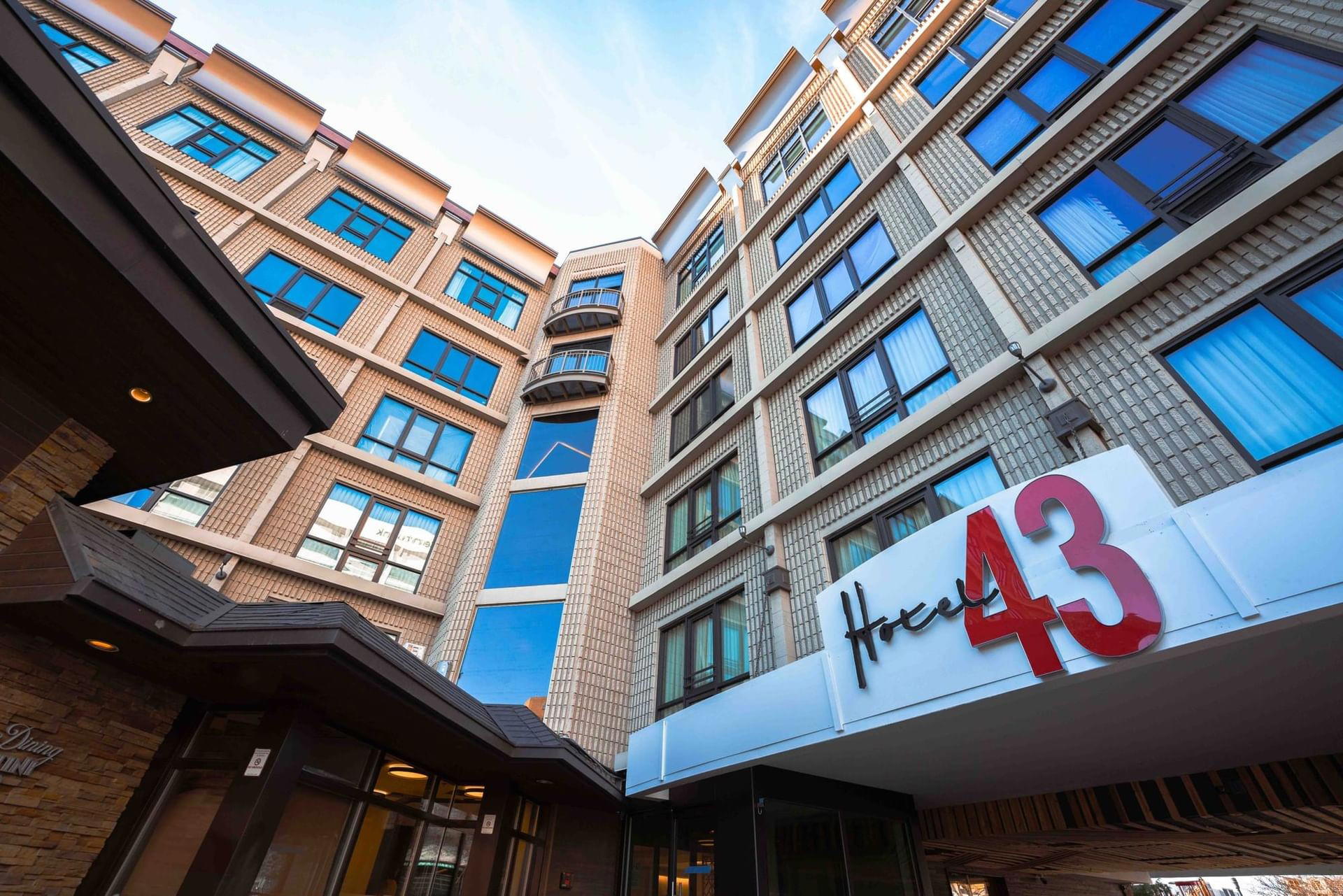
A contemporary, nature-inspired extended-stay hotel with bright, open public spaces, abundant natural light, and a calm, wellness-focused atmosphere connected to the energy of downtown Boise and a dramatic rooftop dining level shared with the co-located AC Hotel.[10][8][1]