Cougar Ridge Lodge

At the gateway to Capitol Reef National Park, Cougar Ridge Lodge trades on landscape as architecture: luxury casitas and a central lodge positioned against southern Utah's red rock formations, where the built environment exists in deliberate conversation with the terrain. For travelers prioritizing access to backcountry and a grounded sense of place over resort-scale amenities, Torrey delivers a specific kind of remoteness that few lodges in the American Southwest can match.
Pearl is the En Primeur Club membership app — saves, bookings, and concierge access live there. Same editors, same standards.
- Address
- 650 E Cougar Rdg Rd, Torrey, UT 84775
- Phone
- +1 435-680-9170
- Website
- cougarridge.com
- Directions
- Get directions
 Saves & bookings on Pearl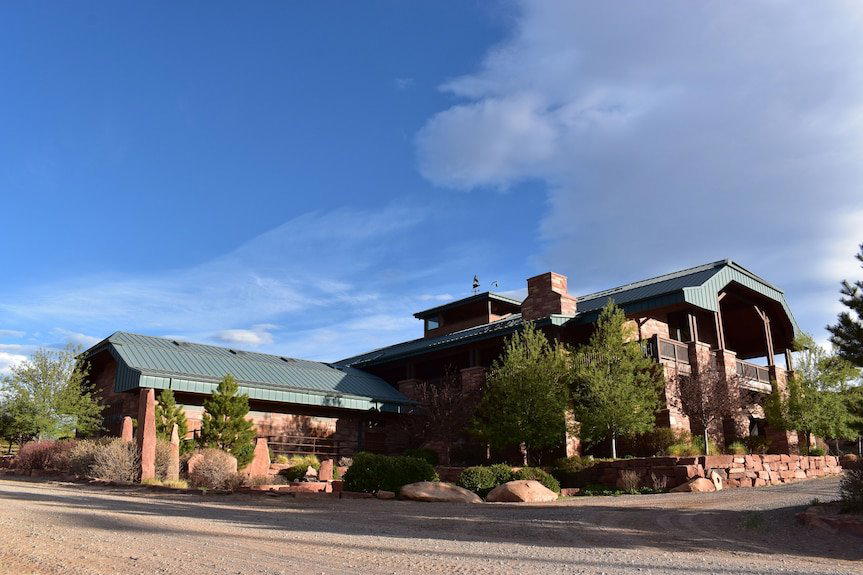
Where the Built Environment Meets the Colorado Plateau
The American Southwest has developed two distinct categories of high-end lodging: the destination resort that treats landscape as backdrop, and the smaller property where the physical environment is central to the entire experience. Cougar Ridge Lodge, set at 650 E Cougar Ridge Road in Torrey, Utah, falls decisively into the second category. The lodge and its casitas sit at the edge of Capitol Reef National Park. The built structures here respond to it.
Torrey's location shapes the stay. The town sits at roughly 6,800 feet in elevation at the western entrance to Capitol Reef, placing guests within immediate reach of the park's Waterpocket Fold, a 100-mile long wrinkle in the Earth's crust that remains among the more visually arresting geological features in the continental United States. This is not incidental to the lodge's design premise; it is the premise. Properties operating in this tier of the Southwest, Amangiri in Canyon Point and Ambiente, A Landscape Hotel in Sedona, treat the surrounding geology as a collaborator rather than a view.
Casitas, a Lodge, and the Logic of Low-Density Design
The accommodation format at Cougar Ridge follows a model common in the premium wilderness segment: dispersed casita units anchored by a central lodge structure. The casita format carries specific architectural advantages in high-desert settings. Individual units, separated by distance rather than corridor walls, allow each guest space to maintain its own relationship with the surrounding terrain. Privacy is a byproduct of the format rather than a feature that needs to be engineered in.
This structural approach places Cougar Ridge in a peer group of properties that use low-density footprints as their primary luxury signal, including Post Ranch Inn in Big Sur and Sage Lodge in Pray. The central lodge at Cougar Ridge functions as a communal anchor, while preserving the sense of each unit existing in its own piece of landscape.
Southern Utah's high desert produces exceptionally clear night skies. At Torrey's elevation and distance from major light-pollution sources, the star density overhead on a clear night is measurable in ways that matter to guests who have spent weeks in urban hotel rooms. This is the kind of detail that properties like Cougar Ridge do not need to manufacture; the latitude and geography deliver it without intervention.
Capitol Reef as the Property's True Amenity
The premium wilderness lodge category has evolved significantly in the past decade. Properties that once traded primarily on interior finish quality now compete on access, to backcountry, to guided experiences, to terrain that guests cannot reach independently without considerable local knowledge. Cougar Ridge's position at the gateway to Capitol Reef places it in a strong starting position for that competition. The park's trail network spans designated routes ranging from short canyon walks to multi-day backcountry itineraries.
The Waterpocket Fold specifically offers a grade of geological exploration that has no equivalent in the more trafficked parks of the Southwest. Grand Canyon and Zion absorb millions of annual visitors; Capitol Reef receives a fraction of that traffic, which means the backcountry experiences available from Torrey tend to operate at a quieter, more immersive register. For the lodging guest, this translates directly into the quality of time spent outside. The contrast with busier parks such as Zion makes Torrey's positioning clear.
This access-led model aligns Cougar Ridge with properties like Blackberry Farm in Walland and Alpine Falls Ranch in Superior, where the surrounding landscape is the primary driver of the stay rather than an attractive amenity supplementary to a restaurant or spa program. The comparison with Amangani in Jackson Hole is also instructive: both properties position themselves as serious launch points for landscape-grade experiences, not simply scenic retreats.
Planning a Stay: Practical Orientation
Torrey sits approximately five hours by road from Salt Lake City and roughly four hours from Las Vegas, making it accessible from two major airline hubs without requiring a connecting flight to a regional airport. The town has limited commercial infrastructure, which is precisely the point, so guests arriving without a vehicle will find their options for independent movement around the park constrained. A rental car from either Salt Lake City or Las Vegas is the standard approach, and it doubles as useful transport for the scenic drive through Capitol Reef itself, which the National Park Service designates as a 25-mile scenic corridor through the park's core.
Seasonality matters here more than at urban properties. Spring (April through early June) and autumn (September through October) represent particularly productive windows for both hiking and photography, when temperatures in the canyon systems stay below the point where midday exposure becomes a limiting factor. Summer brings higher temperatures in the lower canyon elevations, though the lodge's elevation at Torrey moderates conditions relative to the canyon floors. Winter closes some backcountry routes but delivers the park at its least crowded, with snow occasionally sitting on the sandstone formations in a combination that the Colorado Plateau does with considerable visual effect.
For travelers building a longer Southwest circuit, Cougar Ridge pairs naturally with properties operating in adjacent terrain. Amangiri in Canyon Point lies roughly two hours southeast, accessible via Highway 89 through the Grand Staircase-Escalante corridor. Canyon Ranch Tucson in Tucson operates at the other end of the desert-wellness spectrum, and the contrast between the two approaches to high-desert luxury is worth understanding before booking.
Other properties in the premium American wilderness tier worth holding in the same frame when making decisions: SingleThread Farm Inn in Healdsburg, Bernardus Lodge and Spa in Carmel Valley, Auberge du Soleil in Napa, Troutbeck in Amenia, and Kona Village, A Rosewood Resort in Kailua Kona. Each operates from a different geography and tradition, but all share the design logic of properties shaped by their natural setting.
How It Stacks Up
Comparable venues nearby, for context on price, style, and recognition.
| Venue | Cuisine | Price | Awards | Notes |
|---|---|---|---|---|
| Cougar Ridge LodgeThis venue — the venue you are viewing | Luxury ranch resort blending refined comfort with ranch activities and mountain views. | $$$$ | 3-Star | Not listed |
| Hotel Thaynes | Independent-feeling Tribute Portfolio mountain hotel with renovated boutique positioning and meeting/event spaces. | $$$ | 4-Star | Park City Mountain Base Area |
| Waldorf Astoria Deer Valley Resort and Residences | luxury alpine resort with branded residences | $$$$ | 5-Star | Deer Valley East Village |
| Under Canvas Bryce Canyon | Upscale glamping resort combining outdoor adventure with luxury accommodations and environmental consciousness. | $$$ | 4-Star | Widtsoe |
| The Advenire Hotel | Modern pioneer aesthetic balancing Utah's heritage with contemporary luxury | $$$ | 4-Star | Historic Arts District |
| Ofland Escalante | Modern boutique retreat with mid-century modern and Western design influences, transforming a former RV park into a destination hotel. | $$$ | 4-Star | Scenic Byway 12 corridor |
Recognition history
Dated appearances from independent guides and award organizations, with the underlying list record or original source where available.
Small Luxury Hotels of the World Member
Small Luxury Hotels of the World
Continue exploring
More in Torrey
Restaurants in Torrey
Browse all →
At a Glance
- Rustic
- Scenic
- Cozy
- Quiet
- Romantic
- Romantic Getaway
- Family Vacation
- Weekend Escape
- Group Retreat
- Panoramic View
- Wi Fi
- Pool
- Spa
- Fitness Center
- Sauna
- Hot Tub
- Laundry Service
- EV Charging
- Mountain
- Wi Fi
- Pool
- Spa
- Fitness Center
- Sauna
- Hot Tub
- Laundry Service
- EV Charging
Peaceful and relaxed with soundproofed rooms, natural surroundings, comfortable furnishings, and a quiet ranch atmosphere praised for restful stays.