Château Le Cagnard


Michelin Selected · Small Luxury Hotels of the World Member
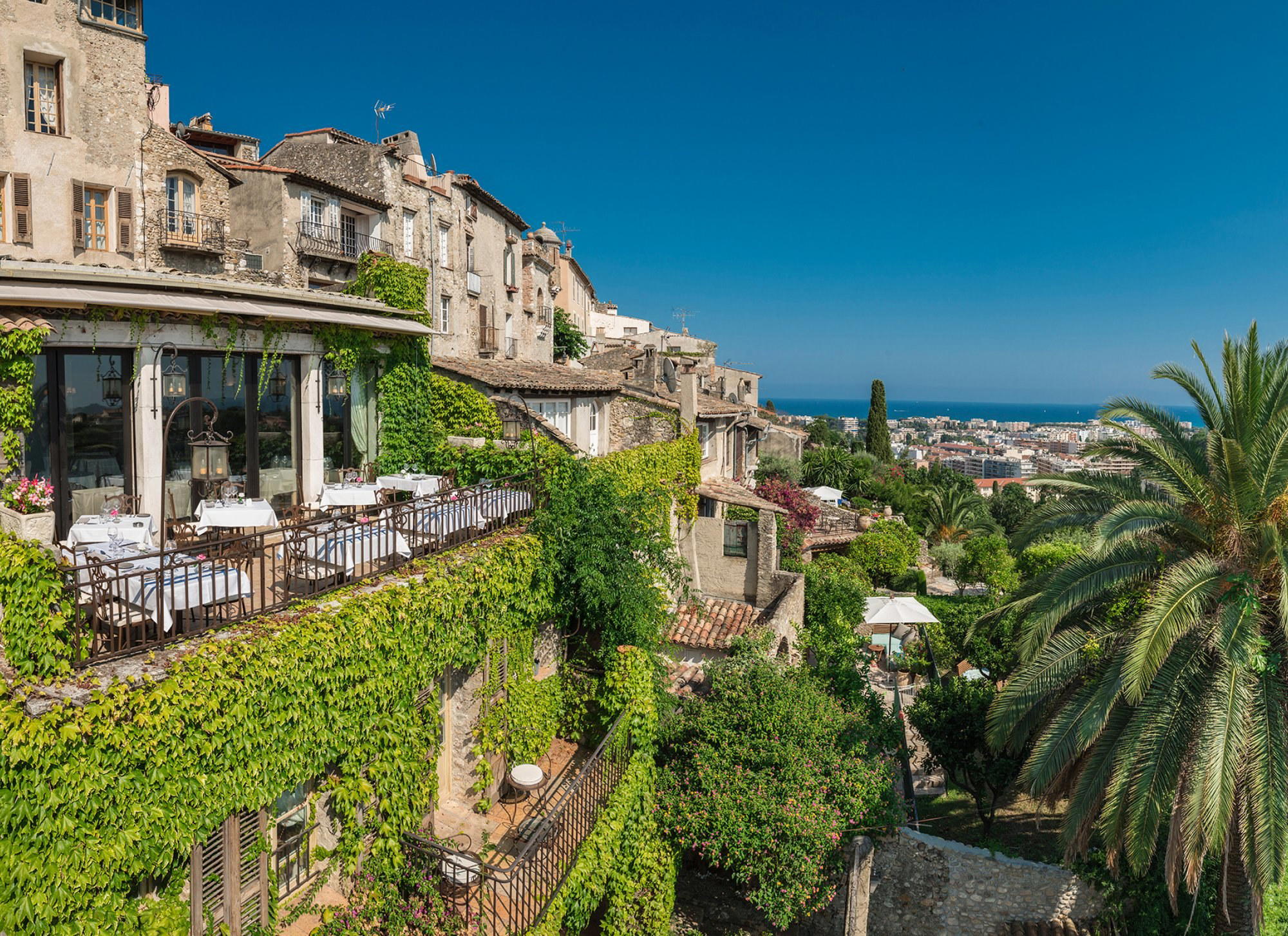
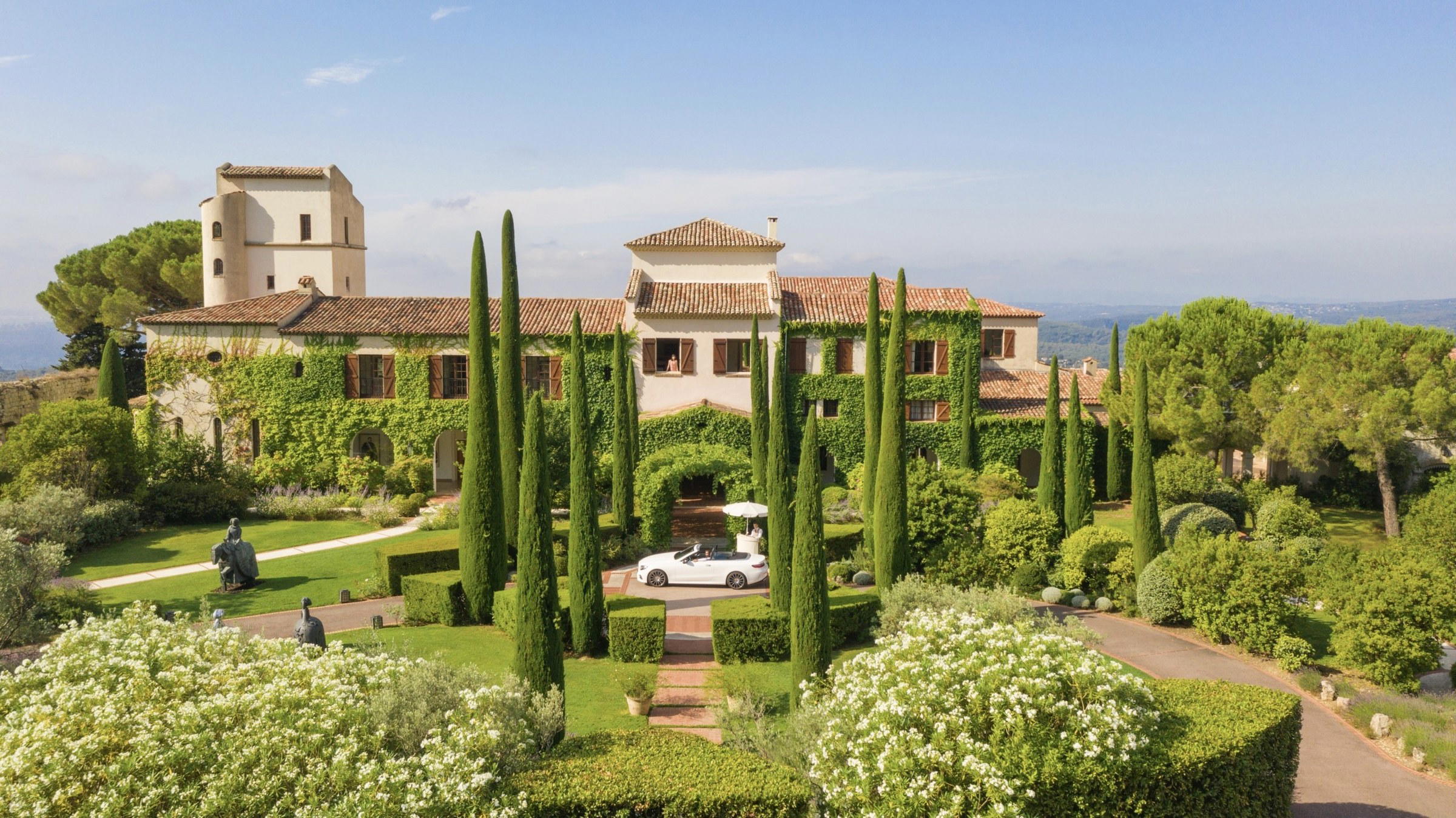
Perched above the medieval village of Haut-de-Cagnes, Château Le Cagnard occupies a 13th-century fortress that once defended the nearby Château Grimaldi. By the 19th century, the building had shifted from military outpost to artistic retreat, drawing painters whose influence remains visible throughout its stone-valled interiors. For travellers seeking the Côte d'Azur at a remove from its coastal noise, this is a considered address.

Pearl is the En Primeur Club membership app, where members save venues, book tables and use the concierge.
Stone, History, and the Hill Above Cagnes
The Côte d'Azur has two distinct registers. The first is the one most visitors encounter: the marina hotels, the promenade crowds, the relentless proximity to the sea. The second sits further back, higher up, in the hilltop villages that predate the resort era by several centuries. Haut-de-Cagnes belongs firmly to that second register, and Château Le Cagnard, positioned within the medieval ramparts at 54 Rue Sous Barri, is one of the more compelling reasons to seek it out. The property occupies structures originally built as part of the defensive architecture protecting the nearby Château Grimaldi, which means the walls here are not decorative; they were built to hold. Walking into the building, that weight is the first thing you register.
Architecture as the Primary Argument
Hotels in Provence and along the Riviera broadly divide between two approaches: the renovated mas or bastide, with its terracotta floors and lavender-and-limestone aesthetic, and the grander château conversion, where history is the explicit subject of the stay. Château Le Cagnard belongs to the latter category, though it operates at a scale that keeps it intimate rather than institutional. The medieval stonework throughout the building is not a backdrop; it is the architecture. Arched passages, vaulted ceilings, and walls that taper with age define the spatial experience in ways that no amount of interior styling could replicate or should attempt to obscure.
The 19th century brought a different kind of occupation to Haut-de-Cagnes. As Provence developed its reputation among artists, Renoir spent his final years in Cagnes-sur-Mer, and the village drew a procession of painters attracted by the quality of Mediterranean light, the château became embedded in that cultural moment. The imprint of that period is woven into the property's identity, not as a marketing footnote but as a physical fact: the building sat at the intersection of military history and artistic community, and both left traces.
This layering of periods is what gives Château Le Cagnard its architectural character. Properties that have been rebuilt or significantly altered for hospitality use tend to read as interpretations of history. A building that has simply continued to exist, adapting without erasing, reads differently, and that difference is perceptible from the first stone staircase. Among the château-style properties along this stretch of the Riviera, that quality of accumulated time is worth distinguishing from the more polished conversions you find further west toward Saint-Tropez, or in the Luberon villages.
Where It Sits on the Riviera
Cagnes-sur-Mer sits between Nice and Antibes, roughly equidistant from both, which positions it as a genuinely practical base for the central Côte d'Azur without the density of either. The village of Haut-de-Cagnes above the modern town is a separate proposition entirely: narrow streets, no through traffic, medieval scale. For travellers accustomed to the sweeping terraces of Hotel Du Cap-Eden-Roc in Cap d'Antibes or the clifftop drama of The Maybourne Riviera in Roquebrune-Cap-Martin, the château offers a fundamentally different proposition: compression and verticality rather than horizontal sea views, history rather than amenity as the primary draw.
That positioning is not a compromise. It is a deliberate choice that aligns the property with a small cohort of Riviera addresses where the built environment does the primary work. The Château de la Chèvre d'Or in Èze operates on a similar logic, medieval village location, architecture as the central experience, though at a different price point and international profile.
Elsewhere in France, comparable medieval-to-hotel conversions include Castelbrac in Dinard and Château de Montcaud in Sabran, both of which carry that same sense of stone with continuity. Further into Provence, La Bastide de Gordes and Château de la Gaude in Aix-en-Provence sit within the same broader tradition of historically grounded hospitality, though with their own distinct architectural languages. For a broader picture of where Château Le Cagnard fits within the local dining and accommodation scene, see our full Cagnes-sur-Mer guide.
The Artist Connection and Its Continuing Relevance
The relationship between the Riviera's hilltop villages and the painters who colonised them in the late 19th and early 20th centuries was not accidental. The light at altitude, the architecture that pre-existed industrialisation, the relative affordability of what were then agricultural communities: all of these drew artists who would later define the region's cultural reputation. Renoir's house, now the Musée Renoir, sits within walking distance of Haut-de-Cagnes, and the Grimaldi château at the village's summit houses a museum with a significant collection. Château Le Cagnard's location places it inside that cultural geography rather than adjacent to it.
For travellers who engage with the Riviera at the level of its cultural history rather than solely its beaches and marinas, that context matters. The village and the property become part of the same itinerary as the Fondation Maeght in Saint-Paul-de-Vence (a short drive north) and the Matisse Museum in Nice (a similar distance east). This is a stretch of the Côte d'Azur where modern art history is embedded in specific buildings and specific light, and a base in Haut-de-Cagnes keeps that itinerary coherent.
Planning Your Stay
The Côte d'Azur's high season runs from late June through August, when the coast operates at maximum capacity and village access becomes more constrained as tour groups and day visitors work their way up the hillside roads. Visiting in May, early June, or September gives you the Mediterranean temperatures without the compression. The village of Haut-de-Cagnes is accessible by road from the lower town, though the streets within the medieval perimeter are narrow. Nice Côte d'Azur Airport sits approximately 15 kilometres east, making this one of the more logistically direct hilltop addresses in the region to reach without a long transfer.
For travellers building a wider French itinerary that extends beyond the Riviera, the property sits at a reasonable remove from the Provençal addresses worth considering in the same trip: Baumanière Les Baux-de-Provence, Villa La Coste in Le Puy-Sainte-Réparade, and Hôtel and Spa du Castellet all sit within a two-hour drive and represent different takes on Provençal hospitality. For those extending further, La Réserve Ramatuelle and Airelles Saint-Tropez Château de la Messardière complete a Riviera circuit that covers the full range from medieval stone to modernist shore.
Comparable Venues
Comparable venues nearby, for context on price, style, and recognition.
| Venue | Cuisine | Price | Awards | Notes |
|---|---|---|---|---|
| Château Le CagnardThis venue (the venue you are viewing) | Restored 13th-century medieval chateau on village ramparts | $200–300 | Michelin Selected · Small Luxury Hotels of the World Member | Not listed |
| Fahrenheit Seven Courchevel | neo-vintage lifestyle hotel | $200–300 | Michelin Selected | Courchevel 1650 |
| 70 Hectares & l'Océan - Fontenille Collection | Contemporary luxury resort with Californian surf lodge influences, blending modern elegance with natural forest surroundings. | $300–500 | Michelin Selected | Seignosse |
| Hôtel La Pérouse | Historic luxury boutique hotel blending Belle Époque charm with contemporary refinement on the French Riviera. | $200–300 | Michelin Selected · La Liste Top Hotels | Nice Historique |
| Les Dromonts | Well-known 1960s alpine architecture with fan-shaped pine-cone design. | Not listed | Michelin Selected | heart of Avoriaz |
| La Vague de Saint Paul | Contemporary low-rise Mediterranean-style with pink stucco and tile roofs amid manicured lawns. | $100–200 | Michelin Selected | Saint Paul de Vence |
Recognition history
Dated appearances from independent guides and award organizations, with the underlying list record or original source where available.
Michelin Selected
Michelin
Small Luxury Hotels of the World Member
Small Luxury Hotels of the World
Continue exploring
More in Cagnes-sur-Mer
Hotels in Cagnes-sur-Mer
All hotels in Cagnes-sur-Mer →
Bars in Cagnes-sur-Mer
Browse all →
Restaurants in Cagnes-sur-Mer
All restaurants in Cagnes-sur-Mer →
Wineries in Cagnes-sur-Mer
Browse all →

Details
- Romantic
- Elegant
- Scenic
- Intimate
- Sophisticated
- Classic
- Honeymoon
- Romantic Getaway
- Anniversary
- Weekend Escape
- Terrace
- Historic Building
- Panoramic View
- Wi Fi
- Pool
- Spa
- Restaurant
- Room Service
- Concierge
- Mountain
- Elevator
Romantic and enchanting with fairytale charm, soundproofed rooms, terrace dining overlooking the sea, and a magical medieval village atmosphere.