
A Michelin Selected heritage palace occupying a 250-year-old haveli directly above the Ganges ghats, Brij Rama Palace places guests within the ceremonial heartbeat of Varanasi. Sandstone terraces overlook the river's daily ritual processions, and the architecture draws from Mughal and Rajput traditions that shaped the city's sacred skyline. For those seeking proximity to the ghats without surrendering structural grandeur, this is the address in Varanasi.
Pearl is the En Primeur Club membership app — saves, bookings, and concierge access live there. Same editors, same standards.
- Address
- Over Darbhanga House Ghat, Near Munshi Ghat, Bangali Tola, Varanasi, India
- Phone
- +91 91294 14141
 Saves & bookings on Pearl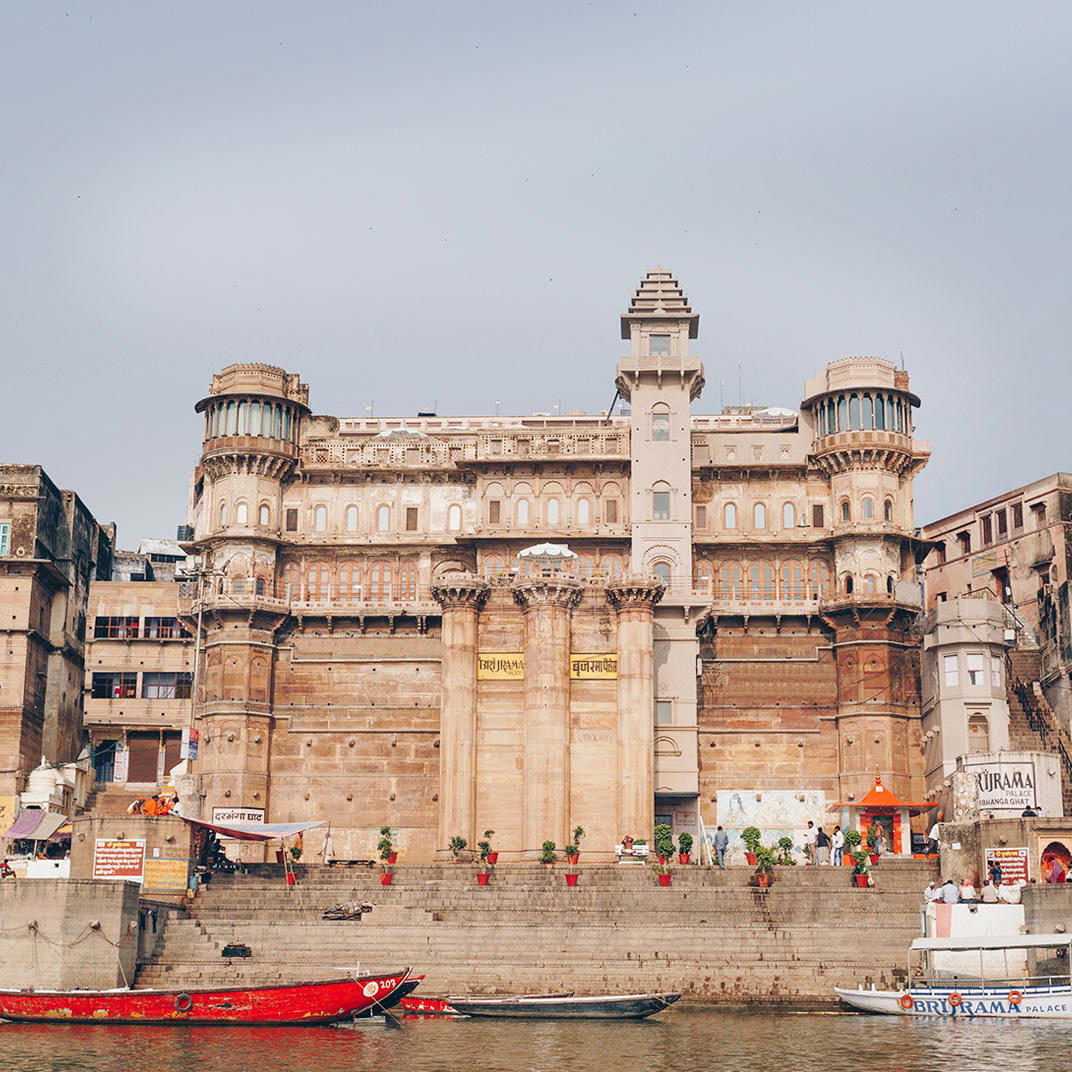
A Palace at the Water's Edge
There is a particular quality of light that arrives over the Ganges in the early morning, when the ghats are already alive with priests, pilgrims, and the first smoke of ritual fires. Most hotels in Varanasi offer proximity to this spectacle. Brij Rama Palace offers something more direct: it is built into the ghat itself, rising from the riverbank in a structure that predates modern tourism by roughly two centuries. Positioned above Darbhanga Ghat and adjacent to Munshi Ghat in the Bangali Tola neighbourhood, the palace occupies one of the oldest continuously inhabited urban stretches in the world. The architecture is not decorative heritage, it is functional, structural, and older than most cities its guests have come from.
Brij Rama Palace Varanasi is a 5-star hotel in Varanasi with 32 rooms, set above Darbhanga House Ghat near Munshi Ghat in Bangali Tola, where the physical fabric of the building is itself the primary credential. Brij Rama is set differently, it is embedded in the street-level fabric of living Varanasi, with the river as its front yard and the lanes of Bangali Tola as its back.
The Architecture: Haveli Logic on a Sacred River
The building belongs to the haveli tradition of North Indian palace architecture, a typology built around enclosed courtyards, tiered terraces, and facades that read simultaneously inward and outward. At Brij Rama, that logic is oriented toward the Ganges. The riverfront elevation, in sandstone characteristic of Varanasi's older structures, presents a series of overhanging balconies and screened galleries that frame the water in a way that feels considered rather than accidental. This is not a property that has been converted with minimal intervention, the spatial organisation reflects the original intent of the haveli form, where every floor mediates a different relationship between interior life and exterior spectacle.
The architectural identity here is conserved rather than reinterpreted. Texture, proportion, and material come from the original structure, the renovation has worked within those constraints rather than around them.
The terraces facing the river are the structural highlight. Stacked across multiple levels, they operate as graduated viewing platforms for the ghat life below, the aarti ceremonies at dusk, the boats moving through morning mist, the ghats emptying and filling across the day. In a city where the relationship between built form and sacred landscape is as old as the settlement itself, these terraces perform a function that is almost liturgical: they orient the occupant toward the river as a site of active attention, not passive scenery.
Varanasi's Heritage Hotel Tier
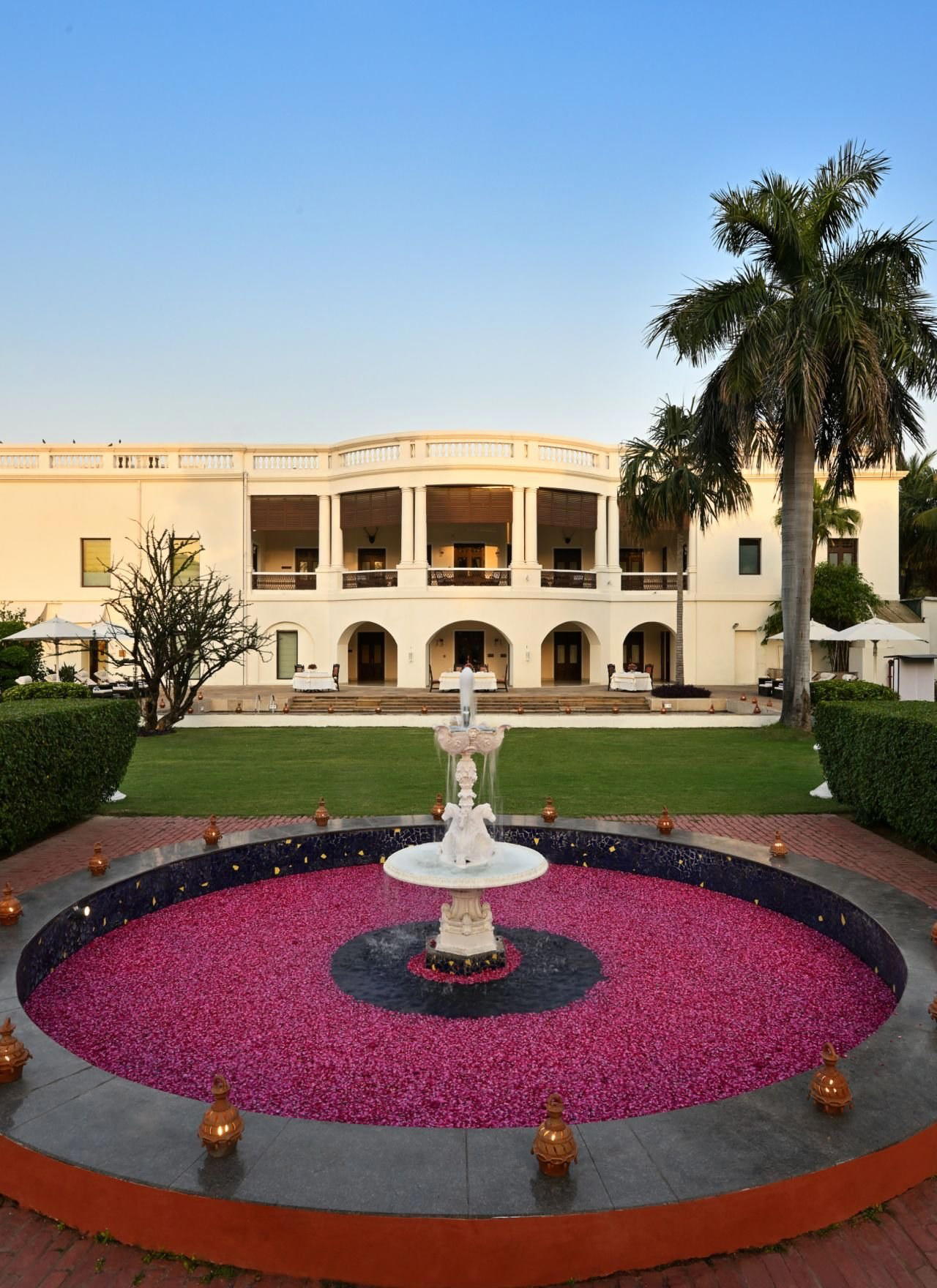
Varanasi's premium accommodation is distributed between a handful of distinct positions. At one end sit the palace conversions close to the ghats, architecturally specific, relatively small in scale, and valued for immediacy of access to the riverfront. At the other end, properties like Taj Nadesar Palace offer a campus model: larger grounds, more formal amenities, and a degree of insulation from the city's density. Brij Rama belongs firmly to the first category. Its value proposition is contact with Varanasi as it actually operates, the sounds of the ghats, the movement of ritual life, the quality of a city that has been sacred for millennia without interruption.
That proximity is specific and deliberate. Guests considering this property should understand that Varanasi's ghat neighbourhood is not insulated from the city. Lanes are narrow, foot traffic is constant, and the sounds of ceremony carry through the air at hours that do not observe standard check-in quiet policies. This is the point, not a drawback, but travellers who prefer the composed remove of properties like The Leela Palace Jaipur or The Oberoi Amarvilas in Agra should weigh it honestly. Brij Rama operates on Varanasi's terms, not the other way around.
Across India's broader premium heritage circuit, the Michelin Selected designation places Brij Rama alongside properties that have satisfied consistent quality criteria across accommodation, atmosphere, and service. Within that group, the Varanasi address is notable for being among the more architecturally specific: the building and the city are not separable experiences. The decision to stay at Brij Rama is ultimately a decision to stay in Varanasi at its most concentrated.
Planning Your Stay
Varanasi draws significant pilgrim and tourist volume year-round, with peak pressure during major Hindu festivals, Diwali, Dev Deepawali in November, and the Kumbh Mela cycle. The Gangetic winter, roughly November through February, is one comfortable season for extended time on the ghats, with cooler air and clearer mornings. Monsoon season brings a transformed quality of light over the river but also refined humidity and limited ghat access at times. Booking for peak festival windows requires planning well in advance, as properties at the ghat level operate with limited inventory by nature of their historic footprints.
Access to the palace itself requires navigating the lane network of Bangali Tola on foot for the final approach, vehicle access does not extend to the river's edge. This is standard for ghat-adjacent addresses in Varanasi and worth factoring into arrival logistics, particularly with significant luggage. The address is Over Darbhanga House Ghat, Near Munshi Ghat, Bangali Tola, Varanasi. For those extending an India itinerary across sacred cities, Vivanta Vrindavan in Vrindavan or Taj Swarna in Amritsar represent comparable heritage-city anchors in the north of the country.
Comparison Snapshot
Comparable venues nearby, for context on price, style, and recognition.
| Venue | Cuisine | Price | Awards | Notes |
|---|---|---|---|---|
| Brij Rama Palace VaranasiThis venue — the venue you are viewing | Heritage palace hotel blending Maratha architecture with royal luxury on the Ganges. | $$$$ | 5-Star | Not listed |
| Avantika by the Ganges | Luxury boutique riverside hotel blending sacred Varanasi heritage with contemporary comfort and elemental design. | $$$$ | 5-Star | Ramghat |
| Taj Nadesar Palace, Varanasi | Heritage palace hotel with regal legacy on expansive grounds | $$$$ | Michelin 1 Key | Nadesar |
| The Oberoi, Gurgaon | Contemporary luxury urban hotel with polished glass lobby and reflection pool. | $$$$ | 5-Star | DLF Cyber City |
| Evolve Back Kabini | Contemporary classic luxury resort with traditional tribal village-inspired architecture and organic design elements. | $$$$ | 5-Star | Begur |
| Trident, Gurgaon | Contemporary classic luxury resort in urban setting | $$$$ | 5-Star | Udyog Vihar Phase V |
Recognition history
Dated appearances from independent guides and award organizations, with the underlying list record or original source where available.
Michelin Selected
Michelin
Continue exploring
More in Varanasi

Restaurants in Varanasi
Browse all →
At a Glance
- Ornate
- Elegant
- Historic
- Scenic
- Intimate
- Sophisticated
- Romantic Getaway
- Honeymoon
- Anniversary
- Wellness Retreat
- Historic Building
- Panoramic View
- Terrace
- Waterfront
- Wi Fi
- Spa
- Room Service
- Concierge
- Restaurant
- Fitness Center
- Airport Transfer
- Waterfront
- Wi Fi
- Spa
- Room Service
- Concierge
- Restaurant
- Fitness Center
- Airport Transfer
Ornate and regal with warm sandstone interiors, intricate Maratha designs, antique furnishings, soft lighting, and a serene historic atmosphere.