Borneo Eagle Resort

Borneo Eagle Resort occupies Pulau Tiga, a volcanic island off the Sabah coast that most travellers pass over in favour of better-known Kota Kinabalu alternatives. With just 13 rooms, the property sits firmly in the low-capacity, island-immersion tier of Sabah accommodation, the kind of place where the journey across open water is part of the proposition, not an inconvenience.
Pearl is the En Primeur Club membership app — saves, bookings, and concierge access live there. Same editors, same standards.
- Address
- Borneo Eagle Resort Pulau Tiga Kuala Penyu, 89740 Kota Kinabalu, Sabah
- Phone
- +60 88-380 390
- Website
- echoresorts.com
- Directions
- Get directions
 Saves & bookings on Pearl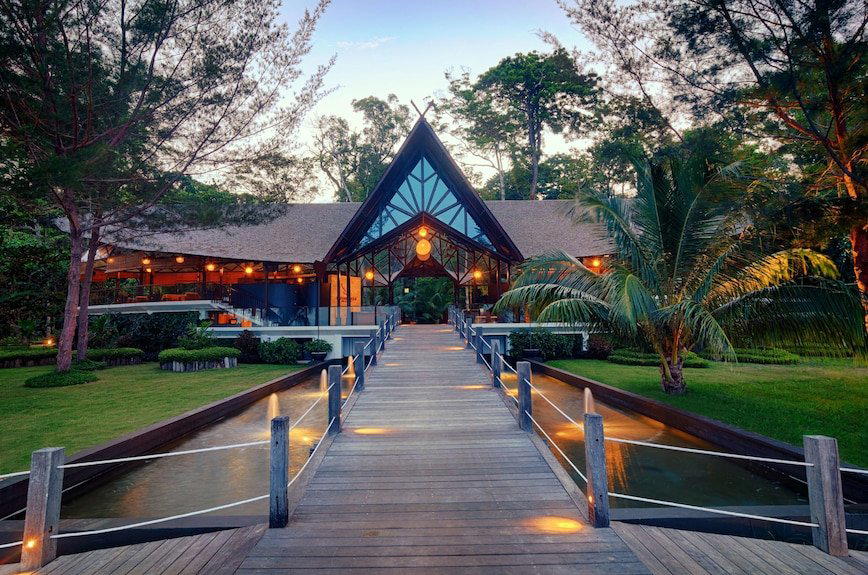
An Island That Earns Its Distance
Pulau Tiga is not a convenient island. Reaching it requires a boat crossing from Kuala Penyu, a coastal town roughly two hours south of Kota Kinabalu by road, followed by a further journey across open water to an island that earned brief international attention as the filming location for the first US season of Survivor in 2000. That origin story has faded from the resort's identity, but the underlying fact remains: Pulau Tiga is a National Park island, which constrains development and keeps visitor numbers low. Borneo Eagle Resort operates within those constraints with 13 rooms.
Bungaraya Island Resort and Gayana Marine Resort sit closer to Kota Kinabalu and operate within marine park territory, giving them a different set of drawcards, primarily coral reefs and proximity to the city. Rasa Ria, Kota Kinabalu operates at the opposite scale entirely, a full-service resort on the mainland with a wildlife sanctuary and beach frontage. Borneo Eagle Resort occupies a different register: island park access, limited accommodation, and a journey that filters out the casual visitor before arrival.
What the Physical Setting Demands
Pulau Tiga's character is geological before it is aesthetic. The island is a mud volcano island, one of three in the group, and its terrain is shaped by that formation rather than by any design intervention. The forest is dense, the shoreline is variable depending on tide and season, and the built environment on the island is minimal by necessity. For a 13-room property operating under national park rules, this means the architecture's job is not to compete with the landscape but to provide functional shelter within it. Across Southeast Asia's island resort category, this constraint has produced two distinct responses: properties that build refined timber structures to minimise ground impact and maximise airflow, and those that build closer to the ground with heavy vegetation screening. Either approach, when executed with attention to materials and siting, produces rooms that read as embedded rather than imposed.
The low room count, 13, is the clearest design signal available for this property. In the broader Malaysian island resort market, this places Borneo Eagle Resort in the same capacity tier as specialist properties such as Pangkor Laut Resort on its private island in Lumut, where restricted room numbers are a deliberate part of the offer. At this scale, the ratio of shared infrastructure (jetty, dining area, pathways) to guest count is high, which affects how the property feels to move through. The absence of crowds is not incidental, it is a product of the room count, and the room count is a product of site and operating model.
The Pulau Tiga National Park Context
Staying on a national park island in Malaysia changes the practical texture of a visit in ways that continental or privately owned island resorts do not. National park rules govern land use, construction, and typically limit the kind of commercial infrastructure that appears at larger resorts, spas, multiple restaurant concepts, private pool villas. The trade is access to relatively undisturbed habitat. Pulau Tiga's park status means the wildlife pressure is lower than on inhabited islands, and the marine environment around the island has a different character from the managed reef experiences at Kota Kinabalu's closer marine parks.
For context on what island national park access looks like at a higher price point in Malaysia, The Datai in Langkawi operates adjacent to an ancient rainforest reserve in a similar model, the natural environment is the product, and the resort's job is to provide access and shelter rather than distraction. Sabah offers a parallel logic through properties like Sukau Rainforest Lodge in Kinabatangan and Borneo Rainforest Lodge in Lahad Datu, where the forest or river is the primary draw and accommodation is sized to that priority. The hotel sits within this tradition in Sabah, applied to an island setting.
Getting There and Practical Planning
Access logistics are the defining planning consideration for the hotel. The standard route runs from Kota Kinabalu south to Kuala Penyu, then by boat to Pulau Tiga. The road from Kota Kinabalu to Kuala Penyu takes approximately two hours under normal conditions, and the boat crossing adds further time. This is not a day-trip proposition.
For travellers building a wider Sabah or Malaysia itinerary, the hotel pairs logically with mainland Sabah stops or with a Kota Kinabalu city base rather than with other island properties. If a trip is structured around multiple island experiences, the Kota Kinabalu marine park islands, served by Bungaraya and Gayana, are a faster-access option from the city, while Pulau Tiga requires a dedicated southward routing. Across Malaysia more broadly, island properties that require comparable logistical commitment include Pangkor Laut Resort in Lumut, reached by private ferry from the mainland. Pair a Pulau Tiga stay with mainland Sabah stops or a Kota Kinabalu city base.
For Malaysian island travel at higher price points and with more established amenity infrastructure, Anantara Desaru Coast Resort in Johor and One&Only; Desaru Coast offer a point of contrast on the peninsula, while Bertam Wellness Spa and Villas in Penang and Cameron Highlands Resort represent the cooler highland alternative for travellers who want immersive natural settings without the island logistics.
Fast Comparison
Comparable venues nearby, for context on price, style, and recognition.
| Venue | Cuisine | Price | Awards | Notes |
|---|---|---|---|---|
| Borneo Eagle ResortThis venue — the venue you are viewing | Luxury boutique resort with rustic architecture designed around natural environment conservation principles. | $$$$ | 5-Star | Not listed |
| Shangri-La Rasa Ria, Kota Kinabalu | Luxury beachfront resort set in a nature reserve | $$$$ | 5-Star | Tuaran |
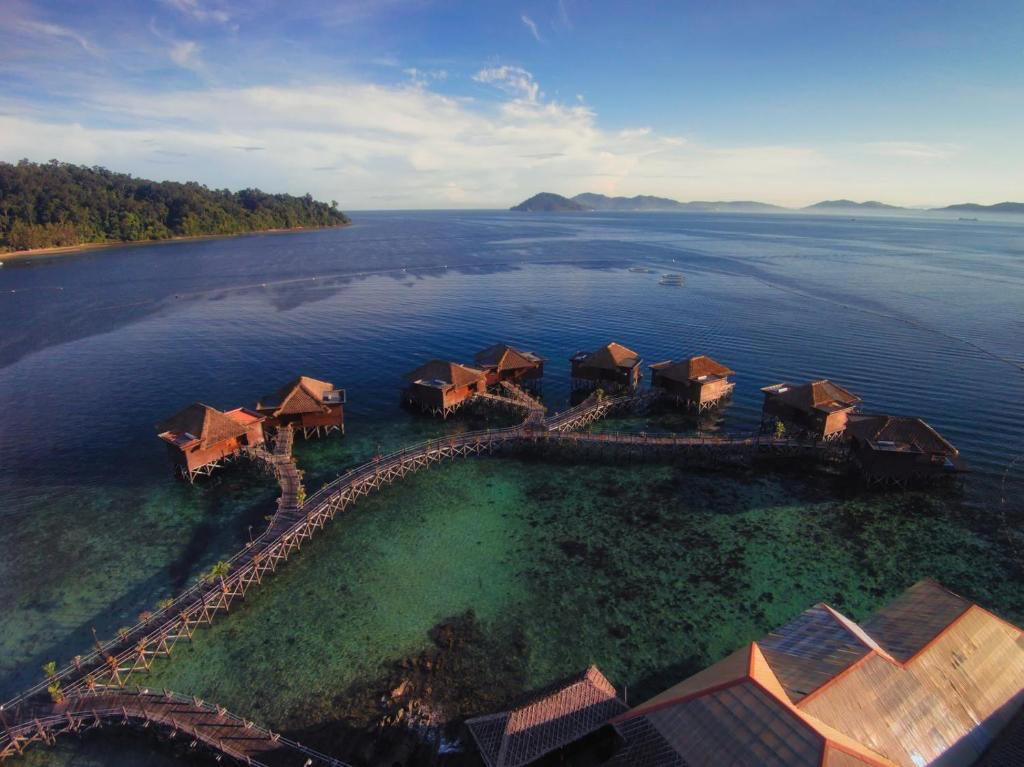
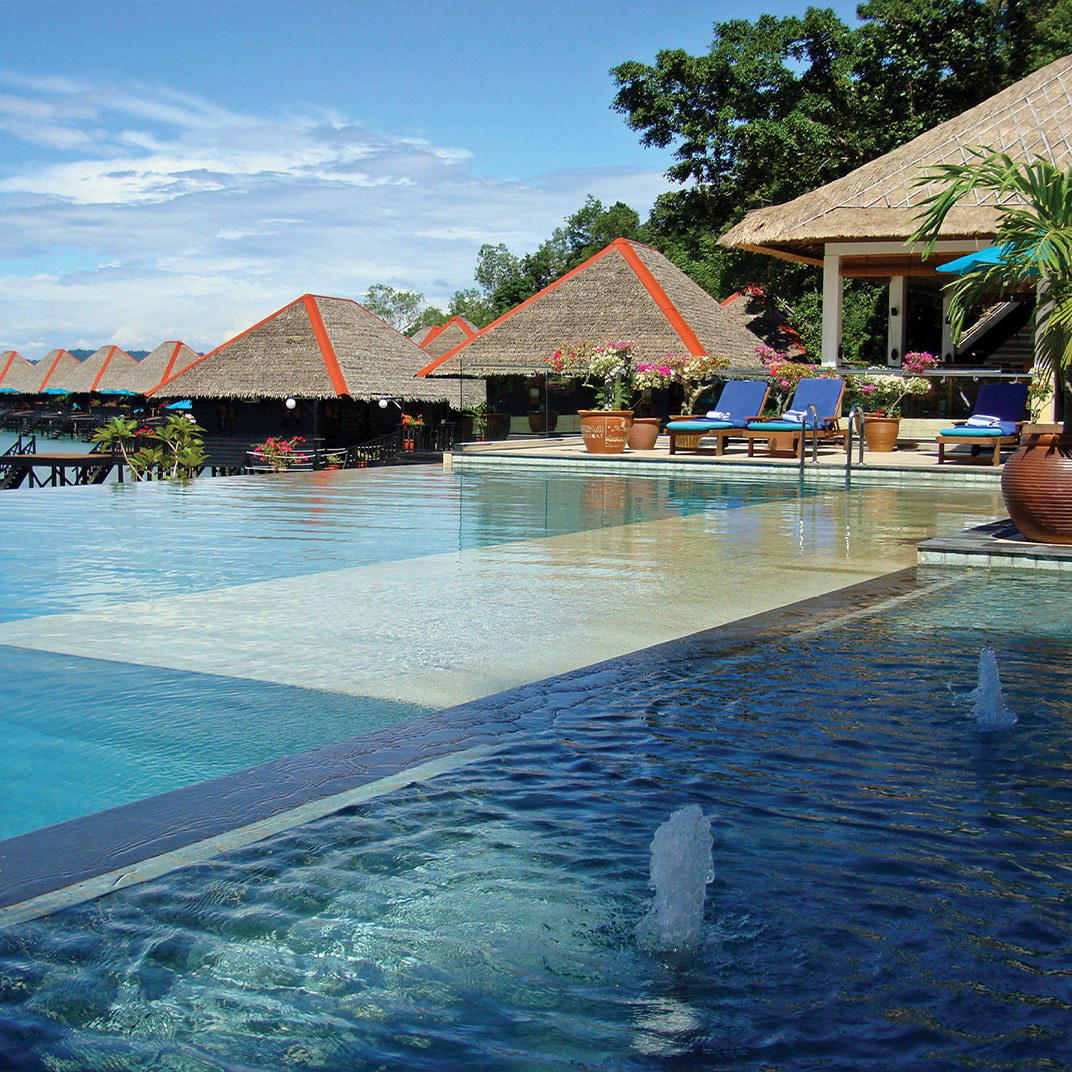
| Gayana Marine Resort | Luxury eco-resort with stilted overwater villas inspired by Borneo architecture and traditions, blending natural minimalism with modern sophistication. | $$$$ | 5-Star | Gaya Island |
| Gayana Eco Resort | Contemporary tropical eco-resort with overwater villas | $$$$ | 5-Star | Gaya Island |
| Bungaraya Island Resort | Secluded island hideaway with Borneo-style timber villas perched on stilts amid tropical vegetation. | $$$$ | 5-Star | Gaya Island |
| Hyatt Centric Kota Kinabalu | Contemporary lifestyle hotel blending Bornean nature with modern design principles; positioned as a cultural and experiential destination rather than traditional luxury. | $$$ | 5-Star | Pusat Bandar Kota Kinabalu |
Recognition history
Dated appearances from independent guides and award organizations, with the underlying list record or original source where available.
Preferred Hotels L.V.X. Collection
Preferred Hotels
Continue exploring
More in Kota Kinabalu
Hotels in Kota Kinabalu
Browse all →
Restaurants in Kota Kinabalu
Browse all →

At a Glance
- Romantic
- Scenic
- Elegant
- Intimate
- Honeymoon
- Romantic Getaway
- Wellness Retreat
- Anniversary
- Destination Wedding
- Beachfront
- Private Villa
- Destination Spa
- Panoramic View
- Private Dining
- Waterfront
- Garden
- Wi Fi
- Pool
- Spa
- Fitness Center
- Room Service
- Concierge
- Beach Access
- Restaurant
- Bar
- Waterfront
- Garden
- Wi Fi
- Pool
- Spa
- Fitness Center
- Room Service
- Concierge
- Beach Access
- Restaurant
- Bar
Serene and luxurious with open-air beachfront settings, magical sunset views over the South China Sea, and intimate garden surroundings.