Blackberry Farm

Blackberry Farm holds Two MICHELIN Keys in the Tennessee foothills of the Great Smoky Mountains, placing it in a narrow tier of American farm stays where the physical setting, local food tradition, and vernacular architecture carry as much weight as service. The property sits on more than 4,200 acres in Walland, operating at the intersection of Appalachian heritage and serious hospitality.
 Discover on Pearl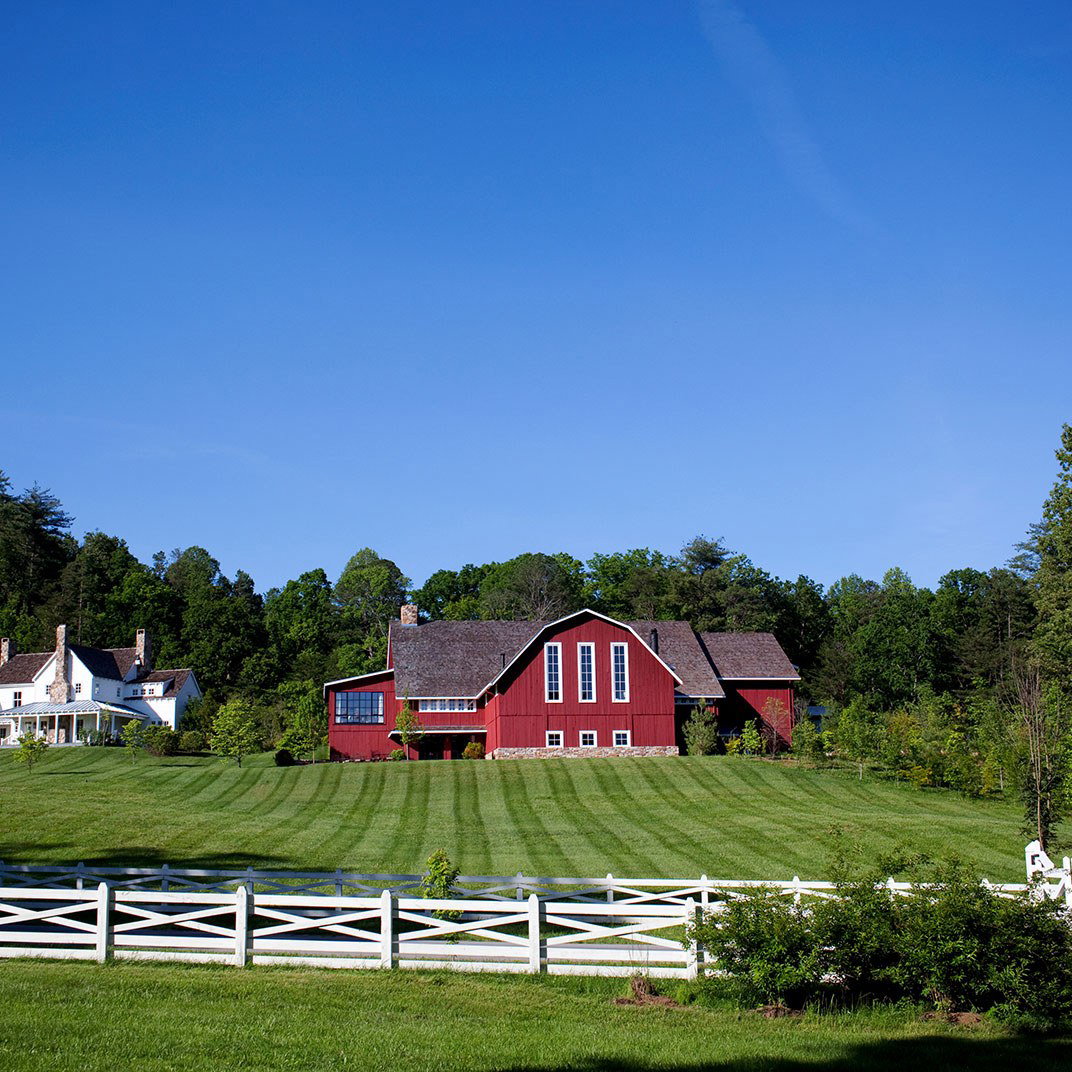
Where Appalachian Architecture Becomes the Program
There is a tier of American rural retreats where the built environment does most of the work. The rooms are not amenities appended to a scenic address; the physical fabric of the place — its farmhouses, barns, stone walls, and covered porches — is the reason guests make the drive at all. Blackberry Farm, situated in Walland, Tennessee at the western edge of Great Smoky Mountains National Park, belongs squarely to that tier. Its Two MICHELIN Keys distinction, awarded as part of the 2025 Michelin Hotels guide, confirms what the property's 4,200-acre footprint already suggests: this is not a resort that happens to have a pastoral backdrop.
The vernacular architecture of East Tennessee hill country defines Blackberry Farm's design identity more than any imported aesthetic. Clapboard siding, fieldstone foundations, and timber-frame structures read as authentically regional rather than theatrically rustic. Where comparable properties in other American wilderness settings often import a generic luxury lodge vocabulary , think bleached pine and antler chandeliers , Blackberry Farm draws from the specific material traditions of the southern Appalachians. That specificity is what places it in a different competitive conversation than, say, Under Canvas Great Smoky Mountains, which occupies the same geography but operates in the glamping tier with a very different spatial logic.
The Farm as Physical Argument
American farm-to-table hospitality has proliferated to the point where the phrase has almost lost meaning. Most properties attach a kitchen garden to an otherwise conventional hotel and call it a farm stay. A smaller group treats the working landscape as structural: the fields, orchards, livestock, and preservation kitchens are not decorative but operational, and the guest experience is organized around them. Blackberry Farm belongs to the latter group, which connects it to properties like SingleThread Farm Inn in Healdsburg and, in spirit if not geography, to Meadowood Napa Valley, where landscape and cuisine operate as an integrated argument about place.
The Great Smoky Mountains region has its own food traditions , Appalachian preserving culture, wild ramp harvests, country ham curing, sourwood honey production , that give a property like Blackberry Farm genuine regional material to work with, rather than imposing a neutral luxury format onto the landscape. The kitchen program draws from that tradition in ways that read as credible, not costumed. For guests arriving from urban hotel formats, this is the aspect that tends to register most durably: the sense that the food on the table has a specific geographic argument behind it, not a generic farm-to-fork slogan.
Positioning in the American Luxury Rural Tier
Michelin's hotel key system places Blackberry Farm at two keys, which in the current U.S. context means the property is operating at the upper end of the experiential hotel category without reaching the three-key tier occupied by the most formally curated international properties. That two-key designation puts it in useful company: Amangiri in Canyon Point and Post Ranch Inn in Big Sur represent the same category of destination-driven American properties where the site itself justifies the rates and where service density is high relative to room count.
Compared to urban peers in the two-key bracket , The Fifth Avenue Hotel in New York City or Raffles Boston , Blackberry Farm operates with a fundamentally different value proposition. Urban two-key properties compete on architecture, neighborhood access, and restaurant programming within a dense city fabric. Blackberry Farm competes on isolation, land, and the depth of its on-property program. Guests are not meant to leave to explore a city; the 4,200 acres contain the full itinerary. That model aligns it more closely with wellness-focused rural retreats like Canyon Ranch Tucson or Canyon Ranch Lenox, though Blackberry Farm's emphasis falls on land stewardship and food culture rather than structured wellness programming.
Among American properties that lead with agricultural heritage and a specific regional identity, the comparison set also includes Troutbeck in Amenia and Sage Lodge in Pray, though Blackberry Farm's scale and Michelin recognition place it at the more formal end of that spectrum. For international context, the same logic of land-rooted hospitality appears at Aman Venice and Badrutt's Palace Hotel in St. Moritz, though each operates from entirely different environmental premises.
The Physical Setting and Arrival Experience
The drive in from Walland along West Millers Cove Road is part of the spatial argument. The transition from the Tennessee highway system to the property's own road network through wooded farmland functions as a deliberate decompression sequence, a design move common to properties that understand arrival as the first room. By the time guests reach the main farmhouse, the elevation change and tree cover have done perceptual work that no lobby installation could replicate.
The accommodation distribution across the property means that individual buildings have distinct characters: some closer to the main house and its communal rhythm, others more isolated in the hillside landscape. This spatial variety is an architectural asset , guests can calibrate their degree of connection to the communal program versus retreat into the landscape. Properties of comparable intent, like Dunton Hot Springs in Dunton or Little Palm Island Resort in Little Torch Key, use similar spatial distribution to manage guest density without sacrificing a sense of privacy.
Planning a Stay
Blackberry Farm operates as an all-inclusive property, which means rates cover accommodation, meals, and most on-property activities. This format, common among high-end rural retreats, simplifies the guest decision on arrival but requires a different budget calculation upfront than rate-only properties like Four Seasons at The Surf Club in Surfside or The Beverly Hills Hotel in Los Angeles. The nearest commercial airport is McGhee Tyson in Knoxville, approximately 45 minutes by car. The property's address , 1471 West Millers Cove Road, Walland, Tennessee , places it on the eastern edge of Blount County, outside the primary tourist corridor of Gatlinburg and Pigeon Forge. That positioning is deliberate: Blackberry Farm operates at remove from the commercial activity that defines the gateway towns, which is a spatial and experiential choice as much as a real estate one.
Autumn, when the Smoky Mountains produce some of the most pronounced foliage color in the eastern United States, is the period of highest demand. Spring, with ramp season and early-harvest kitchen programming, represents the other peak. Planning well in advance for either window is advisable. For more on what the broader region offers, see our full Great Smoky Mountains restaurants guide.
Side-by-Side Snapshot
These are the closest comparables we have in our database for quick context.
| Venue | Cuisine | Price | Awards | Notes |
|---|---|---|---|---|
| Blackberry Farm | This venue | |||
| Aman New York | Michelin 3 Key | |||
| The Beverly Hills Hotel | Michelin 3 Key | |||
| Amangiri | Michelin 3 Key | |||
| Hotel Bel-Air | Michelin 3 Key | |||
| The Carlyle, A Rosewood Hotel | Michelin 2 Key |
Continue exploring
More in Great Smoky Mountains
Hotels in Great Smoky Mountains
Browse all →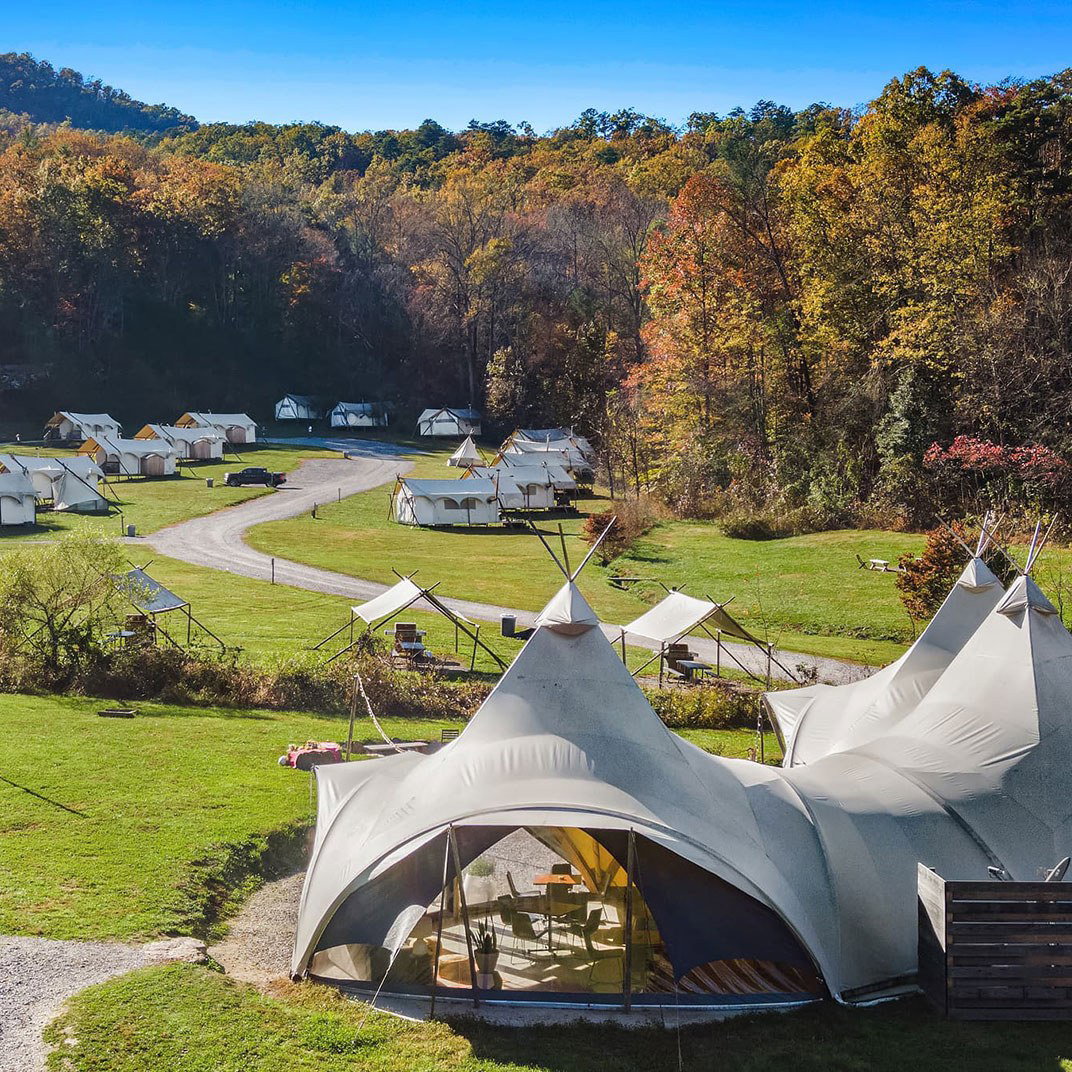
At a Glance
- Romantic
- Scenic
- Rustic
- Elegant
- Cozy
- Sophisticated
- Romantic Getaway
- Family Vacation
- Wellness Retreat
- Anniversary
- Weekend Escape
- Group Retreat
- Panoramic View
- Historic Building
- Pool
- Spa
- Fitness Center
- Room Service
- Concierge
- Golf Cart
- Mountain
Timeless, comfortable, and elegant with classic American style and vernacular Appalachian elements amid stunning mountain views.