
A large-scale beachfront property on Poseidonos Avenue, Annabelle operates at 244 rooms and positions itself within Paphos's established seafront hotel tier. The property sits directly on the Mediterranean coast, placing it among the address-driven options in a city where proximity to the water still commands a meaningful premium. For travellers arriving in Paphos for more than a beach break, it serves as a dependable anchor point for the wider region.
 Discover on Pearl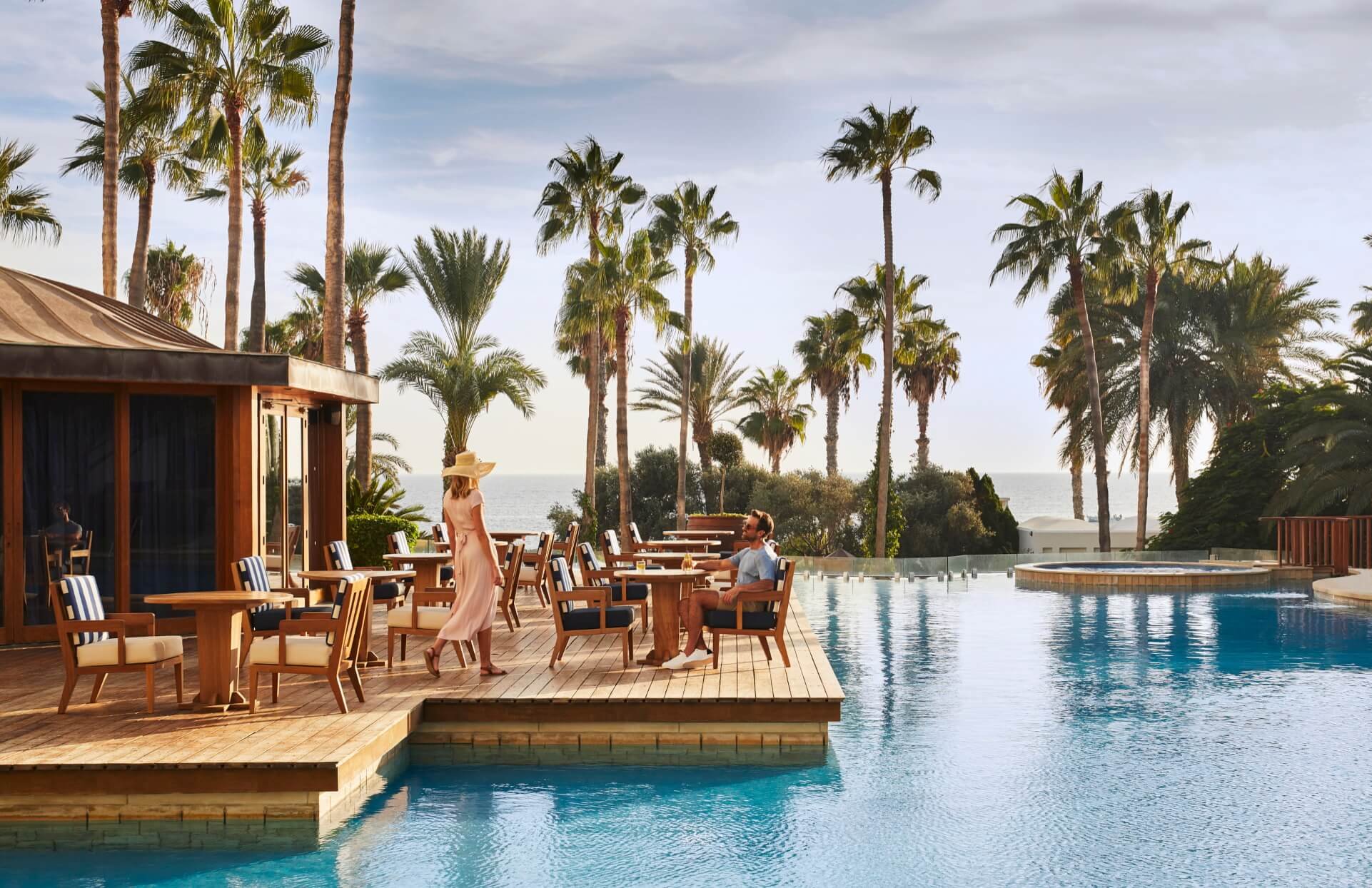
Seafront Scale on Poseidonos Avenue
Paphos's hotel corridor runs along Poseidonos Avenue like a low-rise reef between the city and the Mediterranean. The properties here compete on the same currency: proximity to the water, garden depth, and the quality of what sits between the pool and the sea wall. Within that cluster, Annabelle operates at a scale that sets it apart from the boutique tier. At 244 rooms, it belongs to a cohort of Cypriot coastal hotels built with enough critical mass to support multiple dining formats, dedicated pool areas, and the kind of landscaped grounds that take decades to mature. That maturity is, in itself, a design statement. Established planting, layered gardens, and seafront terracing do not arrive on an opening night; they accumulate.
The Poseidonos Avenue address places Annabelle within walking reach of the Paphos harbour, a working port that also serves as the city's primary evening promenade. The 8041 postcode positions the hotel on the tourist waterfront rather than in the old town or the more residential districts inland, which means guests are trading neighbourhood texture for direct coastal access. For many visitors arriving specifically for the sea, that is the correct trade. For those wanting immersion in the older fabric of Paphos, the archaeology, the Byzantine churches, the hilltop Ktima district, a base here requires deliberate travel into those areas rather than accidental proximity to them. Both are valid choices; they are simply different ones.
Architecture and Ground-Level Design
Hotels of this generation along the Cypriot coast tend to favour a vernacular Mediterranean vocabulary: white or cream render, arched openings, terracotta accents, and garden courtyards that break the block into human-scaled zones. That approach reflects both the local building tradition and the practical reality of Mediterranean light, which bleaches detail from facades and rewards simple, shadow-forming geometry over surface ornament. At 244 rooms, a property of Annabelle's size must manage the tension between institutional scale and the intimate quality that premium coastal guests expect. The most successful large-format Mediterranean hotels solve this by investing in landscaping as a structural element rather than an afterthought, using mature trees and water features to subdivide what would otherwise read as a compound.
The seafront position on Poseidonos Avenue also carries architectural implications. Properties here must orient toward the water while managing the visual and acoustic presence of an arterial road on the inland side. The better-resolved examples handle this with a clear arrival sequence that transitions the guest from road noise to garden calm before they reach the sea-facing spaces. That sequence, the threshold between the urban and the coastal, is where large beachfront hotels either earn their position or simply surrender to convenience.
Within Cyprus, the architectural conversation around premium hospitality has moved in several directions simultaneously. Anassa in Neo Chorio represents the village-scaled cluster approach, with low-rise buildings arranged around a central spine in the Akamas hinterland. Casale Panayiotis in Kalopanayiotis takes the adaptive reuse route, converting a traditional stone village into a hospitality experience where the architecture is the primary offer. Columbia Beach Resort in Pissouri Bay anchors itself to a quieter bay and a more restrained aesthetic. Annabelle occupies a different position in that field: the large-format, full-service beachfront hotel that delivers coverage rather than curation.
Where Annabelle Sits in the Paphos Market
Paphos as a hotel market has a broad spread. At one end, the all-inclusive resorts target volume tourism from Northern Europe, particularly from the UK, which has maintained strong charter connections to the city's international airport since the island joined the EU in 2004. At the other end, smaller boutique properties have emerged, including M Boutique Hotel, which operates on a different model altogether, with fewer rooms and a more design-led approach. Annabelle positions itself in the upper-midrange to premium seafront tier, where the offer is built on facilities breadth and location rather than on design singularity or chef-driven food programming.
That tier has a clear competitive logic. Guests who book here are typically choosing a known format: reliable service infrastructure, multiple pools, direct beach access, and a range of dining options within the property perimeter. The 244-room count enables a level of staffing and facility investment that smaller properties cannot sustain. It is a different value proposition from the intimate, design-forward properties elsewhere on the island, and it serves a different decision-making process. Understanding which category a traveller is optimising for matters more than any ranking of the properties against each other.
For context on how Cyprus's premium hotel market sits against international benchmarks, properties like AMARA in Limassol have set a higher design standard for the island's contemporary coastal offer. Further afield, the comparison set shifts entirely: Cheval Blanc Paris, Aman Venice, and Bvlgari Hotel Tokyo occupy a tier defined by architectural specificity and service ratios that the volume-seafront format does not attempt to match. Annabelle is not competing in that register, and its guests are typically not asking it to.
Planning a Stay: Logistics and Timing
Paphos International Airport (PFO) handles direct flights from most major European cities, with the highest frequency from the UK, Germany, and Russia during the April to October season. The drive from the airport to Poseidonos Avenue takes under twenty minutes in normal traffic, which makes arrival direct. Paphos operates on a clear seasonal rhythm: peak demand runs from May through September, with July and August representing the highest occupancy across all coastal hotels. Shoulder months, particularly April, May, and October, offer more moderate temperatures, thinner crowds at the archaeological sites, and generally more availability across the hotel market.
The hotel's position on Poseidonos Avenue means that the Paphos Archaeological Park, a UNESCO World Heritage site containing some of the most significant Roman mosaic floors in the Eastern Mediterranean, is within practical reach. The harbour, the Byzantine fort, and the concentration of fish tavernas along the waterfront are all accessible on foot from the seafront hotel strip. Guests wanting to extend into the Troodos Mountains, the Akamas Peninsula, or the wine villages of the Limassol hinterland will need a car or organised transfers; none of those areas are within walking or cycling distance from the Paphos coast.
For a fuller picture of what the city offers beyond the hotel itself, our full Paphos restaurants guide, our full Paphos bars guide, our full Paphos experiences guide, and our full Paphos wineries guide cover the wider scene in detail. The our full Paphos hotels guide places Annabelle within the broader accommodation spectrum if you are still deciding between properties.
Frequently Asked Questions
- What is the most popular room type at Annabelle?
- The database does not specify room categories or configuration details for Annabelle. Given the seafront position on Poseidonos Avenue and the 244-room scale, sea-view rooms are typically the premium tier in properties of this type along the Paphos coast, and they tend to command a price differential and higher occupancy during peak season. Confirm current room categories and pricing directly with the property before booking.
- What is the defining thing about Annabelle?
- Scale and position, taken together. At 244 rooms on a direct seafront address in Paphos, Annabelle operates at a size that enables the full-facility coastal hotel format: multiple pools, varied dining, ground-level garden access to the sea, and the staffing infrastructure that a smaller boutique property on the island cannot sustain. It is not a design-forward property in the way that village-style or adaptive-reuse hotels in Cyprus are, but it delivers the broad-coverage coastal experience that its location and scale are built for.
Fast Comparison
These are the closest comparables we have in our database for quick context.
| Venue | Cuisine | Price | Awards | Notes |
|---|---|---|---|---|
| Annabelle | 244 Rooms | This venue | ||
| AMARA | ||||
| M Boutique Hotel | ||||
| Amathus Beach Hotel Limassol | ||||
| Anassa | ||||
| Casale Panayiotis |
Preferential Rates?
Our members enjoy concierge-led booking support and priority upgrades at the world's finest hotels.
Get Exclusive Access