Ambergris Cay Private Island Resort, Turks & Caicos - All Inclusive




A private island resort on the southeastern edge of the Caicos Banks, Ambergris Cay opened to guests in 2019 after operating as a homeowners community. The all-inclusive format covers gourmet à la carte dining across four distinct settings, with arrival by private plane to the island's own airstrip. La Liste's 2026 Top Hotels ranking awarded the property 90.5 points.
Pearl is the En Primeur Club membership app — saves, bookings, and concierge access live there. Same editors, same standards.
- Address
- Ambergris Cay, TKCA 1ZZ
- Phone
- +1 833-313-3172
- Website
- ambergriscay.com
- Directions
- Get directions
 Saves & bookings on Pearl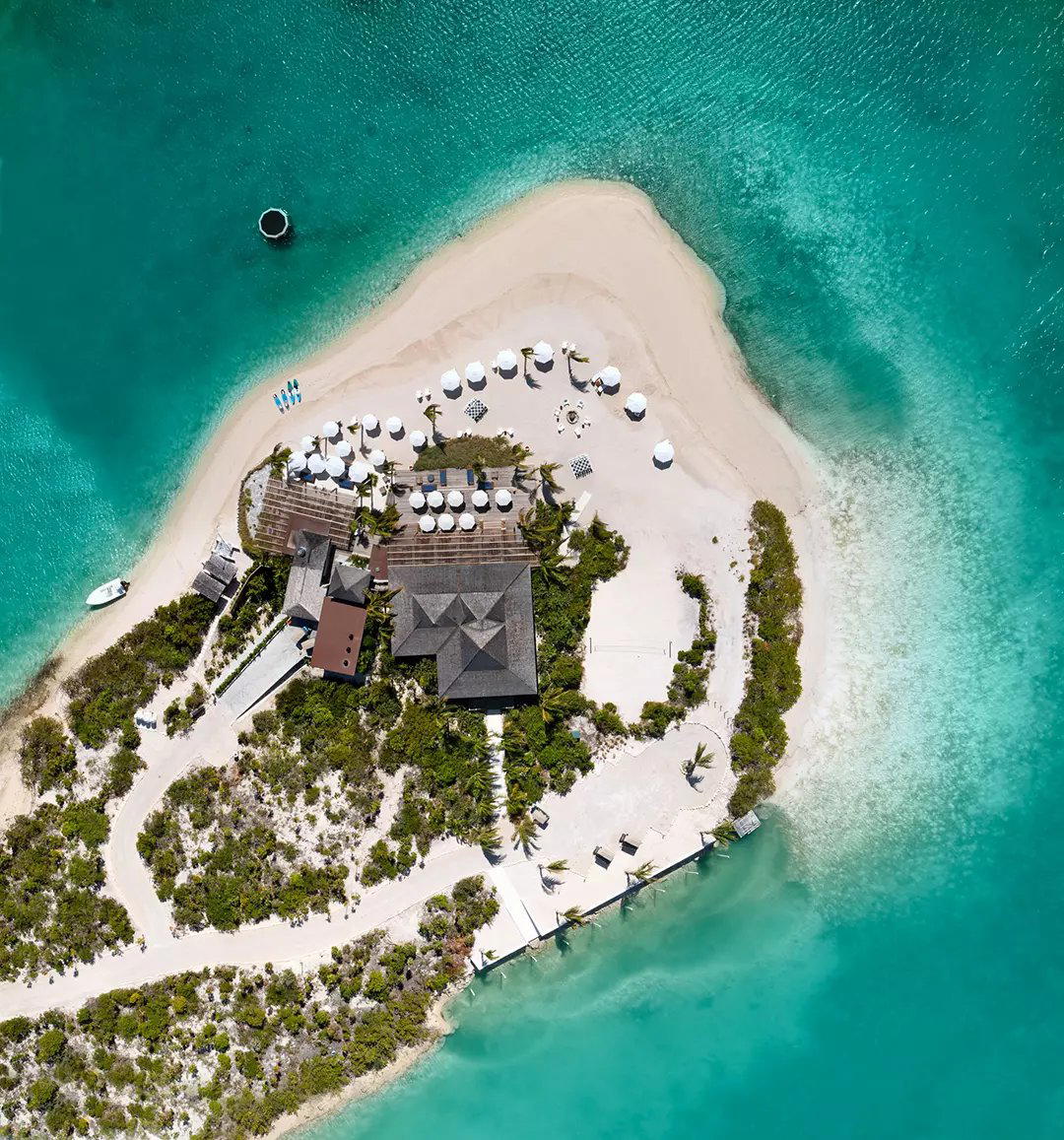
A Private Island in the Southern Caicos Banks
The private island model in the Caribbean has long occupied a specific tier of luxury travel: small guest counts, controlled access, and a logistical choreography that begins well before arrival. Ambergris Cay operates squarely within that format, sitting on the southeastern edge of the Caicos Banks roughly 600 miles south of Miami. The island spans over 1,100 acres, with the resort portion carved out of what was originally a private homeownership community. That community DNA remains part of the property's identity: private villas ranging from three to eleven bedrooms coexist alongside beachfront bungalows, and the guest count stays low by design.
The resort opened formally in 2019, placing it among the newer entrants in Turks and Caicos luxury accommodation, a segment that includes Amanyara in Grand Turk, Pine Cay in Pine Cay, and Beach Enclave in Providenciales. What separates Ambergris Cay from most of those alternatives is the all-inclusive pricing structure applied at the private island scale, and the sheer breadth of undeveloped land surrounding the guest facilities. La Liste's 2026 Leading Hotels ranking placed the property at 90.5 points, a credential that positions it within the upper tier of Caribbean private island resorts globally.
The Dining Programme: À La Carte Across Four Settings
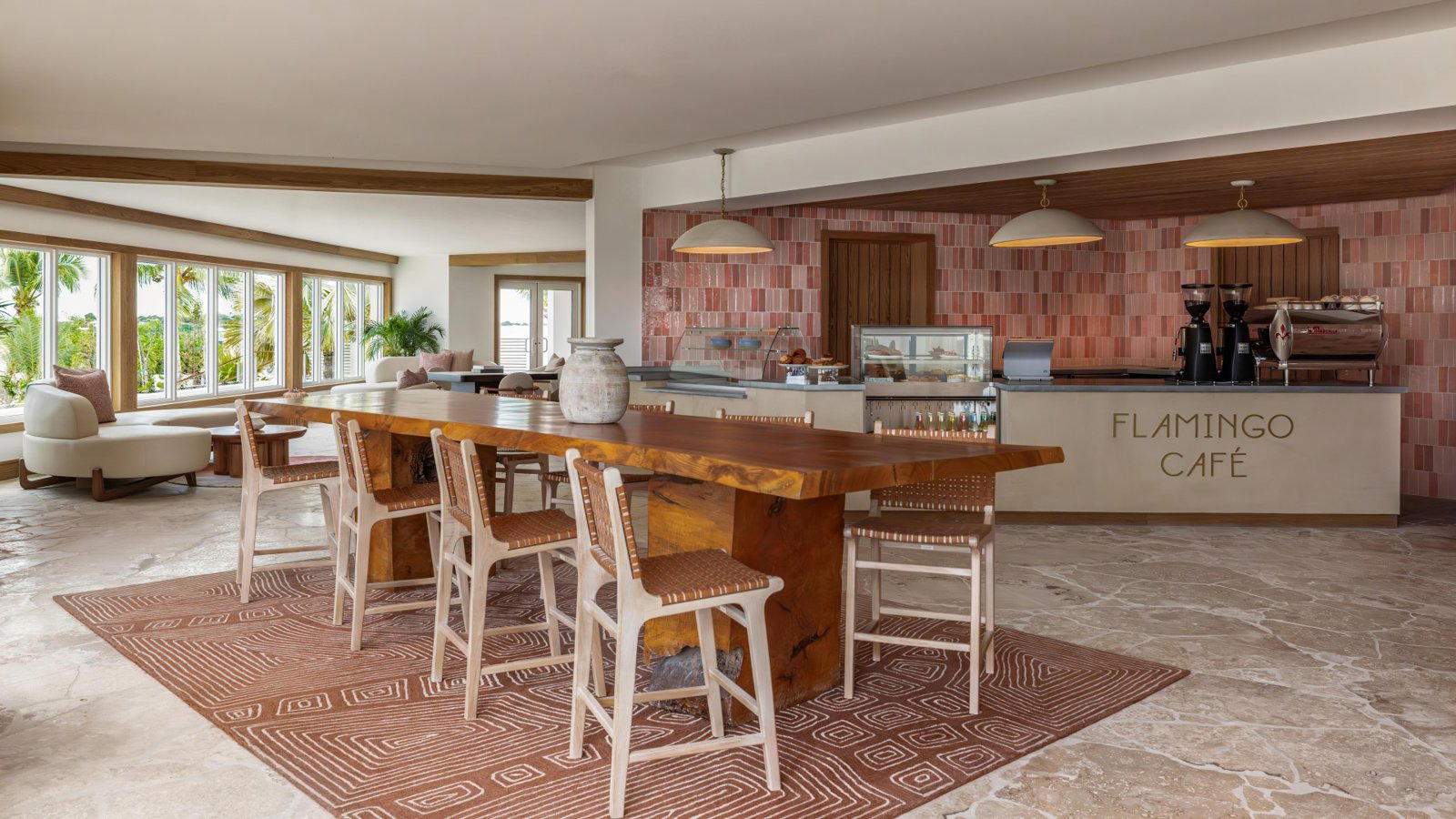
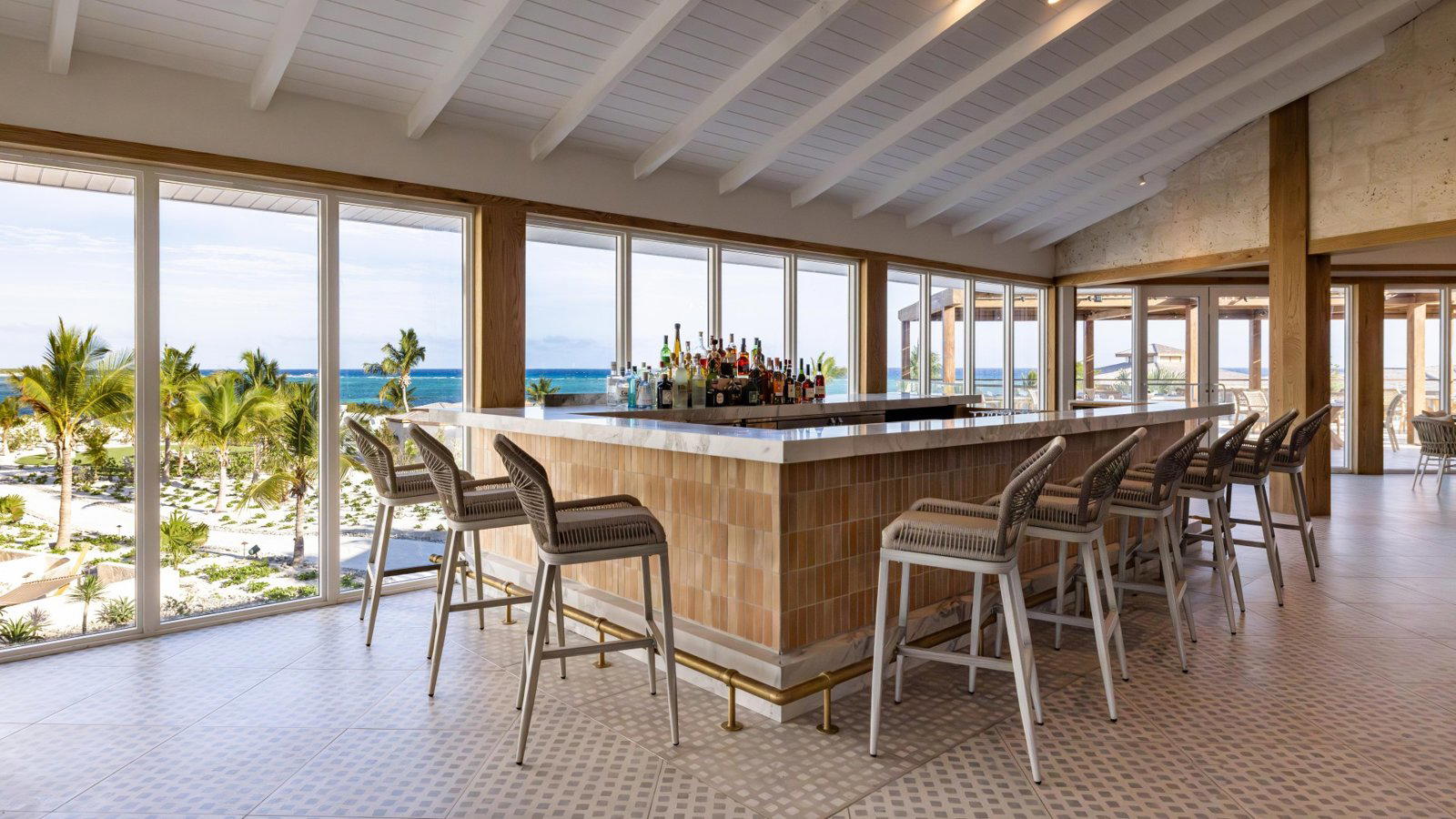
Private island dining programmes tend to fall into one of two categories: a single formal restaurant with a fixed menu, or a distributed, multi-venue approach that gives guests genuine variety without leaving the property. Ambergris Cay takes the second route, with four distinct food and beverage settings covering different moods and times of day.
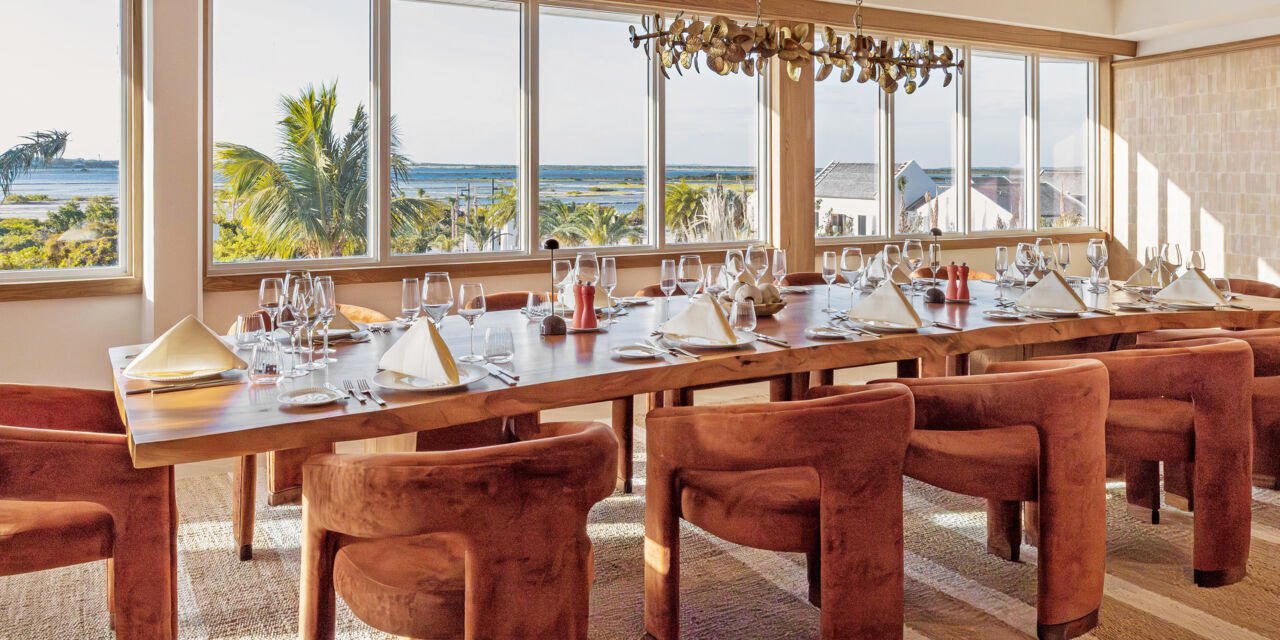
Calico Restaurant and Bar serves as the primary dining venue, handling breakfast and dinner service. The menu operates on an à la carte format that changes daily with the seasons, a structure that requires considerably more kitchen flexibility than a fixed tasting menu. The ingredient sourcing reflects the island's geography: lobster appears on the menu when the season allows, and international chefs rotate the offering to include both local island specialties and broader international preparations. Vegan, vegetarian, and kosher menus are available, with specific dietary requirements accommodated with advance notice.
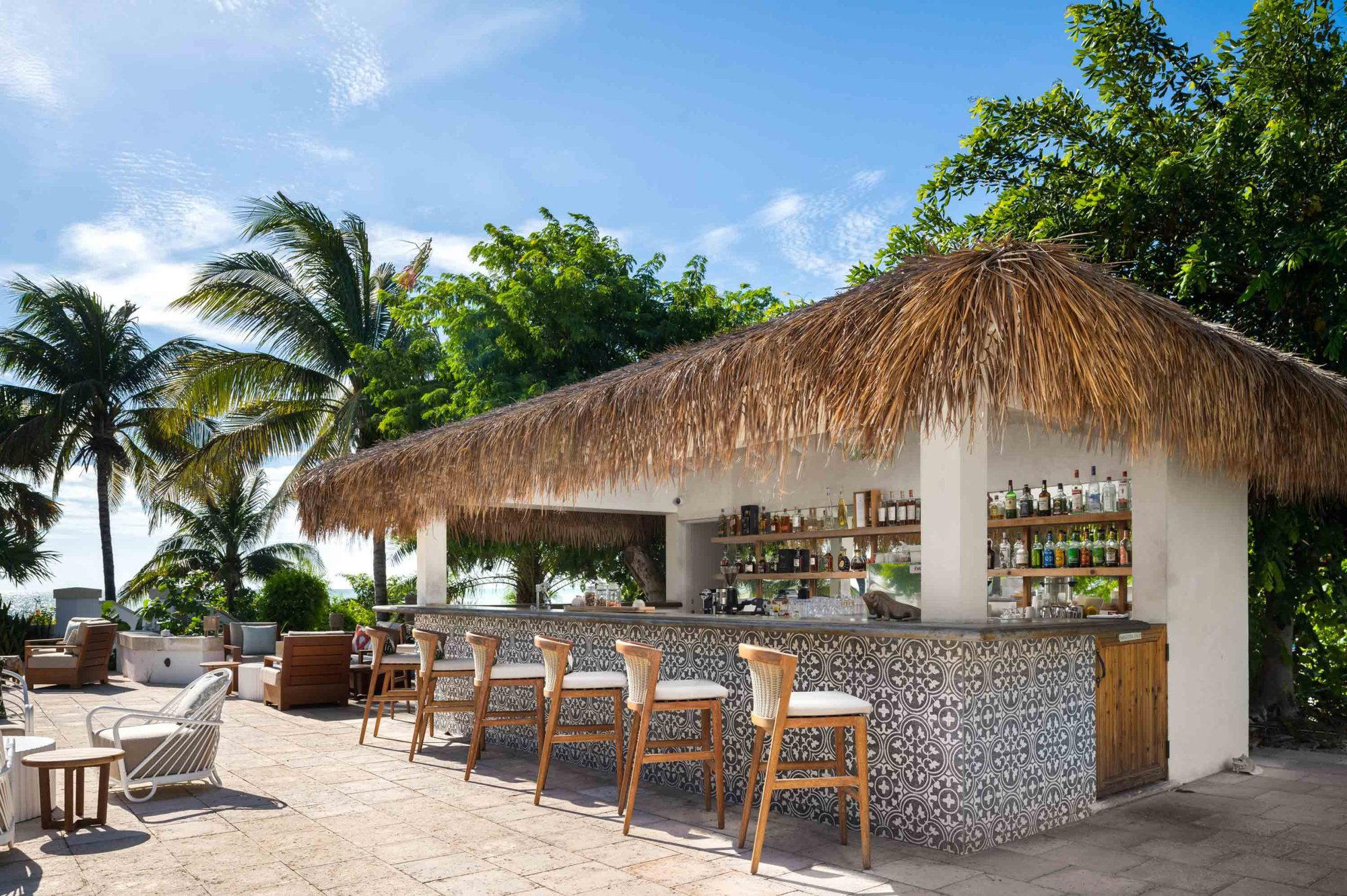
Lunch moves to the Club House, shifting the register toward something more relaxed without abandoning the kitchen's standards. For drinks and lighter options at different hours, the Hangover Tiki Bar operates as the island's casual cocktail point. Poolside bites round out the daytime eating options. In-room dining extends to villas and bungalows directly, subject to a tray charge, which means guests in the larger private villa configurations can maintain full privacy through every meal if they choose.
The daily-changing menu model places meaningful pressure on the culinary team, since it prevents the kitchen from settling into repetitive production cycles. For guests staying multiple nights, that format is what distinguishes the dining experience from comparable all-inclusive resorts where the menu rotation is weekly at leading. The all-inclusive structure covers gourmet meals and premium cocktails across all venues, removing the per-item billing that often complicates relaxed island stays.
Compared to properties like Sailrock South Caicos in South Caicos or Windsong Resort in Grace Bay, Ambergris Cay's dining footprint is broader, with multiple named venues rather than a single restaurant supplemented by room service. That multi-venue structure, combined with the all-inclusive format, positions the property closer to the hospitality model used at ultra-luxury Caribbean retreats where food and beverage is treated as a central programme rather than a supplementary offering.
Accommodation: Scale and Privacy as the Primary Variables
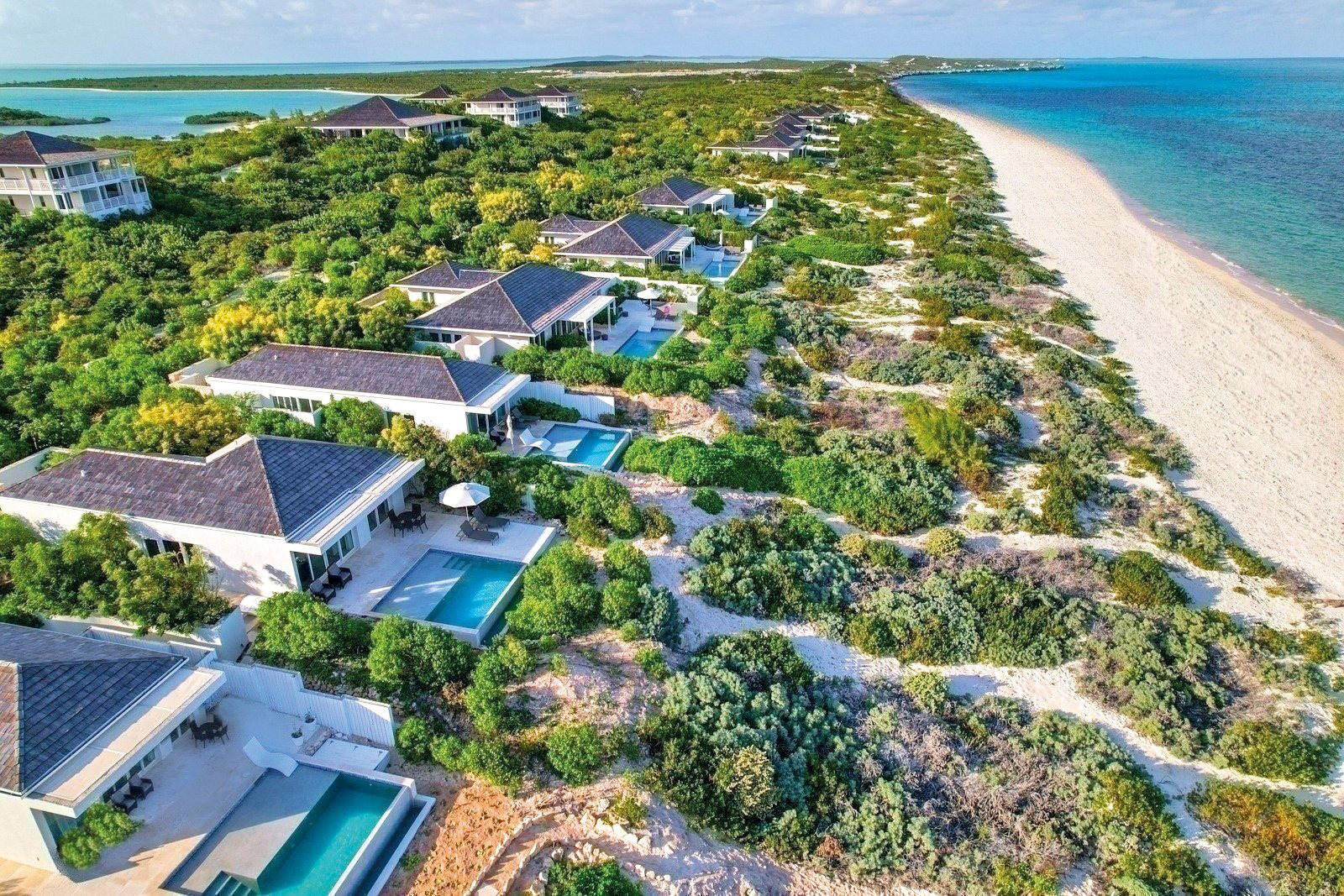
Private island accommodation tends to differentiate itself through two levers: the ratio of land to guests, and the degree of privacy each unit delivers. At Ambergris Cay, both levers are pushed toward maximum separation. Beachfront bungalows with private heated plunge pools represent the entry-level configuration, while private villas at the larger end run to eleven bedrooms, placing them in the category of whole-island buyout alternatives for larger groups or extended families.
The villa scale makes Ambergris Cay directly relevant to a specific planning scenario: the group or multi-generational trip where a single luxury hotel room is structurally inadequate. Properties like Villas of Salt Cay in Balfour Town operate within a similar villa-led format, while properties such as The Palms Turks and Caicos in The Bight Settlement and The Shore Club Turks and Caicos in Long Bay Hills offer multi-bedroom configurations within larger resort footprints. Ambergris Cay's distinction is that the entire surrounding acreage belongs to the island itself, meaning villa guests are not sharing grounds with a larger hotel population.
Getting There: Private Aviation as Standard Logistics
Arrival at Ambergris Cay requires a short-haul private flight, which is standard for private island properties in the Caribbean but involves more planning than a simple ground transfer. Commercial flights land at either Howard Hamilton International Airport (PLS) on Providenciales or South Caicos International Airport (XSC). From Providenciales, guests transfer to the Atlantic Aviation FBO facility, a ten-minute process, before boarding a roughly twenty-minute private plane to the island's own airstrip. From South Caicos, the transfer is more direct, with a ten-minute flight to Ambergris Cay handled by the resort's concierge team.
The critical logistical constraint is the 4:00 p.m. arrival cutoff, which exists to ensure guests connect with the daytime flight. This is the kind of detail that affects ticket selection significantly: a flight arriving in Providenciales at 3:30 p.m. creates real pressure on the ground transfer, while a morning arrival allows for unhurried logistics. The property notes that private planes may occasionally be substituted with chartered domestic airline flights during maintenance periods, with transfers shifting to the main PLS terminal rather than Atlantic Aviation. Guests are notified in advance when this occurs.
Those weighing other Turks and Caicos properties should also consider Point Grace Resort and Spa in Grace Bay or Bohio Dive Resort in Cockburn Town depending on their preferred access format and room configuration.
Planning Your Stay
Cost Snapshot
Comparable venues nearby, for context on price, style, and recognition.
| Venue | Price | Awards | Notes |
|---|---|---|---|
| Ambergris Cay Private Island Resort, Turks & Caicos - All InclusiveThis venue — the venue you are viewing | $$$$ | 5-Star | Not listed |
| Ambergris Cay | $$$$ | 5-Star | Big Ambergris Cay, Private island luxury resort with beachfront bungalows and villas |
| The Strand | $$$$ | 5-Star | Cooper Jack Bay Settlement, Contemporary luxury beachfront resort community with modern architecture, floor-to-ceiling glass, and hand-crafted infinity pools integrated into the natural landscape. |
| Beach Enclave | $$$$ | 5-Star | Providenciales, Luxury private villas and beach houses with resort amenities in secluded beach enclaves |
| The Palms Turks and Caicos | $$$$ | 5-Star | The Bight Settlement, Luxury Caribbean resort combining old-world elegance with contemporary amenities; all-suite property with apartment-style living spaces. |
| Oceanview Two-Story Suites | $$$$ | 5-Star | Providenciales, resort-style suite accommodation |
Recognition history
Dated appearances from independent guides and award organizations, with the underlying list record or original source where available.
Fodor's Most Incredible Hotels in the World
Fodor's
La Liste Top Hotels
La Liste
Virtuoso Luxury Hotel Partner
Virtuoso
World Travel Awards
World Travel Awards
Continue exploring
More in Ambergris Cay
Hotels in Ambergris Cay
Browse all →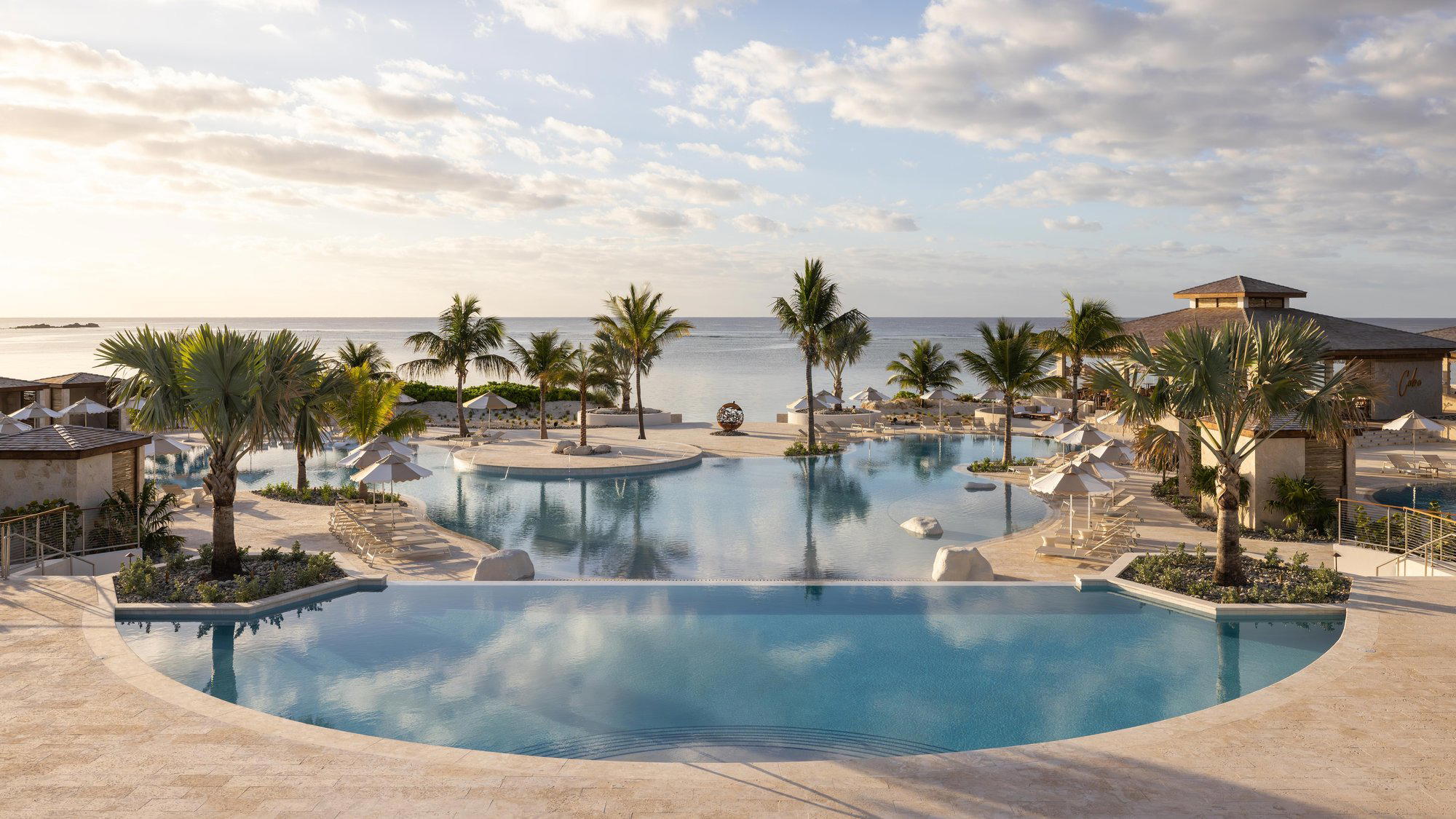
Bars in Ambergris Cay
Browse all →
At a Glance
- Romantic
- Quiet
- Elegant
- Scenic
- Intimate
- Sophisticated
- Ornate
- Honeymoon
- Romantic Getaway
- Anniversary
- Wellness Retreat
- Destination Wedding
- Beachfront
- Infinity Pool
- Private Villa
- Butler Service
- Panoramic View
- Pool
- Spa
- Fitness Center
- Room Service
- Concierge
- Tennis
- Beach Access
- Waterfront
- Pool
- Spa
- Fitness Center
- Room Service
- Concierge
- Tennis
- Beach Access
Tranquil and romantic with a barefoot luxury vibe, pristine beaches, attentive service, and immersive nature experiences amid dramatic ocean views.