← Guides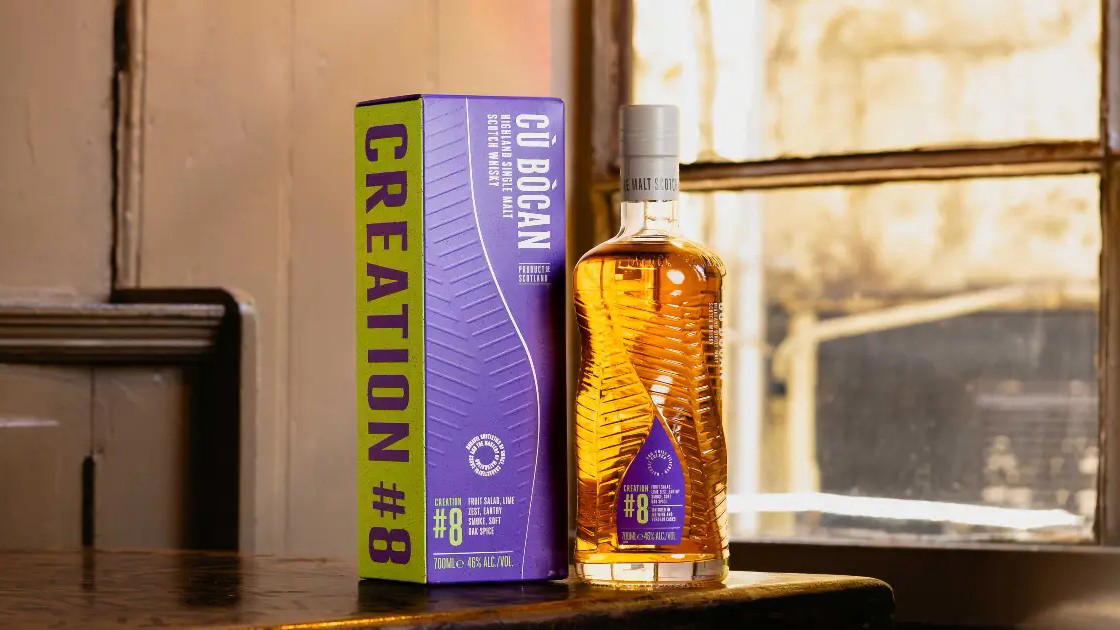
Tomatin's Cù Bòcan Creation #8 — 3,600 bottles matured in Pillitteri Estates Icewine casks — may be the first peated Scotch finished this way.
Tomatin's Cù Bòcan Creation #8 — 3,600 bottles matured in Pillitteri Estates Icewine casks — may be the first peated Scotch finished this way.
In February 2020, ten French Oak casks arrived at Tomatin Distillery in the Scottish Highlands, each still holding a few litres of Canadian Vidal Icewine. Distillery manager Jamie Muir and his team emptied the wine, handed samples to the staff, and filled the barrels immediately with Cù Bòcan new make spirit. The result, Creation #8, limited to 3,600 bottles, is what Tomatin claims is the first known peated Scotch whisky matured in Icewine casks. The Tomatin Cù Bòcan Icewine cask experiment almost never happened at all.
The origin story begins not in the Highlands or Ontario, but at a travel retail trade fair in Singapore in 2013. Scott Adamson, then Tomatin's brand ambassador and blender, found his stand positioned next to Pillitteri Estates Winery from Ontario. According to Jamie Muir, Adamson was struck by the quality of Pillitteri's wines and by the parallels he saw with the European sweet wines Tomatin had previously used in maturation. The cogs, as Muir put it, started turning.
Acting on that instinct proved harder than expected. At the time, only one of Pillitteri's Icewines was oak-aged, and the winery used just ten casks a year, a supply too small for any commercial maturation programme. When Tomatin first approached Pillitteri, the answer was discouraging: the casks from the recent bottling had already been deconstructed, their staves repurposed as cladding for Pillitteri's new tasting room. The project appeared dead before it began.
Then, a few months later, an email arrived out of the blue. Pillitteri was about to bottle their next batch, and the casks would be available if Tomatin still wanted them. Muir moved quickly. Tomatin purchased all ten casks, had them shipped from Pillitteri's winery in Ontario, where winters regularly reach -25°C, and took delivery in February 2020. Eight of those ten casks went into Creation #8. The remaining two still hold Cù Bòcan spirit from 2006, which Muir says will likely be bottled at some point as a single-cask or limited release.
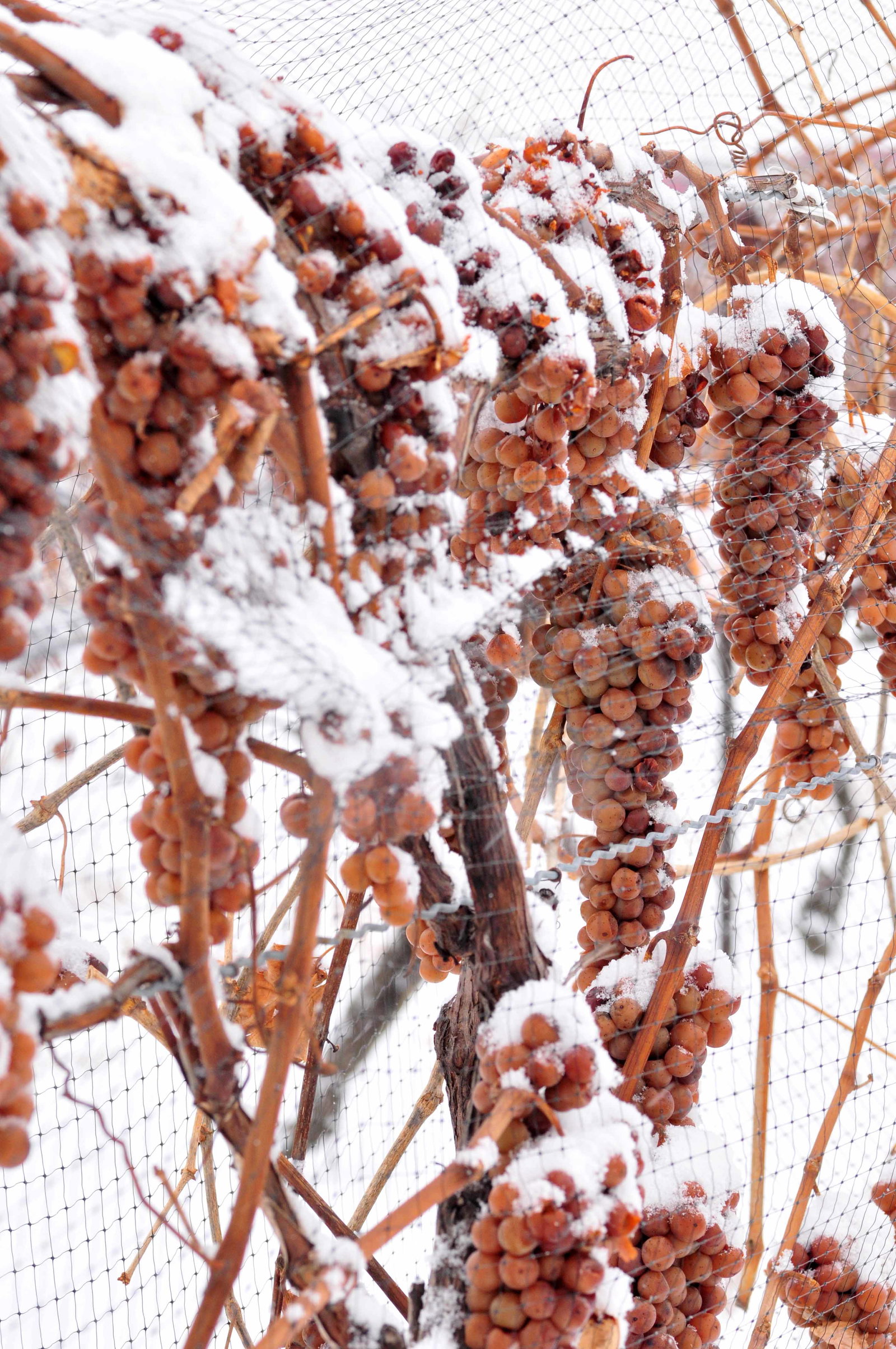
To understand why these casks behave differently from a standard wine barrel, you need to start with the wine itself. Icewine is produced from grapes left to freeze naturally on the vine, a process that Ontario's climate makes possible with brutal reliability. When temperatures drop to around -8°C, the water inside the grapes crystallises, and the fruit is pressed while still frozen. What emerges is a tiny volume of hyper-concentrated juice: dense with sugars, fruit esters, and acidity in proportions that no conventional harvest can replicate.
Pillitteri's Vidal Icewine, the variety used for the casks supplied to Tomatin, is the winery's flagship expression. Jeff Letvenuk, Pillitteri's director of marketing, describes it as developing intense fruit flavours of pear, apple, and apricot with layered honey notes. When aged in oak, the wood adds vanilla and a slight caramel character, deepening the wine's complexity further. The casks Tomatin received are French Oak with a medium toast, a specification that complements the Vidal grape's aromatic profile, and each arrived still holding a few litres of Icewine residue.
That residue matters. Unlike a cask that has been emptied, cleaned, and rested before shipping, these barrels carried their flavour payload right to the point of filling. Muir's team emptied the remaining wine, distributed samples among the distillery staff, and filled the casks immediately with Cù Bòcan new make spirit. The speed of that transition, wine out, spirit in, is deliberate: it preserves the volatile esters and residual sugar compounds absorbed into the wood grain before they can dissipate.
The spirit then matured alongside casks previously used to age Spanish Verdejo, creating a dual-cask programme within the Cù Bòcan Creation series. The Verdejo casks contribute what Tomatin describes as a lively citrus and herbal dimension. The Icewine barrels, by contrast, impart apricot jam, candied peach, and pineapple syrup. The interplay between those two wood types, one bringing brightness and herbaceous lift, the other a dense tropical sweetness, is what gives Creation #8 its stated flavour profile of fruit salad sweets, lime zest, earthy smoke, and soft oak spice.
The chemistry of Icewine-seasoned oak is what separates this technique from generic wine-cask finishing, and it comes down to concentration. Vidal Icewine carries residual sugar levels, typically in the range of 150 to 250 g/L, many times higher than a dry table wine, which sits under 4 g/L. When that wine ages in French Oak, those sugars and their associated ester compounds penetrate the wood over months, loading the barrel's inner surface with flavour-active molecules that a single-use wine cask simply cannot match.
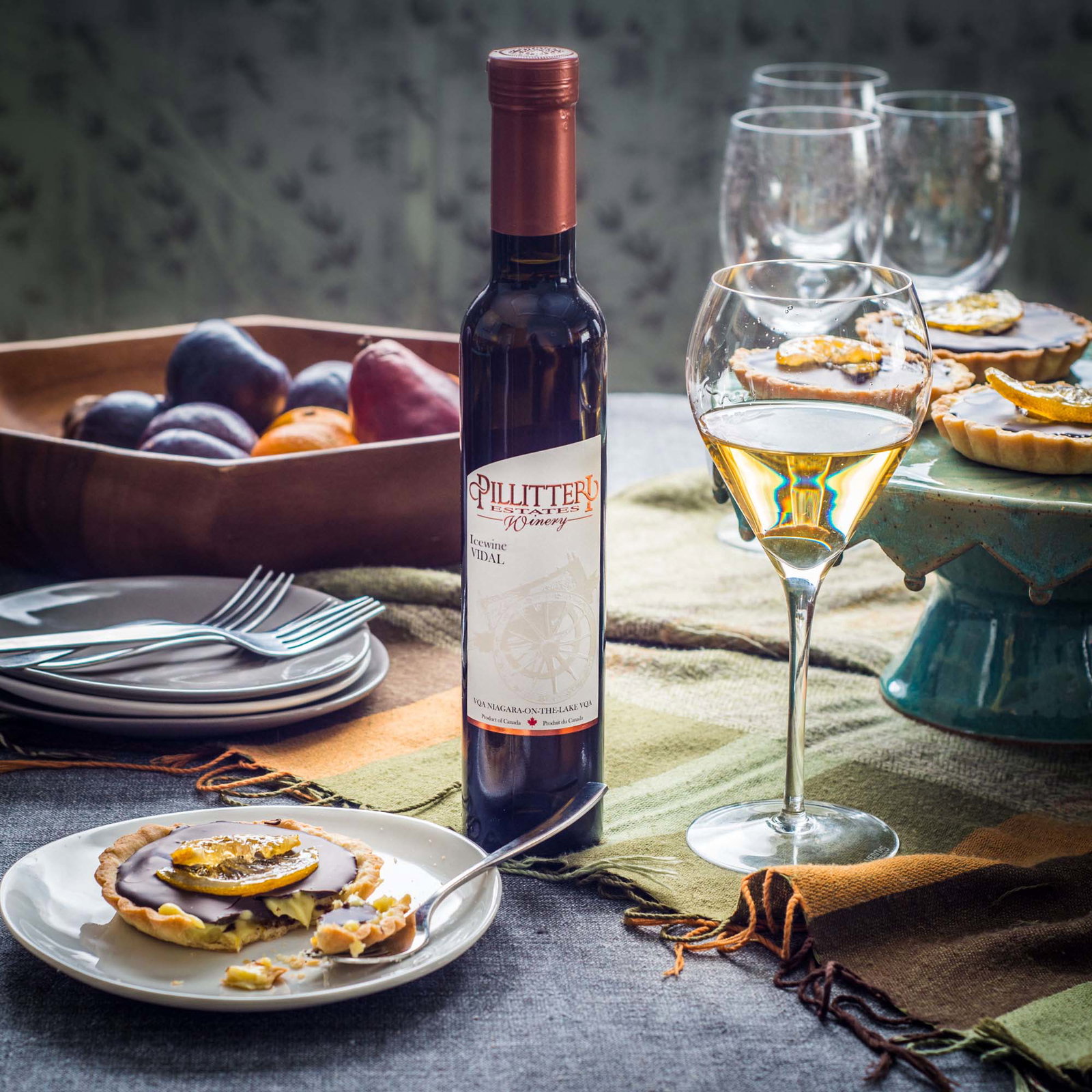
Medium toast amplifies this further. The toasting process caramelises the wood's natural sugars, primarily hemicellulose, and creates lactones and vanillin compounds that interact with the wine's fruit esters during seasoning. By the time the cask reaches Tomatin, it carries layers of flavour that are unavailable through conventional cooperage channels. You cannot order an Icewine-seasoned cask from a standard cooper because Icewine itself is produced in such small volumes: Pillitteri was using only ten casks a year at the time of Tomatin's initial approach, and that constraint has not fundamentally changed.
Letvenuk told the drinks business that Icewine is uniquely suited to spirits maturation because of its complex and fragrant aromatics, and that the sweetness is well balanced by acidity and intensity of flavour, a balance that makes the wood active without becoming cloying. That acid-sugar equilibrium is what Muir noticed when he described the Icewine casks as a dream to work with: the sweetness and mouthfeel of the wine came through gradually, taking longer than usual to assert itself because the fruity character of Cù Bòcan's new make initially masked the cask's contribution.
Pillitteri's range also points toward future experimentation. Beyond Vidal and Riesling, the winery produces Icewine from Merlot, Shiraz, and Cabernet Sauvignon. Letvenuk describes the barrel-aged Cabernet Sauvignon Icewine as rich with strawberry, raspberry, and cherry, with toffee and subtle dark chocolate emerging from the oak contact, a flavour profile that would interact with peated spirit in an entirely different register from Vidal. Pillitteri also launched what it describes as the world's only Corvina-based Icewine, adding yet another potential cask type to the palette.
Creation #8 is the proof-of-concept for everything described above. With only 3,600 bottles produced in total, it sits firmly in collector-grade limited-release territory rather than everyday shelf stock. The Cù Bòcan Creation series has always been the brand's vehicle for experimental maturation, each release explores a different cask type, and #8 is especially technically novel entry to date.
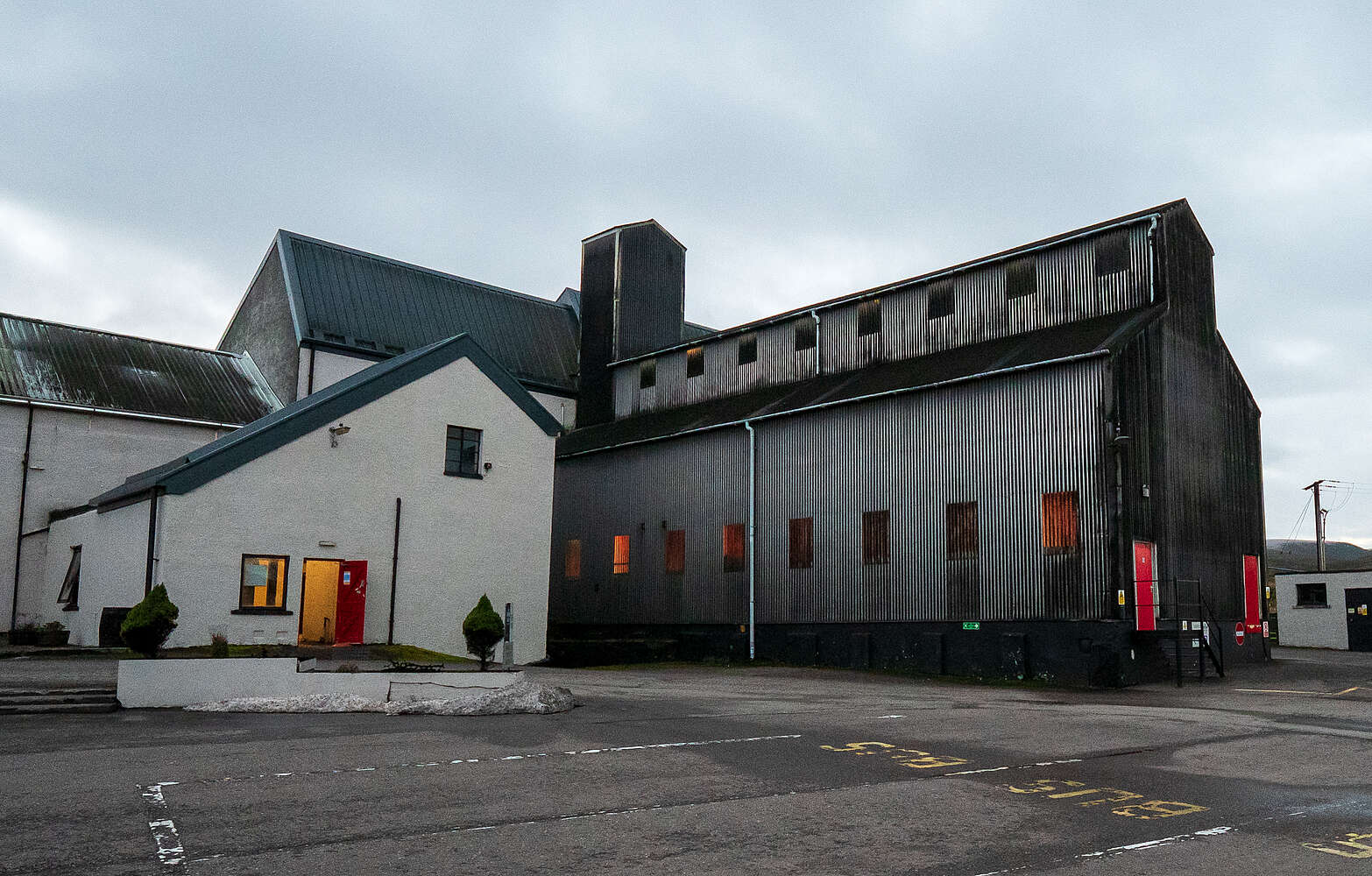
The dual-cask approach writes itself directly onto the palate. The Icewine barrels deliver apricot jam, candied peach, and pineapple syrup, the concentrated stone-fruit and tropical register that Vidal Icewine's 150 to 250 g/L residual sugar loads into French Oak over months of seasoning.
The Verdejo casks cut across that sweetness with citrus brightness and a herbal edge. Then Cù Bòcan's peat arrives underneath both, the earthy smoke preventing the whisky from reading as simply a fruit bowl.
The tension between those three layers, tropical, citrus, smoke, is what Muir spent seven years waiting to achieve, from that Singapore trade fair conversation in 2013 to the February 2020 delivery.
For collectors tracking the Creation series, the scarcity here is structural rather than manufactured. Icewine casks are not available through standard trade channels. Tomatin purchased ten, used eight for Creation #8, and retains two containing spirit from 2006. Muir was explicit that a large-scale follow-up is not possible given how rarely these casks become available. What comes next from those 2006-vintage barrels will almost certainly be a single-cask bottling, an even smaller allocation than the 3,600 bottles already in circulation.
Letvenuk was candid that revenue was not the driving factor behind Pillitteri's decision to supply casks to Tomatin. The winery's stated motivation was to expand awareness of Canadian Icewine within the global wine and spirits world, to show that Icewine is not simply a dessert-course specialty but a wine that ages in oak and produces casks with genuine maturation value. Canadian Icewine faces real headwinds domestically, and any mechanism that broadens the category's profile internationally carries weight that a single cask transaction alone cannot explain.
The commercial logic for cask supply is nonetheless direct. Pillitteri was using ten Icewine casks a year at the time of Tomatin's approach, casks that, once emptied, were being broken down for tasting-room cladding.
Selling those casks to a Scotch distillery instead generates revenue from a by-product that was previously discarded, without requiring any change to the winemaking process itself.
If other Canadian Icewine producers follow the same model, the aggregate supply would still be modest by Scotch industry standards, but modest supply and high flavour activity are precisely what limited-edition distillery releases are built around.
For Scotch producers, the appeal is access to a wood type that is legally novel and unavailable through standard cooperage, a cask that arrives pre-loaded with 150 to 250 g/L worth of fruit ester history rather than a generic wine finish. The Tomatin Cù Bòcan Icewine cask collaboration is the first documented instance of this approach, and Creation #8's 3,600 bottles are the first public evidence of what the technique produces. Muir's two remaining 2006-vintage casks suggest Tomatin is already planning the next chapter, and that bottling, whenever it arrives, will have even fewer bottles to go around.
Tagged
Get the App
Take the shortlist into the En Primeur Club app for concierge access, saved places, and the next step after discovery.
Get Exclusive AccessMore from the editors