← Guides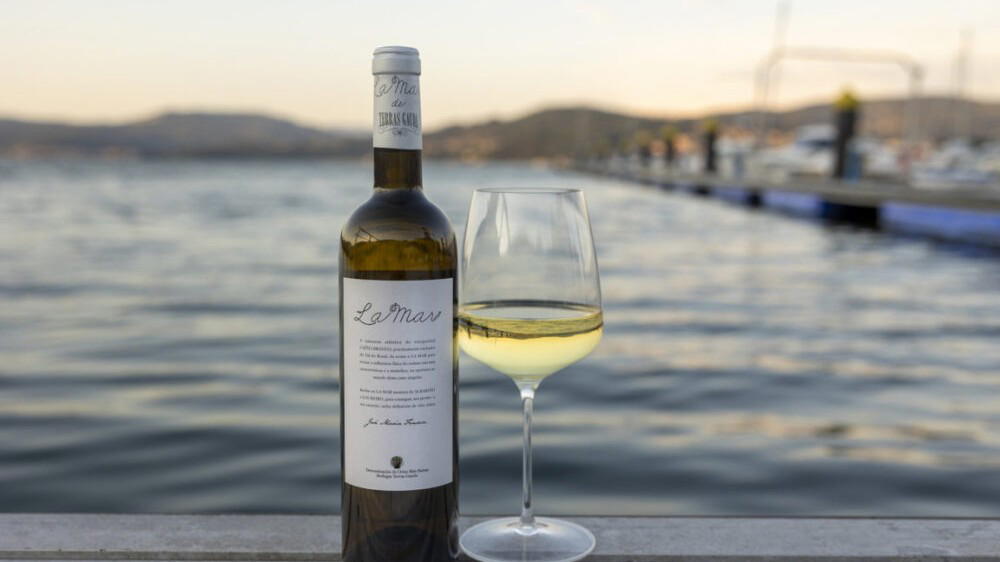
Terras Gauda’s revival of Caíño Blanco gives Rías Baixas a sharper answer to climate pressure beyond Albariño.
Terras Gauda’s revival of Caíño Blanco gives Rías Baixas a sharper answer to climate pressure beyond Albariño.
A late-ripening white grape with tensile acidity is an unusually valuable thing in Galicia now. At Terras Gauda, Caíño Blanco has moved from near-obscurity to the center of the estate’s identity: a native variety recovered by the Fonseca family at an O Rosal winery founded in 1989, and farmed as part of a broader commitment to indigenous grapes in Rías Baixas.
Albariño still defines the region for many drinkers abroad, with its bright acidity, citrus profile, and natural affinity for seafood. Terras Gauda offers a more layered reading of the appellation from its position near the Miño River, close to the Atlantic Ocean: estate-grown white wines made entirely from indigenous varieties, with Caíño Blanco carrying the argument for freshness, structure, and resilience.
The central detail is acidity. Rías Baixas built much of its reputation on vivid, Atlantic freshness, yet warmer seasons put pressure on that signature. Caíño Blanco gives Terras Gauda a native answer: a grape with a particularly long growing cycle and the ability to retain the line and lift that make Galician whites so compelling.
Emilio Rodríguez places the grape’s near-disappearance around 45 years ago, before Terras Gauda helped bring it back into meaningful production. The estate now controls roughly 80% of Caíño Blanco planted in Rías Baixas; winery materials put the figure as high as about 98%. Either way, Terras Gauda is the dominant steward of the variety in the appellation.
Its rarity would mean little without quality in the glass. Caíño Blanco brings naturally high acidity, aromatic intensity, and structure, but it also comes with small clusters, modest yields, and a long season in the vineyard. Those traits once made it a difficult commercial proposition. In a warmer wine world, they look increasingly prescient.
O Rosal, the southernmost subzone of Rías Baixas, sits in Galicia along the Miño River where Spain meets Portugal. That borderland position matters: Terras Gauda’s work is not simply a variation on monovarietal Albariño, but an estate-led case for the native white grapes of this specific corner of the appellation.
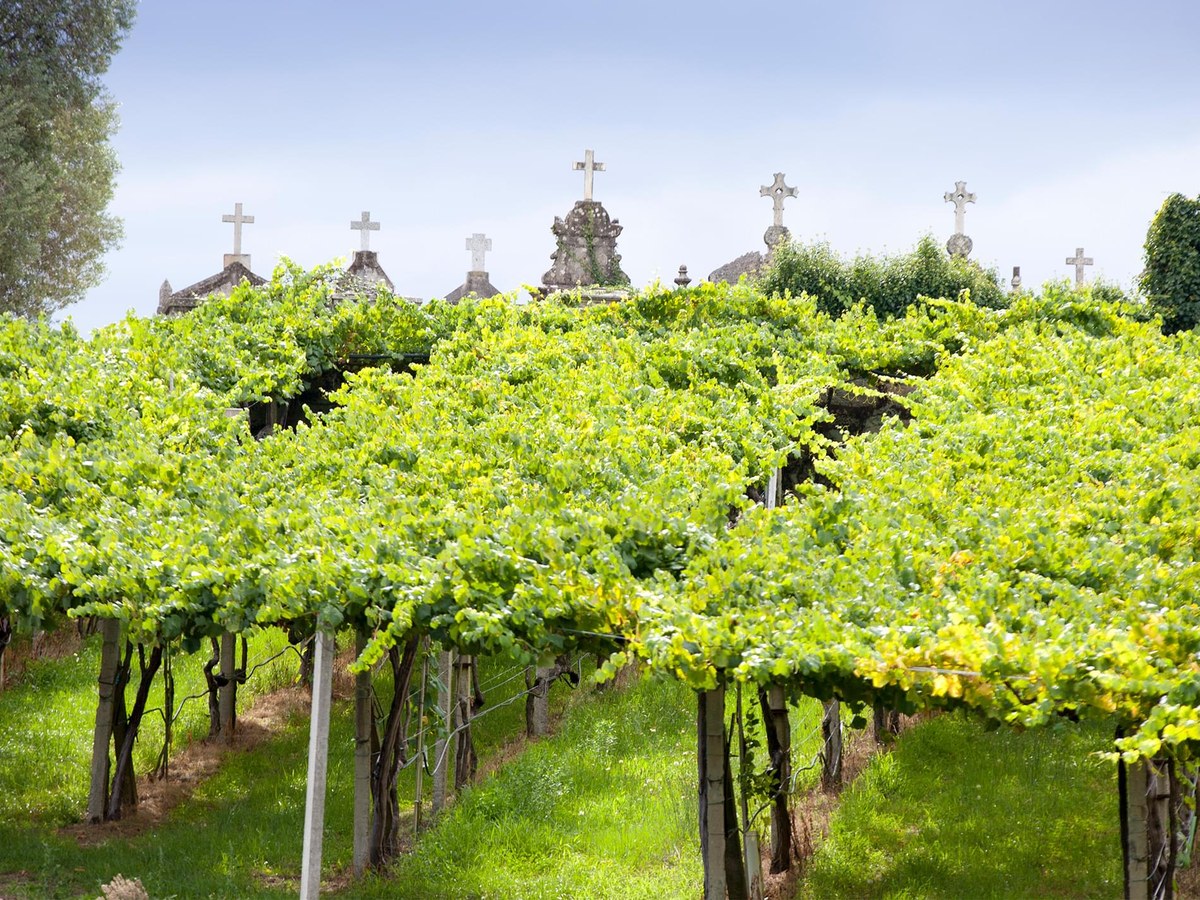
The Fonseca family farms nearly 400 acres across Rías Baixas, focusing exclusively on indigenous varieties. Caíño Blanco, native to Galicia and neighboring northern Portugal, long played a supporting role in regional blends before Terras Gauda gave it a more central place in its wines.
Vineyard detail sharpens the picture. Terras Gauda’s holdings run across rolling hillsides between roughly 160 and 500 feet in elevation, allowing the estate to work with slope, exposure, training system, and grape selection rather than relying on appellation shorthand alone. For the curious drinker, that is where Rías Baixas becomes more interesting.
Caíño Blanco’s climate relevance begins with timing. Albariño generally ripens earlier, while Caíño Blanco reaches maturity later, toward the end of September, when temperatures are cooler and daylight hours shorter. That extended hang time helps preserve the freshness that gives the region its identity.
“Due to the warm temperatures we are losing this typical acidity, but not with the Caíño Blanco, due to the long cycle, so it's resistant to the effects of the climate change,” said Emilio Rodríguez
The mechanics are what make the claim persuasive: later ripening, acid retention, low yields, and structure. Rodríguez also notes that Terras Gauda was not thinking about climate change when it embraced the grape 35 years ago; the original impulse was preservation. The climatic advantage has become newly visible with time.
For sommeliers, Caíño Blanco offers another kind of Galician white, still native, still brisk, but not dependent on the Albariño model that dominates many export shelves. For collectors of serious Spanish whites, the appeal lies in specificity: producer, subzone, grape, and vineyard all carry weight.
Terras Gauda’s vineyard practice reinforces the same philosophy. While much of Rías Baixas is associated with pergola training, the estate uses double cordon Royat, a system Rodríguez says Terras Gauda was the first winery to plant in the appellation. The choice naturally lowers yields and builds concentration.
The numbers are plain. Terras Gauda produces around 7,000 kilos per hectare, while the DO permits 12,000 kilos. Typical Caíño Blanco vineyards at the estate sit around 6,000 kilograms per hectare, aligning the variety’s naturally restrained productivity with a deliberate pursuit of flavor and structure.
That is the opposite of convenience farming. Growers once moved away from Caíño Blanco because easier, more productive grapes made better economic sense. Terras Gauda treated those liabilities as a reason to go deeper: less fruit, more character, and a clearer connection to Galician viticultural heritage.
La Mar is one concentrated expression of that belief, a single-vineyard wine from a dramatic hillside planted almost entirely to Caíño Blanco. Here, the estate accepts steepness, thin soil, schist, and demanding hand work in exchange for precision.
The site averages roughly 25% slope, with about 25 centimeters of sandy topsoil before roots meet solid schist. Mechanization is impossible, so harvesting is done by hand and requires twice the manpower used for other plots. Yields fall to about 4,000 kilograms per hectare.
Those details form the wine’s architecture. A hillside of Caíño Blanco rooted into schist, worked by hand because machines cannot manage the slope, gives La Mar its place within Terras Gauda’s range and within the broader conversation about serious Spanish whites.
It also adds dimension to Rías Baixas itself. The familiar seafood-and-Albariño association remains intact, but O Rosal brings schist-rich soils in contrast to the predominantly granite-based soils found elsewhere in the appellation, along with a grape whose survival depended on one estate refusing to abandon low yields.
Terras Gauda’s work with Caíño Blanco is a reminder that climate adaptation need not always come from imported varieties or fashionable reinvention. Sometimes one compelling answer is already native: nearly lost, then recovered through sustained planting, estate farming, and a willingness to produce less than the rules allow.
For buyers, the practical move is to read Rías Baixas labels with sharper attention to grape composition and subzone. Albariño remains central to the appellation, but Caíño Blanco deserves a place beside it when the wine comes from O Rosal and from a producer that has spent decades building the variety’s future rather than treating it as a curiosity.
Galicia’s next chapter may be shaped by precisely this kind of recovery. In Terras Gauda’s hands, Caíño Blanco is not a footnote to Albariño; it is a native grape with the acidity, structure, and resilience to make Rías Baixas feel newly alive.
Tagged
Get the App
Take the shortlist into the En Primeur Club app for concierge access, saved places, and the next step after discovery.
Get Exclusive AccessMore from the editors