← Guides
Sam Neill was named a Fellow of New Zealand Winegrowers weeks before his death in July 2026, recognizing more than three decades of advocacy for Two Paddocks and Central Otago Pinot Noir.
Sam Neill was named a Fellow of New Zealand Winegrowers weeks before his death in July 2026, recognizing more than three decades of advocacy for Two Paddocks and Central Otago Pinot Noir.
In Central Otago, Pinot Noir can carry red cherry, wild thyme, and cold mountain air in the same glass. Sam Neill helped take that signature well beyond New Zealand, and in early July 2026, weeks before his death at age 78, he received the country’s highest wine industry honor, Fellow of New Zealand Winegrowers. His path began with a single vineyard block purchased in 1991, led to the establishment of Two Paddocks in Central Otago in 1993, and grew over 32 years into one of the country’s most respected wine brands. Through the global reach of his film career, Neill gave Central Otago Pinot Noir an audience few young appellations could reach alone.
The Fellow designation is awarded through peer nomination to individuals whose leadership, innovation, and service have made an outstanding contribution to New Zealand wine. According to New Zealand Winegrowers, Neill was recognized for promoting New Zealand wine and for the warmth and authenticity with which he told the industry’s story. He spoke warmly of what the honor meant to him, acknowledging not only his more than 35 years in New Zealand wine, but also the dedicated Two Paddocks team and the Central Otago region that shared in that journey.
Neill purchased his first vineyard block in 1991, two years before formally establishing Two Paddocks in Central Otago. That timing placed him among the early producers willing to trust the region’s promise for Pinot Noir, the grape that would define Central Otago’s reputation over the following three decades. New Zealand Winegrowers described the arc: what began as a desire to share those ethereal Pinot Noir moments with family and friends grew into one of New Zealand’s most respected wine brands.
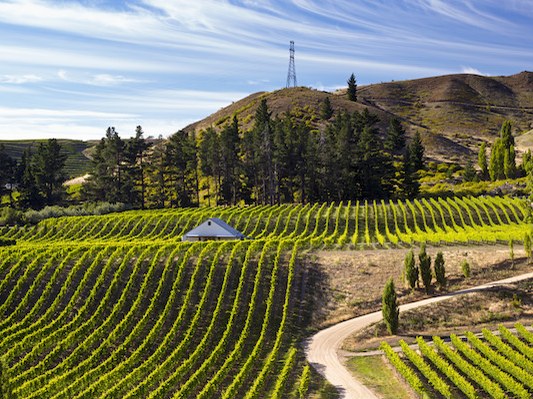
"What began as a desire to share those ethereal Pinot Noir moments with family and friends grew into one of New Zealand's most respected wine brands"
, New Zealand Winegrowers, organisation, The Drinks Business
The winery’s rise tracks closely with Central Otago’s own. In the early 1990s, the region was still little known outside New Zealand.
By the 2020s, Central Otago Pinot Noir drew serious attention from collectors and critics worldwide, a shift shaped by producers who stayed through multiple harvest cycles and deepened their reading of site, clone selection, and cellar technique. Neill’s consistency over 32 years added to that credibility.
Two Paddocks stayed with Pinot Noir from Central Otago parcels, rather than stretching into the brand extensions and geographic drift that often follow celebrity wine projects.
That longevity matters. Many celebrity wine ventures arrive with fanfare and disappear within a decade. Two Paddocks worked through three decades of vintage variation, market shifts, and the scrutiny that comes with a famous founder. New Zealand Winegrowers, an industry body representing the country’s wine sector, chose to honor Neill as a Fellow because his peers saw more than an acting career. The Fellow designation is not awarded for celebrity status; it requires sustained contribution to the industry’s development.
The Fellow honor is awarded annually to a select group of individuals whose leadership and service have shaped New Zealand wine. Fabian Yukich, chair of New Zealand Winegrowers, said the Fellows programme recognizes those who have helped shape the success of the industry. The 2026 Fellows, Neill was one of five, have each helped strengthen New Zealand wine through their commitment to excellence, generosity of knowledge, and service to the wider wine community.

Neill’s contribution centered on advocacy. New Zealand Winegrowers noted that he generously used his profile, talents, and distinctive voice to promote New Zealand wine, bringing authenticity, warmth, and global attention to the people, places, and stories of the wine community.1 The wording is precise: the organization pointed to authenticity and warmth, the qualities that separate true advocacy from a transactional celebrity endorsement.
"Sam generously used his profile, talents and distinctive voice to promote New Zealand wine, bringing authenticity, warmth and global attention to the people, places and stories of the wine community"
, New Zealand Winegrowers, organisation, The Drinks Business
The distinction matters. Celebrity wine brands often use fame to move volume, but few earn peer recognition from industry bodies. Neill’s Fellow designation suggests that New Zealand winemakers understood his work as advancing the sector, not simply capitalizing on it. According to New Zealand Winegrowers, he used his international platform to introduce New Zealand’s wines, regions, and people to audiences around the world. That reach, paired with a commitment to one region and one variety, gave his advocacy its weight.
The timing of the honor, awarded in early July 2026, weeks before Neill’s death from pneumonia on July 13, adds poignancy without changing its meaning. The Fellow designation is not a lifetime achievement award given in memoriam; it is a peer-nominated recognition of sustained contribution. Neill was alive to receive the honor and spoke warmly of what it meant to him, acknowledging the Two Paddocks team and the Central Otago region that shared in the journey.
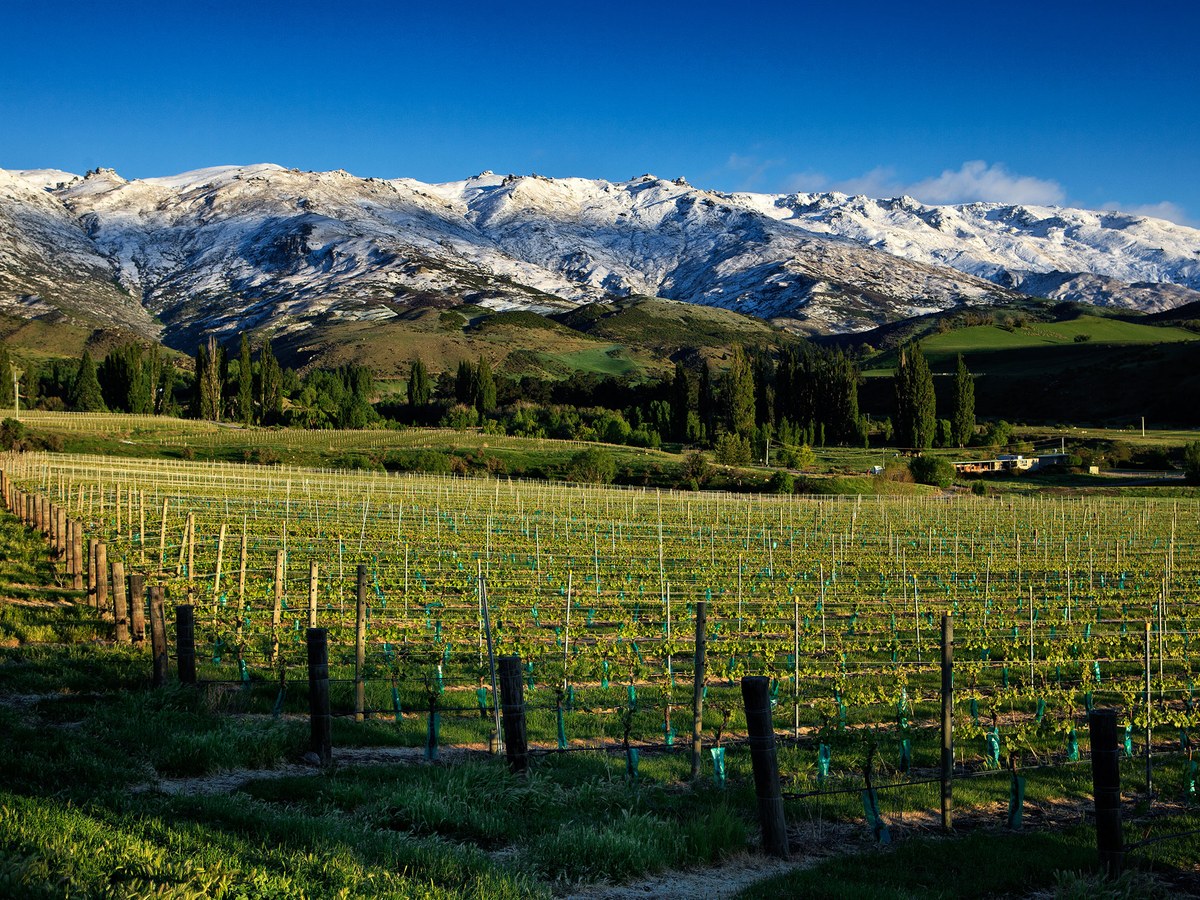
Central Otago is New Zealand’s southernmost wine region and the world’s southernmost significant Pinot Noir appellation. Its continental climate, hot summers, cold winters, and dramatic diurnal temperature swings produce Pinot Noir with intensity, structure, and aromatic lift. In the early 1990s, when Neill purchased his first vineyard block, Central Otago was still proving itself. The region’s first commercial plantings date to the 1980s; by 1991, it was a frontier.
Neill’s international profile opened doors that most New Zealand winemakers could not. His film career, spanning Jurassic Park, The Piano, Hunt for the Wilderpeople, and dozens of other roles, made him recognizable across markets where New Zealand wine was still building awareness. When he spoke about Two Paddocks or Central Otago in interviews, at tastings, or through media appearances, he introduced the region to consumers who might not otherwise have found it.
This advocacy came during a decisive growth phase for Central Otago. The region’s planted area expanded significantly through the 2000s and 2010s, and its reputation moved from curiosity to serious contender. Neill kept returning to place, Pinot Noir, and the people making the wine. He did not blur that message by launching brands in other regions or varieties. Two Paddocks remained a Central Otago Pinot Noir story, and that focus strengthened the region’s credibility.
The ambassador role is hard to quantify, but easy to see in hindsight. Central Otago Pinot Noir now earns respect in international markets, trades on secondary markets, and appears on serious wine lists worldwide. Neill’s contribution was one thread in that larger mix, but a visible one. His death prompted tributes from across New Zealand’s wine sector, and New Zealand Winegrowers described him as an well-known figure in the industry, language that speaks to real impact, not ceremonial courtesy.
The phrase New Zealand Winegrowers used to describe Neill’s motivation, sharing those ethereal Pinot Noir moments with family and friends, points to a maker-first philosophy. It places Two Paddocks as a personal project that grew, rather than a commercial venture built to monetize fame. Neill’s approach shaped how the brand was perceived and how he engaged with his role as winemaker.
Celebrity wine brands face a credibility problem. Consumers and critics often assume that the famous name on the label is a marketing construct, with the actual winemaking outsourced to consultants or négociants. Some celebrity wines are exactly that, licensed brands with minimal involvement from the namesake. Two Paddocks avoided that perception by keeping a clear connection to place and by Neill’s visible, sustained engagement with the winery over three decades. He did not launch Two Paddocks and walk away; he remained involved through 32 vintages.
The authenticity New Zealand Winegrowers emphasized in its tribute is what separates credible wine projects from vanity labels. Neill used his profile to promote New Zealand wine, but he kept the region, the team, and the wine itself in the foreground, not his celebrity. That approach earned him respect within the industry and allowed Two Paddocks to be judged on its merits as a wine brand, not dismissed as a celebrity novelty.
The warmth the organization noted matters just as much. Neill’s public persona was approachable, self-deprecating, and genuinely enthusiastic about wine. He did not position himself as an expert or a connoisseur; he positioned himself as someone who loved Pinot Noir and wanted to share it. That tone resonated with consumers and with the wine community. It also aligned with New Zealand’s broader wine identity, which tends to favor accessibility and storytelling over formality and hierarchy.
Two Paddocks occupies an unusual place in the collector market. It sits close to celebrity, yet carries genuine wine credibility, a rare combination. The winery’s focus on Central Otago Pinot Noir means its wines move within the broader market dynamics of that category. Central Otago Pinot Noir has drawn growing collector interest over the past two decades, driven by the region’s reputation for quality, limited production volumes, and critical acclaim for top producers.
The brand’s longevity is a signal. Collectors looking at Two Paddocks wines can see 32 years of consistent production, which suggests that the winery weathered vintage variation, market downturns, and the hard realities of running a wine business. That record separates Two Paddocks from newer celebrity projects that have not yet proved their staying power. The fact that the brand continued to operate and maintain its reputation through Neill’s illness and now beyond his death points to institutional stability, a team and a vision that extend beyond the founder.
Neill’s death may influence secondary market interest in Two Paddocks wines, particularly older vintages. Collectors often seek out wines associated with notable figures, and Neill’s passing adds historical resonance to the brand. Still, the wines deserve to be assessed on their own terms, as expressions of Central Otago Pinot Noir from specific vintages and parcels. The celebrity connection is part of the story, but it is not the only story.
For collectors considering Two Paddocks, the key questions are the same as for any Central Otago producer: What are the vineyard sources? What is the winemaking approach? How do the wines age? The brand’s reputation within New Zealand’s wine community, evidenced by Neill’s Fellow recognition, suggests that these questions have credible answers. Two Paddocks is not a novelty label; it is a producer that earned peer respect over three decades.
The Fellow honor is a useful data point. New Zealand Winegrowers does not award the designation lightly, and the peer-nomination process means the recognition comes from within the industry. For collectors, that endorsement carries weight. It signals that Two Paddocks contributed to the development of New Zealand wine in a meaningful way, and that Neill’s role as winemaker and advocate was understood by his peers as genuine and impactful.
Neill’s death raises the question of continuity. Two Paddocks has operated for 32 years under his leadership and public identity. The brand now enters a new phase, one in which the founder’s vision must be carried forward by the team he built. Neill acknowledged that team in his comments about the Fellow honor, recognizing the dedicated Two Paddocks staff and the Central Otago region. That acknowledgment suggests he understood the winery as a collective effort, not a solo project.
The brand’s future will depend on whether it can maintain the authenticity and regional focus that defined Neill’s approach. Celebrity wine brands often struggle after the founder’s departure, particularly if the brand was built chiefly on the founder’s fame rather than on the quality of the wine. Two Paddocks has the advantage of a long track record and a clear identity tied to Central Otago Pinot Noir. If the team can sustain that focus and continue to produce wines that reflect the region’s character, the brand has the foundation to endure.
New Zealand Winegrowers described Neill’s contribution as a lasting legacy. That places his work beyond a single lifetime: advocacy, a brand, and a set of relationships that continue to benefit New Zealand wine. The Fellow honor is part of that legacy, a formal recognition that Neill’s three decades in the industry mattered and that his impact will be remembered.
For Central Otago, Neill’s death is the loss of one of the region’s most visible ambassadors. The region has many talented winemakers and producers, but few had Neill’s international platform or his ability to reach audiences outside the wine world. His advocacy helped introduce Central Otago to consumers who might not have discovered it otherwise, and that contribution will continue to shape the region’s reputation even as the industry moves forward without him.
Sam Neill and Two Paddocks leave a clear Central Otago lesson: stay with the site, stay with the grape, and let the wine carry the message. Neill used his fame to amplify a region and a wine style he cared about, and he did so with consistency over 32 years.
The Fellow recognition from New Zealand Winegrowers confirms that work and places it within the broader story of New Zealand wine’s development.
For collectors, travelers, and wine enthusiasts, Two Paddocks remains a lens through which to understand Central Otago Pinot Noir, and a reminder that the celebrity wine projects are the ones where the celebrity becomes a winemaker, not the other way around.
Get the App
Take the shortlist into the En Primeur Club app for concierge access, saved places, and the next step after discovery.
Get Exclusive AccessMore from the editors