← Guides
A new $98.74-per-acre groundwater fee compounds regulatory costs for Napa growers already facing declining wine sales and profit margins.
A new $98.74-per-acre groundwater fee compounds regulatory costs for Napa growers already facing declining wine sales and profit margins.
Beckstoffer Vineyards, one of Napa Valley's largest and most respected grape growers, supplying fruit to about 120 wineries, will pay approximately $25,000 annually under the new groundwater fee.
The $98.74-per-acre charge, set to appear on property tax bills in December, arrives as roughly half of California wineries operate without a profit, according to Silicon Valley Bank's 2026 wine industry report.
Officials agreed to absorb 50% of first-year costs after grower backlash, but the temporary relief does not address the long-term financial pressure reshaping Napa's vineyard economics. For collectors tracking allocation-list Cabernet, the fee compounds a broader margin squeeze that threatens fruit contracts and supply chains.
The Napa County Groundwater Sustainability Agency announced the new fee structure earlier this year, charging farmers $98.74 per planted acre annually while homeowners with private wells will pay $62.58 per parcel. The fees stem from California's 2014 Sustainable Groundwater Management Act, which requires local agencies to develop long-term plans to protect groundwater supplies. Officials say the charges are necessary to protect Napa Valley's groundwater supply while keeping management under local control instead of risking intervention by state regulators.
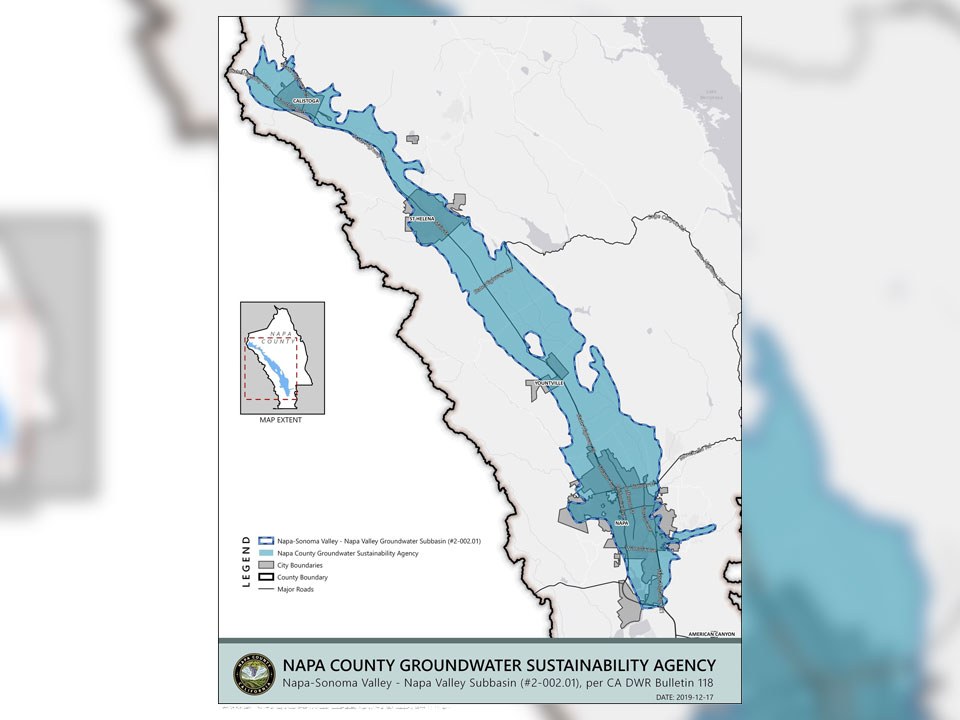
The county will contribute $500,000 annually to offset costs, leaving about $2.17 million to be recovered through fees charged to agricultural users, private well owners, and public water systems. The fees are expected to begin appearing on property tax bills in December. After a massive backlash from growers, officials agreed to temporarily ease the pain for the first year by absorbing 50% of the costs while the region transitions to the charges.
For vineyard owners already navigating declining wine sales and rising labor costs, the new fee represents another line item in an increasingly expensive operating budget. Premium vineyards in Oakville, Rutherford, and Stags Leap District face the same per-acre charge as lower-margin operations, creating disproportionate impact across the region's diverse vineyard holdings.
Jim Lincoln, General Manager of Beckstoffer Vineyards, told The California Post the new fee arrives at a time when all of the company's clients are asking for price reductions and less fruit due to the downturn in the market. Beckstoffer supplies grapes to about 120 wineries producing Cabernet Sauvignon, Chardonnay, Pinot Noir, and Sauvignon Blanc, a client roster that includes some of Napa's most allocation-driven cult Cabernet producers. The $25,000 annual cost estimate for Beckstoffer's 12,000 acres adds fixed expense at a time when revenue is declining across the client base.
Lincoln said most people assume Napa's famous vineyards are insulated from economic hardship because of the region's luxury reputation, but the reality is everything just seems to cost a fortune. For collectors who track allocation windows and mailing-list access, the financial pressure on growers like Beckstoffer has direct implications: when fruit contracts compress, producers may reduce case production, tighten allocations, or raise prices to offset rising input costs.
The groundwater fee arrives on top of what growers describe as an increasingly expensive web of government regulation. A 2025 Cal Poly study commissioned by the Napa County Farm Bureau found regulatory compliance already costs a large Napa vineyard about $1.7 million annually, $1,744.87 per acre, equal to roughly 12.5% of total production costs. Even a typical 200-acre family vineyard spends more than $226,000 each year, or $1,131 per acre, complying with regulations. The groundwater fee adds $19,748 annually to that 200-acre operation at full implementation, an 8.7% increase in compliance costs.
Growers must comply with air quality rules, water quality permits, groundwater monitoring, pesticide reporting, workplace violence prevention plans, wildfire smoke protections, heat illness standards, paid sick leave laws, Affordable Care Act mandates, worker safety training, farmworker housing assessments, and a lengthy list of state and federal reporting requirements.
The Cal Poly report concluded the combination of slumping wine consumption, an oversupply of grapes, and soaring compliance costs is crushing profit margins beyond the point of maintaining viability, warning that the growing regulatory burden may have a withering effect on the industry.
"We're not making a profit right now. Labor's going up and every client that we have has asked us for a price cut. Costs are going up, prices are going down… see where this ends," said Jim Lincoln.1 The comment reflects a broader financial squeeze: direct-to-consumer sales have weakened, tasting room traffic has slowed, wine club memberships have flattened, and vineyard land values have fallen as buyers retreat from the market.
For collectors tracking allocation-list wines from Napa's most sought-after producers, the financial pressure on growers has direct implications. Vineyard economics shape fruit contracts, which in turn shape the availability and pricing of cult Cabernet. When growers face margin compression, they may reduce farming intensity, delay replanting, or exit the business entirely, all of which affect the supply chain for premium wines. A grower who exits mid-contract leaves producers scrambling for replacement fruit, potentially from different parcels with different soil profiles and microclimates.
The temporary relief, officials absorbing 50% of first-year costs, reduces the immediate financial impact but does not address the long-term trajectory of groundwater management costs. Growers are concerned future budgets, and the fees needed to support them, could increase even further as the program expands. The county's $500,000 annual contribution offsets a portion of the $2.17 million to be recovered through fees, but the subsidy is not guaranteed beyond the first year.
For a 200-acre family vineyard already spending more than $226,000 annually on regulatory compliance, the groundwater fee adds roughly $19,748 per year at full implementation, an 8.7% increase in compliance costs.
For Beckstoffer Vineyards, the $25,000 annual cost is a smaller percentage of total operating expenses but still represents a new fixed cost at a time when revenue is declining. The fee structure does not account for vineyard profitability, grape quality, or market conditions.
A 200-acre vineyard producing lower-margin fruit for bulk wine pays the same per-acre fee as a 200-acre vineyard producing allocation-list Cabernet Sauvignon from a upper-tier appellation.
The flat per-acre charge creates disproportionate impact across Napa's diverse vineyard holdings. A grower farming 200 acres in Carneros, where Chardonnay and Pinot Noir command lower prices than Oakville Cabernet, faces the same $19,748 annual fee as a grower farming 200 acres in Rutherford, where Cabernet fruit commands some of Napa's highest contract prices. The fee does not scale with revenue, margin, or grape variety.
Peter Rumble, chief executive officer of the Napa County Farm Bureau, said many growers are already in survival mode. "Some people, they don't even have contracts to sell their grapes this year," said Peter Rumble.2 Even without a buyer, vineyard owners are still on the hook for irrigating, pruning, fertilizing, and maintaining their crops all season long. Rumble told The California Post that growers might not be able to sell anything for the entire year, meanwhile they have every bit of costs for doing the farming throughout the year.
Smaller operations and those with lower-margin fruit contracts face disproportionate impact compared to vertically integrated wineries that own both vineyards and production facilities. A family vineyard that sells fruit to a single winery under a long-term contract has less pricing flexibility than a large grower like Beckstoffer, which supplies 120 wineries and can negotiate across a broader client base. When clients ask for price cuts, as Lincoln reported, smaller growers have fewer options to absorb the cost.
Vineyards without fruit contracts face the acute risk. They must pay for farming inputs, labor, water, and now groundwater fees without guaranteed revenue. In a market where roughly half of California wineries operate without a profit, demand for bulk fruit has weakened, leaving growers with unsold inventory and no way to recoup annual operating costs. A grower who farms 200 acres without a contract faces $19,748 in groundwater fees plus $226,000 in regulatory compliance costs, $245,748 in fixed expenses before accounting for labor, water, fertilizer, or vineyard maintenance.
The financial pressure also affects vineyard land values. As buyers retreat from the market, vineyard owners who might have considered selling to exit the business face declining asset values. The combination of falling land prices, rising regulatory costs, and declining wine sales creates a liquidity trap: growers cannot afford to stay in business, but they also cannot afford to exit.
For collectors and wine enthusiasts, the implications extend beyond pricing. Vineyard closures reduce the supply of premium fruit, which in turn affects the availability of allocation-list wines. If a family vineyard that supplies a single cult Cabernet producer exits the business, that producer must either source fruit from a different vineyard, potentially changing the wine's profile, or reduce production. Either outcome affects the collector market. A producer who loses access to a specific parcel may reformulate the blend, adjust the barrel program, or reduce case production to maintain quality standards.
The groundwater fee also raises questions about the long-term sustainability of Napa Valley's vineyard holdings. If smaller operations exit the business, vineyard ownership may consolidate among larger players with more financial resilience. That consolidation could reshape the region's wine portfolio, favoring vertically integrated wineries over independent growers who supply fruit to multiple producers. The shift would affect not only the diversity of Napa's wine offerings but also the allocation dynamics that collectors navigate when securing bottles from sought-after producers.
The California Post reached out to Governor Gavin Newsom's office for comment on the growers' concerns and the mounting regulatory burden, but the governor's office declined to comment. The lack of response leaves growers without clarity on whether future regulatory relief is under consideration or whether the groundwater fee represents the new baseline for vineyard operating costs in Napa Valley.
For now, the fee structure remains in place, with first bills expected in December. Growers will pay the full $98.74-per-acre charge starting in the second year, unless officials extend the subsidy or adjust the fee based on industry feedback. The outcome will shape not only vineyard economics but also the availability and pricing of Napa Valley wines in the years ahead, a timeline that matters for collectors tracking allocation windows, mailing-list access, and the long-term viability of the producers they follow.
If this is the kind of insider detail you look for in a glass, join the club, we'll keep pouring.
Get the App
Take the shortlist into the En Primeur Club app for concierge access, saved places, and the next step after discovery.
Get Exclusive AccessMore from the editors