← Guides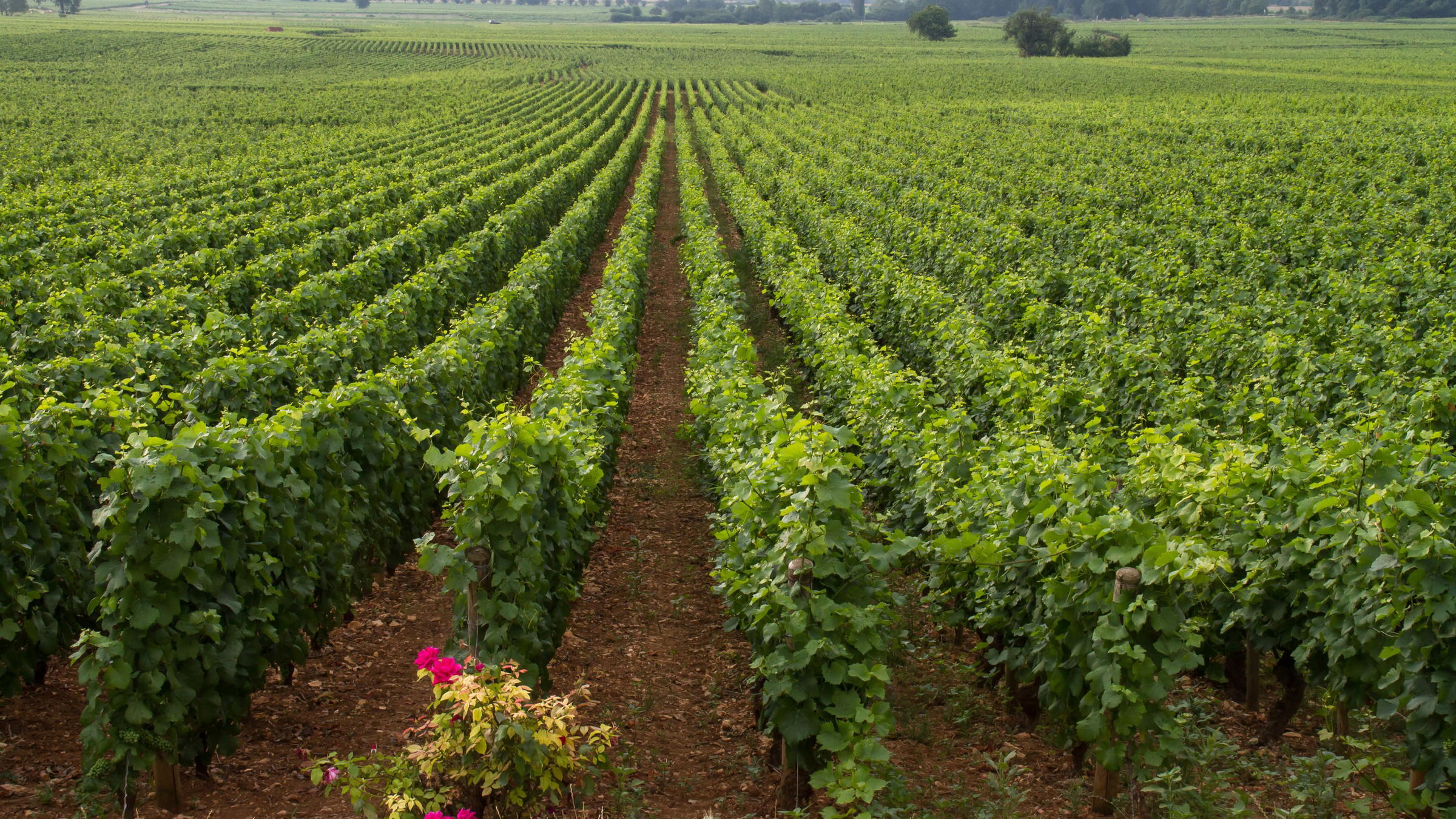
The MICHELIN Guide launches its first wine selection on July 7, 2026, introducing a One, Two, or Three grape rating system for Burgundy estates, nearly a century after restaurant Stars appeared in 1926.
The MICHELIN Guide launches its first wine selection on July 7, 2026, introducing a One, Two, or Three grape rating system for Burgundy estates, nearly a century after restaurant Stars appeared in 1926.
On July 7, 2026, in Dijon, the MICHELIN Guide turned its attention from the table to the cellar. The date is exact: one century after the Guide introduced its restaurant Stars in 1926. Its first wine selection began in Burgundy, across three wine-growing regions: Côte de Beaune, Côte de Nuits, and Côte Chalonnaise, spanning the Côte-d'Or and Saône-et-Loire departments.
At the launch event in Dijon, the Guide introduced a new accolade for wine estates: the MICHELIN grape, awarded as One, Two, or Three grapes.
If you follow Burgundy allocations, this is worth watching closely. Estates awarded grapes will likely feel movement in secondary market valuations and allocation access, much as restaurant Stars have long shifted pricing and demand.
The MICHELIN grape joins the Guide's honours after restaurant Stars, introduced in 1926, and the Key distinction for hotels, introduced in 2024. Wine estates will be assessed against five universal and consistently applied criteria, built for use beyond Burgundy as the selection expands in future years. The final selection recognized 94 Burgundy estates: nine with Three grapes, 20 with Two, 33 with One, and 32 Selected.
Burgundy is a natural first glass. The region is the birthplace of the modern terroir concept, and its climats, a mosaic of over 1,247 meticulously defined vineyard plots recognized by UNESCO as a cultural site of global significance, show how soil composition, slope gradient, and microclimate shape wine character. These small parcels, often just a few hectares or less, are the precision behind Burgundy's reputation. Pinot Noir and Chardonnay, the region's two noble varieties, translate those differences into wines known for finesse, aromatic complexity, and aging potential.
The MICHELIN grape rating system follows the hierarchy of restaurant Stars. One grape signals quality and distinction; Two grapes denote notable achievement; Three grapes are reserved for producers whose wines, regardless of vintage, consistently deliver outstanding quality. The tiers give the Guide a way to distinguish estates that meet rigorous standards from those at the summit of their appellation.
Three grapes, according to the Guide, are reserved for notable producers whose wines consistently deliver outstanding quality regardless of vintage. That vintage-agnostic standard suggests the Guide will look across multiple harvests, favouring producers with deep vineyard holdings, rigorous selection protocols, and the financial resilience to declassify fruit in difficult years.
The One and Two grape tiers may be where collectors find particularly useful signals. They can recognise estates that do not yet command Grand Cru pricing but show clear terroir expression and disciplined winemaking. These tiers could alter how collectors approach Premier Cru and village-level wines, particularly from lesser-known communes in Côte Chalonnaise. A One-grape Volnay or Two-grape Meursault gives trade buyers and sommeliers a concise quality marker, much as Parker scores or Burghound ratings already shape allocation conversations.
Burgundy's role as the launchpad for the MICHELIN Guide wine selection rests on its history of defining terroir as a winemaking principle. The modern idea of terroir, that a wine's character is shaped by the specific geology, climate, and human work of its vineyard site, grew from medieval monastic viticulture in Burgundy. Cistercian monks in the 12th and 13th centuries mapped the region's parcels with precision, identifying which slopes produced wines of distinct character. That early classification work laid the foundation for Burgundy's climat system, still the granular vineyard classification in the world.
The region's climats, over 1,247 meticulously defined vineyard plots, show how small changes in limestone composition and slope gradient can change a wine's character. A parcel in Vosne-Romanée planted with Pinot Noir on limestone-rich soil at 260 meters elevation will produce a wine with a different tannin structure and aromatic profile than a parcel 500 meters away on clay-limestone at 240 meters. That precision makes Burgundy a revealing test case for the MICHELIN Guide's evaluation approach.
UNESCO recognition of Burgundy's climats as a cultural site of global significance reflects the region's importance beyond wine. The climat system holds a millennium of accumulated knowledge about how place shapes flavour, knowledge the MICHELIN Guide now aims to translate into a rating system for wine regions worldwide.
The MICHELIN Guide has stated that wine estates will be evaluated against five universal and consistently applied criteria, specifically quality of agronomy, technical mastery, identity, balance, and consistency. The emphasis on universality suggests the Guide intends to apply the same framework across regions, similar to the way restaurant Stars are judged on cooking quality, ingredient sourcing, technique, personality, and consistency regardless of cuisine type.
In practice, the five criteria cover vineyard quality, including soil, aspect, vine age, and farming practices; winemaking technique, including fermentation, aging, and blending; vintage-to-vintage consistency; terroir transparency, or how clearly the wine expresses its site; and overall balance. Such criteria would allow the Guide to assess estates across different appellations and production scales without favouring Grand Cru over Premier Cru or large négociants over small domaines.
Vintage-to-vintage consistency is central, particularly for Three-grape estates. The Guide's statement that Three grapes are reserved for producers whose wines consistently deliver outstanding quality regardless of vintage suggests inspectors will look across multiple harvests. Terroir transparency, the degree to which a wine expresses the specific character of its vineyard site, will likely separate One-grape estates from Two- and Three-grape recipients. Estates that let site come through with minimal intervention may score higher here than estates that impose a house style across multiple cuvées.
The MICHELIN Guide's move into wine evaluation will likely change how collectors and investors approach Burgundy allocations. Estates that receive grapes, particularly Two or Three grapes, should see stronger demand from buyers using the rating as a quality filter, much as restaurant Stars drive reservation demand. On the secondary market, the effect could resemble what happens when a previously under-the-radar estate receives a 95+ score from a major critic: back vintages move upward as buyers reassess the estate's quality trajectory.
Allocation access will likely tighten for grape-rated estates. Producers with limited mailing list capacity may prioritise long-term customers or trade buyers over new collectors seeking entry after the July 2026 announcement. The post-launch period gives you time to build relationships with estates that received grapes. If a Volnay or Pommard estate currently sells wine direct at €40-60 per bottle and receives Two grapes in July 2026, secondary market pricing for the 2023 and 2024 vintages could adjust to €80-100 per bottle as buyers reprice the estate against its peers.
The grape rating will also influence en primeur strategy. Collectors who usually focus on Grand Cru allocations from benchmark producers may widen their buying to include Premier Cru and village-level wines from grape-rated estates. For négociants and importers, the grape rating offers a clear way to communicate quality to retail buyers who may not know Burgundy's intricate appellation hierarchy.
The secondary market impact will vary by tier. Three-grape estates will likely see the sharpest pricing adjustments, particularly if the recipients include producers already trading at premium levels. For collectors focused on value, the One-grape tier may offer the opening. Estates that receive One grape but lack name recognition among international buyers may still offer direct sales at reasonable pricing in the months immediately following the announcement.
The MICHELIN Guide's expansion into wine is the latest turn in its century-long evolution from tire company marketing tool to global arbiter of hospitality quality. The Guide introduced restaurant Stars in 1926 to encourage car travel, and tire purchases, by identifying destinations worth the drive. The Star system, first a simple one-star rating, evolved into the three-tier hierarchy that now defines fine dining globally.
The Guide entered hotels nearly a century later, with the Key distinction introduced in 2024. The Key rating evaluates hotels on design, service, and guest experience, using a similar tiered structure. The wine selection follows the same pattern, applying the MICHELIN evaluation model to a new category while keeping the hierarchy that defines the brand.
The Guide's credibility rests on independence. MICHELIN does not accept payment for inclusion, does not sell advertising tied to ratings, and employs anonymous inspectors who visit establishments multiple times before awarding distinctions. That independence has allowed the Guide to retain authority even as restaurant criticism has fragmented across online review platforms and social media. For wine, the same independence will matter. If estates can buy their way into the selection or if the criteria lack transparency, the grape rating loses credibility.
The wine selection also reflects broader shifts in luxury hospitality. Wine tourism has grown from a niche interest to a significant revenue stream for producers, particularly in regions like Burgundy where estate visits, tastings, and vineyard tours generate income beyond bottle sales. The MICHELIN grape could become a quality signal for wine travellers, much as Stars guide restaurant reservations. A Three-grape estate becomes a destination worth booking months in advance, while One- and Two-grape estates offer compelling alternatives for travellers seeking quality without the allocation competition around particularly famous names.
The July 7 results now let collectors and investors assess the selection before longer-term market effects emerge. The Guide recognized 94 estates, but Burgundy's fragmented ownership structure suggests the selection will be selective.
The secondary market response in the months after the announcement will show whether the grape rating carries the pricing power restaurant Stars command. For Burgundy producers, the July 2026 announcement will reset allocation hierarchies and secondary market valuations.
For collectors, the published selection is now another signal to weigh before the market adjusts.
The MICHELIN Guide unveiled its first wine selection on July 7, 2026, exactly one century after the Guide introduced restaurant Stars in 1926. The launch event was held in Dijon and will focus on three Burgundy wine-growing regions: Côte de Beaune, Côte de Nuits, and Côte Chalonnaise.
The MICHELIN grape is a new accolade awarded as One, Two, or Three grapes. One grape signals quality and distinction, Two grapes denote notable achievement, and Three grapes are reserved for producers whose wines consistently deliver outstanding quality regardless of vintage. The system mirrors the hierarchical structure of restaurant Stars.
Burgundy was selected as the launch region because it is the birthplace of the modern terroir concept. The region's climats, over 1,247 meticulously defined vineyard plots recognized by UNESCO, demonstrate how soil composition, slope gradient, and microclimate shape wine character, making it an ideal case study for the Guide's evaluation criteria.
Wine estates are evaluated against five universal and consistently applied criteria. This framework is designed to scale beyond Burgundy as the selection expands to other wine regions in future years, and the published criteria are agronomy quality, technical mastery, identity, balance, and consistency.
Estates that received MICHELIN grapes may see shifts in secondary market valuations and allocation access. The announcement carries immediate implications for collectors and investors, mirroring the pricing and demand effects that restaurant Stars have historically delivered in the hospitality sector.
Get the App
Take the shortlist into the En Primeur Club app for concierge access, saved places, and the next step after discovery.
Get Exclusive AccessMore from the editors