← Guides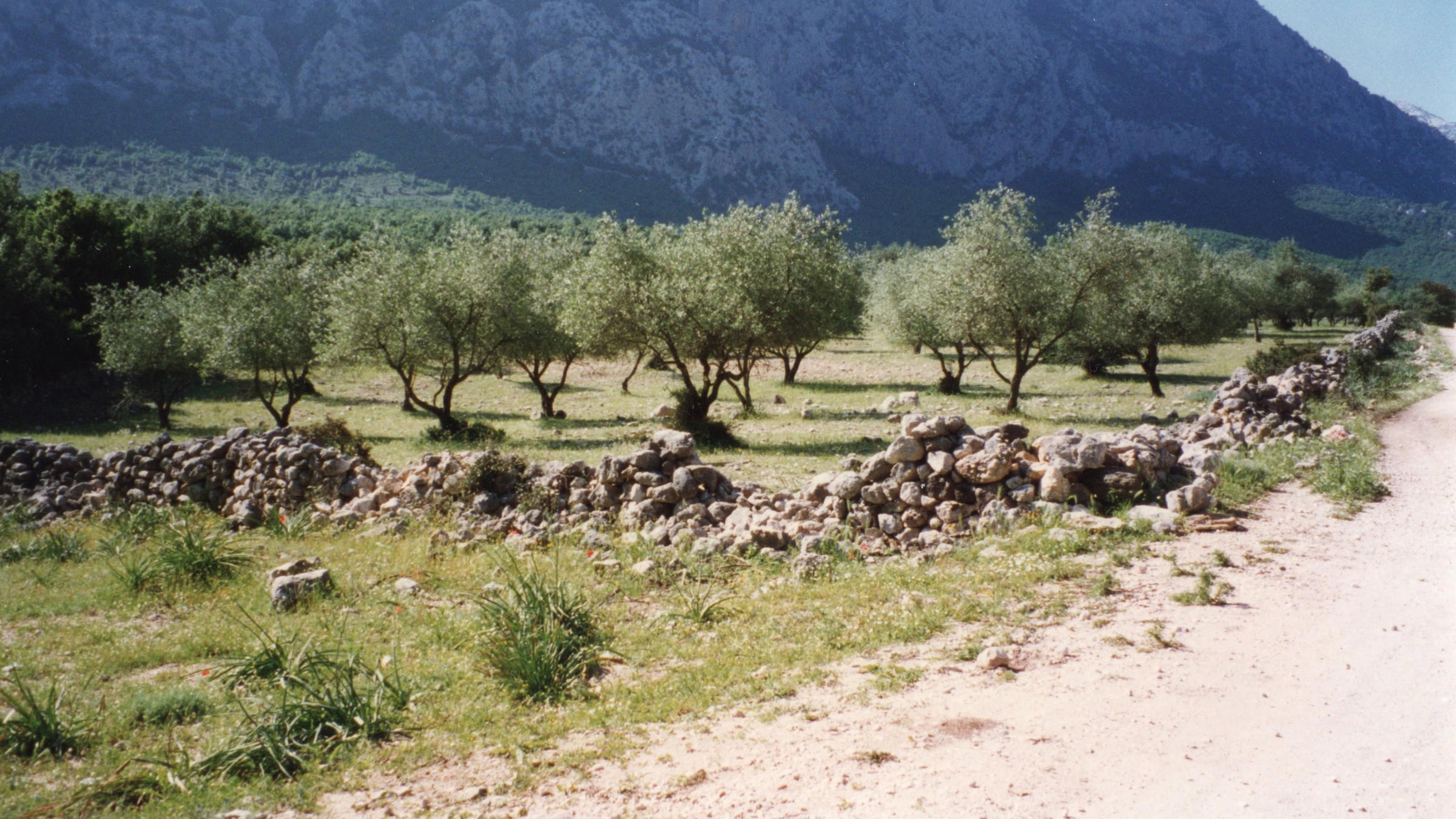
In 1874, Sardinia's distillers buried their stills underground and marked them with iron wire, a clandestine tradition that gave filu 'e ferru its name and shaped the island's spirit culture.
In 1874, Sardinia's distillers buried their stills underground and marked them with iron wire, a clandestine tradition that gave filu 'e ferru its name and shaped the island's spirit culture.
In 1874, the Savoy Kingdom banned domestic distillation of filu 'e ferru for commercial sale across Sardinia. Around 40 distilleries shut down overnight. Families turned cellars into secret operations, burying stills in orchards and woods, marking each cache with a length of iron wire, filu 'e ferru, so they could recover them after the tax officers left. That iron wire became the spirit's name, and the defiance became its identity.
Today, filu 'e ferru Sardinia is legal again, distilled in copper stills by family operations that trace their roots to those clandestine years. The spirit, transparent, fennel-infused, and clocking in near 45% ABV, remains one of the island's least-known and most storied traditions. It's sold in local trattorias, served as a digestivo after Sardinian meals, and still produced in the same mountain villages where women once sealed copper pots with flour dough to evade detection.
Filu 'e ferru is a traditional Sardinian spirit made from grapes grown on the island, typically distilled from marc, the residue of skins and seeds left after winemaking. The spirit is commonly infused with fennel seeds to soften its pungent flavor, resulting in a completely transparent liquid that burns on the nose and the palate. Locals often refer to it as acqua vita (vine water) or abbardente (water that burns), the latter derived from Latin and referencing its near-50% ABV.
Before 1874, Sardinia had around 40 distilleries producing filu 'e ferru openly. When the Savoy Kingdom, which then ruled the island, imposed the ban, the industry didn't disappear. It went underground. Families converted storerooms and cellars into secret distilleries, operating outside the reach of tax authorities who made regular sweeps through remote villages.
The iron wire burial method was born from necessity. Producers would bury alcohol stills underground in orchards, woods, or inside hollowed pumpkins, marking the spot with a long stick of iron so they could be easily recovered. The wire became the spirit's calling card, a symbol of resistance encoded in the name itself.
Filu 'e ferru production in Sardinia, particularly during the prohibition era, was a woman's activity. While men worked the fields, women tended the stills. At first, huge pots of copper, traditionally used for milk, were sealed with flour dough to heat the wine. Later, women turned to purpose-built copper stills, refining the process and the flavor profile. The gendered division of labor meant that much of Sardinia's distilling knowledge was held and transmitted by women, a fact that distinguishes the island's spirit culture from mainland Italian grappa traditions.
Rosa Maria Scrugli was barely 23 years old when in 1970 she was sent on a work mission to the small town of Santu Lussurgiu, a remote village in western Sardinia's Oristano province. At that time, the village was still known for its illicit distilling operations, and tax officers would visit in search of illegal breweries. The spirit's dangerous past, both legally and because of its alcohol concentration, was still substantially alive.
Filu 'e ferru occupies a liminal space in Italian distilling taxonomy. It's often called grappa in Sardinia, though the term isn't precise. Mainland grappa is strictly a pomace distillate, made from the skins, seeds, and stems left after pressing. Filu 'e ferru can be made from marc, but it can also be distilled from wine itself, particularly in areas where vineyards over-yield. At Santu Lussurgiu, the spirit's most famous producer, filu 'e ferru is distilled from wine rather than marc because the local vineyards tend to over-yield, producing more juice than the market can absorb.
The fennel seed infusion is the defining botanical signature. Sardinian distillers add wild fennel seeds during or after distillation to soften the spirit's pungent, high-proof character. The result is an anise-forward nose with a fennel seed heat that distinguishes it from the fruit-driven or floral profiles of Veneto and Piedmont grappas. The fennel also serves a practical function, it masks the rougher edges of a high-ABV spirit distilled from pomace or over-yielded wine.
Sardinian grappa is also made using exclusively Sardinian pomace and wines, including some of the island's best-known varieties such as Vernaccia. Vernaccia di Oristano, a fortified white wine with oxidative aging, is among the more prized wines of Sardinia, and its pomace or base wine can find its way into filu 'e ferru production. The use of local grape varieties, Cannonau, Vermentino, Vernaccia, gives the spirit a regional specificity that mainland grappas lack.
The spirit's transparency is another marker. Unlike aged grappas that take on color from barrel aging, filu 'e ferru is typically unaged or aged briefly in neutral vessels, preserving its water-clear appearance. That transparency is part of the mystique, it looks innocuous, like water, but delivers a near-50% ABV punch that can knock out even those with a high tolerance.
Santu Lussurgiu is a small town set in the wild western reaches of Sardinia, in the Oristano province. The villagers have been making filu 'e ferru for 400 years, a tradition that predates the 1874 prohibition by centuries. The town's remote location, surrounded by hills, orchards, and maquis shrubland, made it an ideal base for clandestine distilling.
Today, Santu Lussurgiu is home to at least one legal distillery. Carlo Psiche owns the only legal distillery in the village, operating as Distillerie Lussurgesi. Psiche's distillery uses traditional copper stills and brews the spirit from wine, not marc, a distinction that sets it apart from most Sardinian producers. The copper stills are the same design that women used during the prohibition era, though now they operate openly, with proper licensing and tax compliance.
The distillery's production method reflects the town's historical practice. Because the vineyards around Santu Lussurgiu tend to over-yield, there's an abundance of wine that doesn't meet the quality threshold for bottling. That surplus wine becomes the base for filu 'e ferru, distilled in copper pot stills and infused with wild fennel seeds harvested from the surrounding hills. The result is a spirit that tastes distinctly of place, the fennel, the wine base, and the mountain water all contribute to a flavor profile that can't be replicated elsewhere.
The copper stills themselves evolved over time. Early versions were repurposed milk pots, sealed with flour dough to create an airtight chamber for heating the wine. The dough seal would harden during distillation, trapping the alcohol vapors and forcing them through a simple condenser. Later, purpose-built copper stills with coiled condensers became standard, allowing for more precise temperature control and higher-quality distillate. Those stills are still in use today at legal distilleries like Distillerie Lussurgesi.
The gendered history of filu 'e ferru production is rarely emphasized in contemporary marketing, but it's a significant part of the story. The women who distilled during the prohibition era were taking real risks, fines, confiscation of equipment, even imprisonment. Their knowledge and skill kept the tradition alive through decades of legal suppression, and their legacy is embedded in every bottle produced today.
Filu 'e ferru is as strong on the nose as it is on the taste buds. The first impression is anise-forward, with a pronounced fennel seed aroma that dominates the bouquet. Behind the fennel, there's a faint sweetness from the grape base, either the fruit sugars in the marc or the residual character of the wine used for distillation. The nose is clean, with no oak influence or barrel-derived spice, just the raw expression of fennel and grape.
On the palate, the spirit delivers a fennel seed heat that coats the mouth and throat. The alcohol concentration, up to 45% and sometimes higher, is immediately apparent, producing a burning sensation that justifies the abbardente nickname. The fennel tempers the burn slightly, adding an herbal complexity that makes the spirit more than just high-proof alcohol. There's a slight bitterness on the finish, likely from the fennel seeds and the tannins in the marc, followed by a lingering anise note that persists for several minutes.
Filu 'e ferru is widely available in Sardinia, though it's less common on the mainland. In Sardinia, the spirit appears on the drinks lists of local bars and trattorias, particularly in rural areas and smaller towns. It's often served as a complimentary digestivo at the end of a meal, alongside or instead of Mirto. Some restaurants keep a house bottle behind the bar, made by a local producer or even distilled by the restaurant owner's family.
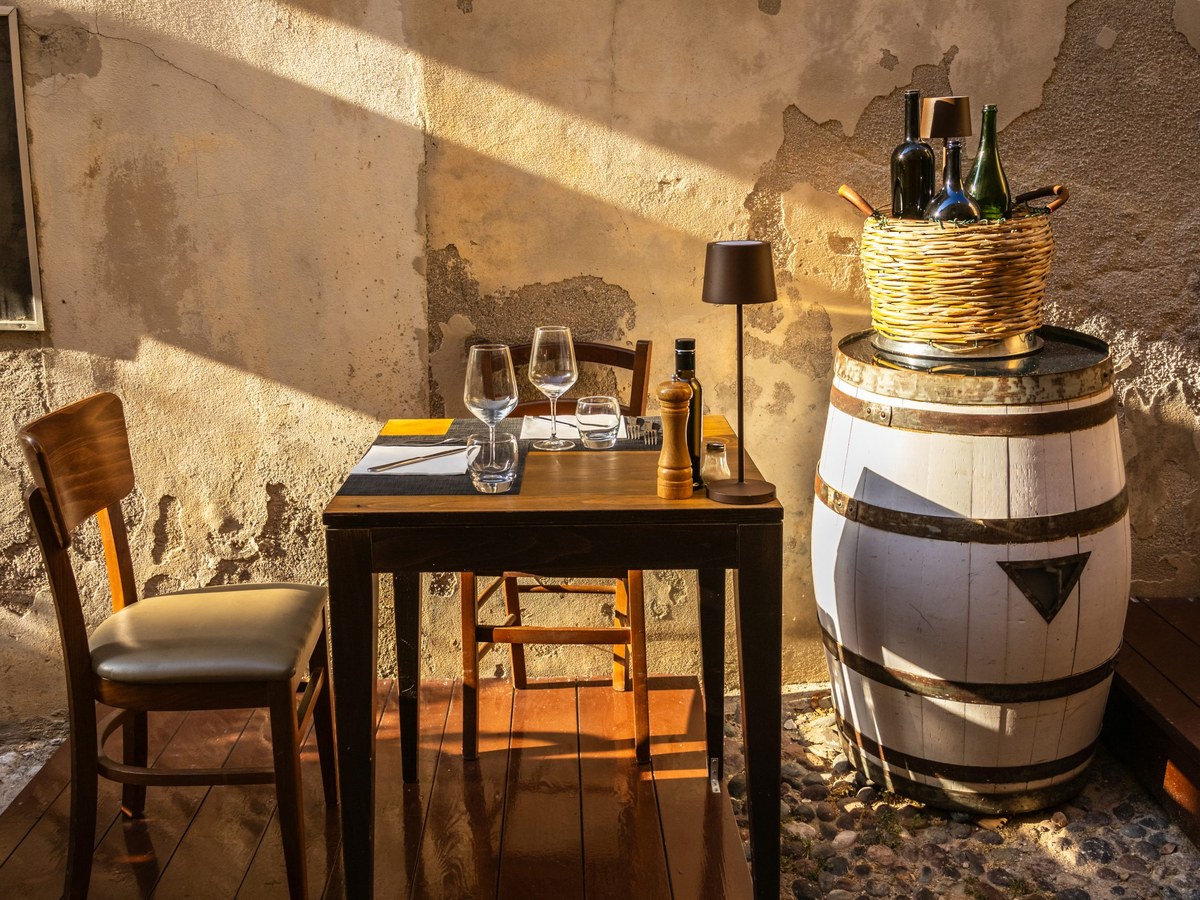
Beyond Santu Lussurgiu, filu 'e ferru can be found at local markets and specialty shops across Sardinia. The spirit is typically sold in clear glass bottles, often with handwritten labels or simple packaging that reflects its artisan origins. In Cagliari, Sardinia's capital, filu 'e ferru appears in wine bars and enotecas that specialize in Sardinian products. These venues often carry multiple producers, allowing for side-by-side tastings that highlight regional variations.
Filu 'e ferru is not the only traditional spirit produced in Sardinia. Mirto, a bittersweet liqueur made from the berries of the native myrtle bush, is equally well-known and more widely known outside the island. Mirto comes in two versions: red Mirto, made from the berries, and white Mirto, made from the leaves. Both are lower in alcohol than filu 'e ferru, typically 30-35% ABV, and sweeter, with a pronounced berry or herbal character.
The relationship between filu 'e ferru and Mirto reflects Sardinia's broader distilling culture, which emphasizes local botanicals and traditional methods. Both spirits are made from ingredients that grow wild on the island, grapes and myrtle, and both are deeply embedded in Sardinian hospitality. It's not uncommon for a Sardinian host to offer both spirits at the end of a meal, letting guests choose between the fennel burn of filu 'e ferru and the berry sweetness of Mirto.
Filu 'e ferru remains a niche spirit, known primarily to Sardinians and the travelers who seek it out. Its future depends on whether younger generations of Sardinians continue to value the tradition and whether producers can work through the tension between authenticity and commercial viability. Some distillers are experimenting with modern packaging and marketing, positioning filu 'e ferru as a craft spirit with a compelling backstory, the iron wire, the prohibition, the women distillers.
The lack of protected designation means producers have the freedom to innovate, but they also face the possibility of dilution as industrial versions enter the market. For now, filu 'e ferru remains what it has always been: a transparent, fennel-infused spirit that tastes of Sardinia's hills, its history, and its defiance. It's a drink that rewards curiosity, a spirit that tells a story in every sip. Those heading to Sardinia this summer would do well to seek it out, in a trattoria, at a distillery, or in the home of a local who still keeps a bottle marked with iron wire.
Get the App
Take the shortlist into the En Primeur Club app for concierge access, saved places, and the next step after discovery.
Get Exclusive AccessMore from the editors