← Guides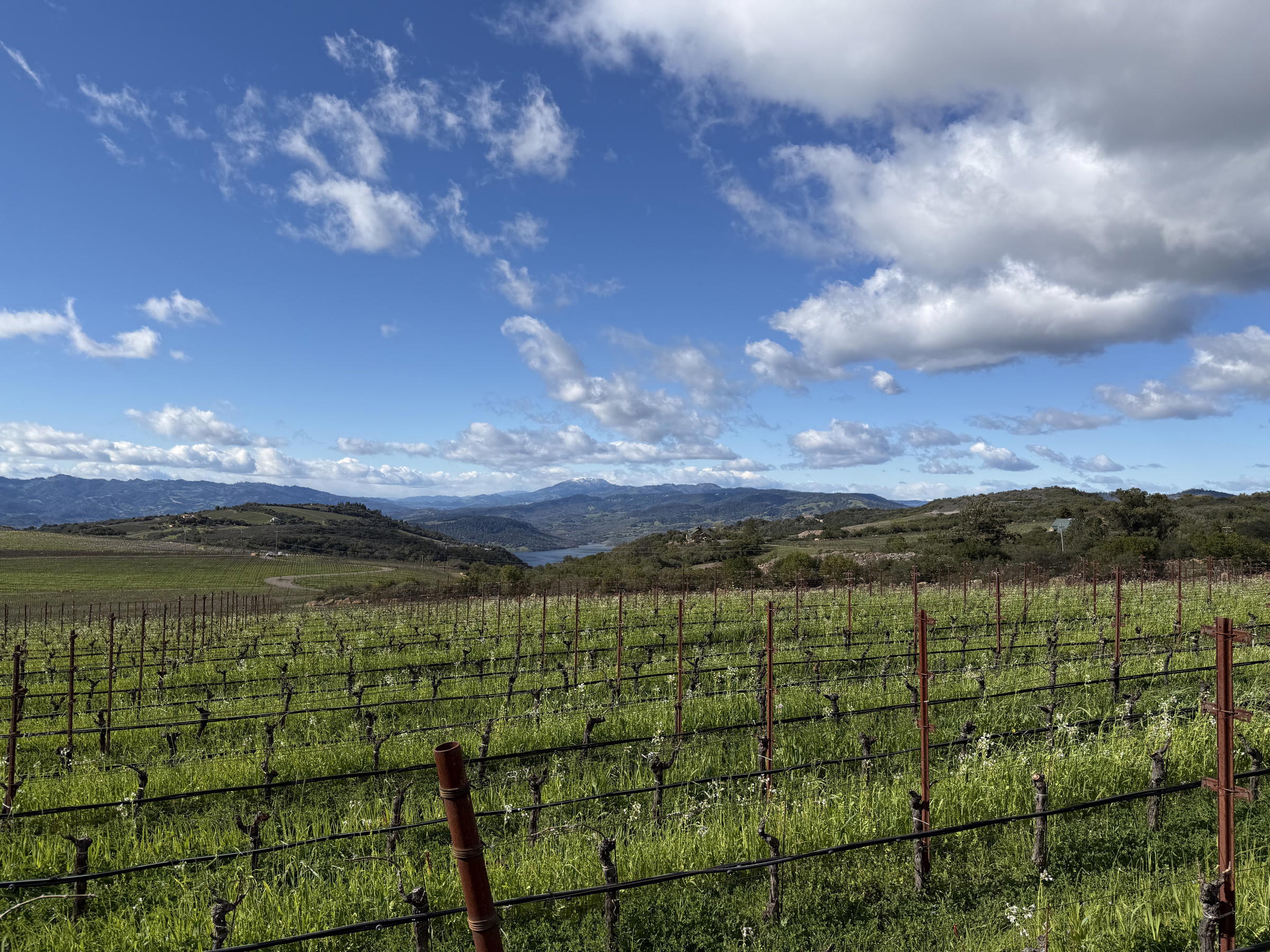
A firsthand Continuum Estate visit review from Sage Mountain Vineyard, hosted by Dane Campbell by ATV, with 2023 Sentium, 2022 Novicium, 2021 Continuum, and 2022 Continuum tasted in the production facility.
A firsthand Continuum Estate visit review from Sage Mountain Vineyard, hosted by Dane Campbell by ATV, with 2023 Sentium, 2022 Novicium, 2021 Continuum, and 2022 Continuum tasted in the production facility.
Continuum Estate is one of those Napa visits where the order of the day matters. If you only taste the wine at a table, you can appreciate the polish, depth, and reputation. But when the visit begins with the mountain itself, the wine becomes much more legible. Sage Mountain Vineyard is not a backdrop. It is the reason the experience works.
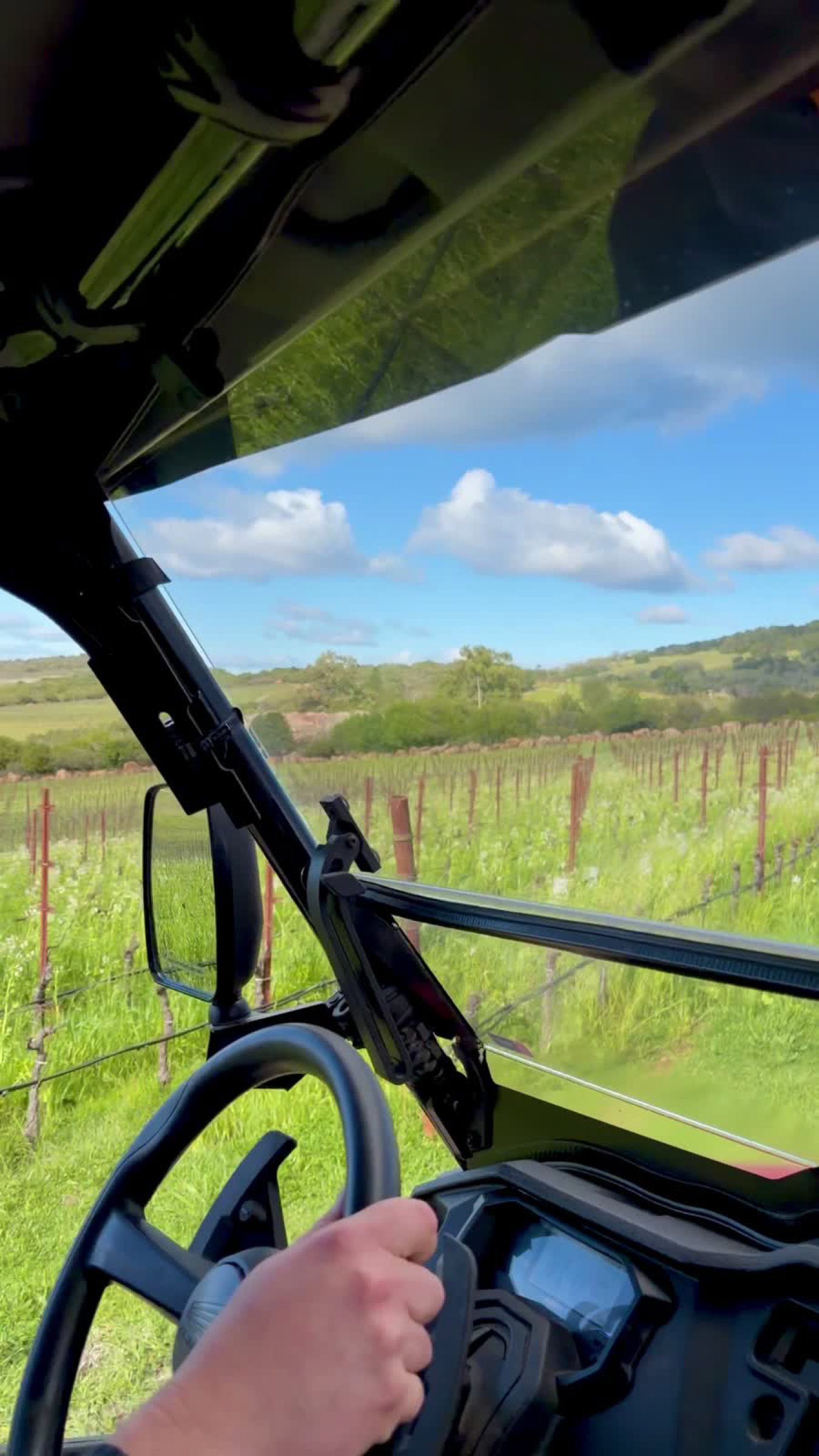
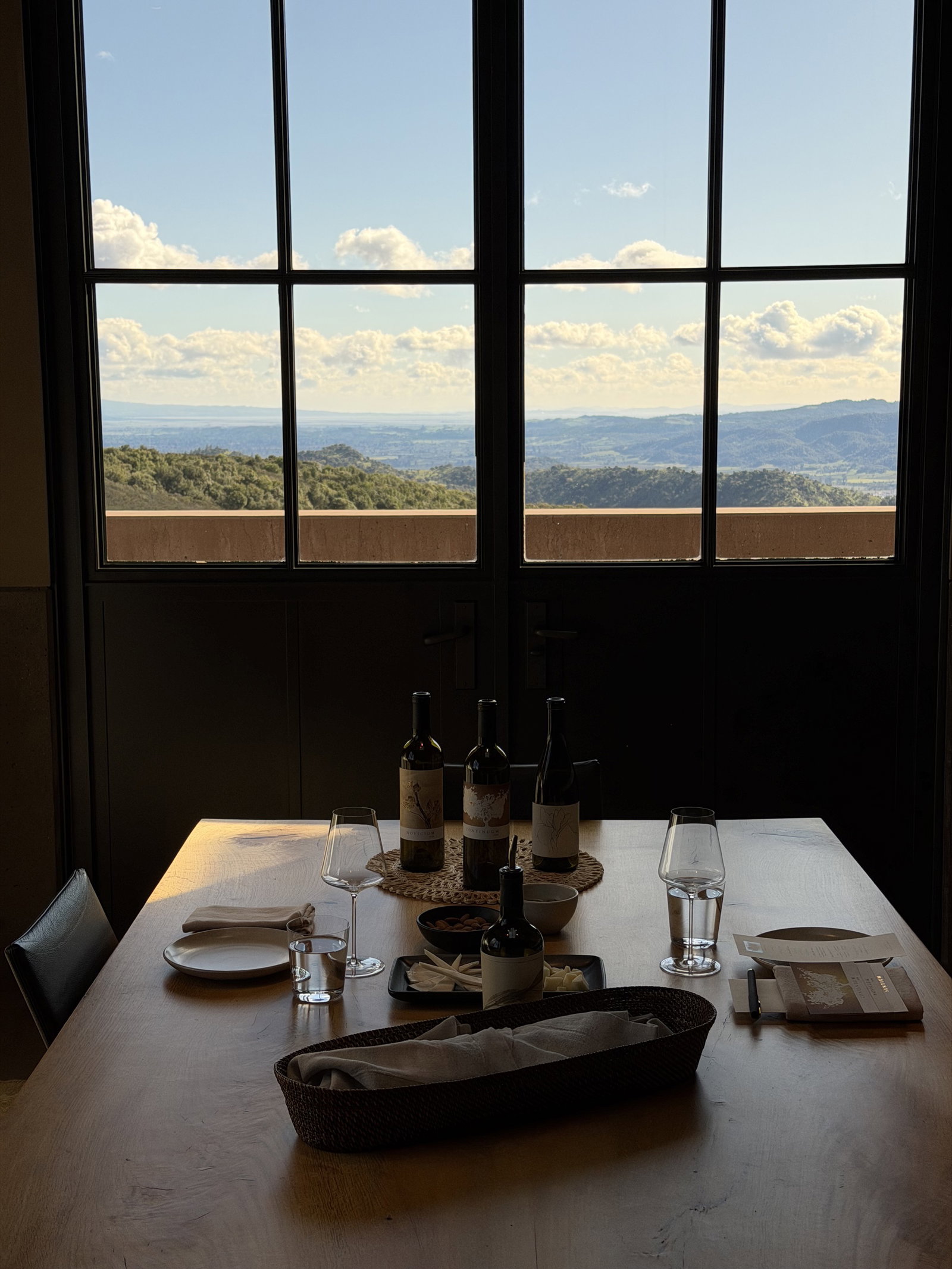
My visit started in one of the estate houses with the tasting table set against a wide mountain view. From there, Dane Campbell hosted me through the property by ATV, driving across the vineyard from top to bottom, pointing out vines, animals, native edges, and the way the land changes as you move through the blocks. After the vineyard route, we came back into the production facility for the tasting, which made the whole visit feel connected rather than staged: house, mountain, vines, cellar, glass.
I also met Liz Burton and Steve Nelson during the visit, which added to the sense that this was not just a polished collector appointment. It felt like being welcomed into the working world of Continuum, where hospitality, farming, production, and family legacy all sit close together.
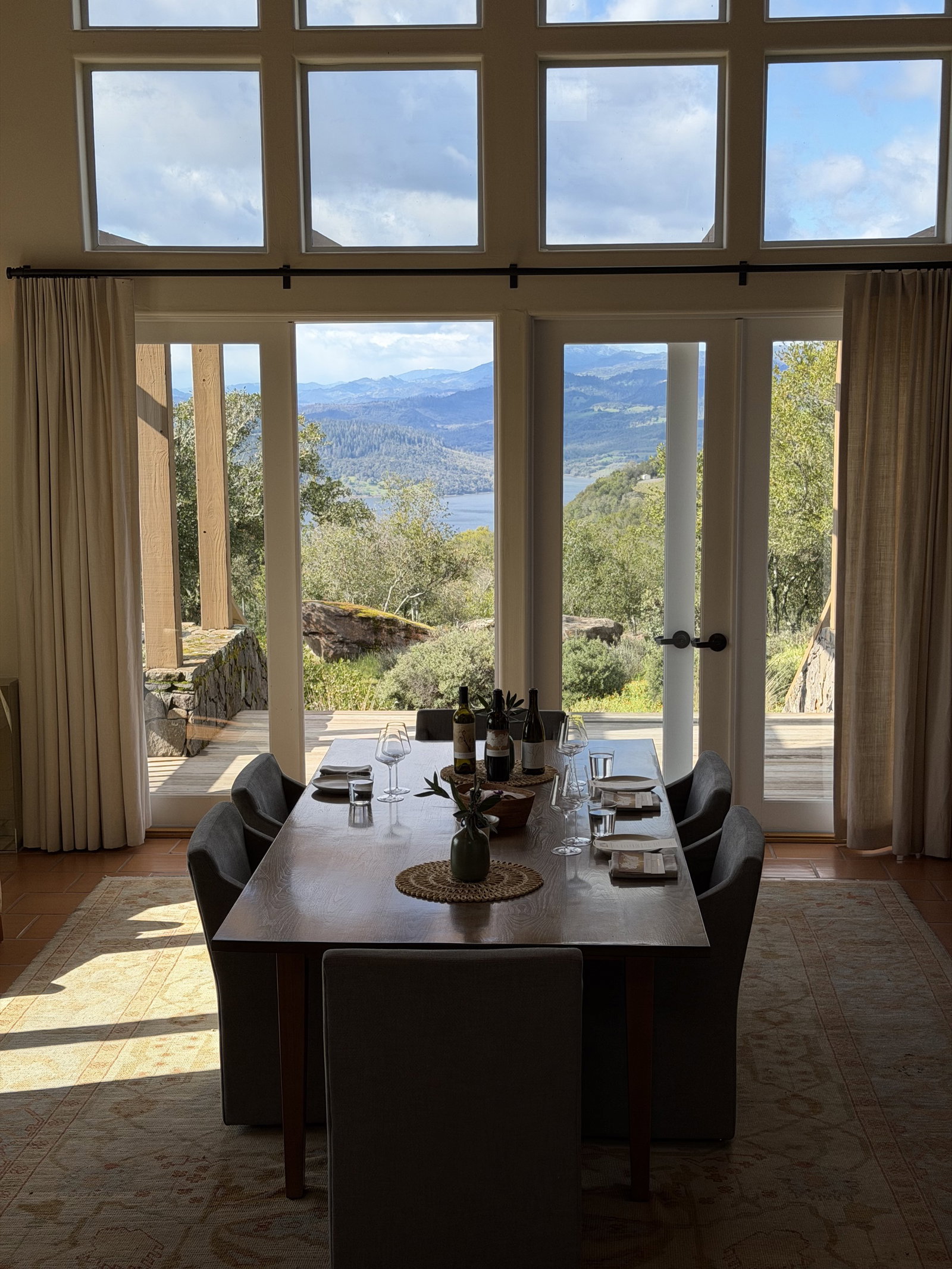
Continuum describes its estate as Sage Mountain Vineyard, a specific name for its Pritchard Hill site on Napa’s eastern side. That distinction matters. Pritchard Hill gives useful context, but Sage Mountain is the estate’s own argument: a high-elevation, hillside vineyard where the wine is shaped by slope, exposure, volcanic soils, wild vegetation, and the decision to keep much of the property as wilderness.
The official numbers help frame the site: 173 total acres, 71 acres under vine, and vineyard elevations ranging from about 1,325 to 1,600 feet. Cabernet Sauvignon leads the plantings, followed by Cabernet Franc, Petit Verdot, and Merlot. Continuum also emphasizes that its rows are divided into small 1- to 2-acre blocks, each farmed according to its own needs.
Those facts are useful, but the ATV ride is what makes them feel real. On the mountain, the rows do not behave like one flat vineyard. Some blocks feel open and wind-touched. Some sit in more protected pockets. Some point toward ridgelines, while others open toward long views over the valley and water. Seeing the site this way is a strong possible introduction to the wines because it explains why Continuum can be powerful without feeling generic.
The ATV portion was the heart of the visit. Dane did not treat the vineyard like scenery. He used it as a map. Starting from the house and moving across the estate, he showed how the vines, terrain, roads, and native land all fit together. You get the romance of being high above Napa, but the real value is practical: you can see what the team is farming.
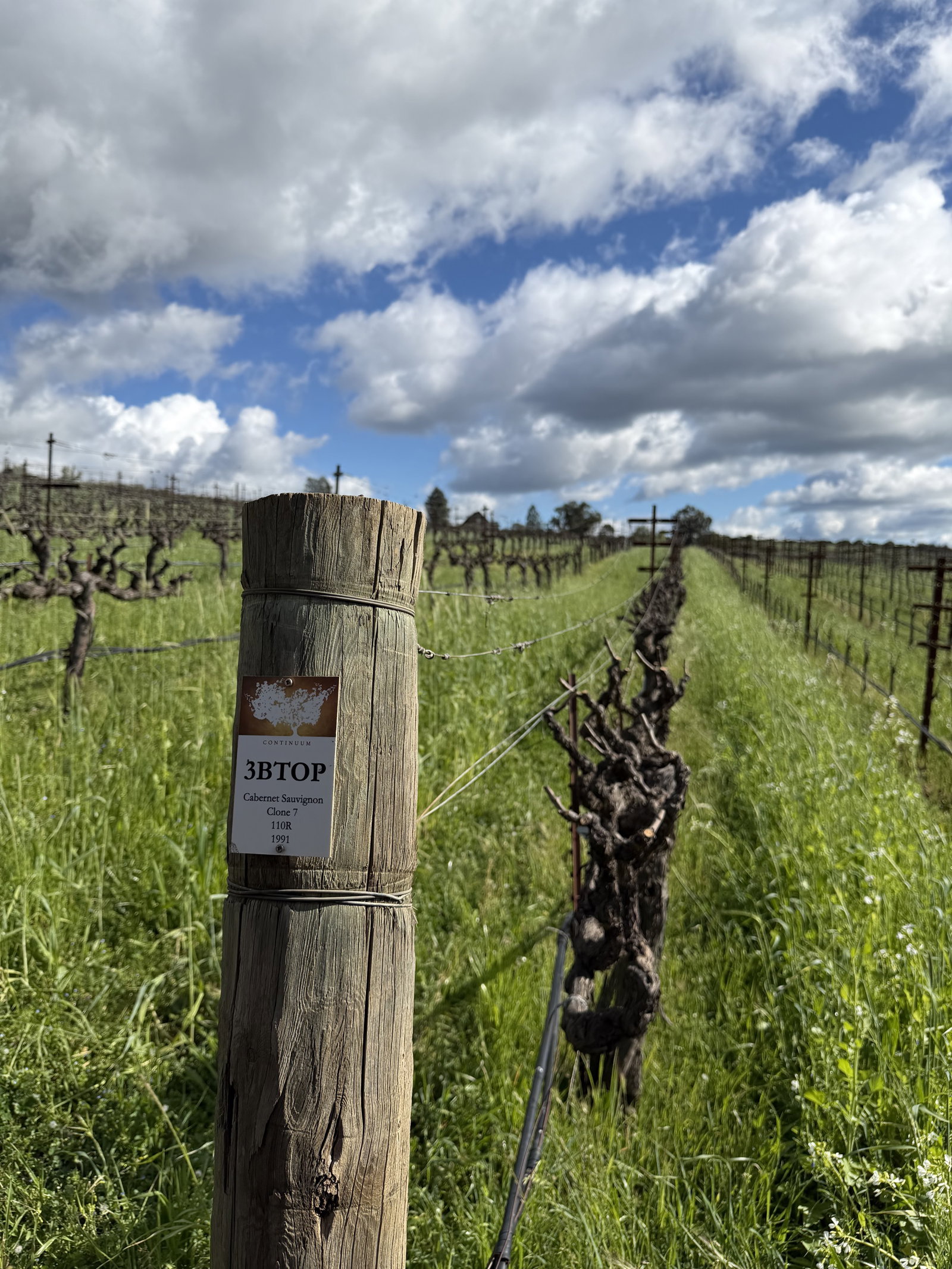
This is where the visit becomes different from a standard luxury tasting. It is not simply a beautiful room and a famous bottle. You see the grasses between the rows, the older vines, the block markers, the rugged edges of the property, and the animals and wild corridors that make the estate feel alive rather than manicured into sameness.
Strong Napa visits make the wine harder to separate from the place. Continuum does that especially well. By the time we reached the tasting, the vocabulary had already been set: elevation, exposure, fog line, breeze, chaparral, sage, bay laurel, and the small shifts from one parcel to the next.
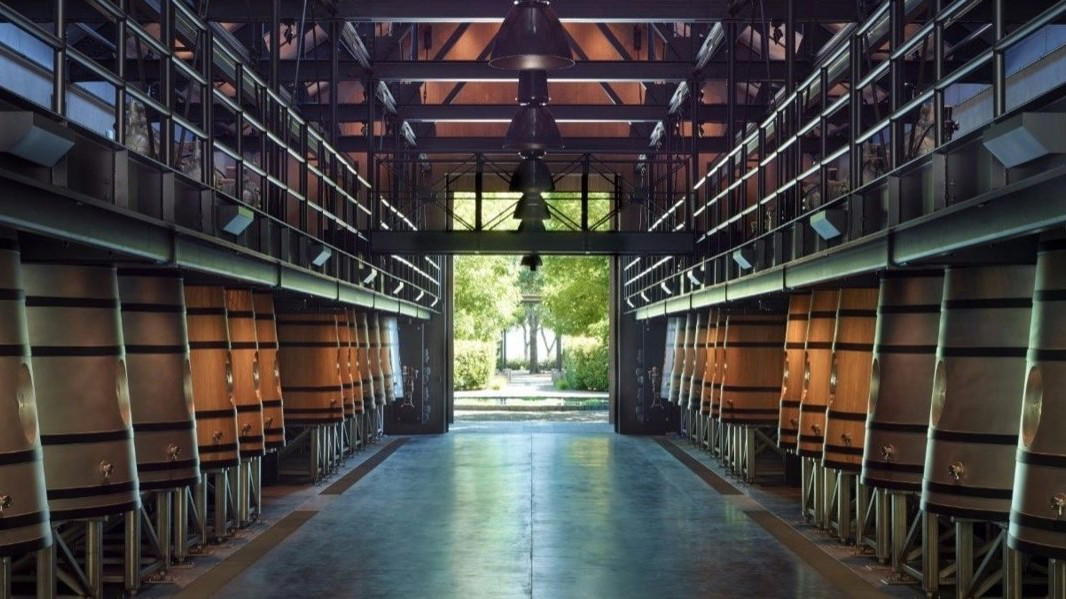
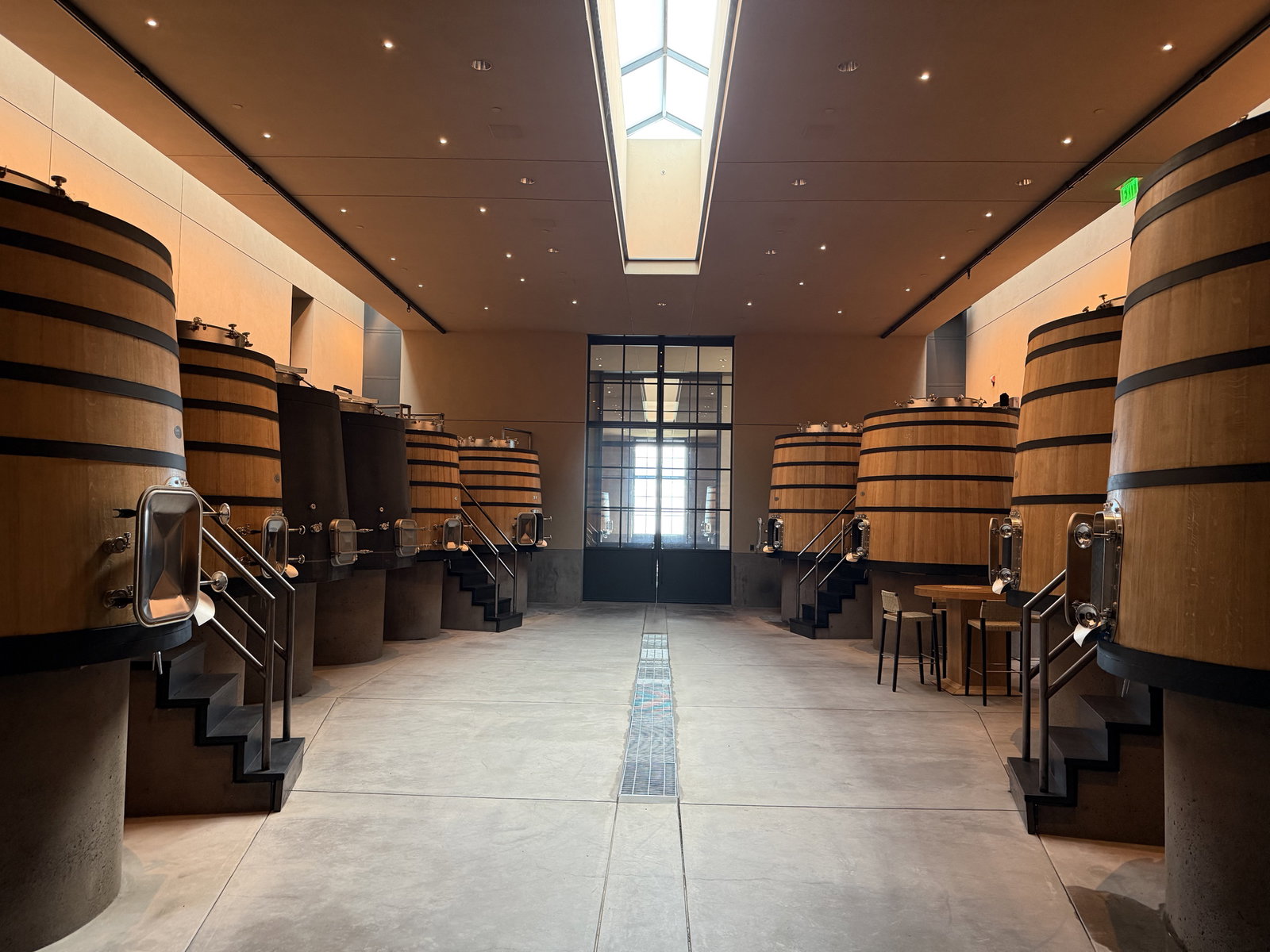
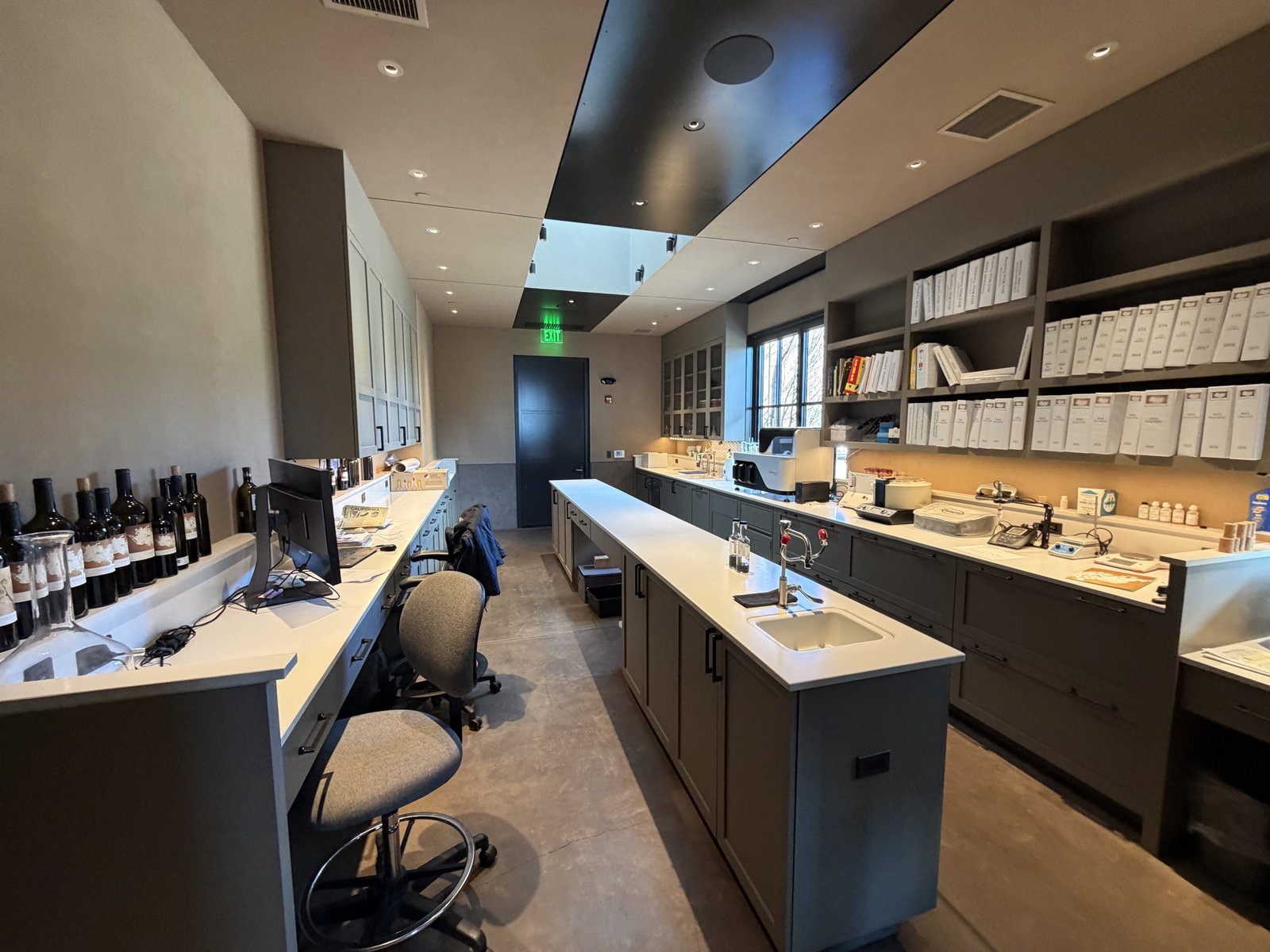
After the ATV route, the visit moved into the production side of the estate. That transition mattered because Continuum’s cellar philosophy follows the same logic as the vineyard. If the vineyard is divided into small, distinct blocks, the production facility has to preserve those differences long enough for the final blend to be built with precision.
We talked about the new cellar work they are building, and it fit naturally into that idea. At a property like Continuum, the point of new cellar infrastructure is not to make the wine feel more technical. It is to give the team more resolution: more ways to keep parcels separate, observe them clearly, and decide later how each piece should contribute to the final composition.
The fermentation room and working tasting space made the visit feel grounded. You are not only seeing the polished face of the estate. You are seeing where the decisions happen, where bottles are lined up, where samples are checked, and where vineyard observations become production choices.
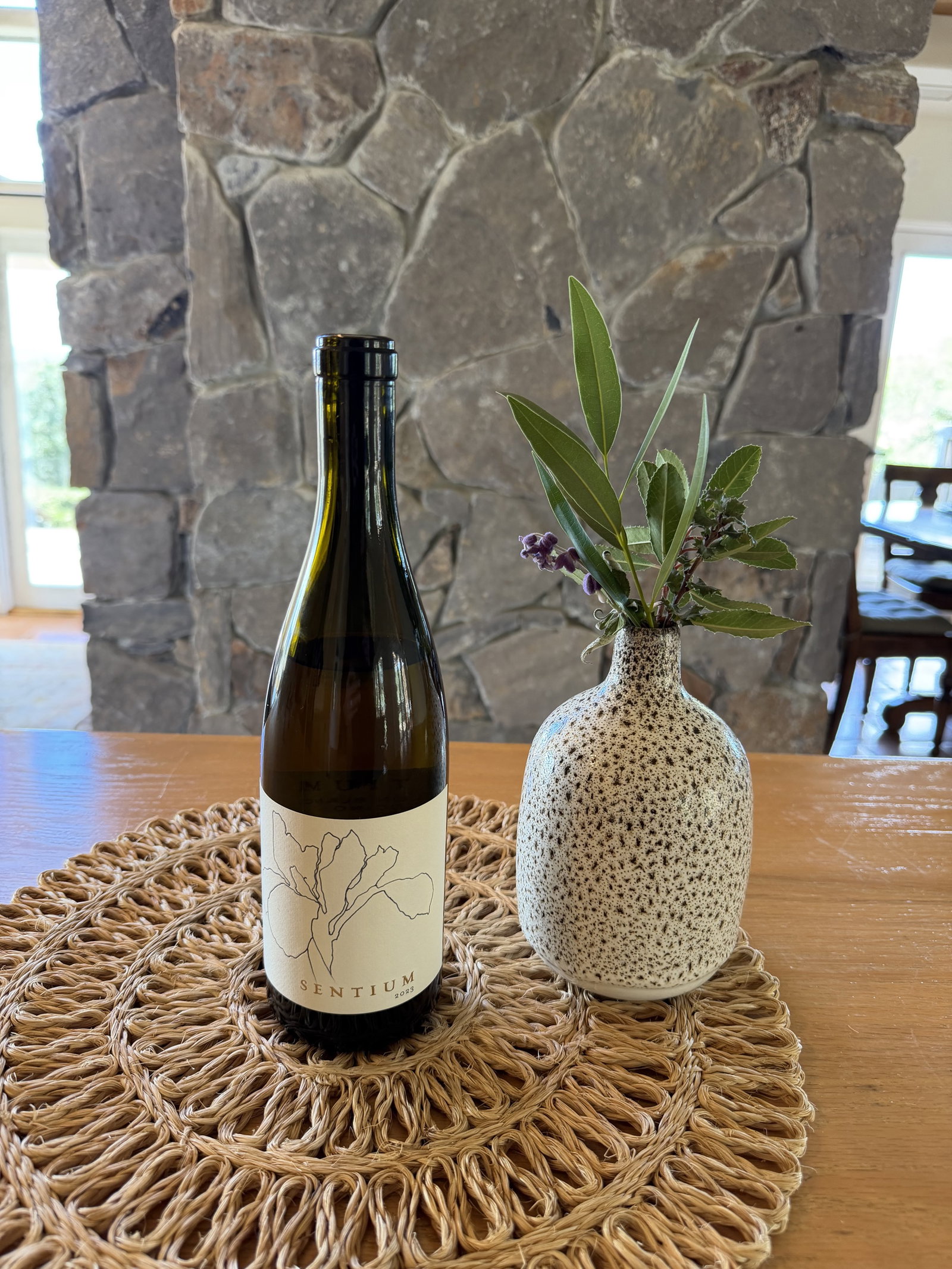
The tasting on February 19, 2026 moved through 2023 Sentium, 2022 Novicium, 2021 Continuum, and 2022 Continuum. That was a smart progression because it started with freshness, moved into an earlier-drinking expression of the estate, and then landed on the flagship wine across two vintages.
Sentium is Continuum’s Sauvignon Blanc project, and the 2023 bottle gave the tasting a bright opening before the Cabernet-family wines. It was also a useful reminder that Continuum’s ambitions are not limited to mountain Cabernet alone; the estate is still thinking through California wine history in a broader Mondavi-family context.
The 2022 Novicium was the bridge wine. Officially, the 2022 Novicium blend is 69% Cabernet Sauvignon, 29% Cabernet Franc, and 2% Petit Verdot. It shows the estate in a more immediately accessible register: still dark-fruited and mountain-driven, but meant to bring the site forward with more openness and early charm.
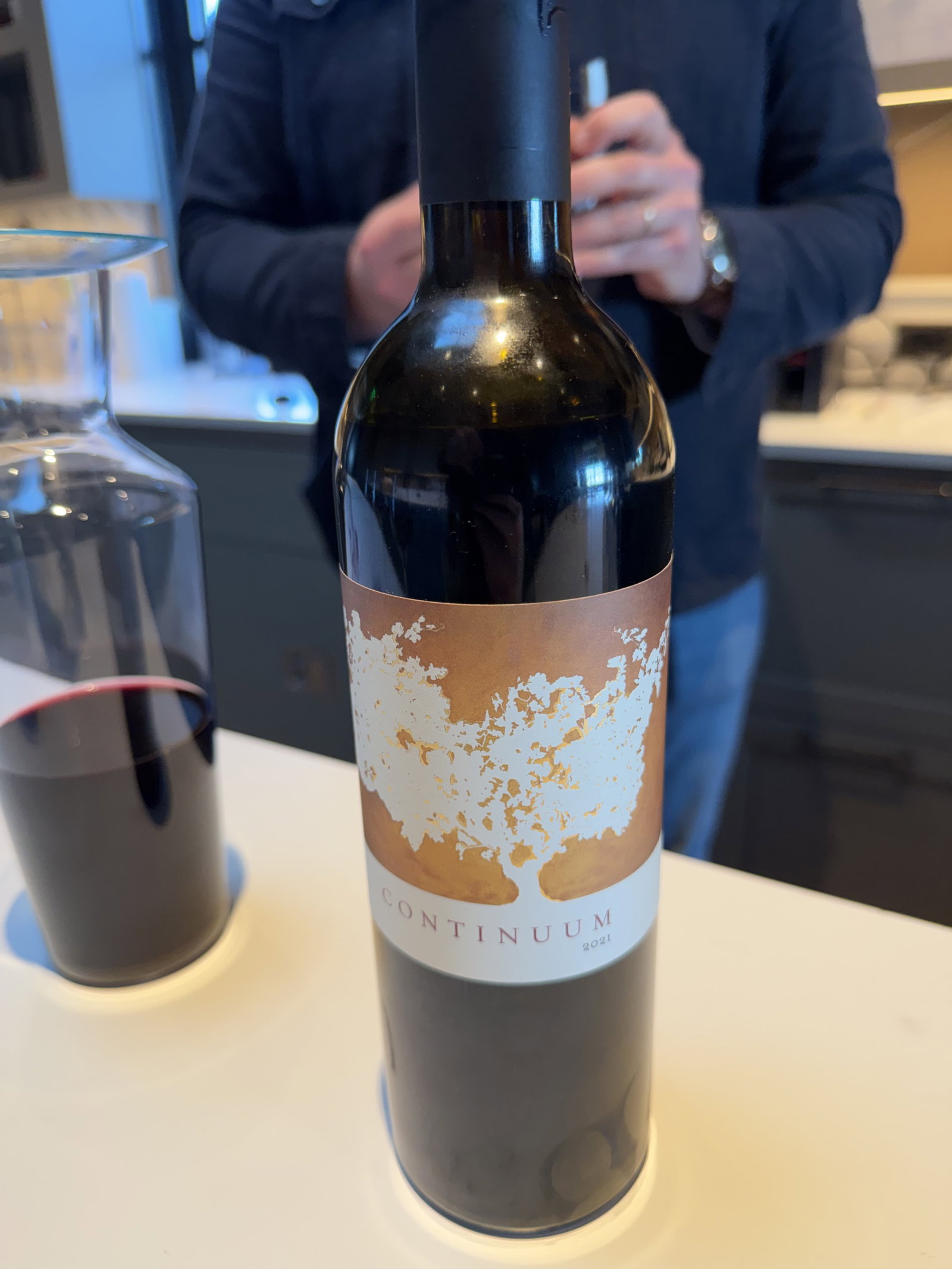
Then came the 2021 and 2022 Continuum comparison. The 2021 Continuum is listed as 45% Cabernet Sauvignon, 35% Cabernet Franc, 11% Merlot, and 9% Petit Verdot; the 2022 Continuum is 45% Cabernet Sauvignon, 43% Cabernet Franc, 8% Petit Verdot, and 4% Merlot. Seeing those two side by side was among the more useful parts of the tasting because Cabernet Franc’s role becomes obvious. Continuum is not just chasing density. It is chasing structure, lift, savory detail, and the ability to make a mountain wine feel layered rather than heavy.
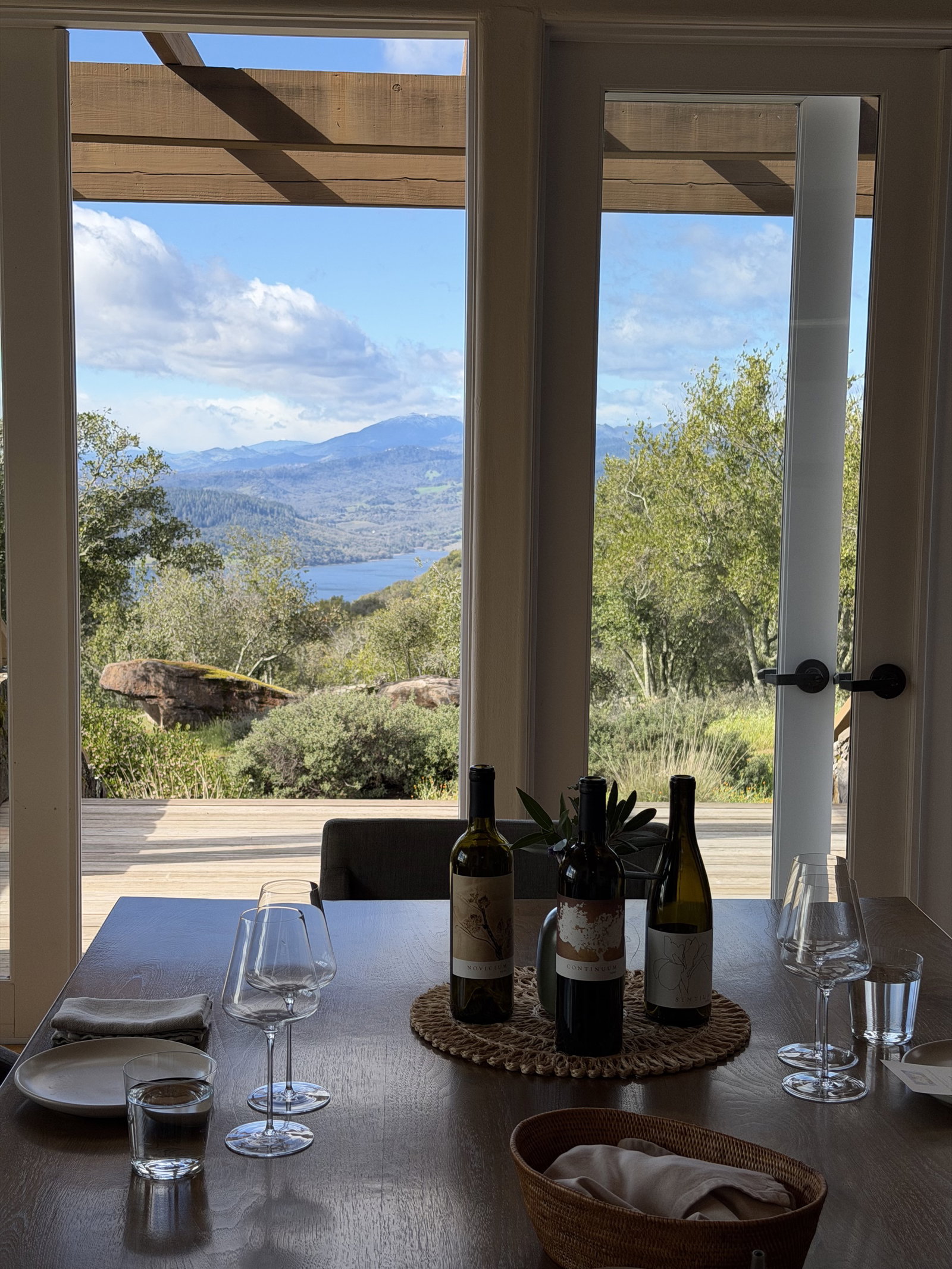
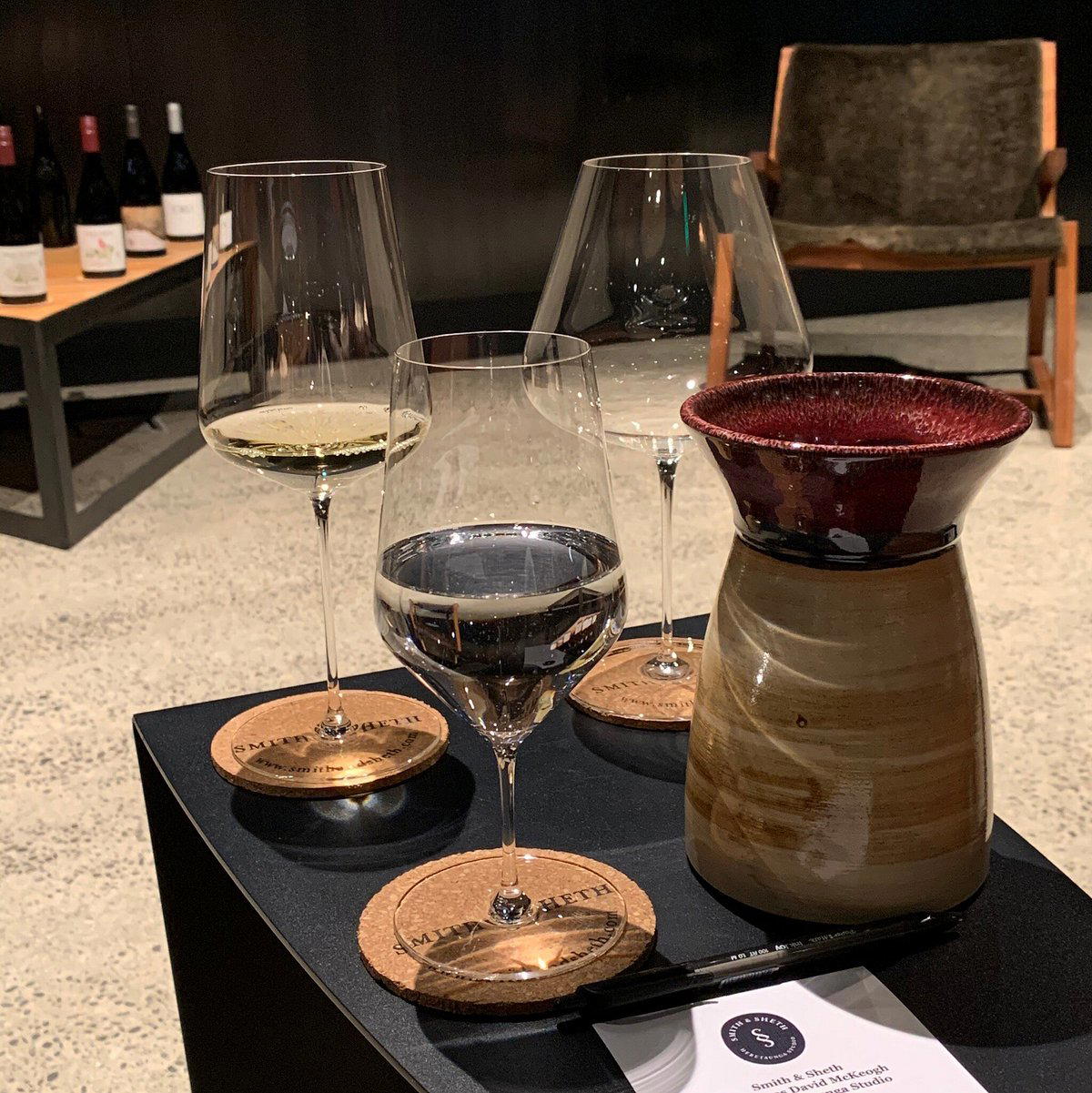
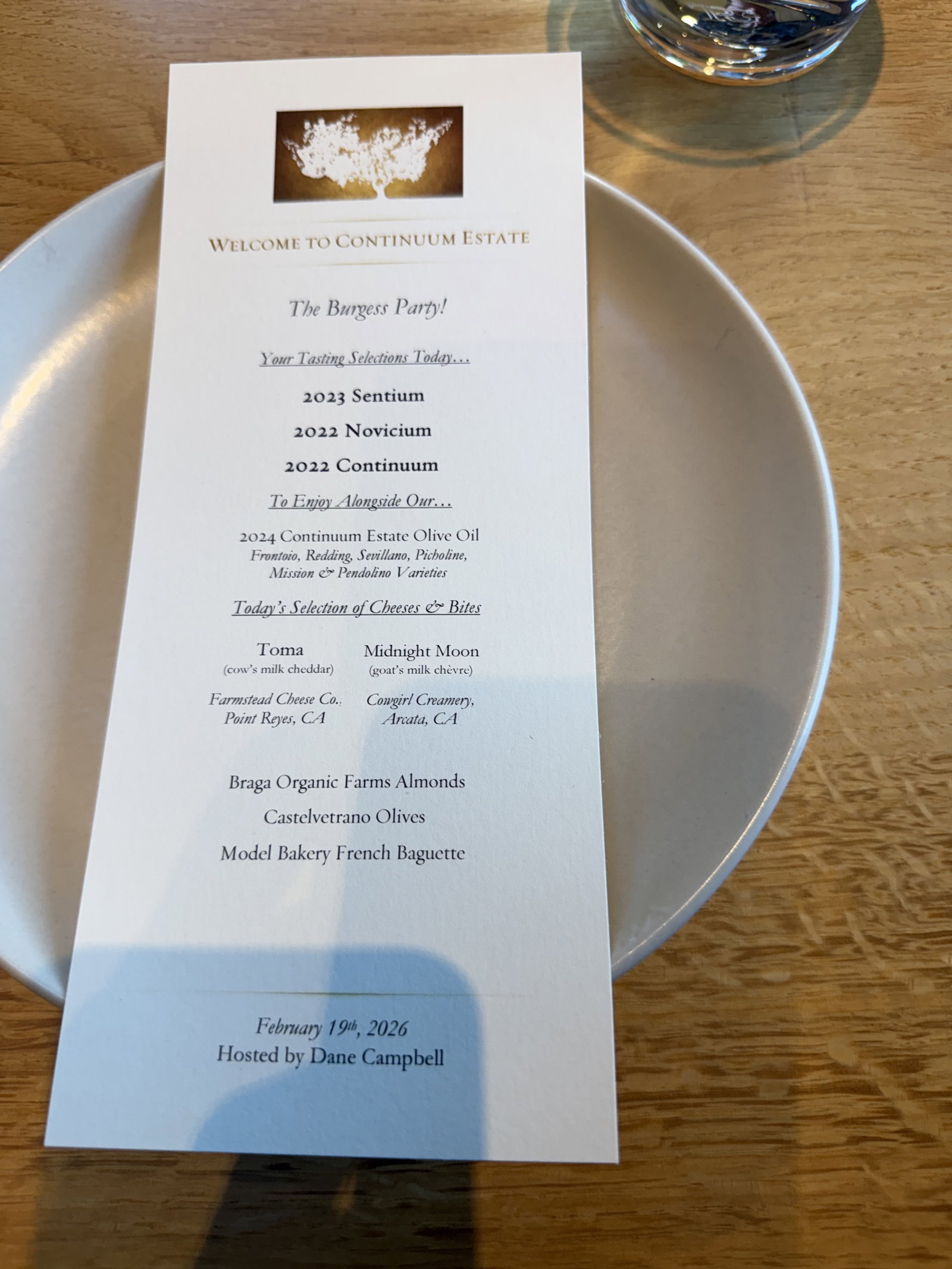
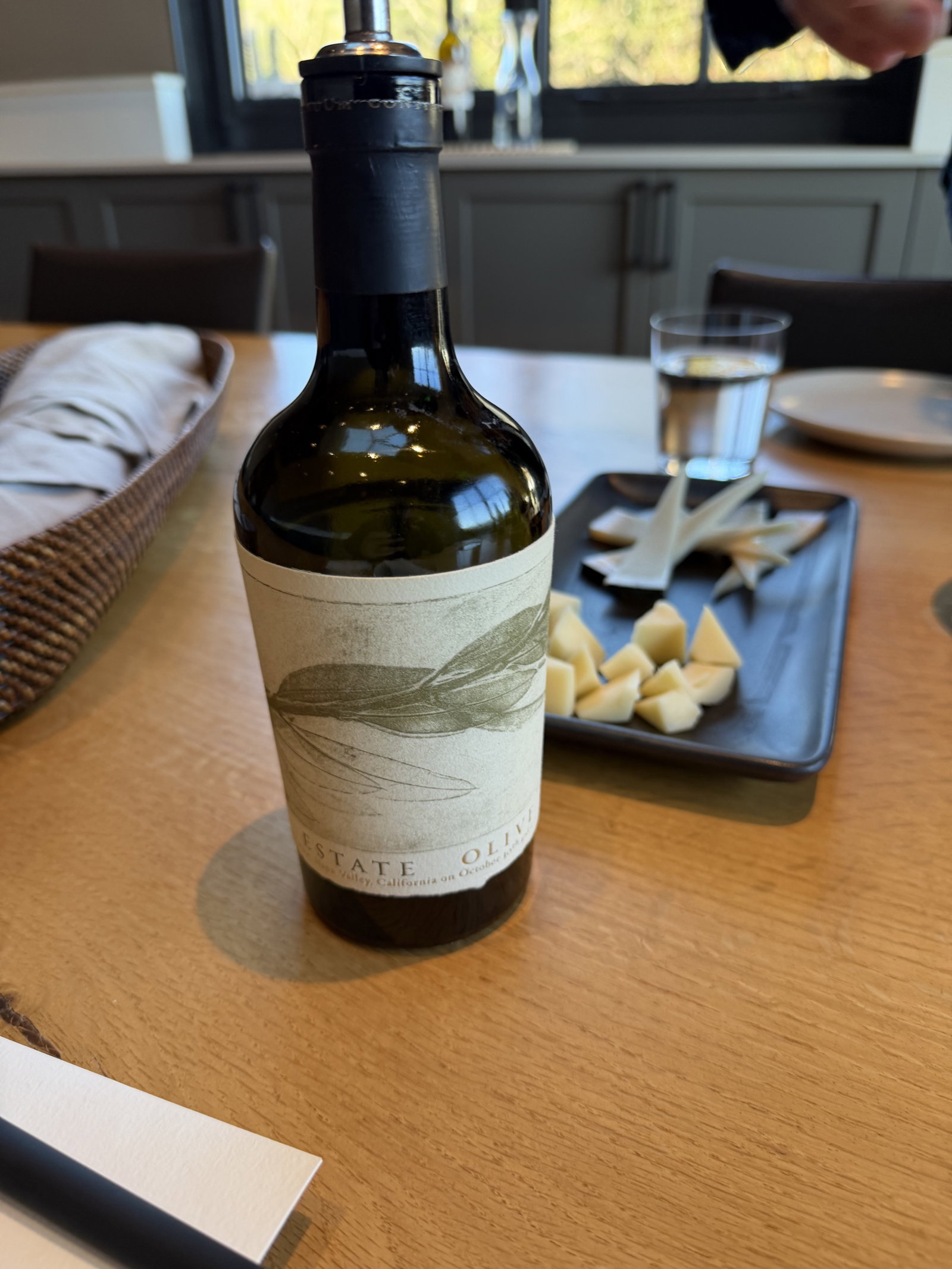
The tasting was not overbuilt, which I appreciated. The table had the right amount of detail: glasses, the printed tasting selections, Continuum Estate olive oil, cheeses, almonds, olives, and Model Bakery baguette. The card listed Toma from Farmstead Cheese Co. and Midnight Moon from Cypress Grove, which felt Napa in a useful way: local, simple, and supportive of the wines rather than distracting from them.
Those small details matter because they keep a serious tasting from becoming sterile. Continuum is an important estate, but strong part of the visit was that it still felt human. Dane’s hosting style, the estate house, the ATV ride, the production facility, and the food on the table all made the experience feel like a complete day rather than a sequence of talking points.
The Continuum label has always felt more meaningful after seeing the vineyard. The image comes from Chiara Mondavi’s “Light of the Vine,” a shadow painting of an old Cabernet Franc vine. That is exactly the right visual language for this estate: the vine itself becomes the art, and the label points back to the farming rather than away from it.
The family story is part of the experience, but the visit does not feel trapped in nostalgia. Continuum was founded by Tim Mondavi and Marcia Mondavi Borger after the sale of Robert Mondavi Winery, then moved its future uphill to Sage Mountain. What you feel on site is not only Mondavi history. You feel a deliberate second act: a mountain estate built around patience, elevation, and one focused idea of Napa greatness.
Continuum is not a casual walk-in winery. Visits are private and by prior arrangement, generally oriented toward collectors, mailing list members, and people seriously interested in the estate. If you have the chance to visit, let the vineyard be the point of the day.
Continuum Estate is on Sage Mountain Vineyard, a Pritchard Hill site on Napa’s eastern side near St. Helena.
The tasting included 2023 Sentium, 2022 Novicium, 2021 Continuum, and 2022 Continuum. The tasting card also listed Continuum Estate olive oil with cheeses, almonds, olives, and Model Bakery baguette.
Dane Campbell hosted the visit and drove the ATV route through the vineyards. I also met Liz Burton and Steve Nelson while at Continuum.
Sage Mountain Vineyard sits above the valley at roughly 1,325 to 1,600 feet, with hillside exposures, volcanic soils, native vegetation, and many small vineyard blocks farmed according to their individual character.
Yes, if you care about site-driven Napa wine. The value is not only tasting the bottles; it is seeing the mountain, the vineyard blocks, the production facility, and the way the team connects farming decisions to what ends up in the glass.
My Continuum visit worked because the experience stayed connected from start to finish. It began in the estate house, moved through Sage Mountain Vineyard by ATV with Dane Campbell, passed through the vines, animals, blocks, and mountain views, then landed in the production facility for a tasting of 2023 Sentium, 2022 Novicium, 2021 Continuum, and 2022 Continuum.
That order matters. Once you have seen the property from top to bottom, Continuum no longer feels like just a famous Napa bottle. It feels like a mountain translated into wine.
Get the App
Take the shortlist into the En Primeur Club app for concierge access, saved places, and the next step after discovery.
Get Exclusive AccessMore from the editors