← Guides
Sébastien Vergne, formerly of Château Margaux, joins Château Léognan as consultant winemaker starting January 2025, bringing First Growth discipline to a 6-hectare Pessac-Léognan estate with an unusually high Cabernet Sauvignon composition.
Sébastien Vergne, formerly of Château Margaux, joins Château Léognan as consultant winemaker starting January 2025, bringing First Growth discipline to a 6-hectare Pessac-Léognan estate with an unusually high Cabernet Sauvignon composition.
In January 2025, Sébastien Vergne stepped into the cellar at Château Léognan, bringing Margaux-trained precision to a quiet 6-hectare estate purchased in 2007.
As Château Léognan winemaker and consultant, Vergne brings years at Château Margaux, one of Bordeaux's five First Growths, and a practised feel for blending, extraction, and the small cellar decisions that shape a wine's line. At Léognan, those decisions meet a vineyard with a high proportion of Cabernet Sauvignon and a forest-surrounded microclimate that sets it apart within Pessac-Léognan.
The Miecaze family has brought him in with a clear purpose: to draw more attention to the estate while keeping faith with the viticulture Olivier Bernard established when he planted the vines in the 1980s for Domaine de Chevalier.
If you follow consultant movements in Bordeaux, Vergne's move from Margaux to a smaller, unclassified property fits a familiar pattern: seasoned winemakers bringing First Growth discipline to estates whose terroir has not yet had its full say. The question now is whether his exacting touch, formed at a property where critics and collectors examine every blending decision, will show up in higher scores, tighter allocations, or fresh secondary-market interest for Château Léognan.
Sébastien Vergne's background at Château Margaux carries immediate weight with collectors who watch winemaker pedigrees. Margaux, classified as a Premier Cru in 1855, produces wines that consistently score 95+ points from critics and trade on the secondary market at premiums shaped by scarcity and reputation.
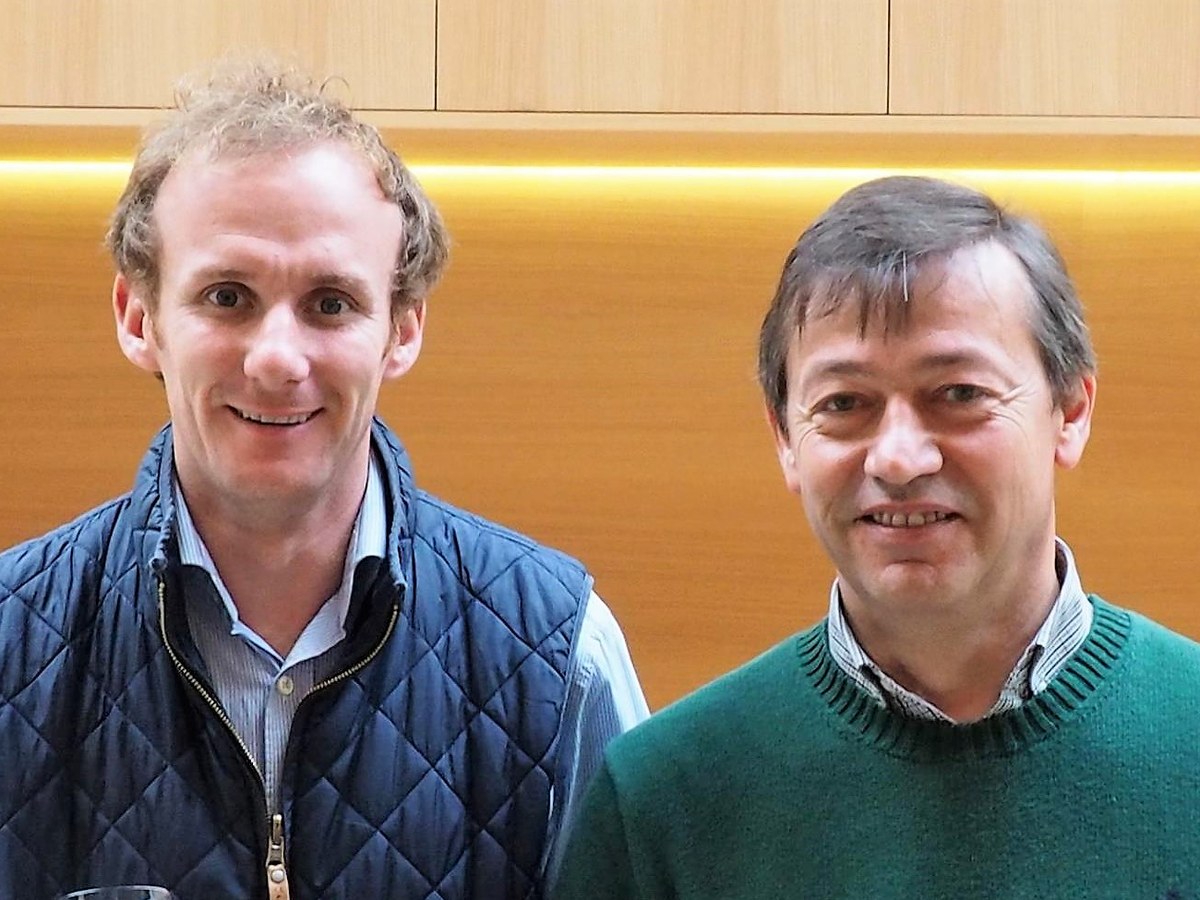
At a property of that calibre, every choice matters, from the first pick date to barrel selection to the final blending ratios. There is little room for imprecision when the global wine press tastes each vintage so closely.
That training should serve Vergne well at Château Léognan, where sandy gravel soils and forest-moderated temperatures create ripening patterns quite different from those of the Left Bank's better-known communes.
His move from a classified First Growth to a smaller Pessac-Léognan estate also reflects a broader Bordeaux rhythm: consultants with blue-chip experience turning their attention to properties outside the traditional hierarchy. For Château Léognan, the Margaux connection gives critics and buyers a reason to look again at a 6-hectare estate with no classified status.
Château Léognan's 6 hectares sit in a single block of sandy gravel, entirely enclosed by forest. The woods matter here. The estate covers 60 hectares in total, with only 10% under vine, and that green enclosure creates a microclimate unlike the more open vineyard landscapes typical of Pessac-Léognan's classified properties.
The nearby forest moderates temperature swings, holds humidity, and encourages the natural biodiversity that supports the estate's pesticide-free viticulture.
No pesticides or chemical fertilisers have been used since the vineyard was first planted in the 1980s, a continuity that links Olivier Bernard's original farming philosophy with the Miecaze family's decision to preserve it.
The sandy gravel soils encourage drainage and root penetration, both essential for Cabernet Sauvignon, which needs well-drained terroir and a long ripening window. Gravel warms quickly during the day and keeps heat into the evening, helping ripening in cooler vintages and supporting phenolic development in Cabernet's thick skins. The single-block layout makes vineyard work more direct, since all parcels ripen under similar conditions, which reduces the complexity of harvest timing decisions. It also concentrates risk. Frost, which damaged yields in 2013, 2016, and 2017, affects the whole vineyard when it arrives.
The estate's proximity to Domaine de Chevalier, Châteaux de France, de Fieuzal, and Le Sartre places it within a recognised terroir cluster. Domaine de Chevalier, a Cru Classé de Graves, produces wines that balance power and elegance, with critics often noting the estate's ability to age gracefully over decades. Château Léognan's vineyard, planted by Olivier Bernard specifically to supply Domaine de Chevalier, shares soil characteristics and microclimate influences with these neighbours, suggesting that the terroir can produce wines of comparable quality if the cellar work matches the farming.
Cabernet Sauvignon thrives on gravel soils, which drain quickly and send roots deep in search of water and nutrients. The variety's thick skins help protect against sunburn and dehydration in hot years, while its naturally high acidity and tannin give the wine its aging frame.
In cooler vintages, Cabernet's long ripening window can become a liability, since harvest may stretch into October and raise the risk of rain or rot. In warmer years, its ability to keep acidity while building phenolic ripeness becomes a strength.
For Château Léognan, the high Cabernet proportion gives the estate a way to make balanced wines as Bordeaux's climate moves toward more Mediterranean patterns.
The recent planting of Petit Verdot, used for the first time in the 2025 vintage, adds a variety that performs well in warm years and brings colour, tannin, and spice notes to the blend. Petit Verdot ripens even later than Cabernet Sauvignon, so it remains a risky choice in cool or wet vintages, but in warm years it can add complexity and structure without dominating the wine. Planting Petit Verdot suggests the estate is adjusting its varietal mix for a warming climate, where late-ripening varieties are less likely to face harvest-time rain and more likely to reach full phenolic maturity.
Aside from the Petit Verdot addition, the vineyard remains essentially as Olivier Bernard constructed it in the 1980s. That continuity shows confidence in the original planting decisions and a reluctance to disturb a vineyard that has proved its quality over decades. For Sébastien Vergne, a mature vineyard with established root systems and a proven record changes the task in the cellar. The viticulture is already strong, so the work turns to extraction, barrel regimes, and blending precision.
The inclusion of Petit Verdot in the 2025 blend introduces a variable that may make Vergne's influence harder to isolate from the compositional change. Petit Verdot adds tannin, colour, and spice notes that can shift a wine's texture and aging curve, so any stylistic movement in the 2025 may come from the new variety as much as the new consultant. If you want to track Vergne's hand more clearly, the 2026 vintage, assuming Petit Verdot remains in the blend, should offer the cleaner comparison, because the varietal mix will be consistent and any stylistic changes can be linked more directly to winemaking decisions.
Château Léognan's lack of classified status and limited production keep the estate outside the en primeur glare that classified properties receive.
Allocations are likely handled through direct mailing lists, négociants, or private sales rather than the futures market, which limits secondary-market liquidity but may allow price appreciation if critical scores rise.
For collectors who enjoy looking beyond the obvious names, Château Léognan has the profile to draw attention if Vergne's tenure produces wines that score consistently in the 92-95 point range, high enough to mark serious quality but not so high that prices become prohibitive.
The frost sensitivity that affected yields in 2013, 2016, and 2017 remains a real risk. Frost damage reduces production, which can lift per-bottle prices if demand holds steady, but it also creates vintage variation that collectors need to read carefully. Warm, dry vintages favour Cabernet Sauvignon and Petit Verdot, allowing both varieties to reach full phenolic ripeness without excessive alcohol. Cooler or wetter vintages may test the high-Cabernet composition, requiring careful harvest timing and selective sorting to avoid underripe tannins or green notes.
Olivier Bernard's decision to plant the Château Léognan vineyard in the 1980s as fermage for Domaine de Chevalier says a great deal about the confidence one of Pessac-Léognan's most respected winemakers placed in this terroir.
Bernard, who has led Domaine de Chevalier since the 1980s, is known for producing wines that balance power and elegance, with critics often noting the estate's ability to age gracefully over decades.
His choice to plant the Château Léognan site and cultivate it exclusively for Domaine de Chevalier until 2007 suggests he recognised the terroir's quality and viewed it as an extension of his own estate's vineyard holdings.
The fermage arrangement, with the vines cultivated under licence to Domaine de Chevalier, explains why no wine was bottled under the Château Léognan label until Philippe and Chantal Miecaze purchased the property in 2007. All fruit from the vineyard went to Domaine de Chevalier, where it was blended into that estate's wines and contributed to its reputation for quality. For collectors familiar with Domaine de Chevalier's profile, the knowledge that Château Léognan's vineyard once supplied fruit to that classified estate gives the site a terroir credential worth noting.
The vineyard's composition and farming practices remain essentially as Bernard designed them, apart from the recent Petit Verdot planting. That continuity suggests the Miecaze family understood the value of the original vision and chose to preserve it rather than impose a new direction.
The absence of pesticides or chemical fertilisers since planting reflects Bernard's farming philosophy, which favours soil health and vine balance over interventionist viticulture.
For Vergne, a vineyard with that history and continuity provides a firm base. The viticulture is already strong, so the focus moves to cellar work and blending precision.
The proximity to Domaine de Chevalier also gives critics and collectors a natural point of comparison for Château Léognan's wines. If the wines show stylistic similarities to Domaine de Chevalier, including structure, mineral tension, and aging potential, the Bernard connection will be cited as evidence of terroir continuity. Either way, the Bernard legacy links Château Léognan to one of Pessac-Léognan's most respected estates, a connection likely to interest collectors who follow terroir lineage and winemaker pedigree.
Get the App
Take the shortlist into the En Primeur Club app for concierge access, saved places, and the next step after discovery.
Get Exclusive AccessMore from the editors